
Contents
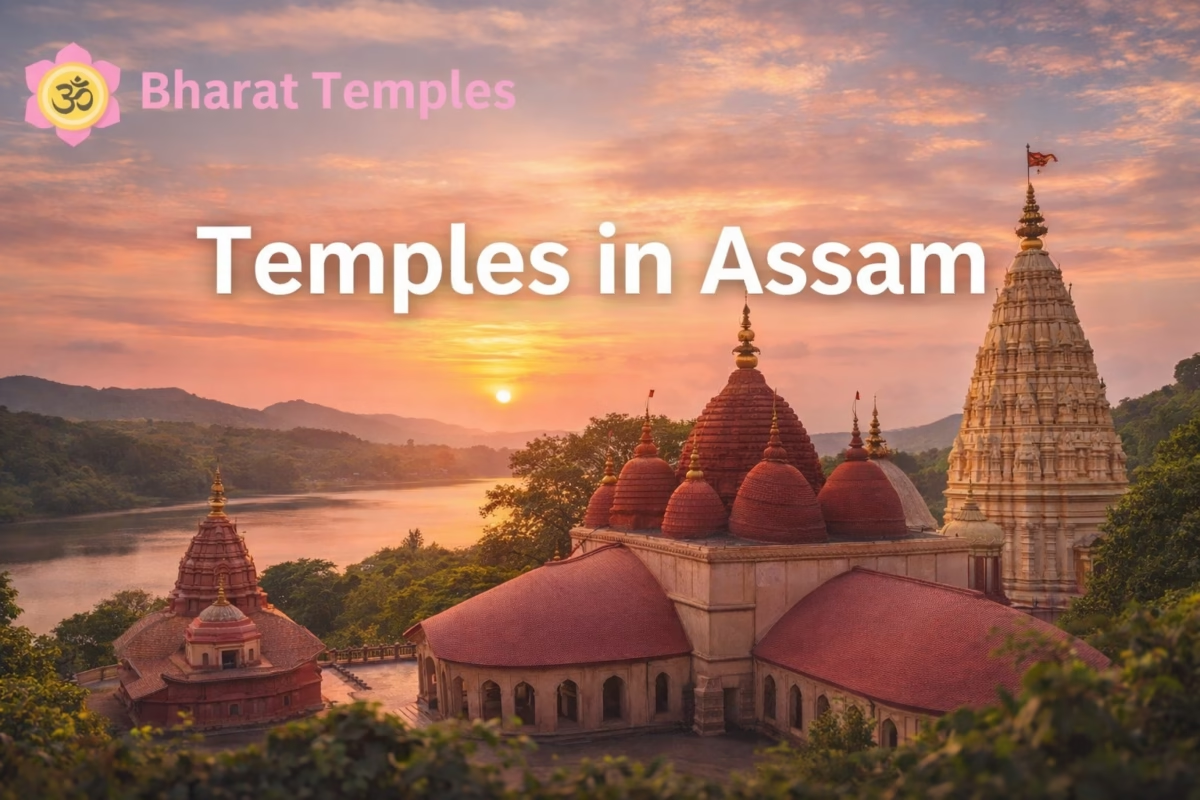
Assam, cradled by the mighty Brahmaputra, is not just a land of tea gardens and one-horned rhinos; it is a profound spiritual powerhouse of Northeast India. The state is the cradle of Shakti worship in this part of the country, dominated by the Shakta and Tantric traditions. From the mystical Nilachal hills of Guwahati to the riverine island of Majuli, the temples in Assam offer a unique blend of indigenous tribal culture and mainstream Hinduism. The architecture here is distinct, featuring the characteristic pointed towers of the Nilachal style—a fusion of indigenous design and traditional Nagara elements. Whether you seek the divine feminine energy at Kamakhya or the serene Vaishnavite culture of Majuli Satras, Assam is a pilgrimage destination unlike any other.
Top Temple Cities in Assam
| City/Town | Key Temple(s) | Sacred Significance | Best For |
|---|---|---|---|
| Guwahati | Kamakhya Temple, Umananda Temple | Presiding deity is Kamakhya (Tara); the site of the Ambubachi Mela. Umananda is the smallest river island temple. | Shakti Worship & Tantric Rituals |
| Sivasagar | Rangnath Dol, Sivadol, Vishnudol | Remnants of the Ahom Kingdom; massive Shiva temples built by Queen Ambika. | Historical Architecture & Ahom Heritage |
| Jorhat | Bhaganagaon Hanuman Temple, Tilinga Mandir | Famous for the massive bell metal Kirtan Ghara and Vaishnavite Satras. | Cultural Satras & Bell Metal Art |
| Majuli | Sri Sri Auniati Satra, Dakhinpat Satra | World’s largest river island; center of Neo-Vaishnavism established by Srimanta Sankardeva. | Sattriya Dance & Vaishnavite Philosophy |
| Barpeta | Barpeta Satra | A major center for the Ekasarana movement; the temple town of Assam. | Religious Discourse & Peace |
Major Temple Festivals in Assam
- Ambubachi Mela (June/July): Held at Kamakhya Temple, Guwahati. It celebrates the menstruation of Goddess Kamakhya, marking the annual menstruation of the deity. The temple remains closed for three days, reopening with a grand celebration. It is a unique tantric festival attracting millions.
- Bhogali Bihu (January): While a harvest festival, it is celebrated with religious fervor in temple precincts, particularly the Magog Bihu celebrations at Kamakhya where community feasts (Bhog) are offered.
- Poagar Bihu (April): The first day of the Assamese calendar, celebrated with traditional rituals at Satras and Shiva temples across the state, marking the new year.
- Rongali Bihu (April/May): The most important Assamese festival, celebrated with music and dance. Temple festivals often coincide with this period, featuring Huwar Khel (traditional martial arts) displays in Satras.
Regional Traditions & Etiquette
Understanding local customs is essential for a respectful visit to temples in Assam.
- Dress Code: While not as strict as in Kerala, modest attire is expected. In Kamakhya, traditional Assamese attire (Gamosa/Dhoti) is highly preferred. You will often be gifted a Gamosa upon entering.
- Tantric Influence: Unlike other parts of India, animal sacrifice (Bali) is still practiced in some Shakta temples in Assam (though banned in Kamakhya main shrine, it happens in outer temples like Chinnamasta). Be aware of this distinct tradition.
- Sattriya Culture: In Majuli Satras, footwear is strictly prohibited inside the prayer halls (Namghar). Women generally cover their heads as a mark of respect during prayers.
- Food (Prasad): The concept of Bhog is central. In Satras, food is served on banana leaves, and it is vegetarian (no onion/garlic). In Kamakhya, sweet offerings (Pitha) are common.
How to Explore Temples in Assam
Travel Circuits
- The Shakti Circuit: Start at Guwahati (Kamakhya) and travel to Hajo (Hayagriva Madhava Temple) and then to Sivasagar. This covers the triangle of Shakta, Buddhist, and Shaiva traditions.
- The Vaishnavite Circuit: Focus on the river islands. Visit Majuli (Mishing villages and Satras) and then head to Barpeta to explore the Satra culture inland.
Gateways & Transport
- Air: The main gateway is Lokpriya Gopinath Bordoloi International Airport (GAU) in Guwahati.
- Rail: Guwahati is the major railway hub. To reach Majuli, take a train to Jorhat or North Lakhimpur, then a ferry.
- Best Season: October to April. Avoid the heavy monsoon (June–September) as the Brahmaputra swells, often disrupting ferry services to Majuli and causing landslides in the hills.
FAQ
Sivasagar is the historical heart of the Ahom dynasty and houses some of the oldest and most massive temples like the Sivadol, built in the 18th century. However, for sheer antiquity and mythical roots, Guwahati (Kamakhya) is considered the most ancient, dating back to ancient texts like the Kalika Purana.
Yes. While general modesty is required, Kamakhya encourages traditional wear (Dhoti/Saree). In Assam Satras, specific dress codes are not strictly enforced on tourists, but covering the head and removing footwear is a strict cultural norm.
Absolutely. A 7-day itinerary is perfect. Days 1-2: Guwahati (Kamakhya, Umananda). Day 3: Hajo. Days 4-5: Sivasagar. Days 6-7: Majuli (via Jorhat). This covers the major spiritual geography.
It varies. In Kamakhya, entry to the inner sanctum is strictly restricted to Hindus. However, non-Hindus are often allowed in the complex or to the base of the hill. In Sivasagar temples, access is generally open. In Satras, non-Hindus are usually welcome to observe prayers and culture but may be restricted from entering the inner sanctum of the Namghar depending on the specific Satra’s rules.