
Contents
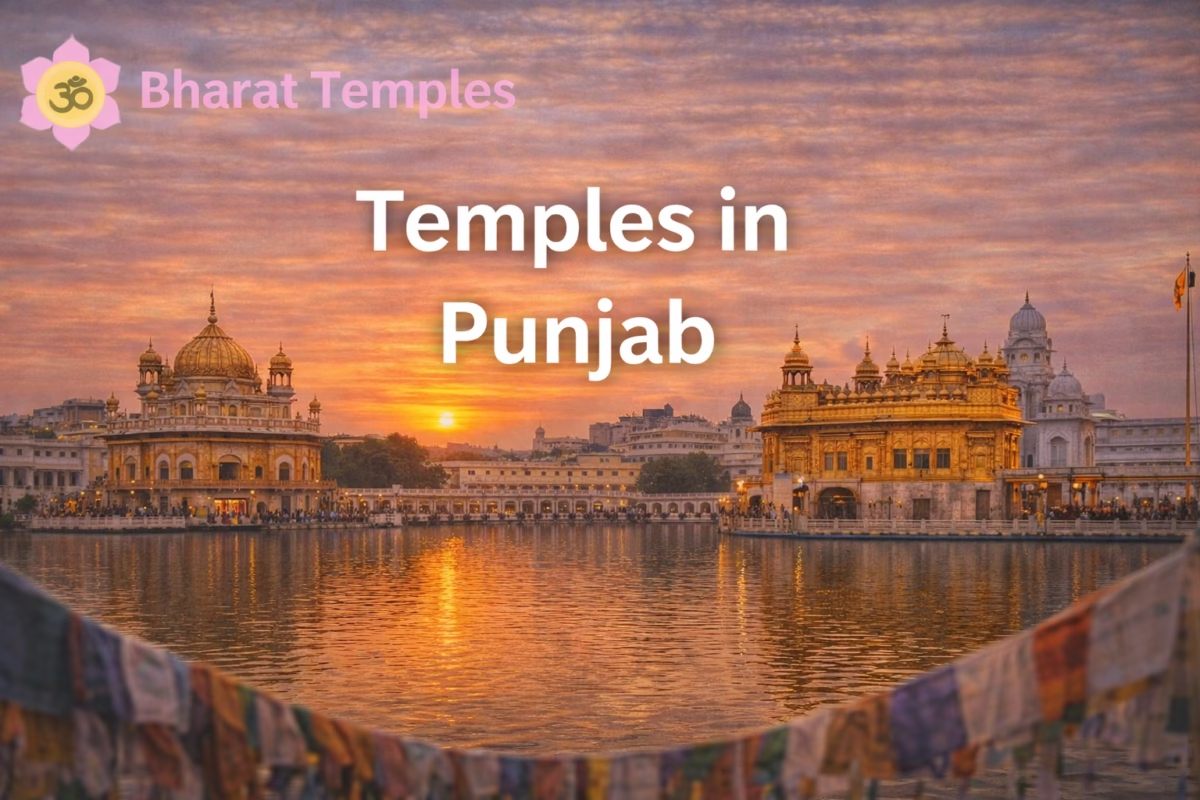
Punjab, the land of five rivers and the heartland of Sikhism, offers a spiritual tapestry that goes far beyond the shimmering exteriors of its famous shrines. While the state is globally recognized as the home of Harmandir Sahib (The Golden Temple), the cradle of the Sikh faith, its spiritual geography is diverse, encompassing ancient Hindu sanctuaries associated with the Mahabharata and revered Shakti Peethas. From the martial valor of Sikh Gurus to the devotion of Hindu saints, the temples in Punjab reflect a history of resilience, syncretism, and profound faith.
The architectural landscape here is a blend of the distinct Sikh ‘Saracenic’ style—characterized by gold domes, intricate marble inlay, and expansive sarovars—and the traditional Nagara style of Hindu temple construction found in older shrines. Whether you seek the tranquility of the Guru Granth Sahib’s recitation or the fierce blessing of a manifestation of Shakti, Punjab serves as a powerful destination for cultural travelers and pilgrims alike.
Top Temple Cities in Punjab
| City/Town | Key Temple(s) | Sacred Significance | Best For |
|---|---|---|---|
| Amritsar | Harmandir Sahib (Golden Temple) | Sikhism’s holiest shrine; spiritual center of the faith. | Peace, Langar, and spiritual awakening. |
| Pathankot / Katra | Mata Vaishno Devi (Trikuta Hills) | One of the 108 Shakti Peethas; deity of strength. | Adventurous trekking and powerful darshan. |
| Jalandhar | Devi Talab Mandir | Ancient Shiva temple; one of the 51 Shakti Peethas. | Ancient history and Shakti worship. |
| Anandpur Sahib | Keshgarh Sahib | Birthplace of the Khalsa; one of the five Takhts. | History of Sikh valor and Hola Mohalla festival. |
| Patiala | Kali Devi Mandir | Major center for Navratri celebrations. | Royal heritage and Shakti worship. |
| Ludhiana | Nehru Rose Garden (Jain Temple) | Significant for the Jain community in Punjab. | Peaceful meditation and Jain heritage. |
Major Temple Festivals in Punjab
- Baisakhi (April): Celebrated across the state with immense fervor at Anandpur Sahib and Golden Temple. It marks the Sikh New Year and the formation of the Khalsa. Expect martial arts displays (Gatka) and large processions.
- Hola Mohalla (March): Exclusive to Sikh shrines, particularly Anandpur Sahib. It is a festival of mock battles, poetry contests, and displays of martial prowess, instituted by Guru Gobind Singh.
- Navratri (Sep/Oct & Mar/Apr): The Mata Vaishno Devi pilgrimage peaks during these times. In cities like Patiala and Jalandhar, Kali and Durga temples host special yagnas and cultural programs.
- Guru Nanak Jayanti (Nov): The Golden Temple is illuminated, and the ‘Prakash Utsav’ is marked by the Reading of the Guru Granth Sahib and massive community service initiatives.
Regional Traditions & Etiquette
Head Covering: In all Gurudwaras, including the Golden Temple, both men and women must cover their heads. Scarves are available at the entrance, but bringing your own is recommended.
Footwear: Shoes must be removed before entering any temple complex. In Gurudwaras, they are deposited in a free facility; wash your feet before entering the main hall.
Prasad and Offerings: In Sikh shrines, the primary offering is devotion; however, Karah Parshad is distributed. In Hindu temples, flowers and sweets are common. Note: Meat, alcohol, and tobacco are strictly prohibited within temple premises in Punjab.
Langar (Community Kitchen): A hallmark of Punjab’s religious culture. Almost all major shrines, Sikh and Hindu alike, offer free meals to all visitors regardless of caste or creed. It is an act of humility to sit on the floor and eat.
How to Explore Temples in Punjab
Travel Circuits
The Spiritual North: Combine Amritsar (Golden Temple) with a trip to Wagah Border for the retreat ceremony. Extend to Anandpur Sahib for a historical deep dive.
The Shakti Circuit: Start at Mata Vaishno Devi (Katra), descend to Jalandhar (Devi Talab), and finish in Patiala for a blend of Hindu deity worship and royal history.
Transport & Seasons
Gateways: The Sri Guru Ram Dass Jee Airport in Amritsar is the primary international hub. New Delhi and Chandigarh serve as major railheads.
Best Season: October to March offers pleasant weather, ideal for walking in complex temple grounds. Summers (May-June) are scorching, while July-September sees heavy monsoon rains.
Local Travel: State-run buses and private taxis are widely available. For Vaishno Devi, battery-operated cars and helicopter services are operational from Katra.
FAQ
While Amritsar is the most famous, Jalandhar holds some of the oldest Hindu structures, specifically the Devi Talab Mandir and the Sodal Mandir, dating back centuries and linked to mythological events.
Yes. Sikh Gurudwaras strictly require covered heads and modest clothing (no shorts). Hindu temples in Punjab are generally more flexible but prefer modest attire; traditional Indian wear is appreciated during festivals.
Absolutely. A well-planned itinerary can cover the Golden Temple in Amritsar, the Keshgarh Sahib in Anandpur Sahib, and the Vaishno Devi shrine in Katra within 5-7 days, utilizing Punjab’s robust road network.
While the Golden Temple is open to all faiths, some older Hindu temples in Punjab may restrict entry to non-Hindus in the inner sanctum. It is advisable to check locally or seek permission from temple authorities before entering.