
Contents
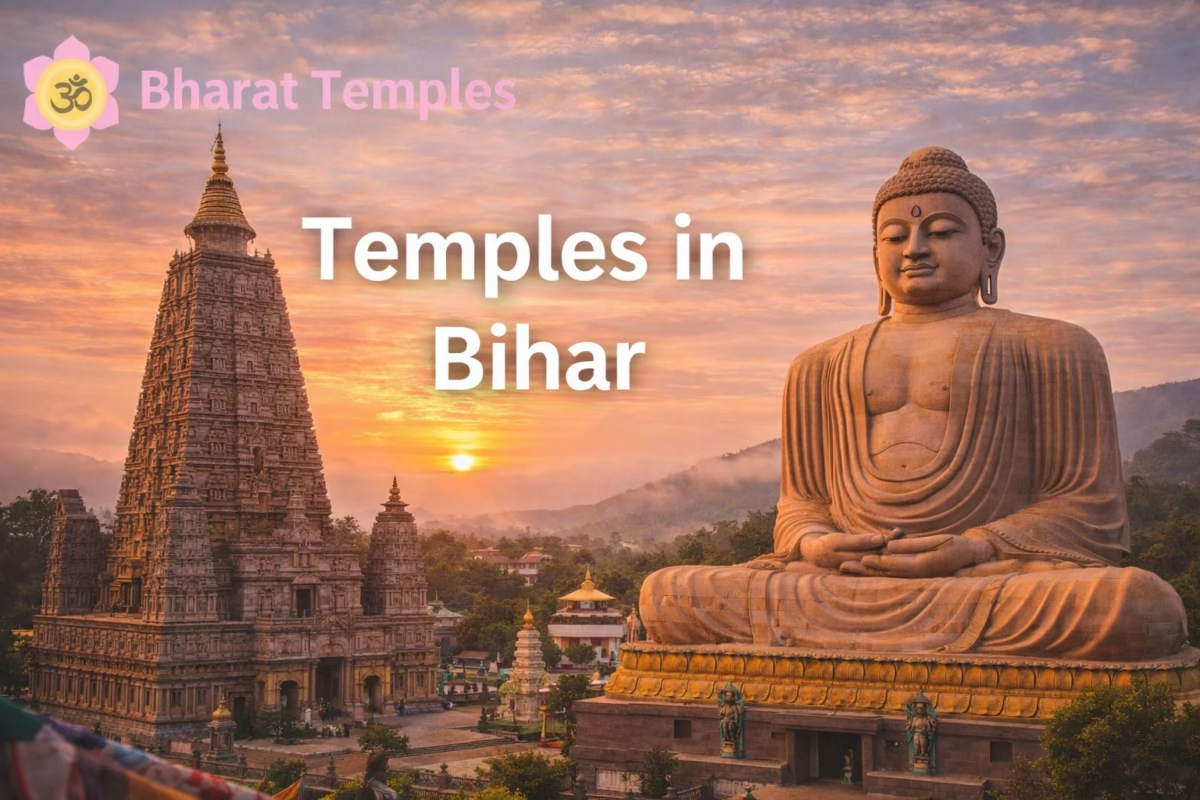
Bihar, the land where Lord Buddha attained enlightenment and the ancient kingdom of Magadha flourished, is a cradle of spiritual and religious heritage. Temples in Bihar are not just places of worship; they are timeless monuments to India’s profound history, housing legends of gods, sages, and empires. From the peaceful Mahabodhi Temple complex in Bodh Gaya to the ancient Pataliputra ruins near Patna, the state offers a unique blend of Buddhist, Jain, Hindu, and Sikh traditions. The spiritual landscape here is defined by its profound tranquility and architectural simplicity, inviting pilgrims to walk the same paths as Lord Rama, Lord Krishna, and various Tirthankaras.
The dominant traditions here revolve around Shaivism and Vaishnavism, with a unique confluence of Buddhist and Jain practices given the region’s historical significance. Whether you seek the divine blessings of Lord Shiva at the Mundeshwari Devi Temple or seek peace at the Vishnupura Temple complex, Bihar serves as a powerhouse of ancient Indian spirituality.
Top Temple Cities in Bihar
| City/Town | Key Temple(s) | Sacred Significance | Best For |
|---|---|---|---|
| Bodh Gaya | Mahabodhi Temple | Site of Lord Buddha’s enlightenment; UNESCO World Heritage Site. | Seeking peace & Buddhist history |
| Patna | Patna Sahib Gurudwara, Takht Sri Patna Sahib | Birthplace of the 10th Sikh Guru, Guru Gobind Singh Ji. | Sikh pilgrimage & history |
| Munger | Kali Mata Temple, Bari Patan Devi | Ancient seat of Yoga; revered Shakti Peeth. | Spiritual retreats & Shakti worship |
| Vaishali | Abhishek Pushpam (Relic Stupa) | First Republic of the world; site of Buddha’s relic discovery. | Historical & Buddhist heritage |
| Kaimur | Mundeshwari Devi Temple | Considered the oldest functional Hindu temple in India (c. 108 AD). | Ancient architecture & heritage |
| Darbhanga | Chhinnamastika Temple | Renowned Shakti Peeth dedicated to Goddess Chhinnamasta. | Shakti worship & Tantric traditions |
Major Temple Festivals in Bihar
- Sonepur Mela (Kartik Purnima – October/November): Held at the confluence of the Ganga and Gandak rivers, this is the largest cattle fair in Asia, deeply intertwined with religious bathing rituals and temple visits.
- Buddha Purnima (April/May): The most significant day in Bodh Gaya, celebrating the birth, enlightenment, and death of Gautama Buddha with grand processions and prayers at the Mahabodhi Temple.
- Chhath Puja (October/November): A statewide festival dedicated to the Sun God (Surya), celebrated with rigorous fasting and rituals on the banks of the Ganga, unique to the Mithila region.
- Mahashivratri (February/March): Celebrated with immense fervor at the Mundeshwari Devi Temple and other ancient Shiva shrines across the state.
Regional Traditions & Etiquette
Temples in Bihar often follow the Panchayatana style of worship, especially in older shrines. Unlike South Indian temples, footwear is usually removed at the sanctum entrance rather than the main gate. In Sikh Gurudwaras (like Patna Sahib), covering the head is mandatory, and Langar (community kitchen) is a sacred tradition accessible to all. For ancient temples like Mundeshwari, the architecture showcases a fusion of Nagara style with local craftsmanship, characterized by square plans and tall shikharas.
How to Explore Temples in Bihar
Travel Circuits
The most efficient circuit is the Buddhist Circuit (Patna – Bodh Gaya – Rajgir – Vaishali). For Hindu pilgrims, the Shakti Circuit connects Darbhanga, Munger, and Kaimur. A common spiritual route includes Patna, followed by a drive to Gaya for Bodh Gaya.
Gateways & Seasons
- Airport: Jay Prakash Narayan Airport (Patna) is the primary gateway; Gaya Airport serves international Buddhist pilgrims.
- Rail: Well-connected via Patna Junction, Gaya Junction, and Darbhanga Junction.
- Best Season: October to March offers pleasant weather. Avoid the peak summer (April-June) and the heavy monsoon (July-September).
FAQ
Kaimur district, specifically the Mundeshwari Devi Temple, is home to what is widely considered the oldest functional Hindu temple in India, dating back to the 2nd century AD. The ruins around Vaishali also hold immense ancient significance.
Generally, modest attire is required. While specific color codes are rare, it is respectful to cover shoulders and knees. In Sikh Gurudwaras, a head covering is compulsory for all genders.
Yes. A week is sufficient to cover the major circuit: 2 days in Patna (Gurudwaras and nearby ruins), 2 days in Bodh Gaya, and 2 days exploring Munger or Darbhanga, depending on your specific spiritual interest.
Most Shiva and Shakti temples in Bihar are open to all. However, the Mahabodhi Temple in Bodh Gaya (Buddhist) is open to all faiths, while specific rituals within the sanctum may be restricted to Buddhists. Always check specific temple notices at the entrance.