
Contents
Delhi, the National Capital Territory, stands as a unique spiritual tapestry woven from threads of ancient history, Mughal grandeur, and modern devotion. While often recognized for its Mughal monuments and colonial architecture, the soul of Delhi is deeply rooted in its sacred heritage. The history of temples in Delhi spans over a millennium, with evidence of Hindu worship dating back to the pre-Mughal era of the Tomara and Chauhan dynasties. The Yogi Kantha Temple, an archaeological marvel from the 10th century, stands as a silent witness to this antiquity, predating much of the city’s current landscape.
From the esoteric traditions of the Kali Perumal Temple to the grandeur of the Laxminarayan Temple (Birla Mandir), and the serene divinity of the modern Akshardham, temples in Delhi offer a comprehensive pilgrimage experience. These sacred sites are not merely places of worship but are cultural repositories showcasing diverse architectural styles—from the towering Shikhara style of North India to the ornate Dravidian influences and the contemporary fusion seen in Akshardham. For pilgrims, Delhi serves as a gateway to spiritual fulfillment, while for cultural travelers, it provides a window into the evolving traditions of Hinduism in an urban metropolis.
Top 5 Temples in Delhi
Akshardham Temple
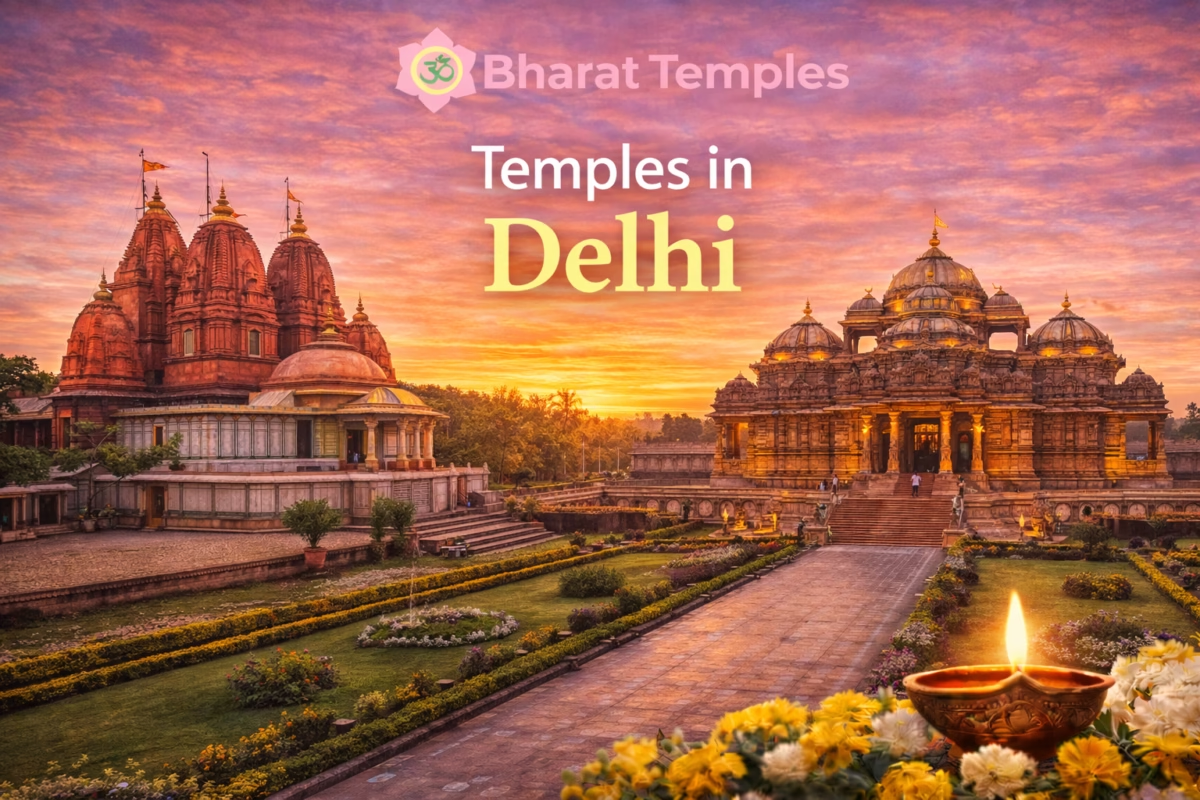
A modern wonder and a spiritual powerhouse, the Akshardham Temple complex is a testament to traditional Vedic architecture and craftsmanship. It houses the majestic murti of Bhagwan Swaminarayan and explores the eternal principles of spirituality, harmony, and peace through its exhibitions and the breathtaking Thematic Garden. The evening Sahaj Anand water show is a spectacular retelling of an Upanishadic story.
Rituals & Experience: Participate in the Abhishek ceremony for spiritual cleansing. Walk the Parikrama path to absorb the intricate carvings of diverse flora and fauna.
Shri Laxminarayan Temple (Birla Mandir)
Inaugurated by Mahatma Gandhi in 1939, this sprawling complex dedicated to Bhagwan Vishnu and Mata Lakshmi is a beacon of social harmony. It was one of the first major temples in Delhi to open its doors to people of all castes. The architecture is典型的 of the Nagara style, with tall spires and intricate carvings.
Rituals & Experience: The temple is particularly vibrant during Janmashtami and Diwali. It houses shrines for Shiva, Hanuman, and Durga, making it a comprehensive stop for devotees.
Shri Kali Perumal Temple (Kali Bari)
Located near the Bengali Market, this historic shrine is one of the few ancient temples surviving the Mughal era. It is dedicated to Goddess Kali, holding immense significance for the Tantric community and devotees of Shakti. The temple architecture features a unique fusion of Bengali styles and South Indian influences.
Rituals & Experience: Tuesdays and Saturdays are auspicious for Kali worship. The atmosphere here is intense and deeply meditative, distinct from the larger tourist-oriented complexes.
Shri Hanuman Mandir, Connaught Place
Believed to have been established by the Mughal Emperor Akbar himself, this is one of the five revered temples of the Mahabharata era in Delhi. It is located at the site where the son of Bhima, Ghatothkacha, is said to have worshipped. The temple is unique for having a rear entry only, as the front was supposedly sealed by Akbar (a legend that persists in local lore).
Rituals & Experience: The Chhola (offering of clothes) is a unique ritual here. It is perpetually crowded, especially on Tuesdays, radiating intense devotional energy.
Yogi Kantha Temple
Rediscovered only recently, this 10th-century temple ruins in Mehrauli are the oldest evidence of Hindu worship in Delhi. Located near the Qutub Minar complex, it is a protected archaeological site. It features a unique architectural style with remnants of a triple-celled shrine and exquisite carvings.
Rituals & Experience: While active worship is limited compared to others, visiting this site is a journey back in time. It offers a silent, contemplative experience of Delhi’s deep historical roots.
Darshan & Aarti Timings
| Temple | Morning Darshan | Evening Darshan | Special Aarti |
|---|---|---|---|
| Akshardham | 9:30 AM – 1:00 PM | 4:00 PM – 7:30 PM | 6:30 PM (Bhajans) |
| Laxminarayan | 6:00 AM – 12:00 PM | 4:00 PM – 9:00 PM | 7:00 PM (Sandhya) |
| Kali Perumal | 6:00 AM – 12:00 PM | 4:00 PM – 9:00 PM | 7:30 PM (Aarti) |
| Hanuman Mandir | 5:00 AM – 12:00 PM | 4:00 PM – 11:00 PM | 9:00 PM (Sundar Kand) |
How to Reach
Airport: Indira Gandhi International Airport (DEL) is well-connected to all major cities. The Delhi Metro Airport Express Line provides seamless connectivity to the city center.
Rail: Delhi serves as the nerve center of Indian Railways with major stations like New Delhi, Old Delhi, Nizamuddin, and Anand Vihar.
Local Transport: The Delhi Metro is the most efficient way to travel. Most major temples have dedicated metro stations (Akshardham on Blue Line, Kali Bari/Connaught Place on Violet Line).
Best Time: October to March offers pleasant weather for temple hopping. Summers (April-June) are extremely hot. Monsoons (July-Sept) bring high humidity.
FAQ
Photography is strictly prohibited inside the sanctum sanctorum of most temples (especially Akshardham and Laxminarayan). However, photography in the outer complex and gardens may be permitted. Electronic devices are banned inside Akshardham.
While most temples do not enforce a strict dress code, it is respectful to dress modestly. Traditional attire is preferred. Akshardham has a strict dress code prohibiting shorts, torn jeans, and sleeveless tops.
Akshardham and Laxminarayan Temple are generally open to all faiths. However, the Kali Perumal and Hanuman Mandir are primarily sites for Hindu worship, and entry policies may vary based on the specific rituals being performed.
Group your visits by location. The Connaught Place area houses the Hanuman Mandir and Kali Bari. The South Delhi belt connects Laxminarayan and Akshardham. Using the Delhi Metro is highly recommended to avoid traffic congestion.
Temples see heavy footfall on Tuesdays, Saturdays, and during major festivals like Hanuman Jayanti, Diwali, and Navratri. Visiting early in the morning (6-8 AM) ensures a peaceful darshan.
Entry to the temples is free. However, the Akshardham complex has ticketed entry for the exhibitions and the water show, while general darshan is free.