Brahma Temple Bhubaneswar: History, Darshan Timings & Guide
Receive daily temple updates, divine darshan, and morning bhajans directly on WhatsApp.
Contents
- 1 Introduction & Spiritual Essence
- 2 Historical Origins & Scriptural Legend
- 3 Architectural Marvels
- 4 Darshan & Ritual Logistics
- 5 Practical Visitor Guidance
- 6 Pilgrimage Connectivity
- 7 Frequently Asked Questions (FAQs)
Introduction & Spiritual Essence
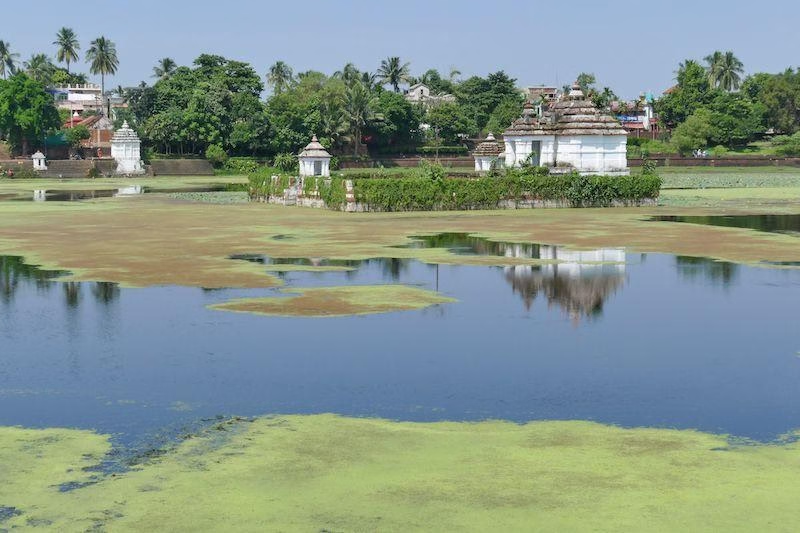
Among the sanctified shrines of Bhubaneswar, the Brahma Temple stands as a unique monument dedicated to the Creator God, Lord Brahma. Located on the eastern embankment of the sacred Bindusagar Tank in the historic Old Town, this temple is a vital spiritual node in the pilgrimage circuit of Odisha. Unlike the dense forest of Shiva temples that characterize the city, the presence of Brahma here offers a distinct theological significance.
Unlike the smaller Brahma shrines found within other complexes (such as the Lingaraj Temple), this standalone temple is significant for its distinct black chlorite image of the deity. The temple follows the late Kalingan architectural style and serves as a testament to the region’s rich religious tapestry. For devotees, a visit to the Brahma Temple is often performed in conjunction with the Lingaraj Temple and Ananta Vasudeva Temple, completing the spiritual triad of Bhubaneswar.
Phalaśruti: Why Devotees Visit
Devotees flock to this shrine seeking the blessings of the Creator. The temple is renowned for:
- Removal of Planetary Malefic Effects: Specifically for balancing the influences of Jupiter (Guru) in one’s astrological chart.
- Creative Inspiration: Students, artists, and scholars visit to seek clarity and divine ingenuity.
- Ancestral Liberation: Rituals performed here are believed to aid in the peaceful transition of ancestors, owing to the sanctity of the adjacent Bindusagar tank.
Historical Origins & Scriptural Legend
The Gajapati Legacy
According to archaeological surveys and temple records, the current structure dates back to the 15th to 16th century C.E. While Bhubaneswar is famed for its 8th-century Kesari architecture, the Brahma Temple represents a later phase of construction during the Gajapati dynasty. The temple masonry exhibits the transition from the structural rigor of the early Kalinga style to more ornate late-Kalingan elements.
📖 Related: Jagannath Temple Puri: History, Timings & Complete Guide
Sthala Purana: The Charioteer Legend
Local tradition holds a fascinating narrative regarding the temple’s origin. Legend states that Lord Brahma arrived in Bhubaneswar to attend the coronation of Lingaraj Deva. So enchanted was he by the divine atmosphere that he was requested to stay forever. Lord Brahma assured the assembly that he would return every year during the month of Chaitra (March-April) for the Ashokashtami festival.
It is further believed that Lord Brahma serves as the charioteer (Sarathy) for the Rukuna Rath of Lord Lingaraj. Consequently, this temple was erected in his honor near Bindusagar to commemorate his eternal association with the city.
Architectural Marvels
The temple is a masterpiece of late Kalingan style, characterized by its horizontal stratification and ornate carvings.
- Deity (Murti): The sanctum houses a four-handed black chlorite image of Lord Brahma. The iconography is specific: in his upper two hands, he holds the Vedas and a water vessel (Kamandalu), while the lower hands display the Rosary (Akshamala) and the Abhaya Mudra (gesture of fearlessness).
- Structure: The temple features a Rekha Deul (spire) that rises elegantly above the sanctum, sitting on a high pedestal (Pitha). The Jagamohana (porch) is decorated with intricate carvings, though less complex than the massive structures of Lingaraj.
- Surroundings: The temple is situated on the embankment of Bindusagar, a tank considered holy as it is believed to contain waters from all the sacred rivers of India.
Darshan & Ritual Logistics
The temple follows traditional Odia worship rituals (Agama) conducted by the Panda family (hereditary priests).
Daily Timings
| Session | Timings | Activity |
|---|---|---|
| Morning | 6:00 AM – 12:00 PM | Mangala Alati, Abhishekam, Mid-day Puja |
| Afternoon | 12:00 PM – 5:00 PM | Sandhya Alati preparations (Temple may close briefly) |
| Evening | 5:00 PM – 9:00 PM | Sandhya Alati, Paka Bhoga, closing rituals |
📖 Related: Patali Srikhetra Temple History & Darshan Timings: Complete 2026 Guide
*Note: Timings may vary during festivals like Ashokashtami or Kartik Purnima. Temple maintenance activities may cause temporary closures.
Sevas & Online Booking
While traditional booking is done at the temple office, the Temple Administration Committee (Odisha) is digitizing services. For the Brahma Temple specifically, devotees often coordinate with the Lingaraj Temple administration for larger rituals due to the proximity.
- Abhishekam: Performed during the morning session. Requires prior notice.
- Archana: Daily chanting of Brahma Gayatri and Purusha Sukta.
- Online Booking: For general darshan, no booking is required. For specific Sevas, check the Odisha Government Temple Administration portal or the official Lingaraj Temple website (often grouped for Old Town temples).
Major Festivals in 2026
- Ashokashtami: April 7, 2026 (The primary festival for Brahma Temple; Lord Brahma acts as the charioteer for Lingaraj).
- Shiva Ratri: February 26, 2026 (High crowds expected in Old Town).
- Kartik Purnima:: November 5, 2026 (Deepotsav celebrations around Bindusagar).
**
Practical Visitor Guidance
Visiting the Brahma Temple requires preparation due to its location in the bustling Old Town area.
- Dress Code: Modest traditional attire is recommended. Men should wear dhoti or trousers; women should wear saree or full-length dresses. Avoid shorts/t-shirts.
- Photography: Photography is generally prohibited inside the sanctum and Jagamohana. Exterior shots of the architecture are permitted.
- Mobile Lockers: Due to restrictions on electronic items near the sanctum, visitors must deposit mobile phones and bags at the designated counters outside the temple complex.
- Crowd Management: The temple can get crowded during the evening Sandhya Alati and Mondays. The best time for a peaceful darshan is 8:00 AM to 10:00 AM.
- Seasonal Advice: Bhubaneswar summers (May-June) are extremely hot. Carry water, wear cotton fabrics, and visit early in the morning to avoid heat exhaustion.
Pilgrimage Connectivity
How to Reach
- Nearest Airport: Biju Patnaik International Airport (BBI) is approximately 5 km away (15-20 min drive).
- Nearest Railway: Bhubaneswar Railway Station (BBS) is about 4 km from the Old Town.
- Road Access: The temple is located on Bindu Sagar Road, accessible via NH 16 (formerly NH 5). Auto-rickshaws and cabs are easily available from Master Canteen Square.
Nearby Sacred Sites
The Brahma Temple is part of a dense spiritual cluster. While here, you must visit:
- Lingaraj Temple (1 km): The largest temple in Bhubaneswar, dedicated to Lord Harihara.
- Ananta Vasudeva Temple (2 km): Dedicated to Lord Vishnu, this is one of the few major Vaishnava temples in the Shaiva-dominated city.
- Mukteshwar Temple (1.5 km): Famous for its torana (archway) and detailed scrollwork.
Frequently Asked Questions (FAQs)
1. Is there a VIP darshan entry at Brahma Temple?
Generally, no. The temple is relatively smaller compared to Lingaraj, and darshan queues move quickly. However, for specific ritual sponsorships or during large festivals, passes may be issued by the temple administration.
2. Can non-Hindus visit the temple?
While the Old Town area is deeply traditional, entry is generally permitted for all visitors as long as they respect the sanctity of the rituals. However, non-Hindus are traditionally restricted from entering the inner sanctum (Garbhagriha) of many Odisha temples. It is advisable to check local customs or observe from the Jagamohana.
3. What is the significance of the Bindusagar Tank?
Bindusagar is considered the ritual bathing tank for the Lingaraj Temple. The water here is believed to be medicinal and contains the essence of all holy rivers (tirthas). The Brahma Temple is situated specifically to oversee the purity of this tank.
4. Is there an entry fee for darshan?
No, general darshan is free. However, offerings and specific Sevas (like Abhishekam) have nominal charges ranging from ₹50 to ₹500 depending on the materials used.
5. What is the best time to visit Bhubaneswar for temple hopping?
The ideal time is October to February when the weather is cool and pleasant. Avoid the peak summer months (April-June) due to intense humidity.
About the Author: This guide is curated by the Lead Heritage Architect at BharatTemples.com, specializing in the preservation and documentation of India’s ancient temple heritage.
**
**
📖 Related: Varahi Deula, Chaurasi Puri: History, Timings & Complete Guide
**