Budheshwar Temple Varanasi: History, Darshan Timings & Complete Guide
Receive daily temple updates, divine darshan, and morning bhajans directly on WhatsApp.
Contents
- 1 Introduction & Spiritual Essence
- 2 Historical Origins & Scriptural Legend
- 3 Architectural Marvels
- 4 Darshan & Ritual Logistics
- 5 Practical Visitor Guidance
- 6 Pilgrimage Connectivity
- 7 Photo Gallery
- 8 Frequently Asked Questions (FAQs)
- 8.1 1. Is there a VIP Darshan entry at Budheshwar Temple?
- 8.2 2. What is the significance of offering Bilva leaves to Budheshwar?
- 8.3 3. Can I visit Budheshwar Temple during menstruation? While many temples in India have relaxed restrictions, traditional temples like Budheshwar in Varanasi generally discourage entry during menstruation as per orthodox Hindu practices. It is best to consult the local priest or respect the traditional norms of the sanctum. 4. Is the temple accessible for senior citizens?
- 8.4 5. What is the best day to visit for academic success?
- 9 Contact Details
Introduction & Spiritual Essence
Amidst the mystical labyrinth of Kashi (Varanasi), where the divine melody of Om Namah Shivaya resonates through ancient alleyways, lies the Budheshwar Temple. This shrine is not merely a place of worship but a celestial anchor for seekers of wisdom. Dedicated to Lord Shiva in his form as Budheshwar (The Lord of Intellect), this temple holds a unique place in the spiritual geography of India.
The primary deity here is a Self-Manifested (Swayambhu) Shiva Lingam. In Hindu astrology, “Budh” refers to the planet Mercury, which governs intelligence, communication, and speech. Consequently, the Budheshwar Temple is revered as the epicenter of spiritual intellect.
Phalaśruti: The Fruits of Pilgrimage
Devotees flock to this sacred sanctuary for specific spiritual benefits (Phalaśruti):
- Enhancement of Intellect (Buddhi): It is believed that worshipping here sharpens the mind, aids in academic pursuits, and grants clarity of thought.
- Removal of Planetary Doshas: Particularly those afflicted by the negative placement of Mercury in their astrological charts.
- Cleansing Ancestral Karma: According to Kashi Khand, offering prayers at Budheshwar helps in liberating ancestors from lingering karmic debts, ensuring their peace.
- Protection from Misfortune: Regular darshan is said to shield devotees from sudden losses and mental instability.
Historical Origins & Scriptural Legend
While specific construction dates for many ancient Kashi shrines are lost in the mists of time due to centuries of invasions and reconstructions, the spiritual history of Budheshwar is firmly rooted in Kashi Khand of the Skanda Purana.
The Legend of Budha (Mercury)
According to the Kashi Khand, Chapter Fifteen, a profound celestial story unfolds:
Tradition holds that Chandra (The Moon) became deeply infatuated with Tara, the wife of Brihaspati (Jupiter). Despite warnings from the Devas, Chandra took Tara with him. After a prolonged conflict mediated by Lord Rudra (Shiva), Tara was returned to Brihaspati. However, she was pregnant.
📖 Related: Kooshmandeshwar Temple Varanasi: History, Darshan Timings & Legend
Brihaspati, unwilling to raise a child born of such a union, asked Tara to discard the child. She abandoned the fully developed infant in a garden. As soon as the child touched the earth, he spoke with divine authority, threatening to curse Tara if she did not reveal the truth. Under duress, Tara confessed that Chandra was the father. Recognizing the child’s extraordinary intelligence (Buddhi), he was named Budha.
Budha sought Chandra’s permission to travel to Kashi to perform penance. He came to Kashi, installed a Shiva Lingam, and worshipped Lord Shiva for years. Pleased by his devotion, Lord Shiva appeared and granted a boon: the Lingam would be known as Budheshwar. Shiva decreed that anyone worshipping this Lingam would attain the highest level of intelligence, which would remain intact even in old age.
Architectural Marvels
The Budheshwar Temple is a stunning example of Dravidian architecture adapted to the ancient aesthetic of Kashi. Despite its modest footprint in the narrow galis of Scindia Ghat, the temple’s architectural grandeur is evident in its intricate carvings and structural sanctity.
Key Architectural Elements
- The Shikhara (Spire): The temple features a tiered Shikhara typical of South Indian Dravidian style, culminating in a Kalasham (pot-shaped finial). It signifies the ascent of the soul from the earthly plane to the divine.
- Vastu Shastra Alignment: The temple is oriented according to Vastu principles, with the Garbhagriha (sanctum sanctorum) positioned to allow the first rays of the sun to illuminate the deity during specific equinoxes.
- Sanctum Sanctorum: The Swayambhu Lingam is naturally formed, embedded in the bedrock. The inner walls are adorned with carvings depicting the story of Budha and the celestial conflict.
- Mandapas: A pillared hall (Mandapa) precedes the sanctum, allowing devotees to sit for meditation and daily Aarti ceremonies.
While the temple is not a UNESCO site, it falls under the general heritage umbrella of the Varanasi Heritage Zone. The temple is situated within the premises of the Atma Veereshwar Temple, creating a complex of intertwined shrines that is a treasure trove for heritage architects.
Darshan & Ritual Logistics
Visiting Budheshwar requires an understanding of the ritualistic schedule. Being a niche shrine in the old city, timings can be fluid, but core rituals follow a strict tradition.
Daily Timings
| Ritual / Time Slot | Timings |
|---|---|
| Morning Mangala Aarti | 05:00 AM – 06:00 AM |
| Morning Darshan | 06:00 AM – 12:00 PM |
| Midday Break (Shayan) | 12:00 PM – 03:00 PM |
| Evening Darshan | 03:00 PM – 06:00 PM |
| Evening Aarti & Shayan | 06:00 PM – 08:30 PM |
📖 Related: Chand Bhairav Temple Varanasi: History, Timings & Complete Guide
Key Sevas (Rituals)
Devotees can perform specific Sevas to invoke the blessings of Budheshwar:
- Budh Shanti Puja: A specialized ritual to calm the planetary influence of Mercury. Best performed on Wednesdays.
- Abhishekam: The bathing of the Shiva Lingam with water, milk, honey, and ghee.
- Rudrabhishek: Chanting the Rudra Sukta while performing Abhishek.
- Archana: Offering Bilva leaves and reciting the 108 names of Shiva.
Online Seva Booking
As of 2026, booking for major rituals at Budheshwar Temple is managed through the central Kashi Vishwanath Temple Trust portals. However, for daily Archana and Abhishekam, registration is often conducted on-site at the temple counter or via the local priest.
Festival Calendar 2026
Special timings apply during these dates:
- Maha Shivaratri (Feb 26, 2026): The temple remains open 24 hours. Special Rudrabhishek is performed at midnight.
- Pradosh Vrat (Monthly): Key dates include Jan 11, Jan 25, Feb 9, Feb 24. Evening Aarti is extended.
- Budh Pradosh (Feb 24, 2026): A rare confluence where Pradosh Vrat falls on a Wednesday. Highly auspicious for intelligence and career growth.
- Maha Navami (Oct 1, 2026): Special Shringar of the deity.
Practical Visitor Guidance
Varanasi’s old city is a labyrinth of narrow, winding lanes that can be challenging for first-time visitors.
Dress Code & Etiquette
- Attire: Traditional Indian wear is preferred. Men should wear dhoti or pants (no shorts), and women should cover shoulders and knees.
- Footwear: Shoes must be removed at the designated holding area outside the temple (usually a nominal fee applies).
- Photography: Photography is strictly prohibited inside the sanctum sanctorum. It is allowed in the Mandapa, but flash should be avoided to respect the sanctity.
- Mobile Phones: Silence is mandatory inside the inner sanctum. Mobile lockers are available near the Scindia Ghat entrance for a small fee.
Crowd Management & Best Times to Visit
- Best Hours: Early morning (6:00 AM – 8:00 AM) or late evening (after 7:00 PM) offer the most peaceful Darshan.
- Seasonal Advice:
- Summer (April-June): Temperatures soar above 40°C. Carry a water bottle, wear a hat, and plan visits during early mornings.
- Monsoon (July-Sept): The gullies near Scindia Ghat can get waterlogged. Wear slip-resistant footwear.
- Winter (Dec-Feb): Ideal time to visit. Mornings are misty and spiritually vibrant.
Pilgrimage Connectivity
The temple is located in the heart of the old city, making motorized access difficult but pedestrian access highly immersive.
How to Reach Budheshwar Temple
- By Air: Lal Bahadur Shastri International Airport (LBS) is approximately 25 km away. Taxis and e-rickshaws are available to reach the ghats.
- By Rail: Varanasi Junction (BSB) is 7 km away. From there, take an auto-rickshaw to Scindia Ghat.
- By Road/Water:
- Route 1 (Boat): Hire a boat from Assi Ghat or Dashashwamedh Ghat and get down at Scindia Ghat. The temple is a 3-minute walk from the ghat steps.
- Route 2 (Walk): From Godaulia crossing, walk towards Chowk. Navigate towards Scindia Ghat (near Kedareshwar Temple). The temple is located at CK-7/158.
📖 Related: Satishwar Temple Varanasi: History, Darshan Timings & Complete Guide
Nearby Sacred Sites (Pilgrimage Circuit)
Complete your spiritual journey by visiting these nearby shrines:
- Atma Veereshwar Temple: Located in the same premises. The deity here is known as the “Lord of the Soul.”
- Kedareshwar Temple: Just steps away from Scindia Ghat, a beautiful shrine dedicated to Lord Shiva with a unique water reservoir inside.
- Manikarnika Ghat: The holy cremation ground of Kashi, located nearby. It is a profound place to contemplate the cycle of life and death.
Photo Gallery
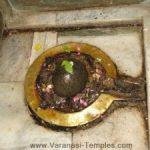
Budheshwar2-300×225, Budheshwar Temple, Varanasi
Frequently Asked Questions (FAQs)
1. Is there a VIP Darshan entry at Budheshwar Temple?
No, Budheshwar Temple does not have a formal VIP entry system. It is a community shrine where all devotees wait in the same queue. However, if you have a valid Pooja booking, the priest may facilitate a quicker entry during the ritual time.
2. What is the significance of offering Bilva leaves to Budheshwar?
According to scriptures, Lord Shiva is highly pleased by the offering of Bilva (Bael) leaves. Offering them to Budheshwar is believed to remove sins of past lives and enhance mental focus. It is said that one leaf offered with devotion is equivalent to offering a thousand lotuses.
3. Can I visit Budheshwar Temple during menstruation?
While many temples in India have relaxed restrictions, traditional temples like Budheshwar in Varanasi generally discourage entry during menstruation as per orthodox Hindu practices. It is best to consult the local priest or respect the traditional norms of the sanctum.
4. Is the temple accessible for senior citizens?
The temple is located in the narrow lanes of the old city near Scindia Ghat. While the walk is short, the lanes are uneven. For those with mobility issues, it is recommended to take a boat directly to Scindia Ghat and use a palanquin (Palki) service available at the ghat to reach the temple entrance.
5. What is the best day to visit for academic success?
Wednesday is considered the day of Lord Budha (Mercury). Visiting Budheshwar Temple on Wednesday morning, offering green moong dal, and performing a simple Abhishekam is believed to bring immense benefits for students and those in creative professions.
Contact Details
Address: Budheshwar Temple, CK-7/158, Scindia Ghat, Varanasi, Uttar Pradesh 221001.
Note: Due to the heritage nature of the site, a dedicated phone number may not be available. For inquiries regarding specific rituals, it is recommended to visit the temple administration office or consult the local head priest of the Scindia Ghat area.