
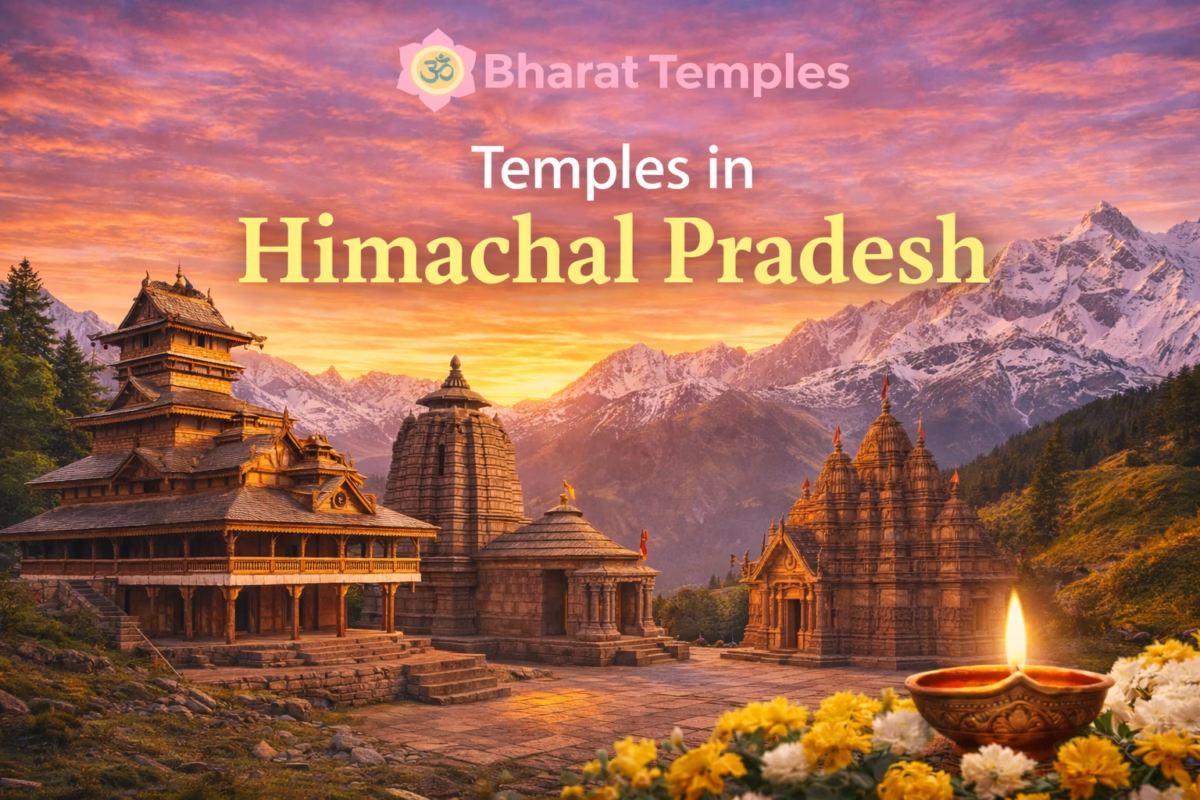
Nestled in the lofty embrace of the Himalayas, Himachal Pradesh is a land where spirituality and nature converge in sublime harmony. The state’s religious tapestry is woven with threads of ancient Hindu traditions, Tibetan Buddhist influences, and unique local folk deities, creating a sacred geography unlike anywhere else. From the stone shrines of the lower foothills to the snow-capped sanctuaries of Lahaul and Spiti, temples in Himachal Pradesh are not merely places of worship but are deeply embedded in the cultural identity of its people. The dominant traditions here are a blend of Shaivism and Shakta worship, with an emphasis on village deities (Kul Devtas) who are believed to govern the local well-being.
The architectural styles are predominantly of the Nagara order, often featuring pagoda-style roofs with intricate woodcarvings, reflecting the region’s craftsmanship. This combination of myth, mountain majesty, and distinct rituals makes Himachal a powerhouse for pilgrims seeking blessings from deities like Lord Shiva, Goddess Durga, and local guardians like Hadimba.
Top Temple Cities in Himachal Pradesh
| City/Town | Key Temple(s) | Sacred Significance | Best For |
|---|---|---|---|
| Mandi | Bhuteshwar Mahadev Temple, Panchavaktra Temple | Known as the “Varanasi of the Hills”; houses a square-shaped temple dedicated to Lord Shiva with a natural Shiva Lingam. | Architectural heritage & ancient Shiva shrines |
| Manali | Hadimba Devi Temple, Manu Temple | Home to the unique Hadimba Devi (Maharishi Manu), the presiding deity of the Kullu valley. | Mythological history & scenic mountain backdrops |
| Kullu | Raghunathji Temple | The cultural center of the Kullu valley, dedicated to Lord Rama and the focal point of the famous Kullu Dussehra festival. | Grand festivals & Rama worship |
| Kangra | Brajeshwari Devi Temple, Masroor Rock Temple | Site of immense Tantric power; the Masroor temple complex is a monolithic marvel carved out of a single rock. | Tantric traditions & rock-cut architecture |
| Chamba | Chamunda Devi Temple, Laxmi Narayan Temple | Ancient capital of the Chamba kingdom, housing some of the oldest and finest temple structures in the state. | Pahari architecture & peaceful pilgrimage |
| Spiti Valley (Tabo/Dhankar) | Tabo Monastery, Dhankar Gompa | While Buddhist, these ancient gompas serve the same spiritual function as temples, holding sacred Tantric relics. | High-altitude spirituality & Buddhist heritage |
Major Temple Festivals in Himachal Pradesh
- Kullu Dussehra – October/November: Unlike anywhere else in India, this festival lasts for seven days and involves the procession of over 200 local deities to the Raghunathji Temple grounds, culminating in the burning of the demon king Ravana’s effigy.
- Shivaratri in Mandi – February/March: Celebrated with great fervor, this week-long international festival sees the assembly of 200+ local deities in the town square, adorned with ancient parasols and finery.
- Phulaich (Kinnaur) – September: A unique festival where flowers are offered to the deity; it involves the “Mohan” (messenger of the deity) entering a trance state to relay divine messages.
- Nati Festival (Various Regions) – December/January: Though primarily a dance festival, it is deeply tied to the blessings of local goddesses and is performed in temple courtyards to ward off evil spirits.
Regional Traditions & Etiquette
Temple culture in Himachal is strictly traditional. In many temples, especially those managed by local trusts, footwear is prohibited even in the outer courtyards.
Entry for non-Hindus is restricted in several prominent temples like the Jwala Ji and Chintpurni shrines; however, Buddhist monasteries in the upper regions are generally open to all.
Dress codes are modest, with men often removing shirts (except in high-altitude areas due to cold) and women wearing sarees or full-length attire. A distinctive feature of Himachal temples is the Rath Yatra (chariot pulling) for local deities, which is a community-driven ritual. Offerings usually consist of coconut, sweets, and flowers, but strictly avoid leather items (belts, wallets) inside the sanctum. The architectural style is predominantly Pahari, characterized by multi-tiered slate roofs and towering conical spires, distinct from the stone Nagara temples of the plains.
How to Explore Temples in Himachal Pradesh
Travel Circuits: For a comprehensive experience, pilgrims can follow the “Shiva Circuit” connecting Mandi, Bhuntar, and Jhanduta. Alternatively, the “Devi Circuit” connects Chamunda, Jwala Ji, and Chintpurni.
Gateways: The primary airports are in Shimla (Jubbarhatti) and Gaggal (Dharamshala). The broad-gauge railway terminus is at Pathankot, which serves as the railhead for Kangra and Chamba.
Best Seasons: April to June is ideal for accessibility, while October to November offers clear skies and festive fervor. The winter months (Dec-Feb) see heavy snowfall in higher regions, making many shrines inaccessible.
Transport Tips: The HRTC (Himachal Road Transport Corporation) runs efficient bus services to even remote temple locations. Private taxis are available for “Char Dham” packages, but self-driving requires experience in navigating narrow mountain roads.
FAQ
Chamba and Mandi are historically rich with temples dating back to the 8th-10th centuries, preserving the classical Pahari style of architecture.
While basic modesty is required everywhere, temples in the Kangra and Chamba districts are stricter regarding traditional attire compared to the more open Buddhist monasteries in Spiti and Lahaul.
Yes, but travel times are significant due to the terrain. A well-planned itinerary focusing on the Kangra valley (Jwala Ji, Chamunda, Masroor) allows for visiting 3-4 major shrines within a week.
No. Prominent state-protected shrines like Jwala Ji and Naina Devi strictly prohibit non-Hindu entry, while smaller village temples or those under private management may be more flexible. It is advisable to check local signage or consult a local guide.