
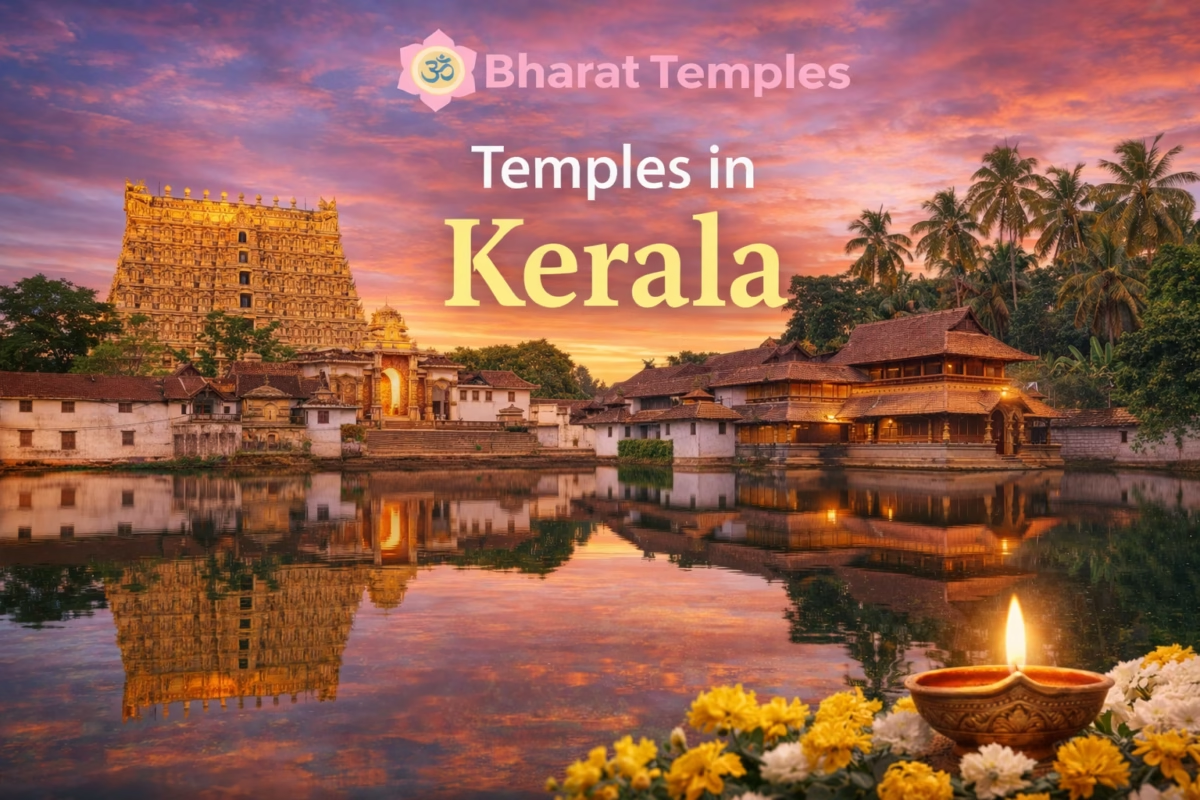
Kerala, the “God’s Own Country,” is not just a land of backwaters and lush greenery but a profound spiritual powerhouse. The landscape of temples in Kerala is uniquely defined by its distinct architectural style—predominantly the Kerala style (with Dravidian influences)—characterized by gabled roofs, extensive copper-plate roofing, and intricate woodwork. Unlike the towering gopurams of Tamil Nadu, Kerala temples often feature a ‘Sreekovil’ (sanctum sanctorum) that is typically square and centrally located.
The state is a confluence of major spiritual traditions. It is a stronghold of Vaishnavism (worship of Vishnu), particularly in the central regions, and Shaivism (worship of Shiva) in the north. Additionally, Kerala has a unique tradition of Bhadrakali worship and ancient animistic traditions absorbed into the mainstream, such as the Theyyam ritual. Temples here are not just places of worship but centers of art, music (Sopana Sangeetham), and community life. Whether you are seeking the blessings of Lord Krishna at Guruvayur, undertaking the arduous pilgrimage to Sabarimala, or marveling at the ancient murals of Parassinikadavu, the temples in Kerala offer a deeply atmospheric and soul-stirring experience.
Top Temple Cities in Kerala
While Kerala is dotted with thousands of temples, a few cities serve as the epicenters of pilgrimage and culture. Use this guide to plan your route through the state’s spiritual hubs.
| City/Town | Key Temple(s) | Sacred Significance | Best For |
|---|---|---|---|
| Guruvayur | Guruvayur Sree Krishna Temple | Known as the “Dwarka of the South,” housing the four-armed form of Lord Krishna. | Weddings, Choroonu (first rice feeding), classic Kerala temple architecture. |
| Sabarimala | Sree Dharma Sastha Temple | One of the largest annual pilgrimage centers in the world, dedicated to Lord Ayyappan. | Vratham (41-day austerity), Makaravilakku festival, trekking. |
| Thrissur | Vadakkunnathan Temple | Ancient temple dedicated to Shiva; UNESCO heritage site. | The grand Thrissur Pooram festival, ancient murals. |
| Kodungallur | Kodungallur Bhagavathy Temple | Renowned for the Bharani festival, dedicated to Goddess Bhadrakali. | Shakti worship, unique rituals involving ‘literary criticism’ (Vadakkekottaram). |
| Thiruvananthapuram | Sree Padmanabhaswamy Temple | One of the 108 Divya Desams; famous for its massive stone structures and vaults. | Offering ‘Anayasam’ (prostrating from a distance), Dravidian architecture. |
Major Temple Festivals in Kerala
- Thrissur Pooram (April/May): The “Festival of Festivals” held at Vadakkunnathan Temple. It is a visual spectacle of caparisoned elephants, percussion ensembles (Kala), and a spectacular fireworks display.
- Makaravilakku (January 14): The climax of the Sabarimala pilgrimage. It is believed that Lord Ayyappa appears as a light (Jyoti) on the hill, marking the end of the season.
- Kottiyoor Vysakha Mahotsavam (May/June): A 27-day festival held at Kottiyoor Temple on the banks of the Bavali river. It is considered one of the most orthodox and pure rituals in Kerala, where millions of ‘Vavali’ sticks are offered to the deities.
- Attukal Pongala (February/March): Held at the Attukal Bhagavathy Temple in Thiruvananthapuram. It holds the Guinness World Record for the largest gathering of women for a single event, where millions cook rice and jaggery offerings on brick stoves.
Regional Traditions & Etiquette
Understanding the local customs is essential for a respectful visit to temples in Kerala.
- Dress Code: Strict adherence to traditional attire is mandatory. Men must remove shirts and wear a Mundu (dhoti) around the waist. Women typically wear sarees or sets of mundu and neriyathu. Pants and shorts are generally prohibited inside the sanctum.
- Offerings: Unlike other regions, Tulsi (Holy Basil) is rarely offered to Shiva or Ayyappa temples in Kerala; instead, Vilva (Bilva) leaves are used. Breaking coconuts is a standard offering, but specific temples (like Sabarimala) have restrictions on carrying items like ‘Irumudi’.
- Caste and Gender Restrictions: Some orthodox temples (like Guruvayur) traditionally restricted entry to Hindus of specific backgrounds, though legal rulings have changed this landscape. However, at Sabarimala, entry for women of menstruating age (10-50) remains a subject of legal and religious debate.
- Prayoga: Sopana Sangeetham (music performed on the steps of the temple) is a vital part of the ritual. Silence is strictly observed within the inner sanctum.
How to Explore Temples in Kerala
Kerala’s geography dictates travel. The Western Ghats separate the north from the south, making travel slower but scenic.
- Travel Circuits:
- The Central Circuit: Combine Kochi (for historical context), Thrissur (Vadakkunnathan), and Guruvayur. This is the easiest region to navigate.
- The Malabar Circuit: Visit the ancient Kodungallur temple and the coastal Mahabs (Muzhappilangad) for a mix of spirituality and beaches.
- The Southern Circuit: Thiruvananthapuram (Padmanabhaswamy) serves as a gateway to the southernmost temples. This is the hub for temple festivals in winter.
- Best Seasons: October to March is ideal. The weather is cool and dry, coinciding with the major temple festival season. Avoid the heavy monsoon (June-August) if you plan on travelling frequently, as roads to hill temples like Sabarimala can be treacherous.
- Transport Tips:
- Kerala State Road Transport Corporation (KSRTC) runs special ‘Temple Tourism’ buses on specific routes (e.g., Guruvayur-Thrissur).
- Rail connectivity is excellent; major towns have railway stations.
- App-based taxis are available in cities, but hiring a car is best for visiting remote temples in the ghats.
FAQ
Thrissur and Kodungallur are contenders, with history dating back to the Chera dynasty. Thrissur’s Vadakkunnathan Temple is widely considered one of the oldest in the state, established by Parasurama.
The dress code is generally uniform: traditional attire is required. However, minor variations exist. For instance, while a full Mundu is mandatory in Guruvayur, some smaller village temples might allow lungis, though a shirt is almost always prohibited for men inside the sanctum.
Yes, if you stick to the Central or Southern circuits. You can easily cover Guruvayur, Thrissur, and Palakkad in a week. However, covering the northern temples and Sabarimala in a single week is physically demanding due to travel distances and trekking requirements.
Generally, non-Hindus are permitted in most temples administered by the Devaswom Board (like Guruvayur and Sabarimala), but they are not allowed inside the sanctum sanctorum (inner chamber) and must adhere to the dress code. Some ancient private temples may have stricter entry norms.