
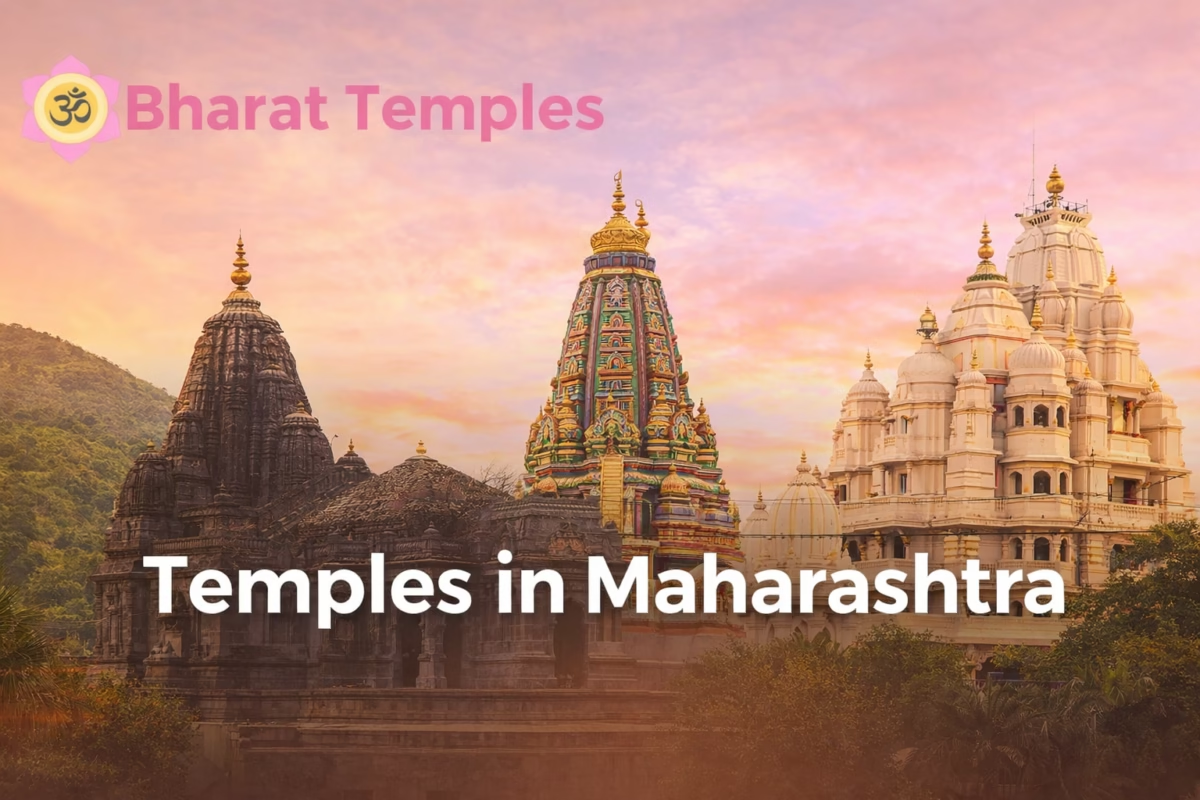
Sacred Landscapes of Maharashtra: A Pilgrim’s Guide to Its Divine Temples
Maharashtra, the land of the Marathas, is not just an economic powerhouse but a profound spiritual crucible where history, mythology, and faith converge. The state is dotted with over 33,000 registered temples, each echoing tales from the Puranas and the valor of the Bhakti movement. From the rugged forts of the Western Ghats housing ancient shrines to the bustling holy towns that attract millions annually, temples in Maharashtra offer a diverse spiritual palette.
The region is a significant stronghold for Shaivism and Waishnavism, with a unique blend of Ganapatya traditions. Architecture here spans from the rock-cut marvels of the Elephanta Caves and Ajanta-Ellora to the majestic Hemandathi style of the Yadava dynasty in Verul and the pristine white marble of the Warkari sect in Pandharpur. Whether you seek the healing solace of Shirdi, the divine mother’s protection in Tuljapur, or the cosmic dance of Shiva in Bhimashankar, the temples of Maharashtra are gateways to liberation and inner peace.
Top Temple Cities in Maharashtra
| City/Town | Key Temple(s) | Sacred Significance | Best For |
|---|---|---|---|
| Sangli / Tuljapur | Tulja Bhavani Temple | Shakti Peetha; Kuldevi of the Bhonsle dynasty. | Seeking protection & power (Shakti). |
| Shirdi | Sai Baba Temple | Abode of Sri Sai Baba; universal faith. | Healing, Charity, and Surrender. |
| Pandharpur | Vitthal Rukmini Temple | Home of Lord Vithoba (Vishnu/Krishna). | Bhakti movement & Warkari pilgrimage. |
| Nasik / Trimbakeshwar | Trimbakeshwar Jyotirlinga | One of the 12 Jyotirlingas of Shiva. | Moksha & Ancestral rites (Pind Daan). |
| Bhimashankar | Bhimashankar Jyotirlinga | Source of the Bhima River; Ranks 5th Jyotirlinga. | Nature lovers & Shiva devotees. |
| Mumbai | Siddhivinayak, Mahalaxmi | Modern spiritual hubs; Siddhivinayak is Ashtavinayak Lord. | Urban pilgrims & wish fulfillment. |
Major Temple Festivals in Maharashtra
- Chaitra Gudhi Padwa (March/April): The Marathi New Year marked by the erection of the Gudhi (brahmadhwaj) symbolizing the victory of the mind. Celebrated with devotion in all Ganpati and Shiva temples.
- Sanjhi Utsav (September/October): Celebrated extensively in Pandharpur and Alandi, this festival marks the Warkari pilgrimage where devotees walk barefoot carrying Palkhis (palanquins) of Saints Dnyaneshwar and Tukaram.
- Shirdi Sai Baba Punyatithi (October): The death anniversary of Sai Baba is celebrated as a festival of life, drawing devotees for the Chavadi procession and Maha Puja.
- Ellora Festival (December): Organized by the Maharashtra Tourism Development Corporation (MTDC), this cultural festival celebrates the artistic and spiritual heritage of the Kailasa temple at Ellora.
Regional Traditions & Etiquette
- Prasadam Customs: Unlike South India, coconut and modak (sweet dumplings) are prime offerings to Ganesha. In Shirdi, the offering is usually coconut, flowers, and the act of Dakshina (donation).
- Footwear: Most temples in rural Maharashtra require you to leave footwear outside with a token system. Shoes are strictly prohibited inside the inner sanctum.
- Architecture: Many temples in Maharashtra follow the Hemandathi style (intricate stone carvings on black basalt) seen in Aundha Nagnath and Verul. Shikharas (spires) here are typically curvilinear but distinct from the Nagara style of North India.
- Wari/Palkhi: If visiting during the monsoon (June-Sept), be aware that the roads to Pandharpur may be crowded by millions of pilgrims walking the Wari. It is a beautiful cultural experience but requires route planning.
How to Explore Temples in Maharashtra
Suggested Circuits
- The Ashtavinayak Circuit: A 8-day pilgrimage covering eight ancient Ganesha temples (Modak, Theur, Lenyadri, Ozar, Ranjangaon, Morgaon, Siddhatek, Mahad) forming a loop around Pune.
- The Jyotirlinga Trail: Combine Bhimashankar, Trimbakeshwar, and Grishneshwar (near Ellora) to cover three major Jyotirlingas in a single trip.
- The Sai Circuit: Shirdi (Main), Shani Shingnapur (Aurangabad), and Triambakeshwar (Nasik) for a complete spiritual recharge.
Travel Logistics
Gateways: Pune and Mumbai are the two major international airports and railway hubs. Aurangabad serves the Marathwada region (Ellora/Ajanta/Shani Shingnapur).
Best Season: October to February offers cool weather, ideal for temple hopping. The monsoon (June-August) is lush but travel can be difficult in the ghats.
Transport: State-run MSRTC buses connect almost every village. For holy shrines like Shirdi and Pandharpur, special luxury buses run from major cities. Private taxis are common but negotiate fares for hill stations like Bhimashankar.
FAQ: Temples in Maharashtra
Nasik and Pune districts host some of the oldest shrines. However, Verul (Ellora) contains the Kailasa temple, carved in the 8th century, which represents one of the most ancient and massive rock-cut architectural feats.
While there is no strict dhoti mandate in most generic temples (unlike some South Indian shrines), deities like Shani Shingnapur are unique as women are traditionally not allowed near the sanctum (though this is debated and periodically challenged). For Jyotirlingas, traditional attire is preferred but not strictly enforced.
Yes. A well-planned route covering Mumbai (Siddhivinayak) -> Pune (Ashtavinayak start) -> Shirdi -> Trimbakeshwar -> Bhimashankar is a very popular 6-7 day itinerary covering both Shiva and Ganesha shrines.
Generally, temples like Siddhivinayak and Shirdi are open to people of all faiths. However, certain ancient temples like the Trimbakeshwar Jyotirlinga restrict entry to non-Hindus in the inner sanctum. It is advisable to check specific temple trust websites before visiting.