
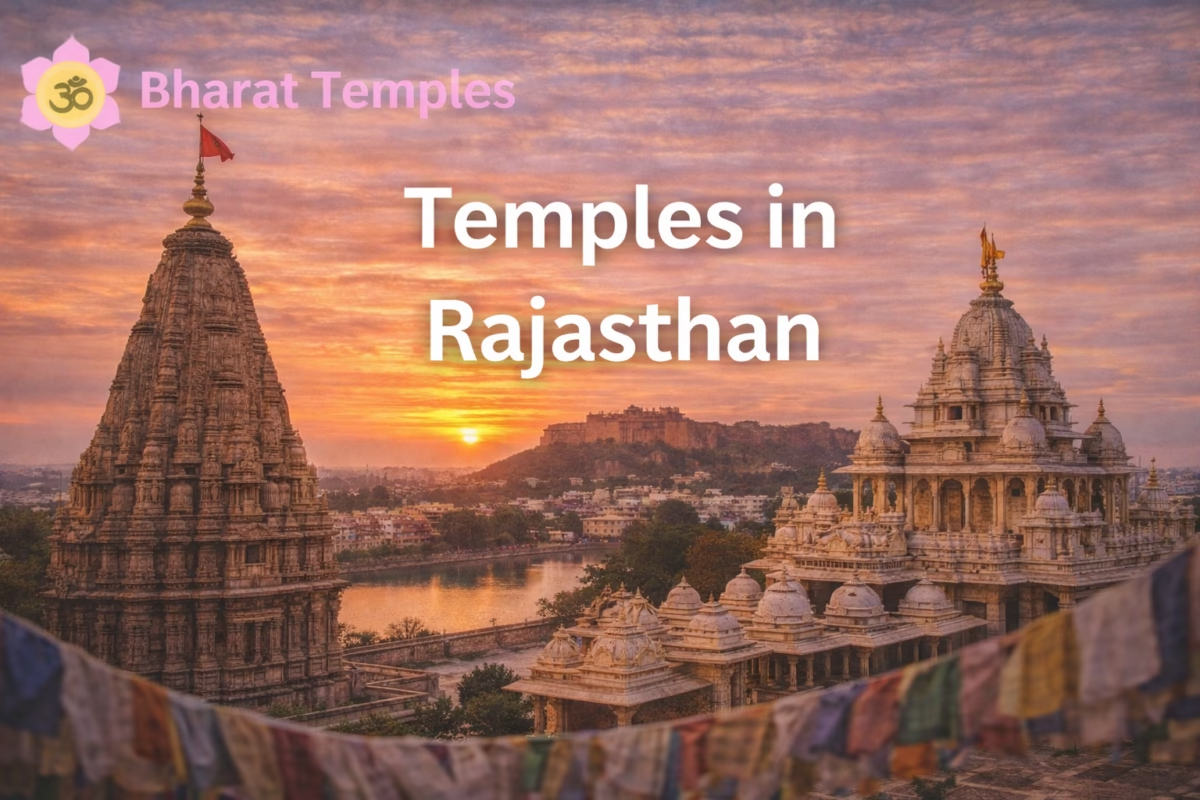
Rajasthan, the Land of Kings, is renowned for its majestic forts and golden deserts, but beneath its warrior history lies a profound spiritual tapestry. The temples in Rajasthan are a testament to the region’s deep-rooted devotion, showcasing architectural brilliance that ranges from intricate marble carvings to towering Rajputana spires. While the state is predominantly Hindu, its temples also embrace Jain traditions, reflecting a harmonious cultural syncretism.
From the sacred shrines of Shekhawati to the pilgrimage hubs of Mewar, these temples serve as centers of faith for millions. Whether you seek the blessings of Lord Shiva, Lord Vishnu, or the fierce forms of Goddess Shakti, Rajasthan offers a diverse spiritual landscape. The temple architecture here—often featuring Maha Mandapas and Shikharas—blends Nagara styles with local artistic sensibilities, making them must-visit sites for both devotees and heritage enthusiasts.
Top 5 Famous Temples in Rajasthan
1. Dilwara Jain Temples, Mount Abu
Renowned globally for their breathtaking marble craftsmanship, the Dilwara Temples are a pinnacle of Jain architectural heritage. Built between the 11th and 13th centuries, these five temples are dedicated to various Jain Tirthankaras. The intricate ceiling designs and the use of mirror-work marble panels are unparalleled. Explore temples in Mount Abu for a complete guide.
2. Khatu Shyamji Temple, Sikar
One of the most visited pilgrimage sites in Rajasthan, this temple is dedicated to Khatu Shyam, an incarnation of Lord Krishna (Barbarika). The Chhappan Bhog offering and the annual Phalgun Mela draw devotees from across the country. The architecture features a beautiful Mandir built with white marble.
3. Ranakpur Jain Temple, Pali
Located in the Aravalli hills, this temple is an architectural marvel dedicated to Tirthankara Rishabhadev (Adinath). Famous for its 1,444 uniquely carved pillars—no two of which are alike—it represents the zenith of Jain temple architecture. The temple is supported by 29 halls and features intricate carvings of celestial bodies.
4. Eklingji Temple, Udaipur
Dedicated to Lord Shiva as the ruling deity of the former Mewar kingdom, Eklingji is a complex of 108 temples within walled precincts. The black stone idol of Shiva in the four-faced form (representing Shiva, Brahma, Vishnu, and Surya) is the main attraction. It remains the family deity of the Mewar royals. Explore temples in Udaipur.
5. Shri Brahma Temple, Pushkar
Pushkar is home to one of the very few temples in the world dedicated to Lord Brahma, the creator god. Located on the banks of the sacred Pushkar Lake, the temple features a red spire and a unique image of Hans (the goose). It is a focal point during the famous Pushkar Camel Fair.
Darshan & Aarti Timings (General Guide)
| Temple | Morning Timings | Evening Timings | Key Aarti |
|---|---|---|---|
| Dilwara Temples (Mount Abu) | 6:00 AM – 12:00 PM | 2:30 PM – 5:30 PM | Morning Puja |
| Khatu Shyamji (Sikar) | 4:30 AM – 12:30 PM | 5:00 PM – 10:00 PM | Mangla Aarti |
| Ranakpur Jain Temple | 6:00 AM – 12:00 PM | 2:30 PM – 6:00 PM | Maha Aarti |
| Eklingji Temple (Udaipur) | 4:30 AM – 6:30 AM | 5:00 PM – 7:00 PM | Kalasha Aarti |
| Brahma Temple (Pushkar) | 6:30 AM – 1:30 PM | 3:00 PM – 8:30 PM | Sandhya Aarti |
Note: Timings may vary slightly during festivals. It is advisable to check locally.
How to Reach Rajasthan
Air: Major airports are located in Jaipur (Jaipur International Airport), Udaipur (Maharana Pratap Airport), and Jodhpur (Jodhpur Airport). These connect to Delhi, Mumbai, and major Gulf countries.
Rail: Rajasthan has an extensive railway network. Jaipur, Udaipur, Jodpur, and Ajmer are key junctions connected by premium trains like the Palace on Wheels and Shatabdi Express.
Road: The state is well-connected by National Highways. RSRTC (Rajasthan State Road Transport Corporation) runs regular buses connecting all major temple towns.
Best Time to Visit: October to March is ideal. Summers (April-June) are extremely hot, and monsoon (July-September) brings humidity, though the landscape turns green.
Frequently Asked Questions
Generally, photography is prohibited inside the sanctum sanctorum and inner halls of major temples in Rajasthan. However, you may be allowed to take photos in the outer courtyards. Always look for signboards or ask the temple authorities.
Yes, modest attire is expected. Both men and women should cover their shoulders and knees. It is recommended to remove footwear before entering temple premises; designated shoe keeping areas are usually available for a nominal fee.
While there are many, Eklingji Temple near Udaipur is the most significant Shiva temple in Rajasthan. Additionally, the Neelkanth Mahadev Temple in Rajsamand is highly revered.
The Dilwara temples are unique for their use of white marble and incredibly intricate carving designs. Unlike many temples that focus on exterior decoration, the Dilwara temples emphasize interior beauty, with ceiling patterns that are mesmerizing.