
Contents
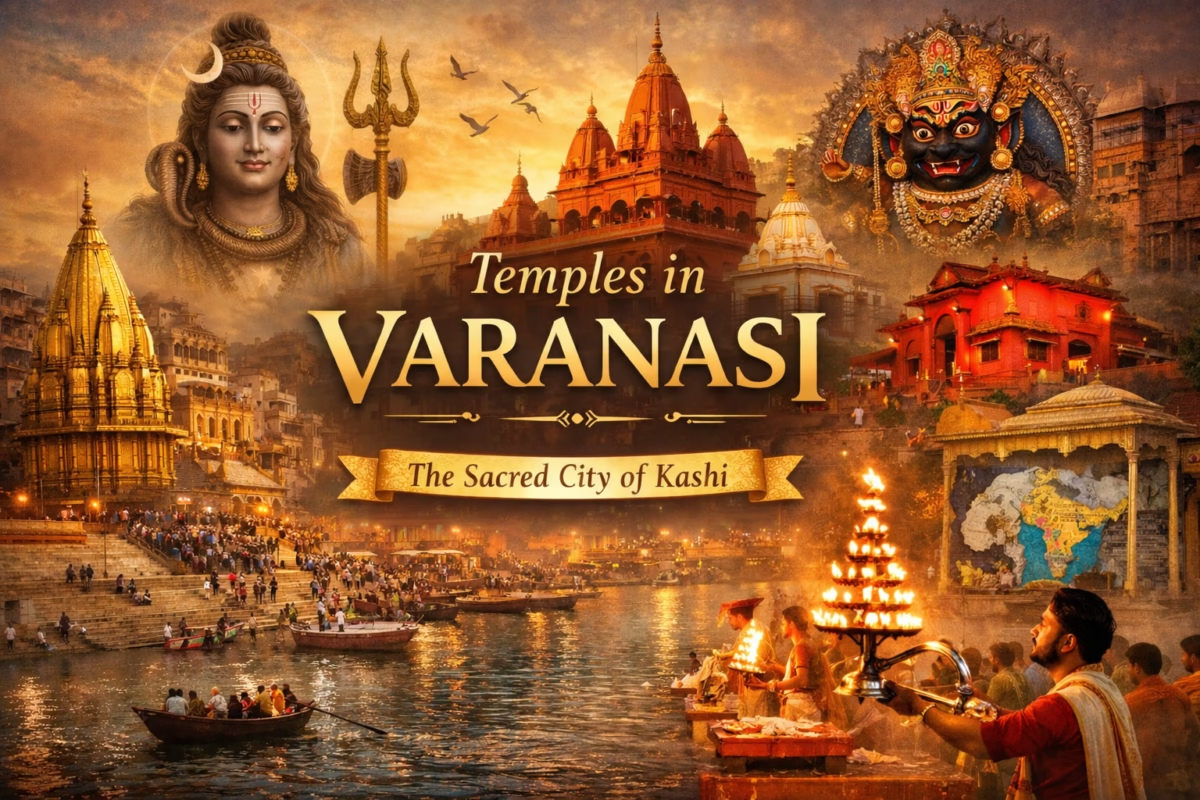
Varanasi, also known as Kashi or Banaras, is not just a city—it is a living embodiment of Sanatana Dharma. Regarded as the oldest continuously inhabited city in the world, Varanasi holds an unmatched spiritual magnetism. Scriptures proclaim that Lord Shiva himself resides here, whispering the Taraka Mantra into the ears of those who attain liberation on this sacred land.
For pilgrims, Varanasi is the moksha capital of India. Every alley resonates with mantras, every ghat reflects centuries of devotion, and every temple preserves a layer of divine history. From the sacred Jyotirlinga of Kashi Vishwanath to powerful Shakti peethas and ancient Hanuman temples, Kashi is a complete tirtha ecosystem—Shiva, Shakti, Vishnu, Ganesha, Surya, and Bhairava are all worshipped here in their most potent forms.
This page is your authentic, pilgrim-first guide to the most important temples in Varanasi, including history, rituals, darshan timings, and practical travel insights—crafted especially for devotees planning a meaningful yatra.
Top 5 Must-Visit Temples in Varanasi
1. Shri Kashi Vishwanath Temple (Jyotirlinga)
Deity: Lord Shiva (Vishwanath – Lord of the Universe)
History & Mythology:
One of the 12 Jyotirlingas, Kashi Vishwanath is the spiritual nucleus of Varanasi. It is believed that worship here grants liberation from the cycle of birth and death. The temple has been destroyed and rebuilt multiple times, symbolizing Sanatana Dharma’s resilience.
Why it’s a must-visit:
- Supreme Jyotirlinga of Shiva
- Connected to Gyanvapi Tirtha
- Integral to the Kashi Panchakroshi Yatra
Pilgrim Tip: Traditional dhoti/kurta is preferred. Phones are strictly prohibited inside.
2. Kaal Bhairav Temple
Deity: Kaal Bhairav (Kotwal of Kashi)
History & Mythology:
Kaal Bhairav is considered the guardian deity of Varanasi. It is said that no pilgrim can stay in Kashi without his permission.
Why it’s a must-visit:
- Completion of Kashi Yatra is incomplete without Bhairav darshan
- Unique offering of mustard oil
Ritual Insight: Devotees whisper their wishes directly into the deity’s ear.
3. Sankat Mochan Hanuman Temple
Deity: Lord Hanuman
History & Mythology:
Founded by Goswami Tulsidas, the composer of Ramcharitmanas. Known for removing mental distress and planetary afflictions.
Why it’s a must-visit:
- Powerful for Shani & Rahu dosha
- Tuesdays & Saturdays are highly auspicious
Dress Code Note: Modest attire recommended; avoid shorts.
4. Durga Kund Temple
Deity: Goddess Durga
History & Mythology:
An ancient Shakti temple where Goddess Durga is believed to have manifested herself. The kund (water tank) once hosted crocodiles, symbolizing divine protection.
Why it’s a must-visit:
- Major Navratri pilgrimage site
- One of the most powerful Devi temples in Kashi
5. Bharat Mata Mandir
Deity: Mother India (Bharat Mata)
History & Significance:
Unique temple housing a marble relief map of undivided India. No idols—only patriotism and cultural unity.
Why it’s a must-visit:
- Spiritually uplifting yet non-ritualistic
- Symbol of national consciousness
Darshan & Aarti Timings (Indicative)
| Temple Name | Morning Darshan | Evening Aarti |
|---|---|---|
| Kashi Vishwanath | 4:00 AM – 12:00 PM | 7:00 PM – 9:00 PM |
| Kaal Bhairav | 5:30 AM – 1:00 PM | 4:00 PM – 9:00 PM |
| Sankat Mochan | 5:00 AM – 12:00 PM | 4:00 PM – 9:00 PM |
| Durga Kund | 6:00 AM – 12:00 PM | 4:00 PM – 8:00 PM |
| Bharat Mata Mandir | 9:00 AM – 7:00 PM | No Aarti |
Note: Timings may change during festivals, Shravan Maas, and special tithis.
How to Reach Varanasi
✈️ Nearest Airport
Lal Bahadur Shastri International Airport (VNS) – ~25 km
Well connected to Delhi, Mumbai, Bengaluru, Kolkata.
🚆 Nearest Railway Station
Varanasi Junction (BSB) & Banaras (Manduadih) Station
Excellent connectivity across India.
🛕 Best Time to Visit
- October to March – Ideal weather for temple visits
- Shravan Maas (July–August) – Peak Shiva devotion (expect heavy crowds)
- Dev Deepawali & Mahashivratri – Spiritually powerful but crowded