Kirateshwar Temple, Varanasi: History, Timings & Darshan Guide
Receive daily temple updates, divine darshan, and morning bhajans directly on WhatsApp.
Contents
- 1 Kirateshwar Temple, Varanasi: A Pilgrim’s Guide to the Hidden Shiva Ling
Kirateshwar Temple, Varanasi: A Pilgrim’s Guide to the Hidden Shiva Ling
Within the sacred labyrinth of Kashi (Varanasi), where every stone resonates with spiritual vibration, lies a sanctuary often missed by the hurried traveler but revered by the devoted seeker. The Kirateshwar Temple is not merely a structure of brick and mortar; it is a step into the celestial geography described in the ancient Kashi Khand of the Skanda Purana. Here, amidst the bustling lanes near Chowk, a Shiv Ling pulsates with the energy of the Kirat ganas—guardians sent by Lord Shiva himself.
| Date built: | – |
|---|---|
| Deity: | Kirateshwar |
| Architectural style: | Hindu Temple architecture |
| Major festivals | – |
| Locale: | Varanasi |
| District:: | Varanasi |
| Address: | – |
| Phone | – |
1. Introduction & Spiritual Essence
The Deity: Kirateshwar
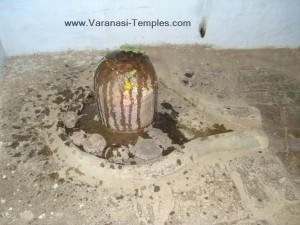
The presiding deity of this sanctum is Lord Shiva in his form as Kirateshwar. Unlike the towering, cosmic forms of Shiva found elsewhere, this manifestation is deeply rooted in the lore of Shiva’s ganas (attendants). The temple houses a Shiv Ling believed to be installed by the Kirat ganas—divine beings dispatched by the Lord to Kashi. In the traditional pantheon, the Ling is considered Swayambhu (self-manifested) or installed by divine agency, possessing immense spiritual potency.
Phalaśruti: The Fruit of Devotion
Why do pilgrims seek the sanctum of Kirateshwar? The Kashi Khand offers profound promises to the devotee:
- Removal of Fear: Chapter 55 of the Kashi Khand explicitly states that devotees who worship the Kirateshwar Ling shed all fears from their lives.
- Moksha (Liberation): As per Chapter 69, worshiping Kirateshwar located behind Bharabhooteshwar grants liberation from the cycle of rebirth (Punarjanma). It is particularly significant for cleansing ancestral karma.
📖 Related: Ratneshwar Mahadev Temple, Varanasi: History, Darshan Timings & Complete Guide
2. Historical Origins & Scriptural Legend
The Divine Conflict
According to the oral traditions preserved by the priests and local residents, the origin of Kirateshwar is intertwined with the celestial history of Kashi. Tradition holds that Lord Shiva, residing in Mandarachal, sent batches of his Shiv Gans to Kashi to create disturbances and distract King Divodas, the mythological ruler of the region.
Among these batches, one Shiv Gana named Kirat arrived in the ancient city. To establish his presence and power, Kirat installed a Shiv Ling here. This Ling came to be revered as Kirateshwar, the Lord of the Kirats. While specific dynasty records (such as Gupta or Medieval era builders) are not explicitly documented in common inscriptions, the temple’s existence is validated through centuries of mention in local folklore and religious texts.
Sthala Purana
The local legend suggests that the temple’s energy is amplified by its proximity to other ancient shrines. The narrative of the Kashi Khand weaves this temple into the very fabric of the city’s spiritual geography, marking it as a specific spot where the boundary between the physical and divine realms thins.
3. Architectural Marvels
Underground Sanctum & Vastu
Unlike the soaring spires of Nagara-style temples, Kirateshwar presents a unique architectural experience. It is located underground (below street level). This architectural choice is significant in Vastu Shastra, often indicating a direct connection to the netherworld or the subconscious energies of the earth. The entrance leads down into the sanctum, creating a feeling of entering a cave or a hidden chamber.
Structure and Style
The temple follows the traditional Hindu Temple architecture typical of the Varanasi region. The Garbhagriha (sanctum sanctorum) is compact, focusing the devotee’s attention entirely on the Ling. The stone masonry is typical of ancient Kashi structures, often heavily worn by time and ritual oiling.
While it may not feature elaborate external Shikharas (spires) due to its subterranean nature, the intricate carvings and the placement of the Mandapa (pillared hall) adhere to the cardinal directions, ensuring energy flow aligns with the rising sun.
4. Darshan & Ritual Logistics
Since this is a heritage site embedded within residential and commercial zones, timings can be fluid, dependent on the resident priest. However, the general schedule for pilgrims is as follows:
📖 Related: Nakshatreswar Temple History & Darshan Timings: Varanasi Temple Guide
| Session | Timings | Activity |
|---|---|---|
| Morning Darshan | 06:00 AM – 12:00 PM | Morning Aarti & Abhishekam |
| Afternoon Break | 12:00 PM – 03:00 PM | Closure (Cleaning/Priest Rest) |
| Evening Darshan | 03:00 PM – 09:00 PM | Evening Aarti & Shringar |
Key Sevas (Rituals) & Online Booking
As a localized shrine, major Sevas are conducted on-site rather than via digital portals. However, for the broader Kashi Vishwanath circuit (which often includes Kirateshwar in itinerary planning), the Kashi Vishwanath Temple official website offers online booking for Abhishekam and Archana.
- Abhishekam (Ritual Bathing): Performed with water, milk, and honey. Best time: Morning 7:00 AM.
- Archana (Recitation of Names): Performed for individual family welfare. Can be done daily.
Festival Dates 2026
Special celebrations occur during Mahashivratri and the month of Shravan:
- Maha Shivratri: February 26, 2026 (Extended night-long Darshan).
- Shravan Mondays: July 6, 13, 20, 2026 (High volume of devotees; arrive by 5:00 AM).
- Pradosh Vrat: 14th January and 29th January 2026 (Evening rituals).
5. Practical Visitor Guidance
Dress Code & Etiquette
Visitors should maintain traditional modesty. Men are advised to wear dhotis or trousers (no shorts). Women should wear sarees, salwar kameez, or full-length skirts. The sanctum is intimate; maintaining a quiet, meditative demeanor is essential.
Photography & Security
Photography inside the sanctum is strictly prohibited to preserve the sanctity of the deity. Mobile phones are allowed but should be kept on silent. Given the underground nature, heavy luggage is not advised; carry only essentials.
Crowd Management & Accessibility
The temple is located in the dense lanes of Varanasi (near Chowk). Accessibility is challenging for those with mobility issues due to stairs leading down to the sanctum.
- Best Time to Visit: Weekdays between 10:00 AM and 2:00 PM.
- Seasonal Advice: Summer (April-June) in Varanasi is hot; carry a water bottle. Monsoon (July-Sept) may make the steps slippery—proceed with caution.
6. Pilgrimage Connectivity
How to Reach Kirateshwar Temple
The temple is a hidden gem, requiring navigation through the famous labyrinth of Varanasi.
Exact Location: Ck.52/15, Near Bharabhooteshwar, Raja Darwaja, Varanasi.
- Start Point: Proceed from Chowk towards Neechibaug.
- Landmark: Pass Chowk Police Station and take the left turn toward Raja Darwaja.
- Navigation: Walk 200 yards and take a right turn. Look for Shyamlal Khatri Attar Merchants (a famous perfumery shop).
- Destination: Opposite the Attar shop is premises Ck. 52/15. Enter the large gate (Narayan Agricultural Industries) to find the underground temple.
📖 Related: Mangal Vinayak Temple Varanasi: History, Darshan Timings & Guide
Transport: Auto-rickshaws can drop you at Raja Darwaja. From there, a 5-minute walk is required. During peak festivals, vehicles may be restricted to Chowk-Neechibaug road.
Nearby Sacred Sites (Pilgrimage Circuit)
To maximize your spiritual journey, include these nearby temples (within 0.5 km radius):
- Bharat Mata Temple: Located a short distance away, featuring a relief map of undivided India carved in marble.
- Shri Durga Temple (Durga Kund): A vibrant red temple dedicated to Goddess Durga, roughly 1.5 km away.
- Kashi Vishwanath Jyotirlinga: The main hub of spiritual activity in Varanasi, approximately 1.5 km from this location.
7. Frequently Asked Questions (FAQs)
Is there a VIP Darshan entry?
No, Kirateshwar is a community shrine. There is no VIP entry. The darshan is egalitarian, and devotees are served in the order of arrival. However, contacting the local priest (Pujari) for specific ritual requests can facilitate a quicker entry for donation-based services.
What is the significance of the Attar shop mentioned?
Shyamlal Khatri Attar Merchants are legendary in Varanasi. While the temple is the spiritual center, the shop serves as a practical landmark. Perfumes (Attar) are traditionally offered to deities in Shiva temples, making this location syncretic.
Is the temple accessible for senior citizens?
The sanctum is underground and requires descending stairs. While the devotees assisting at the gate can help, it is not fully wheelchair accessible without significant assistance.
What is the historical age of the temple?
While no stone inscription specifies the exact century, the references in the Kashi Khand suggest the temple’s origins trace back to the era of the Puranic oral traditions. The current structure likely dates back several centuries, renovated over time by local devotees.
Can I perform Rudrabhishek here?
Yes, Rudrabhishek can be performed, but prior notice to the priest is recommended to arrange the necessary materials (milk, bilva leaves, flowers). It is best done in the morning hours.
Where can I park my vehicle?
Street parking is extremely limited near Raja Darwaja. It is advisable to park near Chowk or Dashashwamedh Ghat and take a rickshaw or walk to the temple.
Disclaimer: Timings and contact details are subject to change based on local administration and priest schedules. Please verify locally before planning your visit.