
Contents
- 1 Pawaneshwar Temple Varanasi: A Definitive Pilgrimage Guide
- 1.1 1. Introduction & Spiritual Essence
- 1.2 2. Historical Origins & Scriptural Legend
- 1.3 3. Architectural Marvels
- 1.4 4. Darshan & Ritual Logistics
- 1.5 5. Practical Visitor Guidance
- 1.6 6. Pilgrimage Connectivity
- 1.7 7. Frequently Asked Questions (FAQ)
- 1.8 Architecture
- 1.9 Legend / Local stories
- 1.10 Photo Gallery
- 1.11 How to Reach:
- 1.12 Contact Details
Pawaneshwar Temple Varanasi: A Definitive Pilgrimage Guide
1. Introduction & Spiritual Essence
Deep within the ancient bylanes of Varanasi lies the Pawaneshwar Temple, a sanctuary of profound spiritual energy. While often overshadowed by the more famous Kashi Vishwanath, this Jyotirlinga site offers a unique, undisturbed connection to Lord Shiva. The primary deity here is Pawaneshwar Mahadev, a Swayambhu (self-manifested) lingam.
Phalaśruti: The Fruits of Devotion
According to the sacred Kashi Khand of the Skanda Purana, worshipping the Pawaneshwar Lingam yields immense spiritual benefits. The Phalaśruti (scriptural promise of rewards) states that a devotee who offers sincere prayers here attains Siddhi—mystic accomplishments and ultimate knowledge. It is believed to cleanse ancestral karma and grant the devotee the power to overcome negative energies and fear.
2. Historical Origins & Scriptural Legend
Scriptural Basis: The Kashi Khand
The existence of Pawaneshwar Temple is deeply rooted in the Kashi Khand (Chapter 97) of the Skanda Purana. Tradition holds that on the humble request of Goddess Parvati, Lord Shiva described the various Teerths (sacred ponds) and Shiv Lings in the holy city of Kashi. Shiva revealed that the Pawaneshwar Ling is among the most potent for bestowing Siddhi to devotees.
Local Legend & The Underground Sanctum
Local lore suggests that to protect the intense spiritual energy (Tapasya) generated by this Lingam, the structure was built underground. This architectural choice preserves the sanctity and vibration of the shrine, shielding it from the chaos of city life. While exact dynastic records are sparse—typical of many ancient Kashi shrines—the site has been maintained by local priests for centuries, with regular renovations funded by devotees to preserve the stonework and steps.
3. Architectural Marvels
The Pawaneshwar Temple is a striking example of a subterranean sanctum (Bhumi-Griha). Unlike the towering Nagara style shikharas seen across North India, this temple focuses inward, descending deep into the earth.
Key Features
- The Sanctum (Garbhagriha): The main lingam is situated at the base of a flight of steps. The enclosed space amplifies the resonance of chants, creating a meditative environment.
- Sculptural Details: The surrounding walls feature stone carvings typical of medieval North Indian temple art, depicting various forms of Shiva and guardian deities.
- Vastu Shastra: The underground placement adheres to Vastu principles of grounding energy, connecting the devotee directly to the earth element.
4. Darshan & Ritual Logistics
As a traditional temple managed by local priests, the timings are generally consistent throughout the year.
Daily Timings
| Session | Timing |
|---|---|
| Morning Darshan | 05:00 AM – 12:00 PM |
| Evening Darshan | 04:00 PM – 09:00 PM |
| Aarti/Abhishek | Sunrise & Sunset (Specific times vary by season) |
Seva & Online Booking
While traditional offerings can be made in person at the temple counter, many rituals in Varanasi are now available digitally. Online Seva Booking for general Abhishekam or Rudrabhishekam in Kashi is typically facilitated through the Kashi Vishwanath Temple (KVT) portal or local trusted aggregators.
2026 Festival Calendar (Major Events)
- Maha Shivaratri: February 26, 2026 (Extended hours and special Abhishekam).
- Kartik Purnima: November 15, 2026 (Deep Daan offering).
- Sawan Somvar: July–August 2026 (Special morning Aarti during the holy month of Shravan).
5. Practical Visitor Guidance
Rules & Etiquette
- Dress Code: Modest attire is mandatory. Traditional Indian wear is preferred. Men should remove shirts before entering the sanctum; women should wear sarees or full-length dresses.
- Photography: Strictly prohibited inside the inner sanctum. General photography may be allowed in the courtyard, but it is respectful to ask the priest.
- Mobiles & Lockers: There are no official locker facilities at this smaller shrine. It is advised to keep phones on silent and store valuables securely in your accommodation before visiting.
- Footwear: Must be removed at the designated area outside the temple premises.
Crowd Management
Pawaneshwar Temple is relatively quieter than the main Kashi Vishwanath corridor. Best hours to visit are early mornings (6 AM – 8 AM) or late evenings (7 PM – 9 PM). In summer (May–June), the underground stone steps can be cool, but carry a water bottle as the walk back up is physically demanding.
6. Pilgrimage Connectivity
How to Reach
The temple is located in the Bhoot Bhairav Mohalla near Kashi Devi Temple.
- By Rail: Varanasi Junction (BSB) is approximately 7 km away (20-30 mins by auto-rickshaw).
- By Air: Lal Bahadur Shastri International Airport (LKO) is about 30 km from the temple.
- Local Transport: Take an auto-rickshaw to Lohatia or Bula Nala. From there, it is a walking distance to Jyeshta Gauri and Bhoot Bhairav.
Nearby Sacred Sites
Enhance your pilgrimage by visiting these nearby shrines:
- Bhoot Bhairav Temple: Located very close to Pawaneshwar, this fierce form of Shiva is a guardian of Kashi.
- Jyeshta Gauri Temple: A hidden gem dedicated to the elder form of Goddess Gauri.
- Kashi Vishwanath Temple: The main Jyotirlinga is a short rickshaw ride away across the Ganges.
7. Frequently Asked Questions (FAQ)
Is there a VIP Darshan entry at Pawaneshwar Temple?
No, Pawaneshwar Temple does not have a formal VIP entry system. The darshan is generally open to all, and the crowd is manageable compared to the main Kashi Vishwanath corridor.
Can I perform an Abhishekam myself?
Yes, you can perform Abhishekam. You need to bring your own water (milk, honey, or gangajal) and offer it to the priest. The priest will typically perform the ritual on your behalf, or guide you if permitted.
Is the temple accessible for senior citizens?
Due to the underground location, there is a flight of steps leading down to the sanctum. While manageable, it may be challenging for those with severe mobility issues. Assistance is often available from the local priests.
What is the best time of year to visit?
The best time is during the month of Sawan (July-August) for a spiritual experience, or in October/November (post-monsoon) for pleasant weather while walking the Kashi lanes.
Are there accommodation options nearby?
Yes, the Chowk and Dashashwamedh area (1-2 km away) offers numerous Dharamshalas, guest houses, and hotels ranging from budget to luxury.
| Date built: | – |
|---|---|
| Deity: | Pawaneshwar |
| Architectural style: | Hindu Temple architecture |
| Major festivals | – |
| Locale: | Varanasi |
| District:: | Varanasi |
| Address: | – |
| Phone | – |
Kashi Khand mentions one Pawaneshwar Ling among various other Shiv Lings. All these Lings are capable of giving Siddhi (mystic accomplishments) and many powers to the devotees.
A devotee who worships Pawaneshwar Ling, will attain Siddhi. Siddhi means ultimate knowledge and power for a devotee.
Architecture
Legend / Local stories
Photo Gallery
How to Reach:
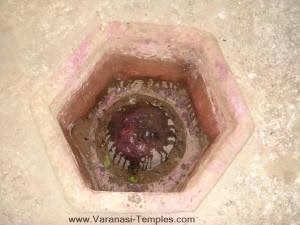
Pawaneshwar is located at K.63/14, Bhoot Bhairav Mohalla. The ling is under the ground and there is a flight of steps leading to the Ling from ground level. Devotees can reach this place by travelling upto Kashi Devi temple/Bula Nala/Lohatia by rickshaw and walk on foot upto Jyeshta Gauri/Bhoot Bhairav.
Contact Details
Official Address
Recent Posts

Shri Kaamkoteeshwar Mandir, Varanasi – History & Significance
In the heart of Kashi, the eternal city of Lord Shiva, where the Ganges flows with celestial grace, stands the Shri Kaamkoteeshwar Mandir. This sacred Sannidhi is not merely a temple but a profound spiritual bridge between the Northern…

ओ सांवरे तूने ही मुझको संभाला – Lyrics & Meaning
ओ सांवरे तूने ही मुझको संभाला – A Prayer to Shyam Origin & Spiritual Essence Why This Bhajan Resonates Devotees chant this when overwhelmed by life’s storms—the refrain ‘तूने ही मुझको संभाला’ is the soul’s sigh of relief: “You…

कथा ये है महाराज मेरे की – Lyrics & Meaning
कथा ये है महाराज मेरे की छत्रपति संभाजी महाराज – A Prayer to Chhatrapati Sambhaji Maharaj Origin & Spiritual Essence Why This Bhajan Resonates Devotees chant this when their spirit feels tested—its powerful refrain “महाराज मेरे” is a soul’s…

Rigveda Samhita Yathartha Anuvada (ऋग्वेद संहिता यथार्थ अनुवाद) – Complete Set with Anvayartha & Hindi/English Translation
The Rigveda is the oldest surviving scripture of humanity and the foundational text of Sanātana Dharma. For serious students, scholars, UPSC aspirants studying ancient Indian history, Sanskrit learners, and spiritual seekers, a precise and grammatically structured translation is indispensable.…

आना भी अकेला है जाना भी अकेला है – Lyrics & Meaning | BharatTemples
आना भी अकेला है जाना भी अकेला है – A Prayer to the Divine Witness Origin & Spiritual Essence Why This Bhajan Resonates Devotees turn to this bhajan in moments of deep reflection—when life’s attachments begin to ache. The…

माता शेरावाली के द्वार जो भी जाता है – Lyrics & Meaning
माता शेरावाली के द्वार जो भी जाता है – A Prayer to Maa Sherawali Origin & Spiritual Essence Why This Bhajan Resonates Devotees turn to this bhajan in times of fear or uncertainty—its promise that no one leaves Maa’s…

मार लेना सपणी उबार लेणा भवरा – Lyrics & Meaning
मार लेना सपणी उबार लेणा भवरा – A Prayer to the Divine Beloved Origin & Spiritual Essence Why This Bhajan Resonates Devotees chant this in moments of deep vulnerability—its cry of “मार लेना सपणी, उबार लेणा भवरा” is the…

हमें श्याम सुंदर भरोसा तुम्हारा – Lyrics & Meaning
हमें श्याम सुंदर भरोसा तुम्हारा – A Prayer to Shyam Sundar Origin & Spiritual Essence Why This Bhajan Resonates Devotees chant this when feeling alone—its refrain ‘de do sahara’ is the soul’s cry for divine support. Lyrics in Hindi…

Mere Satguru Ne Di Thi Davai Lyrics in Hindi & Meaning
Mere Satguru Ne Di Thi Davai: Invoking the Guru’s Liberating Wisdom This soul-stirring bhajan venerates the Satguru (True Spiritual Master) as the divine physician who dispenses the only remedy for life’s deepest sufferings. Composed by Sant Karmaveer Tufani, it…

Janm Diyo Thari Maa Dukh Dekhiyo Lyrics in Hindi & Meaning
जन्म दियो थारी माँ दुख देखियो (Maa’s Grief Upon Birthing You) This soul-stirring Chetavani Bhajan (admonitory hymn) is addressed to the Divine Mother (Maa) – a call for repentance when children forget their filial duties in the dark age…