
Contents
Introduction & Spiritual Essence
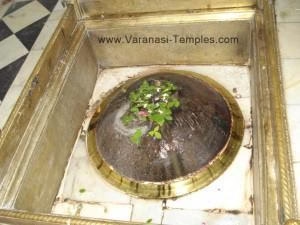
In the heart of the spiritual capital of India, amidst the labyrinthine alleys of Varanasi, lies the revered Pasupateshwar Temple. This ancient shrine is dedicated to Lord Shiva in his form as the Pasupateshwar (the Lord of all beings). Unlike typical vertical lingams, this deity is a massive Swayambhu (self-manifested) lingam that protrudes horizontally, covering a large surface area. According to devotees, worshipping this form of Shiva is believed to bestow ultimate happiness and free the soul from all bondages.
Phalaśruti (Spiritual Benefits): The primary significance of Pasupateshwar Temple is its connection to ancestral liberation. Devotees visit specifically to perform rituals for their forefathers (Pitru Tarpan). It is believed that performing Shraddha or Pinda Daan at the nearby Manikarnika Teerth, while worshipping Pasupateshwar, cleanses ancestral karma and brings peace to the departed souls.
Historical Origins & Scriptural Legend
The origins of Pasupateshwar Temple are deeply rooted in the Kashi Khand of the Skanda Purana, the primary scripture detailing the sacred geography of Varanasi.
Scriptural Foundations
- Kashi Khand, Chapter 61: Lord Vishnu describes the sacred Teerths (water bodies) around Manikarnika. It specifically mentions the Pasupath Teerth located to the north of Manikarnika. The text mandates that devotees take a holy dip in this tank, perform rituals for their ancestors, and worship Pasupateshwar to attain liberation.
- Kashi Khand, Chapter 79: This chapter highlights the concept of Twilight Worship. It states that Lord Shiva resides in the Pasupateshwar Ling specifically during the twilight hours (Sandhya Kala). Consequently, visiting this temple during dawn or dusk is considered highly auspicious.
Oral Tradition (Sthala Purana): Local legends suggest that the temple has been a site of immense spiritual energy since time immemorial. While specific dynastic records of construction are sparse (common for ancient Swayambhu sites in Kashi), the temple has been maintained by local priests for centuries. The locality itself, Pasupateshwar Galli, is named after the deity, signifying its central identity within the Varanasi urban landscape.
Architectural Marvels
The architecture of Pasupateshwar Temple reflects the traditional Nagara style typical of North Indian temples, adapted to the dense urban fabric of Varanasi.
Vastu and Layout
The temple is situated in a narrow lane, creating a sense of spiritual seclusion. The sanctum (Garbhagriha) houses the Swayambhu Lingam, which is unique in its horizontal formation. The Shikhara (tower) above the sanctum, though modest in height due to spatial constraints, is adorned with intricate carvings typical of medieval Hindu architecture.
The temple complex includes a Mandapa (pillared hall) where devotees can gather for prayers. Given its proximity to Manikarnika Teerth, the architecture integrates water sanctity principles, with the temple facing the sacred tank. Although the temple is not a listed ASI or UNESCO monument, its architectural value lies in its preservation of ancient Kashi rituals and Swayambhu idol worship.
Darshan & Ritual Logistics
Devotees can visit the temple to offer prayers and perform specific Sevas. The temple remains open for devotees throughout the day, with specific emphasis on twilight hours.
Daily Timings
| Session | Timing | Activity |
|---|---|---|
| Morning Darshan | 05:00 AM – 12:00 PM | General Darshan, Morning Aarti |
| Twilight Darshan | 05:30 PM – 06:30 PM | Sandhya Puja (Highly Recommended) |
| Evening Darshan | 06:30 PM – 10:00 PM | General Darshan, Evening Aarti |
Key Sevas and Booking
To ensure a seamless spiritual experience, devotees can opt for the following rituals:
- Abhishekam: Ritual bathing of the Swayambhu Lingam with water, milk, and honey.
- Archana: Recitation of names (Namavali) for personal well-being.
- Pitru Tarpan: Specific rituals performed for ancestors (requires prior consultation with the head priest).
Online Seva Booking: While many local Kashi temples rely on physical bookings, trusted third-party spiritual service platforms often facilitate bookings for rituals in Varanasi. For real-time availability, devotees can contact the temple trust via the phone number provided in the contact section.
2026 Major Festival Dates
Special Note: According to Kashi Khand, special importance is given to the Chaitra month (March-April), specifically the day before Poornima (Full Moon).
- Maha Shivaratri: February 26, 2026
- Chaitra Poornima: April 12, 2026 (Fast observed one day prior)
- Kartik Purnima: November 5, 2026
Practical Visitor Guidance
Visiting Pasupateshwar Temple requires preparation due to its location in the old city.
- Dress Code: Traditional attire is recommended. Men should wear Dhoti or trousers and remove shirts before entering the sanctum. Women should wear sarees or full-length dresses covering shoulders and knees.
- Photography: Photography is generally prohibited inside the inner sanctum to maintain sanctity. It is allowed in the outer courtyard.
- Mobile & Lockers: Electronic items should be kept on silent mode. Since the temple is small, large lockers are not available; it is advisable to carry minimal belongings.
- Crowd Management:
- Best Hours: Early morning (6:00 AM – 9:00 AM) or Twilight (5:30 PM) are ideal for a peaceful darshan.
- Seasonal Advice: Varanasi summers (May-June) are extremely hot. Carry a water bottle and a head cover. Winters (Dec-Jan) are pleasant but require warm layers.
- Accessibility: The temple is located in a narrow lane (galli) accessible only by foot. It is not wheelchair accessible due to uneven steps and narrow passages.
Pilgrimage Connectivity
How to Reach
The temple is located at Ck. 13/66, Pasupateshwar Galli, Varanasi.
- By Air: Lal Bahadur Shastri International Airport (LBS) is approximately 25 km away. Taxis and cabs are available to drop you at Godaulia or Chowk.
- By Rail: Varanasi Junction (BSB) is the nearest major railway station (5 km). Auto-rickshaws can take you to Chowk.
- By Road: Varanasi is well-connected via NH-19 and SH-5. From the main city, take an auto to Chowk. From Chowk, the temple is a 10-minute walk through the market lanes. Local transport is restricted in the old city lanes.
Nearby Sacred Sites
Extend your pilgrimage by visiting these nearby landmarks:
- Manikarnika Teerth: The sacred tank located just a short walk away. It is the most important site for ancestral rites in Kashi.
- Kashi Vishwanath Temple (Shri Kashi Vishwanath Jyotirlinga):** The primary Jyotirlinga is approximately 1 km away (walking distance through the old city).
- Shri Durga Temple (Durga Kund): Located on the southern side of the city (approx. 3 km), famous for its vibrant architecture and association with Navratri.
Frequently Asked Questions (FAQ)
1. Is there a VIP darshan entry at Pasupateshwar Temple?
Given the small size of the temple and its narrow entrance, separate VIP gates are generally not available. However, devotees seeking priority access can coordinate with the local head priest for an appointment during less crowded hours (early morning).
2. What is the significance of worshipping the horizontal Swayambhu Ling?
The horizontal Swayambhu form represents Lord Shiva in his most stable, ground-connected state. It is specifically worshipped for dissolving bondages and offering salvation to ancestors. The distinct form is unique to this specific shrine within the Kashi circuit.
3. Can I perform Pind Daan here?
Yes. According to Kashi Khand, performing Pind Daan at Pasupath Teerth (adjacent to the temple) while worshipping Pasupateshwar is highly effective for the liberation of ancestors.
4. Are there accommodation facilities nearby?
There are no guest houses within the temple premises. However, the Chowk area has numerous Dharamshalas and hotels. For better amenities, hotels near Varanasi Junction or Dashashwamedh Ghat are recommended.
5. What is the best time of day to visit?
The temple scriptures state that Lord Shiva resides here during the twilight hours. Therefore, visiting just before sunset (around 5:30 PM to 6:30 PM) is considered the most spiritually beneficial time.
Recent Posts

Shri Kaamkoteeshwar Mandir, Varanasi – History & Significance
In the heart of Kashi, the eternal city of Lord Shiva, where the Ganges flows with celestial grace, stands the Shri Kaamkoteeshwar Mandir. This sacred Sannidhi is not merely a temple but a profound spiritual bridge between the Northern…

ओ सांवरे तूने ही मुझको संभाला – Lyrics & Meaning
ओ सांवरे तूने ही मुझको संभाला – A Prayer to Shyam Origin & Spiritual Essence Why This Bhajan Resonates Devotees chant this when overwhelmed by life’s storms—the refrain ‘तूने ही मुझको संभाला’ is the soul’s sigh of relief: “You…

कथा ये है महाराज मेरे की – Lyrics & Meaning
कथा ये है महाराज मेरे की छत्रपति संभाजी महाराज – A Prayer to Chhatrapati Sambhaji Maharaj Origin & Spiritual Essence Why This Bhajan Resonates Devotees chant this when their spirit feels tested—its powerful refrain “महाराज मेरे” is a soul’s…

Rigveda Samhita Yathartha Anuvada (ऋग्वेद संहिता यथार्थ अनुवाद) – Complete Set with Anvayartha & Hindi/English Translation
The Rigveda is the oldest surviving scripture of humanity and the foundational text of Sanātana Dharma. For serious students, scholars, UPSC aspirants studying ancient Indian history, Sanskrit learners, and spiritual seekers, a precise and grammatically structured translation is indispensable.…

आना भी अकेला है जाना भी अकेला है – Lyrics & Meaning | BharatTemples
आना भी अकेला है जाना भी अकेला है – A Prayer to the Divine Witness Origin & Spiritual Essence Why This Bhajan Resonates Devotees turn to this bhajan in moments of deep reflection—when life’s attachments begin to ache. The…

माता शेरावाली के द्वार जो भी जाता है – Lyrics & Meaning
माता शेरावाली के द्वार जो भी जाता है – A Prayer to Maa Sherawali Origin & Spiritual Essence Why This Bhajan Resonates Devotees turn to this bhajan in times of fear or uncertainty—its promise that no one leaves Maa’s…

मार लेना सपणी उबार लेणा भवरा – Lyrics & Meaning
मार लेना सपणी उबार लेणा भवरा – A Prayer to the Divine Beloved Origin & Spiritual Essence Why This Bhajan Resonates Devotees chant this in moments of deep vulnerability—its cry of “मार लेना सपणी, उबार लेणा भवरा” is the…

हमें श्याम सुंदर भरोसा तुम्हारा – Lyrics & Meaning
हमें श्याम सुंदर भरोसा तुम्हारा – A Prayer to Shyam Sundar Origin & Spiritual Essence Why This Bhajan Resonates Devotees chant this when feeling alone—its refrain ‘de do sahara’ is the soul’s cry for divine support. Lyrics in Hindi…

Mere Satguru Ne Di Thi Davai Lyrics in Hindi & Meaning
Mere Satguru Ne Di Thi Davai: Invoking the Guru’s Liberating Wisdom This soul-stirring bhajan venerates the Satguru (True Spiritual Master) as the divine physician who dispenses the only remedy for life’s deepest sufferings. Composed by Sant Karmaveer Tufani, it…

Janm Diyo Thari Maa Dukh Dekhiyo Lyrics in Hindi & Meaning
जन्म दियो थारी माँ दुख देखियो (Maa’s Grief Upon Birthing You) This soul-stirring Chetavani Bhajan (admonitory hymn) is addressed to the Divine Mother (Maa) – a call for repentance when children forget their filial duties in the dark age…