
Contents
- 1 Introduction & Spiritual Essence
- 2 Historical Origins & Scriptural Legend
- 3 Architectural Marvels
- 4 Darshan & Ritual Logistics
- 5 Practical Visitor Guidance
- 6 Pilgrimage Connectivity
- 7 Frequently Asked Questions (FAQ)
- 8 Architecture
- 9 Legend / Local stories
- 10 Photo Gallery
- 11 How to Reach:
- 12 Contact Details
Introduction & Spiritual Essence
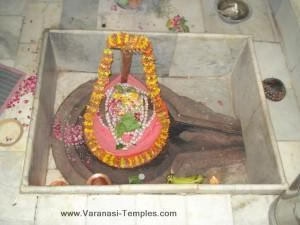
Nestled within the divine energy of Kashi (Varanasi) lies the Tripurantakeshwar Temple, a sanctuary dedicated to Lord Shiva in his fierce yet benevolent form. This temple is not merely a structure of stone but a spiritual vortex where the cosmic dance of destruction and creation is witnessed daily. As a Jyotirlinga manifestation, it holds a specific place in the hearts of Shaivites, serving as a terrestrial anchor for the infinite light of the Supreme Being.
Why Devotees Visit: The Phalaśruti
According to ancient scriptures, specifically the Kashi Khand of the Skanda Purana, Tripurantakeshwar is the granter of Moksha (liberation from the cycle of birth and death). The deity is believed to have vanquished the three demon cities (Tripura), symbolizing the destruction of the three impurities of the soul: Anava (ego), Karma (action), and Maya (illusion).
- Benefits of Darshan: Devotees believe that worshipping here yields the same spiritual merit (Punya) as visiting the Mallikarjun Jyotirling in Andhra Pradesh.
- Ancestral Liberation: It is a powerful site for performing rites for ancestors, helping cleanse ancestral karma and guide souls toward liberation.
Historical Origins & Scriptural Legend
The history of Tripurantakeshwar is deeply rooted in the oral and written traditions of Kashi. While the exact construction date of the current architectural structure is lost to the mists of time, its spiritual existence is traced back to the 9th century or earlier, during the era when Kashi Khand was being chronicled.
The Legend of Gajasur and Rudra Vasam
Tradition holds that the site was originally known as Rudra Vasam. It is the place where Lord Shiva, after slaying the demon Gajasur, draped the elephant demon’s skin as a garment. Here, Lord Shiva resides in the form of Krithi Vaseshwar.
The Origin of the Name
The name “Tripurantakeshwar” has a specific cosmological significance. According to temple records and the Kashi Khand (Chapter 69):
“From the holy Mount Shri Shailam (Srisailam), a lingam known as Tripurantak manifested itself in Varanasi. Hence, the deity came to be known as Tripurantakeshwar.”
Architectural Marvels
The temple showcases the resilience of Indo-Aryan (Nagara) architectural styles adapted to the specific spatial constraints of Varanasi. Unlike massive temple complexes, this shrine is intimate and vertically oriented, designed to draw the eye upward toward the heavens.
Sanctum and Symbolism
The sanctum sanctorum houses the Shivalinga, which is the primary focus of worship. The temple structure is built on an elevated mound (Sigra Tila), adhering to Vastu Shastra principles where the deity faces the East, capturing the first rays of the sun.
Notable Sculptures
The walls feature intricate carvings depicting the slaying of the three cities (Tripura). While the exterior is modest, the interior murals and stone carvings reflect the devotional fervor of the artisans. Within the same complex, devotees can also visit the shrine of Trimukh Vinayak (Ganesha), adding to the architectural symmetry of the site.
Darshan & Ritual Logistics
Experience the rhythm of Kashi through its daily rituals. The temple follows a traditional schedule, balancing the serenity of morning Puja with the vibrancy of evening Aarti.
Daily Timings
| Session | Timings | Ritual |
|---|---|---|
| Morning | 05:00 AM – 12:00 PM | Mangala Darshan & Abhishekam |
| Afternoon | 12:00 PM – 03:00 PM | Sanctum Cleaning (Limited Access) |
| Evening | 03:00 PM – 11:00 PM | Shringar Darshan & Aarti |
Key Sevas & Online Booking
Devotees can book specific rituals to enhance their spiritual experience. Most bookings are now managed digitally to streamline the process.
- Abhishekam: Ritual bathing of the Linga with milk, honey, and water.
- Rudrabhishek: A powerful Vedic ritual for prosperity and peace.
- Archana: Personalized chanting of names.
Note: Online booking links are typically hosted through the Varanasi temple district portals or specific Uttar Pradesh Tourism gateways.
2026 Major Festivals
- Maha Shivaratri (Feb 26, 2026): The temple remains open 24 hours; special grand Abhishekam is performed.
- Pradosh Vrat: Monthly (13th day of the lunar cycle) special evening Aarti.
- Somvar Vrat: Every Monday, heavy rush expected; devotees are advised to book online slots.
Practical Visitor Guidance
To ensure a seamless darshan experience, visitors should adhere to the following guidelines:
Code of Conduct
- Dress Code: Traditional attire is recommended. Men should wear dhotis or trousers and shirts; women should wear sarees or salwar kameez. Avoid western casual wear like shorts or torn jeans.
- Photography: Strictly prohibited inside the sanctum sanctorum. External architecture photography may be allowed based on current ASI guidelines, but always seek permission.
- Electronic Items: Mobile phones and cameras are permitted but must be kept on silent. Storage lockers are available near the temple entrance for a nominal fee.
Crowd Management & Seasonal Advice
- Best Time to Visit: 5:00 AM to 8:00 AM is ideal for a peaceful Darshan.
- Summer (April-June): Varanasi can be extremely hot. Carry a reusable water bottle and a head covering. The temple provides Chandan (sandalwood paste) which has a cooling effect.
- Monsoon (July-Sept): The ghats and lanes can be slippery. Wear rubber-soled sandals with good grip.
Pilgrimage Connectivity
How to Reach
The temple is located in the Sigra Tila area of Varanasi, which is a well-connected locality.
- By Air: Lal Bahadur Shastri International Airport (VNS) is approximately 25 km away. Taxis and e-rickshaws are available 24/7.
- By Rail: Varanasi Junction (BSB) is about 5 km from the temple. You can hire an auto-rickshaw to Sigra.
- By Road: The temple is situated off the main Sigra-Mehmoorganj road. It is accessible via NH 19. Private vehicles must be parked in designated parking areas as the lanes leading to the temple are narrow.
Nearby Sacred Sites
Complete your spiritual circuit by visiting these nearby shrines:
- Grishneshwar Temple (Kamakhya Temple Area): Located a short distance away, this temple represents the Grishneshwar Jyotirlinga (Ellora).
- Baijnatheshwar Temple: Another representation of a Jyotirlinga (Baijnath) located nearby.
- Kashi Vishwanath Temple (Approx. 4 km): The main Jyotirlinga of Kashi, essential for any pilgrimage itinerary.
Frequently Asked Questions (FAQ)
1. Is there a VIP Darshan entry available?
Yes, the temple trust usually provides a priority entry lane for elderly devotees, specially-abled visitors, and those who have booked special Sevas like Rudrabhishek online. This line is significantly shorter than the general queue.
2. What is the significance of the “Tila” (Mound) the temple is built on?
The term “Sigra Tila” refers to the elevated land mass. In Varanasi, many temples are built on mounds to represent the spiritual elevation required to reach the divine. It also offers a unique vantage point amidst the dense city architecture.
3. Can we perform Shraddha (ancestor rites) here?
Absolutely. Because of its association with liberation (Moksha) and the belief that Lord Shiva himself wears the skin of Gajasur (symbolic of shedding the ego/body), this is considered an auspicious spot for performing Shraddha and Pinda Daan.
4. Is there an entry fee?
General Darshan is free for all devotees. However, specific Sevas and rituals incur a nominal charge, which goes toward the maintenance of the temple and charitable activities.
5. What is the best way to reach the temple from Assi Ghat?
From Assi Ghat, the most convenient mode of transport is an electric rickshaw (E-rickshaw) or a cycle rickshaw. Ask the driver to take you to Sigra Tila (near Union Bank of India). The journey takes approximately 20-30 minutes depending on traffic.
| Date built: | – |
|---|---|
| Deity: | Tripurantakeshwar |
| Architectural style: | Hindu Temple architecture |
| Major festivals | – |
| Locale: | Varanasi |
| District:: | Varanasi |
| Address: | – |
| Phone | – |
From Shri Shail Mountain one Ling by name of Tripurantak has appeared in the Holy city of Kashi, which is called Tripurantakeshwar. By worshipping this deity, the devotee derives the benefit of worship the Holy Shri Shail Mountain. A devotee who worships Tripurantakeshwar will attain Moksha and need not worry about rebirth.
On all India basis there are twelve Jyotirlings and there are twelve important Shiv Lings in Kashi which represent the aforesaid twelve Jyotirlings. Tripurantakeshwar is worshipped as Mallikarjun Jyotirling (Sri Sailam, Andhra Pradesh).
Architecture
Legend / Local stories
Photo Gallery
How to Reach:
Tripurantakeshwar is located at D.59/95, Sigra Tila (Mount of Mud). If devotee travels from Sigra towards Mehmoorganj, after about 100 yards towards the left side he will come across Union Bank of India and further onwards one commercial complex called Siddharth. Just ahead of this is Shitla Devi immediately after which there is a left turn. After taking a left turn devotees will come to Sigra Tila over which this temple is located. In the same premises, devotees can find Trimukh Vinayak.
Two more deities are worshipped in Varanasi symbolic of Jyotirlings of their respective Jyotirlings elsewhere. Grishneshwar located at Kamakhya temple and Baijnatheshwar located nearby are worshipped for Grishneshwar (Ellora/Maharashtra) and Baijnath (either Parli Maharashtra or Bihar) respectively.
Contact Details
Official Address
Recent Posts

Shri Kaamkoteeshwar Mandir, Varanasi – History & Significance
In the heart of Kashi, the eternal city of Lord Shiva, where the Ganges flows with celestial grace, stands the Shri Kaamkoteeshwar Mandir. This sacred Sannidhi is not merely a temple but a profound spiritual bridge between the Northern…

ओ सांवरे तूने ही मुझको संभाला – Lyrics & Meaning
ओ सांवरे तूने ही मुझको संभाला – A Prayer to Shyam Origin & Spiritual Essence Why This Bhajan Resonates Devotees chant this when overwhelmed by life’s storms—the refrain ‘तूने ही मुझको संभाला’ is the soul’s sigh of relief: “You…

कथा ये है महाराज मेरे की – Lyrics & Meaning
कथा ये है महाराज मेरे की छत्रपति संभाजी महाराज – A Prayer to Chhatrapati Sambhaji Maharaj Origin & Spiritual Essence Why This Bhajan Resonates Devotees chant this when their spirit feels tested—its powerful refrain “महाराज मेरे” is a soul’s…

Rigveda Samhita Yathartha Anuvada (ऋग्वेद संहिता यथार्थ अनुवाद) – Complete Set with Anvayartha & Hindi/English Translation
The Rigveda is the oldest surviving scripture of humanity and the foundational text of Sanātana Dharma. For serious students, scholars, UPSC aspirants studying ancient Indian history, Sanskrit learners, and spiritual seekers, a precise and grammatically structured translation is indispensable.…

आना भी अकेला है जाना भी अकेला है – Lyrics & Meaning | BharatTemples
आना भी अकेला है जाना भी अकेला है – A Prayer to the Divine Witness Origin & Spiritual Essence Why This Bhajan Resonates Devotees turn to this bhajan in moments of deep reflection—when life’s attachments begin to ache. The…

माता शेरावाली के द्वार जो भी जाता है – Lyrics & Meaning
माता शेरावाली के द्वार जो भी जाता है – A Prayer to Maa Sherawali Origin & Spiritual Essence Why This Bhajan Resonates Devotees turn to this bhajan in times of fear or uncertainty—its promise that no one leaves Maa’s…

मार लेना सपणी उबार लेणा भवरा – Lyrics & Meaning
मार लेना सपणी उबार लेणा भवरा – A Prayer to the Divine Beloved Origin & Spiritual Essence Why This Bhajan Resonates Devotees chant this in moments of deep vulnerability—its cry of “मार लेना सपणी, उबार लेणा भवरा” is the…

हमें श्याम सुंदर भरोसा तुम्हारा – Lyrics & Meaning
हमें श्याम सुंदर भरोसा तुम्हारा – A Prayer to Shyam Sundar Origin & Spiritual Essence Why This Bhajan Resonates Devotees chant this when feeling alone—its refrain ‘de do sahara’ is the soul’s cry for divine support. Lyrics in Hindi…

Mere Satguru Ne Di Thi Davai Lyrics in Hindi & Meaning
Mere Satguru Ne Di Thi Davai: Invoking the Guru’s Liberating Wisdom This soul-stirring bhajan venerates the Satguru (True Spiritual Master) as the divine physician who dispenses the only remedy for life’s deepest sufferings. Composed by Sant Karmaveer Tufani, it…

Janm Diyo Thari Maa Dukh Dekhiyo Lyrics in Hindi & Meaning
जन्म दियो थारी माँ दुख देखियो (Maa’s Grief Upon Birthing You) This soul-stirring Chetavani Bhajan (admonitory hymn) is addressed to the Divine Mother (Maa) – a call for repentance when children forget their filial duties in the dark age…