
Contents
- 1 Introduction & Spiritual Essence
- 2 Historical Origins & Scriptural Legend
- 3 Architectural Marvels
- 4 Photo Gallery
- 5 Darshan & Ritual Logistics
- 6 Practical Visitor Guidance
- 7 Pilgrimage Connectivity
- 8 Frequently Asked Questions (FAQs)
- 8.1 1. Is there a VIP darshan entry available?
- 8.2 2. Is there parking available near the temple?
- 8.3 3. Are devotees allowed to offer home-cooked Prasad?
- 8.4 4. What is the significance of the three deities together?
- 8.5 5. How crowded is the temple on Diwali?
- 8.6 6. What is the contact number for the temple trust?
Introduction & Spiritual Essence
The Shree Mahalakshmi Temple in Mumbai is not merely a stone structure; it is a pulsating spiritual heart of the city. Located on Bhulabhai Desai Road near the Arabian Sea in Malabar Hill, this ancient shrine dates back to the 18th century. It is revered as a Jagrut Devasthan (living temple), where the divine energy of the Goddess is believed to be intensely active and responsive to the prayers of her devotees.
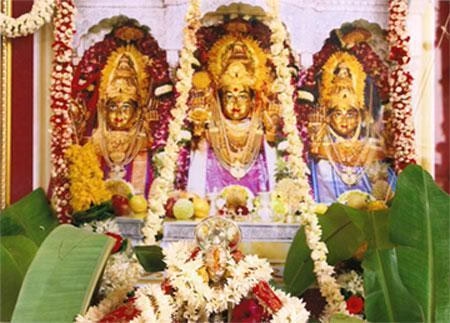
The temple houses three powerful deities in the main sanctum (Gabhara):
- Shree Mahalakshmi: The Goddess of Wealth, Prosperity, and Fortune.
- Shree Mahakali: The Fierce Form of Shakti, the Destroyer of Evil and Ignorance.
- Shree Mahasaraswati: The Goddess of Knowledge, Music, and the Arts.
Phalaśruti: Why Devotees Visit
According to local tradition and the faith of millions of pilgrims, the Shree Mahalakshmi deity is “Jagrut” (awake/alive). Devotees believe that offering prayers here cleanses ancestral karma and removes financial obstacles. Specific benefits include:
- Removal of Debt: It is widely believed that sincere worship to the Goddess of Wealth helps in overcoming financial debts.
- Protection: Worshipping Mahakali shields the devotee from negative energies and accidents.
- Wisdom: Students and professionals often visit to seek the blessings of Mahasaraswati for clarity and success in endeavors.
Historical Origins & Scriptural Legend
The Construction and Patronage
The temple was constructed in the year 1761 A.D. (with some extensions completed in 1771 A.D.). It was built by a wealthy Hindu merchant and banker, Laxman Prabhu, in the colonial era. The unique location on Malabar Hill, overlooking the sea, was chosen with great Vastu consideration. While the original architectural records are sparse, the current structure stands as a testament to the resilience of Mumbai’s historic communities.
The Legend of the Rocks
Tradition holds that the three idols were not carved by human hands but were discovered by a local cowherd near the present site. While trying to construct a small shrine, he found that the soil would give way every night, revealing the rock foundation beneath. Divine guidance led the villagers to recognize the presence of the deities. It is said that the exact location where the idols naturally emerged is where the main sanctum stands today.
Astronomical Alignment
According to temple records, a remarkable architectural feat occurs twice a year. During the equinoxes (March/April and September/October), the first rays of the rising sun fall directly on the feet of the deities for a few minutes, illuminating the sanctum naturally. This aligns with the solar cycle and the festivals of Chaitra and Ashwin Navaratra.
Architectural Marvels
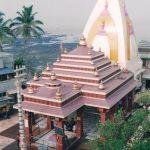
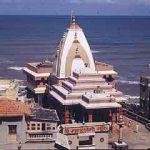
The temple showcases a blend of traditional Hindu temple architecture with influences suitable to the coastal geography of Mumbai.
Interior & Design
- Dhwajstambha: Upon entering the compound, devotees are greeted by a towering 10.60-meter-high Dhwajstambha (flagstaff) wrapped in silver sheets.
- Deepmala: An intricately carved stone lamp post stands nearby, illuminating the premises during evening aartis.
- Sabhamandap (Assembly Hall): The hall measures approximately 12.10 meters by 9.10 meters. It features 27 apex tops (shikharas) on the roof, a complex wooden structure.
- Silver Lion: In the center of the Sabhamandap sits a silver-cast lion, the vehicle (vahana) of Goddess Durga, facing the inner sanctum.
- Jay-Vijay Idols: Located on either side of the main entrance to the Gabhara, these statues of the gatekeepers of Vishnu are covered in silver.
Note: While the temple is a heritage site, it does not currently hold an official ASI (Archaeological Survey of India) or UNESCO listing, preserving its status as a living, functional place of worship.
Photo Gallery
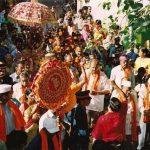
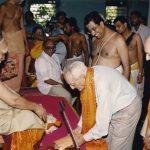
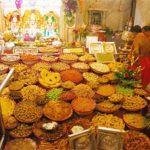
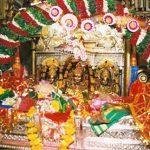
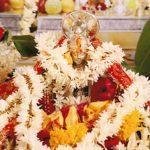
Darshan & Ritual Logistics
Daily Timings
The temple remains open from early morning until late evening, accommodating both early risers and evening aarti attendees.
| Session | Timings | Activity |
|---|---|---|
| Morning | 5:00 AM – 1:00 PM | Opening, Abhishekam, Darshan |
| Afternoon Break | 1:00 PM – 4:30 PM | Sanctum Closed for Rest |
| Evening | 4:30 PM – 9:30 PM | Aarti, Mahaprasad Distribution |
*Note: Timings may vary slightly on major festival days.
Key Sevas & Online Booking
Seva Offerings
- Abhishekam: Ritual bathing of the deities (performed with milk, honey, and sugar).
- Archana: Individual name prayers (Sankalp).
- Maha Naivedyam: Offering of sweets and fruits.
- Chandika Homa: Performed during Navaratri for profound blessings.
Online Booking: The Shree Mahalakshmi Temple Trust has streamlined the process for devotees globally. To book Sevas or send offerings:
- Visit the official website:
www.bharattemples.com/shree-mahalakshmi(or the temple’s dedicated portal). - Navigate to the “Online Seva Booking” tab.
- Select the desired Seva and date.
- Upload the devotee details for Sankalp.
2026 Festival Calendar
- Gudi Padwa: March 30, 2026 (Hindu New Year)
- Chaitra Navaratri: March 30 – April 7, 2026 (Peak crowd, Sun Ray phenomenon expected)
- Deepavali (Diwali): October 21, 2026 (Lakshmi Pujan)
- Ashwin Navaratri: September 22 – September 30, 2026 (Durga Puja)
- Margashirsha Month: November 25 – December 24, 2026 (Highly auspicious for Satyanarayan Puja)
Practical Visitor Guidance
Rules & Etiquette
- Dress Code: Traditional Indian attire is recommended. Men should wear Dhoti or full-length trousers; women should wear Sarees, Salwar Kameez, or long skirts. Avoid shorts and sleeveless tops.
- Photography: Photography is strictly prohibited inside the sanctum and the Sabhamandap to maintain the sanctity of the Darshan.
- Mobile Phones: Mobile phones are allowed but must be kept on silent mode. Lockers are available near the entrance for bags and electronics.
- Accessibility: The temple has ramps for wheelchair access to the main courtyard, though steps lead up to the sanctum.
Crowd Management & Best Times to Visit
The temple attracts over 10,000 visitors daily. The crowd swells to nearly 100,000 during Navaratri.
- Best Time: Weekdays (Tuesday and Friday are considered highly auspicious). Visit between 6:30 AM and 8:00 AM for a peaceful Darshan.
- Avoid: Sunday evenings and major festival evenings.
- Seasonal Advice: Mumbai can be humid. Carry a bottle of water. During the monsoon (June-September), carry an umbrella as the queue lines are partially exposed.
Pilgrimage Connectivity
How to Reach
By Air: The nearest airport is Chhatrapati Shivaji Maharaj International Airport (BOM), approximately 25 km away (60-90 mins travel time depending on traffic).
By Train: The nearest railway station is Mumbai Central (Western Railway), about 5 km away. From there, take a taxi or auto-rickshaw to Bhulabhai Desai Road.
By Road:
- Located off Nepean Sea Road (State Highway 10).
- Direct access from the Sea Link via Pedder Road.
Nearby Sacred Sites (Pilgrimage Circuit)
- Hare Rama Hare Krishna Temple (ISKCON), Mumbai: Located just 1 km away at Hare Rama Land, Near NCPA.
- Shree Swaminarayan Temple, Bhuleshwar: A magnificent temple complex dedicated to Lord Swaminarayan (approx. 20 mins drive).
- Mount Mary Basilica, Bandra: A prominent Marian shrine (approx. 15 mins drive via the Sea Link), symbolizing Mumbai’s interfaith harmony.
Frequently Asked Questions (FAQs)
1. Is there a VIP darshan entry available?
While there is no formal “VIP” ticket system like at Tirupati, devotees who book specific Abhishekam sevas in advance usually get access to a priority line for Darshan. Senior citizens and differently-abled visitors are also guided through a separate entry point.
2. Is there parking available near the temple?
Street parking is limited and strictly regulated in the Malabar Hill area. It is advisable to use paid parking lots near NCPA (National Centre for Performing Arts) or use ride-sharing apps (Uber/Ola) to avoid parking hassles.
3. Are devotees allowed to offer home-cooked Prasad?
Generally, external food items are not permitted in the sanctum. However, dry offerings like flowers, fruits, and sweets bought from the temple counter are accepted. For larger quantities of offerings, please contact the temple office 24 hours in advance.
4. What is the significance of the three deities together?
The trinity of Mahalakshmi (Wealth), Mahakali (Power/Protection), and Mahasaraswati (Knowledge) represents the complete cycle of material and spiritual prosperity. Worshipping them together ensures holistic well-being.
5. How crowded is the temple on Diwali?
Diwali and the following day (Bhai Dooj) see peak footfall. Queues can extend beyond 2-3 hours. It is recommended to visit early morning (5:00 AM) or late night (post 10:00 PM) during these days.
6. What is the contact number for the temple trust?
You can reach the Shree Mahalakshmi Temple Charities at 022-2351 4732 during office hours (10:00 AM to 5:00 PM).
Recent Posts

Shri Kaamkoteeshwar Mandir, Varanasi – History & Significance
In the heart of Kashi, the eternal city of Lord Shiva, where the Ganges flows with celestial grace, stands the Shri Kaamkoteeshwar Mandir. This sacred Sannidhi is not merely a temple but a profound spiritual bridge between the Northern…

ओ सांवरे तूने ही मुझको संभाला – Lyrics & Meaning
ओ सांवरे तूने ही मुझको संभाला – A Prayer to Shyam Origin & Spiritual Essence Why This Bhajan Resonates Devotees chant this when overwhelmed by life’s storms—the refrain ‘तूने ही मुझको संभाला’ is the soul’s sigh of relief: “You…

कथा ये है महाराज मेरे की – Lyrics & Meaning
कथा ये है महाराज मेरे की छत्रपति संभाजी महाराज – A Prayer to Chhatrapati Sambhaji Maharaj Origin & Spiritual Essence Why This Bhajan Resonates Devotees chant this when their spirit feels tested—its powerful refrain “महाराज मेरे” is a soul’s…

Rigveda Samhita Yathartha Anuvada (ऋग्वेद संहिता यथार्थ अनुवाद) – Complete Set with Anvayartha & Hindi/English Translation
The Rigveda is the oldest surviving scripture of humanity and the foundational text of Sanātana Dharma. For serious students, scholars, UPSC aspirants studying ancient Indian history, Sanskrit learners, and spiritual seekers, a precise and grammatically structured translation is indispensable.…

आना भी अकेला है जाना भी अकेला है – Lyrics & Meaning | BharatTemples
आना भी अकेला है जाना भी अकेला है – A Prayer to the Divine Witness Origin & Spiritual Essence Why This Bhajan Resonates Devotees turn to this bhajan in moments of deep reflection—when life’s attachments begin to ache. The…

माता शेरावाली के द्वार जो भी जाता है – Lyrics & Meaning
माता शेरावाली के द्वार जो भी जाता है – A Prayer to Maa Sherawali Origin & Spiritual Essence Why This Bhajan Resonates Devotees turn to this bhajan in times of fear or uncertainty—its promise that no one leaves Maa’s…

मार लेना सपणी उबार लेणा भवरा – Lyrics & Meaning
मार लेना सपणी उबार लेणा भवरा – A Prayer to the Divine Beloved Origin & Spiritual Essence Why This Bhajan Resonates Devotees chant this in moments of deep vulnerability—its cry of “मार लेना सपणी, उबार लेणा भवरा” is the…

हमें श्याम सुंदर भरोसा तुम्हारा – Lyrics & Meaning
हमें श्याम सुंदर भरोसा तुम्हारा – A Prayer to Shyam Sundar Origin & Spiritual Essence Why This Bhajan Resonates Devotees chant this when feeling alone—its refrain ‘de do sahara’ is the soul’s cry for divine support. Lyrics in Hindi…

Mere Satguru Ne Di Thi Davai Lyrics in Hindi & Meaning
Mere Satguru Ne Di Thi Davai: Invoking the Guru’s Liberating Wisdom This soul-stirring bhajan venerates the Satguru (True Spiritual Master) as the divine physician who dispenses the only remedy for life’s deepest sufferings. Composed by Sant Karmaveer Tufani, it…

Janm Diyo Thari Maa Dukh Dekhiyo Lyrics in Hindi & Meaning
जन्म दियो थारी माँ दुख देखियो (Maa’s Grief Upon Birthing You) This soul-stirring Chetavani Bhajan (admonitory hymn) is addressed to the Divine Mother (Maa) – a call for repentance when children forget their filial duties in the dark age…