
Contents
Introduction & Spiritual Essence
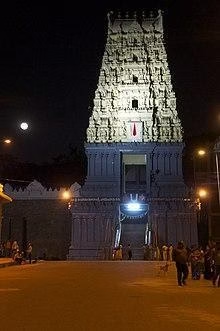
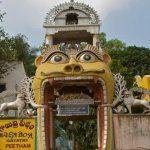
Perched majestically 500 meters above sea level on the Simhachalam hill range in Visakhapatnam, Andhra Pradesh, stands the ancient Shri Varaha Lakshmi Narasimha Temple. This sacred site is one of the 32 Narasimha temples in the state and holds a unique place in the pan-Indian tradition of Vaishnavism. Unlike conventional forms, the presiding deity is a Swayambhu (self-manifested) murti (idol) that embodies the fusion of Varaha (Boar) and Narasimha (Lion), protecting the devotee Prahlada.
Phalaśruti (Spiritual Benefits):
Devotees believe that a visit to this Divya Kshetram (holy place) grants immense blessings. The deity, revered as Simhachalam Nadha, is specifically known to:
- Cleanse Ancestral Karma: Performing rites here is believed to liberate ancestors from the cycle of rebirth.
- Fulfill Wishes: It is a prime Mannasiddhi sthala for those seeking relief from prolonged ailments.
- Bless with Progeny: Childless couples pray here for the boon of childbirth.
Historical Origins & Scriptural Legend
The Legend of Protection
According to the local Sthala Purana, the demon king Hiranyakashipu attempted to kill his son, Prahlada, for worshipping Vishnu. When the Lord emerged from a pillar at the nearby Holika Dahan area (modern-day Visakhapatnam), he took the form of a half-boar, half-lion to save his devotee and kill the demon. This form is the Varaha Narasimha Moorthi.
Historical Patronage
According to temple records and historical inscriptions, the temple has a lineage dating back to the 9th century AD. Historians cite an inscription by the Chalukya Chola king Kulottunga I as evidence of its medieval significance.
Tradition holds that the temple complex underwent radical physical changes in the later half of the 13th century during the reign of the Eastern Ganga king Narasimhadeva I. It later flourished under the patronage of the Tuluva dynasty of the Vijayanagara Empire. Notably, the temple experienced a period of religious inactivity from 1564 AD to 1604 AD. In 1949, the temple was brought under the purview of the state government and is currently administered by the Simhachalam Devasthanam Board.
Architectural Marvels
The architecture of Simhachalam is a fascinating syncretic blend of styles. While the primary style is Dravidian, scholars note strong influences of Kalinga (Odishan) architecture, visible in the temple spire (Shikhara).
- Orientation: Unusually, the temple faces west (Prathachya), signifying victory over darkness, rather than the east.
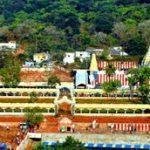
- Structure: The complex resembles a fortress with three outer courtyards and five gateways.
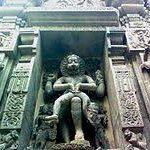
- Mandapas: The interior is adorned with intricately carved pillars and spacious mandapams (halls).
- Water Systems: Two sacred temple tanks exist: Swami Pushkarini near the sanctum and Gangadhara at the base of the hill.
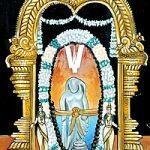
The idol of the deity is unique. Except on Akshaya Tritiya, the murti is covered with sandalwood paste (Chandan) throughout the year, giving it the shape and appearance of a Shiva Lingam.
Darshan & Ritual Logistics
The rituals at Simhachalam are formulated by the Vaishnavite philosopher Ramanuja and are based on the Satvata Samhita, one of the 108 texts of the Pancharatra Agama.
Daily Darshan Timings (2026 Schedule)
| Session | Timings | Description |
|---|---|---|
| Morning | 07:00 AM – 04:00 PM | Regular Darshan (General Public) |
| Break | 04:00 PM – 05:00 PM | Sri Deity Srikara (Closing) |
| Evening | 05:00 PM – 09:00 PM | Regular Darshan & Sevas |
| Closing | 09:00 PM | Final Rituals |
Key Sevas & Online Booking
The temple is the second-largest income earner in Andhra Pradesh after Tirumala. Key offerings include:
- Chandanotsava: The annual removal of sandalwood paste (usually in May/June).
- Kalyanotsavam: Celestial wedding ceremony.
- Abhishekam: Ritual bathing of the deity.
- Archana: Recitation of holy names.
Bookings for these sevas can be made through the official Simhachalam Devasthanam website. For 2026, devotees are advised to book at least 30 days in advance for festivals.
Major Festivals in 2026
- Narasimha Jayanthi: April/May (The birthday of the Lord).
- Chandanotsava: May/June (The only day the original form of the deity is visible to the public).
- Navaratri: October (Dedicated to Goddess Lakshmi).
- Kamadahana: April (Festival of lamps).
Practical Visitor Guidance
Dress Code & Etiquette
Visitors must adhere to a strict dress code. Traditional Indian attire (Dhoti/Saree) is mandatory for darshan inside the sanctum. Men should remove shirts before entering the temple. Western clothing is generally restricted to the outer courtyards.
Crowd Management & Best Time to Visit
Simhachalam attracts massive crowds, especially on weekends and festivals.
- Best Hours: Early morning (7:00 AM – 9:00 AM) or late evening (7:00 PM – 9:00 PM) to avoid long queues.
- Summer (March-June): Visakhapatnam is humid. Carry a water bottle and an umbrella.
- Monsoon (July-September): The hill receives heavy rainfall; roads can be slippery.
Facilities
- Mobile Lockers: Available at the entrance for electronic devices. Photography is strictly prohibited inside the sanctum.
- Accessibility: The temple provides a Doli (palanquin) service for elderly devotees unable to walk up the hill. A ghat road also allows vehicle access up to the main entrance.
Pilgrimage Connectivity
How to Reach
- By Air: The nearest airport is Visakhapatnam International Airport (VTZ), located approximately 18 km from the base of the hill.
- By Rail: Visakhapatnam Railway Station (VSKP) is the nearest major railhead, well-connected to all Indian metros.
- By Road: The temple is situated on Simhachalam Road. It is accessible via National Highway 16 (NH16), which runs along the coast. City buses and taxis are readily available from Daba Gardens and RTC Complex in Visakhapatnam.
Nearby Sacred Sites
- Simhachalam Wildlife Sanctuary: Surrounds the temple, offering nature trails.
- Kailasagiri: A nearby hilltop park offering panoramic views of the Bay of Bengal.
- Thotlakonda Buddhist Complex: Located about 15 km away, an ancient Buddhist site overlooking the sea.
Photo Gallery
Frequently Asked Questions (FAQs)
1. Is there a VIP darshan entry available?
Yes, the Simhachalam Devasthanam offers a special entry darshan (often called Vishesha Darshanam) for a nominal fee. Additionally, donors contributing to specific temple trusts or sevas may be eligible for priority darshan.
2. How do I perform the ritual for ancestors?
The temple is highly revered for Pithru Karma (ancestral rites). You can book a specific Tharpana or Shradhha seva at the counter or online. The priests (Archakas) perform the rites on your behalf.
3. Why is the deity covered in sandalwood paste?
It is believed that Lord Narasimha, after killing the demon Hiranyakashipu, was in a fierce form. The sandalwood paste (Chandan) is applied to cool the deity down. The original form is visible only on Chandanotsava (Akshaya Tritiya).
4. Is the climb to the temple difficult?
There are 500 steps leading to the temple. It is a moderate hike suitable for most fitness levels. However, for those with mobility issues, taxis can drive directly to the entrance via the ghat road.
5. Where can I stay in Visakhapatnam for a temple visit?
There are numerous hotels near the Daba Gardens and RTC Complex areas (approx. 10 km from the temple). The temple management also runs guest houses (Choultries) for pilgrims, subject to availability.
Contact Details
Official Address:
Simhachalam Rd, Simhachalam,
Visakhapatnam, Andhra Pradesh 530028
Phone (Enquiry): +91-891-2744331 (or check official website for updated numbers)
Om Namo Narayanaya!
Recent Posts

Shri Kaamkoteeshwar Mandir, Varanasi – History & Significance
In the heart of Kashi, the eternal city of Lord Shiva, where the Ganges flows with celestial grace, stands the Shri Kaamkoteeshwar Mandir. This sacred Sannidhi is not merely a temple but a profound spiritual bridge between the Northern…

ओ सांवरे तूने ही मुझको संभाला – Lyrics & Meaning
ओ सांवरे तूने ही मुझको संभाला – A Prayer to Shyam Origin & Spiritual Essence Why This Bhajan Resonates Devotees chant this when overwhelmed by life’s storms—the refrain ‘तूने ही मुझको संभाला’ is the soul’s sigh of relief: “You…

कथा ये है महाराज मेरे की – Lyrics & Meaning
कथा ये है महाराज मेरे की छत्रपति संभाजी महाराज – A Prayer to Chhatrapati Sambhaji Maharaj Origin & Spiritual Essence Why This Bhajan Resonates Devotees chant this when their spirit feels tested—its powerful refrain “महाराज मेरे” is a soul’s…

Rigveda Samhita Yathartha Anuvada (ऋग्वेद संहिता यथार्थ अनुवाद) – Complete Set with Anvayartha & Hindi/English Translation
The Rigveda is the oldest surviving scripture of humanity and the foundational text of Sanātana Dharma. For serious students, scholars, UPSC aspirants studying ancient Indian history, Sanskrit learners, and spiritual seekers, a precise and grammatically structured translation is indispensable.…

आना भी अकेला है जाना भी अकेला है – Lyrics & Meaning | BharatTemples
आना भी अकेला है जाना भी अकेला है – A Prayer to the Divine Witness Origin & Spiritual Essence Why This Bhajan Resonates Devotees turn to this bhajan in moments of deep reflection—when life’s attachments begin to ache. The…

माता शेरावाली के द्वार जो भी जाता है – Lyrics & Meaning
माता शेरावाली के द्वार जो भी जाता है – A Prayer to Maa Sherawali Origin & Spiritual Essence Why This Bhajan Resonates Devotees turn to this bhajan in times of fear or uncertainty—its promise that no one leaves Maa’s…

मार लेना सपणी उबार लेणा भवरा – Lyrics & Meaning
मार लेना सपणी उबार लेणा भवरा – A Prayer to the Divine Beloved Origin & Spiritual Essence Why This Bhajan Resonates Devotees chant this in moments of deep vulnerability—its cry of “मार लेना सपणी, उबार लेणा भवरा” is the…

हमें श्याम सुंदर भरोसा तुम्हारा – Lyrics & Meaning
हमें श्याम सुंदर भरोसा तुम्हारा – A Prayer to Shyam Sundar Origin & Spiritual Essence Why This Bhajan Resonates Devotees chant this when feeling alone—its refrain ‘de do sahara’ is the soul’s cry for divine support. Lyrics in Hindi…

Mere Satguru Ne Di Thi Davai Lyrics in Hindi & Meaning
Mere Satguru Ne Di Thi Davai: Invoking the Guru’s Liberating Wisdom This soul-stirring bhajan venerates the Satguru (True Spiritual Master) as the divine physician who dispenses the only remedy for life’s deepest sufferings. Composed by Sant Karmaveer Tufani, it…

Janm Diyo Thari Maa Dukh Dekhiyo Lyrics in Hindi & Meaning
जन्म दियो थारी माँ दुख देखियो (Maa’s Grief Upon Birthing You) This soul-stirring Chetavani Bhajan (admonitory hymn) is addressed to the Divine Mother (Maa) – a call for repentance when children forget their filial duties in the dark age…