
Contents
- 1 Introduction & Spiritual Essence
- 2 Historical Origins & Scriptural Legend
- 3 Architectural Marvels
- 4 Darshan & Ritual Logistics
- 5 Practical Visitor Guidance
- 6 Pilgrimage Connectivity
- 7 Frequently Asked Questions (FAQs)
- 7.1 1. Is there a VIP darshan entry at Veerabhadra Temple?
- 7.2 2. What is the significance of the hanging pillars in the temple?
- 7.3 3. Are there accommodation facilities available near the temple?
- 7.4 4. Can we perform hair tonsuring (Mundan) at this temple?
- 7.5 5. What is the entry fee for Veerabhadra Temple?
- 8 Photo Gallery
Introduction & Spiritual Essence
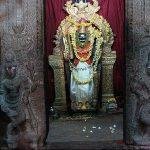
The Veerabhadra Temple, located in the historic village of Lepakshi in Andhra Pradesh, stands as a timeless monument of devotion and architectural grandeur. Dedicated to Veerabhadra, a fierce manifestation of Lord Shiva, this temple embodies the spiritual intensity of the Vijayanagara era. According to Hindu mythology, Veerabhadra was created by Shiva’s wrath following the self-immolation of Goddess Sati. Worshipped as the “Lord of War” and the protector of devotees, he represents the power to destroy evil and overcome obstacles.
Phalaśruti (Spiritual Benefits): Devotees flock to this sacred shrine to seek blessings for courage, strength, and the removal of negative influences in their lives. It is particularly renowned for:
- Cleansing Ancestral Karma: Performing rituals here is believed to bring peace to ancestors.
- Overcoming Obstacles: Lord Veerabhadra removes planetary afflictions (Graha Dosha) and black magic.
- Marital Harmony: Couples visit to strengthen their bond and seek blessings for longevity.
Historical Origins & Scriptural Legend
Historical Construction:
According to temple records and historical consensus, the Veerabhadra Temple was constructed in 1530 CE during the reign of the Vijayanagara Empire. It was built by the governors of the empire, Virupanna Nayaka and Viranna Nayaka, under the patronage of King Achyuta Deva Raya. The temple is a prime example of the Vijayanagara architectural style, which evolved from the earlier Dravidian traditions.
Local Legend (Sthala Purana):
Tradition holds that the temple was built on the spot where Lord Shiva (as Veerabhadra) is believed to have manifested. The village name “Lepakshi” is often associated with the legend of the bird Jatayu from the Ramayana. It is believed that Jatayu fell here after his battle with Ravana, and Lord Rama comforted him, saying “Le Pakshi” (Rise, O bird). While the temple is dedicated to Shiva, the proximity to the Jatayu cave adds a layer of epic mythology to the site.
Architectural Marvels
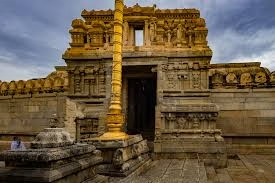
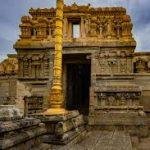
The temple is an architectural masterpiece that showcases the zenith of the Vijayanagara style. Built on a low, tortoise-shaped hillock (Kurma Saila), the complex is divided into two main sections: the Ranganayaka Swamy hall and the Veerabhadra Swamy hall.
- The Monolithic Nandi: Located 200 meters from the temple, this colossal Nandi (bull) is carved from a single block of granite. Measuring approximately 27 feet in height and 15 feet in width, it is one of the largest monolithic Nandi statues in Asia. Its dimensions are so precise that it serves as a geometric centerpiece for the temple’s axis.
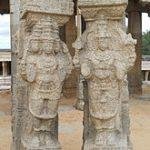
- Carvings and Frescoes: The interior walls are adorned with intricate paintings depicting scenes from the Ramayana and Mahabharata. The “Ardhanarishvara” (half-man, half-woman) sculpture on the southern wall is a highlight, showcasing the artistic finesse of the period.
- Preservation Status: The Archaeological Survey of India (ASI) maintains this site as a “Centrally Protected Monument of National Importance.”
Darshan & Ritual Logistics
Visitors are encouraged to check specific timings during festivals as they may vary. Below are the standard daily timings for Veerabhadra Temple, Lepakshi.
| Session | Timings |
|---|---|
| Morning Darshan | 06:00 AM – 12:00 PM |
| Afternoon Break | 12:00 PM – 04:00 PM |
| Evening Darshan | 04:00 PM – 08:30 PM |
Key Sevas and Offerings:
- Rudrabhishekam: Performed daily between 9:00 AM and 11:00 AM.
- Veerabhadra Archana: Can be performed any time during darshan hours.
- Kumkum Archana: A special offering to Veerabhadra and Goddess Bhadrakali.
Online Seva Booking:
As of 2026, the temple administration facilitates online bookings for major rituals through the official Andhra Pradesh Endowments Department portal. Devotees are advised to book at least 24 hours in advance for special abhishekams.
2026 Festival Dates:
- Maha Shivaratri: February 26, 2026
- Karthika Deepam: December 15, 2026
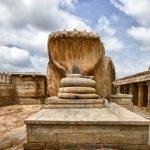
- Naga Chaturthi: Specific dates vary by lunar calendar; usually celebrated with great fervor for serpent deities.
Practical Visitor Guidance
To ensure a smooth darshan experience at the Veerabhadra Temple, Lepakshi, follow these guidelines:
- Dress Code: Traditional attire is preferred. Men should wear dhotis or trousers with shirts; women should wear sarees, salwar kameez, or long skirts. Short clothing is not permitted.
- Photography & Mobiles: Photography is allowed in the temple courtyards and exterior areas. However, it is strictly prohibited inside the sanctum sanctorum (Garbhagriha) and near the preserved frescoes. Mobile phones are permitted, but use is discouraged inside the inner halls.
- Crowd Management: Weekends and holidays witness heavy crowds. The best time to visit is on weekdays between 10:00 AM and 12:00 PM. During summer (April–June), the granite floor retains heat; carry a water bottle and wear light socks.
- Accessibility: The temple has ramps for wheelchair access to the main courtyard, but the interiors have high thresholds.
Pilgrimage Connectivity
How to Reach Veerabhadra Temple
The temple is strategically located on the Andhra Pradesh border with Karnataka, making it easily accessible from Bangalore.
- By Air: The nearest airport is Kempegowda International Airport (BLR), Bangalore (approx. 130 km). The second closest is Vijayawada Airport (approx. 280 km).
- By Train: The nearest railway station is Hindupur (approx. 35 km). Another major option is Bangalore City Junction.
- By Road: The temple is located just off NH 44 (formerly NH 7). It is 12 km from the Karnataka-Andhra Pradesh border. The drive from Bangalore takes approximately 2.5 hours via the Anantapur Highway.
Nearby Sacred Sites
Extend your pilgrimage by visiting these nearby landmarks:
- Borra Caves: While a longer drive, these ancient limestone caves are a geological marvel often combined with a trip to the region.
- Penukonda Fort: Located about 35 km away, this fort houses several temples and was a strategic capital of the Vijayanagara Empire.
- Kadiri Lakshmi Narasimha Temple: Located in Kadiri (approx. 90 km), this is a powerful Narasimha shrine known for its curing properties.
Frequently Asked Questions (FAQs)
1. Is there a VIP darshan entry at Veerabhadra Temple?
Yes, the temple management offers a ‘Special Entry’ or VIP darshan facility for a nominal fee. This allows devotees to bypass the general queue during peak hours. Tickets can be purchased at the counter near the entrance or booked online.
2. What is the significance of the hanging pillars in the temple?
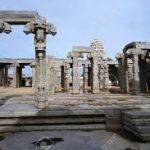
The temple hall contains pillars that appear to be hanging from the ceiling without full support at the base. These are a testament to the advanced engineering skills of Vijayanagara architects. It is said one pillar was slightly moved by a British engineer to test its stability but was stopped as cracks appeared in the ceiling.
3. Are there accommodation facilities available near the temple?
While there are limited lodges in Lepakshi village, the nearest town with hotel facilities is Hindupur (35 km). Pilgrims can also opt to stay in Bangalore or Anantapur and make a day trip to the temple.
4. Can we perform hair tonsuring (Mundan) at this temple?
Hair tonsuring is a common ritual at Shiva temples. While there are no modern facilities within the complex, traditional barbers are often available outside the temple. However, for hygiene reasons, it is recommended to perform this ritual in nearby towns like Hindupur.
5. What is the entry fee for Veerabhadra Temple?
There is no entry fee for general darshan. However, a nominal fee is charged for photography permits and special darshan tickets.
Photo Gallery
Recent Posts

Shri Kaamkoteeshwar Mandir, Varanasi – History & Significance
In the heart of Kashi, the eternal city of Lord Shiva, where the Ganges flows with celestial grace, stands the Shri Kaamkoteeshwar Mandir. This sacred Sannidhi is not merely a temple but a profound spiritual bridge between the Northern…

ओ सांवरे तूने ही मुझको संभाला – Lyrics & Meaning
ओ सांवरे तूने ही मुझको संभाला – A Prayer to Shyam Origin & Spiritual Essence Why This Bhajan Resonates Devotees chant this when overwhelmed by life’s storms—the refrain ‘तूने ही मुझको संभाला’ is the soul’s sigh of relief: “You…

कथा ये है महाराज मेरे की – Lyrics & Meaning
कथा ये है महाराज मेरे की छत्रपति संभाजी महाराज – A Prayer to Chhatrapati Sambhaji Maharaj Origin & Spiritual Essence Why This Bhajan Resonates Devotees chant this when their spirit feels tested—its powerful refrain “महाराज मेरे” is a soul’s…

Rigveda Samhita Yathartha Anuvada (ऋग्वेद संहिता यथार्थ अनुवाद) – Complete Set with Anvayartha & Hindi/English Translation
The Rigveda is the oldest surviving scripture of humanity and the foundational text of Sanātana Dharma. For serious students, scholars, UPSC aspirants studying ancient Indian history, Sanskrit learners, and spiritual seekers, a precise and grammatically structured translation is indispensable.…

आना भी अकेला है जाना भी अकेला है – Lyrics & Meaning | BharatTemples
आना भी अकेला है जाना भी अकेला है – A Prayer to the Divine Witness Origin & Spiritual Essence Why This Bhajan Resonates Devotees turn to this bhajan in moments of deep reflection—when life’s attachments begin to ache. The…

माता शेरावाली के द्वार जो भी जाता है – Lyrics & Meaning
माता शेरावाली के द्वार जो भी जाता है – A Prayer to Maa Sherawali Origin & Spiritual Essence Why This Bhajan Resonates Devotees turn to this bhajan in times of fear or uncertainty—its promise that no one leaves Maa’s…

मार लेना सपणी उबार लेणा भवरा – Lyrics & Meaning
मार लेना सपणी उबार लेणा भवरा – A Prayer to the Divine Beloved Origin & Spiritual Essence Why This Bhajan Resonates Devotees chant this in moments of deep vulnerability—its cry of “मार लेना सपणी, उबार लेणा भवरा” is the…

हमें श्याम सुंदर भरोसा तुम्हारा – Lyrics & Meaning
हमें श्याम सुंदर भरोसा तुम्हारा – A Prayer to Shyam Sundar Origin & Spiritual Essence Why This Bhajan Resonates Devotees chant this when feeling alone—its refrain ‘de do sahara’ is the soul’s cry for divine support. Lyrics in Hindi…

Mere Satguru Ne Di Thi Davai Lyrics in Hindi & Meaning
Mere Satguru Ne Di Thi Davai: Invoking the Guru’s Liberating Wisdom This soul-stirring bhajan venerates the Satguru (True Spiritual Master) as the divine physician who dispenses the only remedy for life’s deepest sufferings. Composed by Sant Karmaveer Tufani, it…

Janm Diyo Thari Maa Dukh Dekhiyo Lyrics in Hindi & Meaning
जन्म दियो थारी माँ दुख देखियो (Maa’s Grief Upon Birthing You) This soul-stirring Chetavani Bhajan (admonitory hymn) is addressed to the Divine Mother (Maa) – a call for repentance when children forget their filial duties in the dark age…