
Contents
- 1 Introduction & Spiritual Essence
- 2 Darshan & Ritual Logistics
- 2.1 Daily Timings
- 2.2 Key Sevas & Online Booking (2026)
- 2.3 Practical Visitor Guidance
- 2.4 Pilgrimage Connectivity
- 2.5 Frequently Asked Questions (FAQ)
- 2.5.1 1. Is there a VIP darshan entry available at Bagheswari Temple?
- 2.5.2 2. What is the contact number for the temple office?
- 2.5.3 3. Are there accommodation facilities available near the temple?
- 2.5.4 4. What is the historical significance of the name ‘Bagheswari’?
- 2.5.5 5. Is non-vegetarian food allowed near the temple?
- 3 Photo Gallery
- 4 How to Reach
- 5 Contact Details
Introduction & Spiritual Essence
The Bagheswari Temple stands as a profound spiritual beacon in Bongaigaon, Assam. As one of the revered 51 Shakti Pithas scattered across the Indian subcontinent, this temple is dedicated to Maa Bagheswari, a manifestation of the Divine Mother (Shakti). In local lore, she is often worshipped as Matsya or Mamata, embodying the nurturing and protective energies of the region.
The primary deity here is a Swayambhu (self-manifested) idol, which devotees believe holds immense spiritual potency. The theological significance of visiting Bagheswari Temple is deeply rooted in the restoration of balance. Phalaśruti (scriptural promise of merit) suggests that sincere prayers here alleviate ancestral karma and grant spiritual liberation (Moksha). It is particularly auspicious for devotees seeking relief from planetary afflictions and for the fulfillment of marital and familial harmony.
Historical Origins & Scriptural Legend
According to temple records and regional historical accounts, the site has been a center of worship since ancient times, though the current structure has evolved through centuries of patronage. The exact date of the original foundation is difficult to pinpoint due to the oral nature of its early history, but it is traditionally believed to have been established during the Limbu Dynasty (as per local narratives) or early medieval period in Assam.
The Sthala Purana (local legend) of Bagheswari links the temple to the mythological event of Sati’s self-immolation. It is believed that the right thigh of Goddess Sati fell at this location, making it a powerful Shakti Pitha. The name “Bagheswari” translates to “The Lady of the Tiger” (Bagh = Tiger), symbolizing her fierce yet protective nature, similar to Goddess Durga riding a tiger.
Tradition holds that the temple was renovated and expanded by local chieftains and later by the Koch Dynasty rulers who were devout worshippers of the Goddess. The temple complex stands as a testament to the region’s continuous devotion despite the changing historical tides.
Architectural Marvels
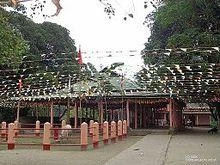
The architecture of Bagheswari Temple is a serene blend of Assamese and traditional Shakti styles. While it lacks the towering spires of the Nagara style found in North India, it embodies the distinct regional aesthetics prevalent in Assam’s temple architecture.
- Sanctum Sanctorum (Garbhagriha): The inner shrine houses the Swayambhu idol. The architecture focuses on a compact, fortified structure that maintains the sanctity of the deity.
- Roof Structure: The temple features a traditional curved roof typical of Assamese architecture, designed to withstand the heavy monsoon rains of the Brahmaputra Valley.
- Mandapas: The complex includes a pillared Mandapa (hall) used for rituals and gatherings. The pillars are often adorned with intricate carvings depicting scenes from Hindu mythology.
- Vastu Shastra: The temple layout adheres to the principles of Vastu Shastra, ensuring that the energy flow from the north-east corner (Ishan Kon) is directed towards the sanctum.
While the temple is not a UNESCO site, it is protected and maintained as a major religious site by the state authorities, preserving its historical integrity.
Darshan & Ritual Logistics
Devotees visiting Bagheswari Temple can participate in various sevas and witness the daily rituals. The atmosphere is particularly charged with devotion during the morning Mangala Arati and the evening Shayan Arati.
Daily Timings
| Session | Timings | Ritual Details |
|---|---|---|
| Morning | 5:30 AM – 1:00 PM | Opens with Mangala Darshan (5:30 AM). Main Darshan starts after 8:00 AM. |
| Afternoon | 1:00 PM – 3:00 PM | Temple remains closed for ritual cleaning and Deity rest. |
| Evening | 3:00 PM – 8:30 PM | Reopens for afternoon Darshan. Ends with the nightly Shayan Arati. |
Key Sevas & Online Booking (2026)
The temple administration has digitized the booking process for major rituals. Devotees can book the following Sevas via the official state temple portal:
- Abhishekam: Ritual bathing of the deity with milk, honey, and ghee. (Time: 8:00 AM – 9:00 AM)
- Archana: Recitation of 108 names of Maa Bagheswari. (Time: Available throughout the day)
- Maha Arati: Participation in the evening lamp ceremony. (Time: 7:30 PM)
Important 2026 Festival Dates:
Note: Dates are estimated based on the Hindu calendar (Tithi) and are subject to local sighting.
- Basanti Puja (Durga Puja): September 28 – October 7, 2026
- Navaratri: March 21 – March 30, 2026 (Vasant Navaratri)
- Diwali: November 11, 2026 (Deepavali celebrates the victory of light; special Arati is held)
- Shivaratri: February 26, 2026 (Though dedicated to Shiva, the temple observes special prayers)
Practical Visitor Guidance
- Dress Code: Traditional attire is highly encouraged. Men should wear dhoti/kurta or formal trousers and shirts; women should wear saree, salwar kameez, or long skirts. Avoid shorts and sleeveless tops.
- Photography & Mobiles: Photography inside the sanctum sanctorum is strictly prohibited. Mobile phones should be silenced; lockers are available at the entrance for electronic devices.
- Accessibility: The temple complex has ramps for wheelchair access to the main hall, though the sanctum area involves a few steps.
- Crowd Management:
- Best Time to Visit: Early mornings (6:00 AM – 8:00 AM) or weekdays (Tuesday/Thursday).
- Seasonal Advice: During summer (April-June), carry water and a head cover, as Bongaigaon can be humid. Winters (Nov-Feb) are pleasant and ideal for pilgrimage.
Pilgrimage Connectivity
How to Reach:
The temple is located in the heart of Bongaigaon, making it easily accessible.
- By Air: The nearest airport is Lokpriya Gopinath Bordoloi International Airport in Guwahati (approx. 180 km). Taxis and buses are readily available from Guwahati to Bongaigaon.
- By Rail: New Bongaigaon Railway Station is the closest railhead, located just 2-3 km from the temple (approx. 10-minute drive).
- By Road: Bongaigaon is connected via National Highway 27 (formerly NH 31). Regular bus services connect Bongaigaon to Guwahati, Silchar, and Kolkata.
Nearby Sacred Sites:
Enhance your spiritual journey by visiting these nearby sites:
- Shiva Temple (Borgang): Located approximately 10 km away, this hilltop temple offers panoramic views and serenity.
- Koya Khol Temple (Joypur): Famous for its natural springs and cave-like structure, located about 20 km from Bongaigaon.
- Saraighat Bridge (Guwahati): If traveling via Guwahati, visit the Brahmaputra river banks and the historic temples near Umananda Island.
Frequently Asked Questions (FAQ)
1. Is there a VIP darshan entry available at Bagheswari Temple?
Currently, the temple administration facilitates a standard queue for all devotees to ensure equality in darshan. However, during major festivals, special passes for donors or elderly citizens may be issued by the temple trust office.
2. What is the contact number for the temple office?
The official contact number for queries regarding Seva booking or timings is 08319707128. It is advisable to call between 9:00 AM and 5:00 PM.
3. Are there accommodation facilities available near the temple?
Yes, Bongaigaon offers several hotels and guest houses ranging from budget to mid-range within a 2 km radius of the temple. The District Commissioner’s (DC) office also has guest houses for government officials with prior booking.
4. What is the historical significance of the name ‘Bagheswari’?
It translates to “The Lady of the Tiger.” The tiger symbolizes power and energy. As the deity is a Shakti Pitha, the name signifies her role as the supreme source of energy (Shakti) who vanquishes evil and protects the devotees.
5. Is non-vegetarian food allowed near the temple?
Being a Shakti Pitha, the temple premises and the immediate vicinity are strictly vegetarian zones. Devotees are requested to respect the sanctity of the place.
Photo Gallery
How to Reach
Contact Details
Official Address:
Bagheswari Mandir Road, Borpara, Mayapuri, Bongaigaon, Assam 783380
Phone: 08319707128
Recent Posts

Shri Kaamkoteeshwar Mandir, Varanasi – History & Significance
In the heart of Kashi, the eternal city of Lord Shiva, where the Ganges flows with celestial grace, stands the Shri Kaamkoteeshwar Mandir. This sacred Sannidhi is not merely a temple but a profound spiritual bridge between the Northern…

ओ सांवरे तूने ही मुझको संभाला – Lyrics & Meaning
ओ सांवरे तूने ही मुझको संभाला – A Prayer to Shyam Origin & Spiritual Essence Why This Bhajan Resonates Devotees chant this when overwhelmed by life’s storms—the refrain ‘तूने ही मुझको संभाला’ is the soul’s sigh of relief: “You…

कथा ये है महाराज मेरे की – Lyrics & Meaning
कथा ये है महाराज मेरे की छत्रपति संभाजी महाराज – A Prayer to Chhatrapati Sambhaji Maharaj Origin & Spiritual Essence Why This Bhajan Resonates Devotees chant this when their spirit feels tested—its powerful refrain “महाराज मेरे” is a soul’s…

Rigveda Samhita Yathartha Anuvada (ऋग्वेद संहिता यथार्थ अनुवाद) – Complete Set with Anvayartha & Hindi/English Translation
The Rigveda is the oldest surviving scripture of humanity and the foundational text of Sanātana Dharma. For serious students, scholars, UPSC aspirants studying ancient Indian history, Sanskrit learners, and spiritual seekers, a precise and grammatically structured translation is indispensable.…

आना भी अकेला है जाना भी अकेला है – Lyrics & Meaning | BharatTemples
आना भी अकेला है जाना भी अकेला है – A Prayer to the Divine Witness Origin & Spiritual Essence Why This Bhajan Resonates Devotees turn to this bhajan in moments of deep reflection—when life’s attachments begin to ache. The…

माता शेरावाली के द्वार जो भी जाता है – Lyrics & Meaning
माता शेरावाली के द्वार जो भी जाता है – A Prayer to Maa Sherawali Origin & Spiritual Essence Why This Bhajan Resonates Devotees turn to this bhajan in times of fear or uncertainty—its promise that no one leaves Maa’s…

मार लेना सपणी उबार लेणा भवरा – Lyrics & Meaning
मार लेना सपणी उबार लेणा भवरा – A Prayer to the Divine Beloved Origin & Spiritual Essence Why This Bhajan Resonates Devotees chant this in moments of deep vulnerability—its cry of “मार लेना सपणी, उबार लेणा भवरा” is the…

हमें श्याम सुंदर भरोसा तुम्हारा – Lyrics & Meaning
हमें श्याम सुंदर भरोसा तुम्हारा – A Prayer to Shyam Sundar Origin & Spiritual Essence Why This Bhajan Resonates Devotees chant this when feeling alone—its refrain ‘de do sahara’ is the soul’s cry for divine support. Lyrics in Hindi…

Mere Satguru Ne Di Thi Davai Lyrics in Hindi & Meaning
Mere Satguru Ne Di Thi Davai: Invoking the Guru’s Liberating Wisdom This soul-stirring bhajan venerates the Satguru (True Spiritual Master) as the divine physician who dispenses the only remedy for life’s deepest sufferings. Composed by Sant Karmaveer Tufani, it…

Janm Diyo Thari Maa Dukh Dekhiyo Lyrics in Hindi & Meaning
जन्म दियो थारी माँ दुख देखियो (Maa’s Grief Upon Birthing You) This soul-stirring Chetavani Bhajan (admonitory hymn) is addressed to the Divine Mother (Maa) – a call for repentance when children forget their filial duties in the dark age…