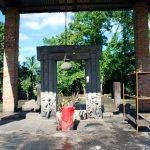
Located in the serene village of Dah Parvatiya, just west of Tezpur in Assam, lies a fragment of divine history preserved in stone. While the current visible ruins are often associated with the Ahom period, the spiritual bedrock of this site dates back to the 6th century under the Gupta Empire. Known locally as the Da Parbatia temple complex, this site is not merely a monument but a surviving witness to the architectural zenith of ancient India.
The presiding deity of this ancient site is Lord Shiva. Though the original murti (idol) is lost to time, the sanctity of the place remains intact. The temple stands on the foundations of a much older structure, creating a unique layering of history where devotees walk upon the same ground as their Gupta-era ancestors.
Phalaśruti: Why Devotees Visit
According to traditional beliefs, visiting this site fulfills specific spiritual desires:
Cleansing of Ancestral Karma: It is believed that performing rituals here helps pacify planetary afflictions, particularly those related to Shani (Saturn) and Rahu, thereby cleansing ancestral lineage.
Blessings of Wisdom (Saraswati): The intricate carvings and the scholarly nature of the temple’s history attract students and researchers seeking the blessings of Goddess Saraswati for knowledge and clarity.
Harmony in Domestic Life: As a site dedicated to Shiva-Parvati, couples visit to seek blessings for marital harmony and stability.
The history of Dah Parvatiya is a dual narrative of imperial glory and spiritual resilience.
The Gupta Legacy (6th Century CE)
Archaeological excavations conducted by the Archaeological Survey of India (ASI) in 1924 revealed the existence of a Gupta-era temple. This places Dah Parvatiya among the earliest stone structures in Northeast India. The architects of the Gupta period were masters of structural purity, moving away from rock-cut caves to free-standing stone temples.
The Ahom Period Overlay
Centuries later, during the Ahom period, the temple underwent significant reconstruction. The Ahom rulers, known for their syncretic culture, revered the ancient site but rebuilt the structure using bricks and stone, overlaying the original Gupta foundations. This created the stone-paved layout of the sanctum sanctorum and the mandapa (hall) seen today.
Scriptural & Oral Legends
While specific Vedic verses detailing this site are focused on regional lore, the Sthala Purana (local legend) suggests that the site was a potent center of Tantric practices during the Gupta era due to its proximity to the Brahmaputra River, which is considered a manifestation of Lord Vishnu’s cosmic energy.
Da Parbatia is a small village very close to west Tezpur, in the Indian State of Assam. In the village there are significant architectural remnants of an ancient temple of the sixth century overlying the ruins of another Shiva temple built of bricks during the Ahom period. Archaeological excavations done here in 1924 have unearthed a sixth century antiquity in the form of a stone door frame with extensive carvings.The ruins of the temple built during the Ahom period are built over the ancient temple’s foundations and are in the form of a stone paved layout plan of the sanctum sanctorum and a mandapa.This complex is under the jurisdiction of the Archaeological Survey of India and its importance and notability is recorded under the Ancient Monuments and Archaeological Sites and Remains Act 1958
Architectural Marvels
The architecture of Dah Parvatiya is a testament to the transition in Indian temple design.
Gupta Style
The surviving stone door frame is the crown jewel of this site. It reflects the classic Gupta architectural style, characterized by grace, proportion, and structural clarity. The carvings on the door frame display the mature artistic sensibilities of the 6th century, featuring intricate scroll work and divine figures that rival the best temples of North India.
The layout follows the principles of Vastu Shastra, with the Garbhagriha (sanctum) positioned for maximum solar energy absorption during the equinoxes. The remnants of the Mandapa suggest a spacious hall for congregational worship, typical of the era.
Status: The site is protected by the Archaeological Survey of India (ASI) under the Ancient Monuments and Archaeological Sites and Remains Act, 1958.
Darshan & Ritual Logistics
Unlike active temples with large presiding deities, Dah Parvatiya is a heritage site. However, the ASI maintains the sanctity of the location for visitors and devotees.
Daily Timings
Session
Timing
Morning Darshan
06:00 AM – 12:00 PM
Evening Darshan
03:00 PM – 06:00 PM
Closure
12:00 PM – 03:00 PM (Lunch Break)
Sevas and Rituals
While the site is preserved, specific temple rituals are symbolic. For those seeking deeper engagement:
Heritage Walk & Meditation: Visitors are encouraged to sit in the Mandapa area for quiet meditation.
Online Seva Booking: As this is a protected archaeological site, standard temple sevas (like Abhishekam) are not conducted by the ASI. However, during Shivratri, local temple committees often organize special prayers nearby.
2026 Festival Calendar
Maha Shivaratri: February 26, 2026
Assamese New Year (Rongali Bihu): April 14, 2026
Kartik Purnima: November 5, 2026
Practical Visitor Guidance
As a heritage site managed by the ASI, specific protocols must be followed to preserve the monument.
Rules & Etiquette
Dress Code: Modest attire is recommended. Traditional Indian wear is preferred.
Photography: Allowed. The stone carvings are highly photogenic. Avoid using flash directly on the stone to prevent degradation.
Mobile Lockers: There are no official locker facilities on-site. Carry minimal belongings.
Accessibility: The site is on ground level, but the terrain is uneven due to archaeological excavations. Wheelchair access is limited.
Crowd Management & Seasonal Advice
Best Hours: 8:00 AM to 10:00 AM offers the best natural light for photography and a tranquil atmosphere.
Summer (March–June): Tezpur can get humid. Carry water and a hat.
Monsoon (June–September): The Brahmaputra valley receives heavy rainfall. Visit early in the morning to avoid showers.
Dah Parvatiya is strategically located in the cultural hub of Sonitpur district.
How to Reach
By Air: The nearest airport is Lokpriya Gopinath Bordoloi International Airport in Guwahati, approximately 180 km away.
By Rail:Tezpur Railway Station is the nearest railhead, well connected to Guwahati and other major cities.
By Road: The site is located on the outskirts of Tezpur. It is accessible via the NH 715 and local state highways. Taxis and auto-rickshaws are readily available from Tezpur town.
Nearby Sacred Sites
Enhance your pilgrimage by visiting these nearby spiritual destinations:
Bamuni Hills: Located just 1 km away, these ruins feature exquisite Gupta-era sculptures and offer panoramic views of the Brahmaputra.
Mahabhairab Temple: Situated in Tezpur, this ancient Shiva temple is believed to be founded by King Banasura.
Kolabari Temple: A serene spot on the banks of the Brahmaputra, ideal for evening Aarti.
Photo Gallery
iimages (85), Dah Parvatiya, Tezpur, Assam
Dah Parvatiya1, Dah Parvatiya, Tezpur, Assam
Dah Parvatiya, Dah Parvatiya, Tezpur, Assam
Da-Parbatia, Dah Parvatiya, Tezpur, Assam
Frequently Asked Questions (FAQ)
1. Is there an entry fee for Dah Parvatiya?
Yes, as it is an ASI-protected site, a nominal entry fee is charged for Indian citizens and foreign tourists. Please carry cash as digital payments may not always be accepted at the ticket counter.
2. Is there a VIP darshan entry available?
No, VIP darshan is not applicable as this is an archaeological monument rather than an active temple with a presiding deity. Entry is first-come, first-served.
3. Can I perform Abhishekam at the ruins?
Strictly no. ASI regulations prohibit the use of water, oil, or other liquids on the monument structure to prevent damage to the ancient stonework.
4. What is the best time of year to visit Tezpur?
The ideal time is between October and March when the weather is cool and dry, perfect for exploring outdoor ruins.
5. Are there accommodation options nearby?
Tezpur town, just a few minutes away, offers a range of hotels and guesthouses ranging from budget to mid-range.
Contact Details
Official Address:
Dah Parvatiya (Da Parbatia),
Tezpur, Sonitpur District,
Assam, India.
In the heart of Kashi, the eternal city of Lord Shiva, where the Ganges flows with celestial grace, stands the Shri Kaamkoteeshwar Mandir. This sacred Sannidhi is not merely a temple but a profound spiritual bridge between the Northern…
ओ सांवरे तूने ही मुझको संभाला – A Prayer to Shyam Origin & Spiritual Essence Why This Bhajan Resonates Devotees chant this when overwhelmed by life’s storms—the refrain ‘तूने ही मुझको संभाला’ is the soul’s sigh of relief: “You…
कथा ये है महाराज मेरे की छत्रपति संभाजी महाराज – A Prayer to Chhatrapati Sambhaji Maharaj Origin & Spiritual Essence Why This Bhajan Resonates Devotees chant this when their spirit feels tested—its powerful refrain “महाराज मेरे” is a soul’s…
The Rigveda is the oldest surviving scripture of humanity and the foundational text of Sanātana Dharma. For serious students, scholars, UPSC aspirants studying ancient Indian history, Sanskrit learners, and spiritual seekers, a precise and grammatically structured translation is indispensable.…
आना भी अकेला है जाना भी अकेला है – A Prayer to the Divine Witness Origin & Spiritual Essence Why This Bhajan Resonates Devotees turn to this bhajan in moments of deep reflection—when life’s attachments begin to ache. The…
माता शेरावाली के द्वार जो भी जाता है – A Prayer to Maa Sherawali Origin & Spiritual Essence Why This Bhajan Resonates Devotees turn to this bhajan in times of fear or uncertainty—its promise that no one leaves Maa’s…
मार लेना सपणी उबार लेणा भवरा – A Prayer to the Divine Beloved Origin & Spiritual Essence Why This Bhajan Resonates Devotees chant this in moments of deep vulnerability—its cry of “मार लेना सपणी, उबार लेणा भवरा” is the…
हमें श्याम सुंदर भरोसा तुम्हारा – A Prayer to Shyam Sundar Origin & Spiritual Essence Why This Bhajan Resonates Devotees chant this when feeling alone—its refrain ‘de do sahara’ is the soul’s cry for divine support. Lyrics in Hindi…
Mere Satguru Ne Di Thi Davai: Invoking the Guru’s Liberating Wisdom This soul-stirring bhajan venerates the Satguru (True Spiritual Master) as the divine physician who dispenses the only remedy for life’s deepest sufferings. Composed by Sant Karmaveer Tufani, it…
जन्म दियो थारी माँ दुख देखियो (Maa’s Grief Upon Birthing You) This soul-stirring Chetavani Bhajan (admonitory hymn) is addressed to the Divine Mother (Maa) – a call for repentance when children forget their filial duties in the dark age…