
Contents
- 1 Chatur Dant Vinayak Temple: The Spiritual Anchor of Varanasi
Chatur Dant Vinayak Temple: The Spiritual Anchor of Varanasi
As the Lead Heritage Architect for bharattemples.com, I have traversed the sacred geography of Varanasi countless times. Yet, the spiritual resonance found within the narrow bylanes of Nai Sarak, specifically at the Chatur Dant Vinayak Temple, remains a singular experience. This guide is crafted not merely as an informational resource, but as a devotional entry point into one of the most potent Ganesha shrines in Kashi.
Introduction & Spiritual Essence: The Significance of Chatur Dant
The primary deity of this temple is Chatur Dant Vinayak, a specific form of Lord Ganesha. In Sanskrit, Chatur means four and Dant means teeth/tusks. This form is rare and spiritually significant, representing the four aspects of the mind (Manas, Buddhi, Ahamkara, and Chitta) and the four Vedas.
Phalaśruti: Why Devotees Visit
According to temple records and oral tradition, merely having the Darshan of this Swayambhu (self-manifested) idol removes the “Sankat” (obstacles) from a devotee’s life. The specific benefits (Phalaśruti) include:
- Removal of Obstacles: Known to clear the path of political, legal, and personal hurdles.
- Clarity of Mind: As the deity represents the four-fold mind, devotees pray here for wisdom and decision-making prowess.
- Ancestral Karma: It is a powerful site for performing rites to cleanse ancestral lineage debts (Pitra Dosha).
Historical Origins & Scriptural Legend
Unlike the massive temple complexes built by royal dynasties, the history of Chatur Dant Vinayak is deeply woven into the domestic and mercantile fabric of Varanasi’s Purani (old) city.
Origins and Timeline
While exact dating is difficult for such ancient sites, local historians estimate the shrine’s origins to the 16th or 17th century. It is believed to have been established during the Bhosale or Mughal era patronage of Hindu merchants in Kashi. Unlike the towering Shikharas of North Indian temples, this structure has evolved through renovations by the local trading community, specifically those dealing in sarees and fabrics in the Nai Sarak area.
The Legend of the Four Tusks
Tradition holds that the idol was unearthed during the construction of a household cellar (Taal) in the area. The local Sthala Purana suggests that Lord Ganesha appeared in a dream to a devout merchant, instructing him to protect the manifestation of the deity who carries the four Vedas within him. The name “Chatur Dant” directly links this deity to the Ganesh Atharvashirsha scripture, where Ganesha is equated with the ultimate reality (Brahman) and the Vedas.
Architectural Marvels
From a heritage perspective, this temple exemplifies the adaptation of temple architecture within the dense urban fabric of Varanasi.
Style and Vastu
The architecture is a blend of the Nagara style and traditional Kashi residential architecture. The sanctum (Garbhagriha) is located below the ground level, a unique Vastu feature found in several ancient Kashi shrines, symbolizing the descent into the inner self. The Shikhara (spire) is modest, constructed of stone, but the inner sanctum is richly decorated with gold and silver plating added over centuries of devotee offerings.
Sculptural Details
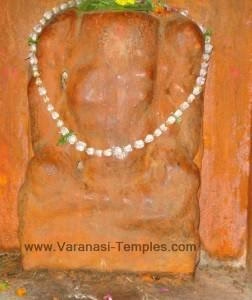
The idol features the standard two hands, holding the modak (sweet) and the lotus, with the trunk turning towards the left (Vamamukha). The four tusks are carved with precision, representing the four states of consciousness: waking, dreaming, deep sleep, and the transcendent state (Turiya). The walls surrounding the sanctum are adorned with intricate carvings depicting various forms of Ganesha, protected by iron grilles to preserve their antiquity.
Darshan & Ritual Logistics
Visiting Chatur Dant Vinayak requires an appreciation for the fluid nature of time in Varanasi. While the temple is generally accessible throughout the day, specific rituals follow traditional timings.
Daily Timings (2026 Schedule)
| Session | Timing | Activity |
|---|---|---|
| Morning | 05:00 AM – 12:00 PM | Mangala Aarti & Abhishekam |
| Afternoon | 12:00 PM – 04:00 PM | General Darshan (Idol adorned with flowers) |
| Evening | 04:00 PM – 11:00 PM | Sandhya Aarti & Shringar |
*Note: During Shravana Mondays (July-August) and Sankashti Chaturthi, timings extend by 2-3 hours.
Sevas and Online Booking
Currently, the temple relies heavily on direct offerings. However, for special occasions, bookings can be managed via the Kashi Vishwanath Temple Trust portal or local priests.
- Abhishekam: Performed with milk, honey, and Ganga Jal.
- Archana: Offering of 108 names of Ganesha.
- Modak Offering: The deity’s favorite, available at temple counters.
2026 Festival Calendar
- Magh Ganesh Chaturthi: February 3, 2026
- Varad Vinayak Chaturthi: August 23, 2026
- Angarki Chaturthi: September 21, 2026
- Sankashti Chaturthi: Monthly (Specific dates vary by lunar calendar).
Practical Visitor Guidance
Navigating the lanes of Nai Sarak can be intense. Here is how to prepare for a seamless pilgrimage.
Rules and Etiquette
- Dress Code: Modest attire is mandatory. Men should wear dhoti or trousers (no shorts). Women should cover shoulders and knees.
- Photography: Strictly prohibited inside the inner sanctum. Photography of the outer architecture is allowed but discouraged during Aarti.
- Mobile Phones: Use the free cloakroom facilities provided at the entrance of Nai Sarak market to store phones. The lanes are too narrow for effective network coverage.
- Accessibility: The temple is accessible via a staircase. Unfortunately, there are no ramps for wheelchair users due to the antique structure.
Crowd Management & Seasonal Advice
Best Hours: 6:00 AM – 8:00 AM is ideal for a peaceful Darshan. Avoid 7:00 PM – 9:00 PM on weekends when local traders visit.
Seasonal Tip: Varanasi summers (May-June) are scorching. Carry a reusable water bottle and a handkerchief. The narrow lanes offer shade, but dehydration is a risk.
Pilgrimage Connectivity
The temple is located in the heart of Varanasi, making it a central point for a spiritual circuit.
How to Reach
- Air: Lal Bahadur Shastri International Airport (LBS) is approximately 35 km away. Taxi or Auto-rickshaw to Dashashwamedh Ghat (fare: ₹400-500).
- Rail: Varanasi Junction (BSB) is 7 km away. Rickshaws are easily available.
- Road: Located near Maidagin. Accessible via NH-19 and Varanasi-Ghazipur Highway. Use public transport to avoid parking hassles.
Nearby Sacred Sites (Pilgrimage Circuit)
Once you offer prayers to Chatur Dant Vinayak, extend your pilgrimage to:
- Kashi Vishwanath Temple: 1.5 km (15-minute walk) via Godaulia intersection.
- Sankat Mochan Hanuman Temple: 3 km (Auto-rickshaw recommended). Famous for the Sankat Mochan Sanskrit Mahavidyalaya.
- Durga Temple (Monkey Temple): 2 km. A vibrant red-painted Nagara style temple.
Frequently Asked Questions (FAQ)
1. Is there a VIP Darshan entry?
No, this is a neighborhood temple rather than a large commercial shrine. VIP entry is not applicable. However, visiting during early morning hours offers the most intimate Darshan experience.
2. What is the entry fee?
There is no entry fee. However, donations are accepted and appreciated.
3. Can I perform the Abhishekam myself?
Yes. According to temple records, devotees are allowed to perform basic Abhishekam with Ganga Jal and milk. However, for elaborate rituals, assistance from the resident priest is recommended.
4. Is the temple open during eclipses?
Following traditional Hindu customs, the inner sanctum is generally closed during solar and lunar eclipses. The outer complex remains open.
5. Where can I park my vehicle?
There is no parking directly at the temple. Visitors are advised to park at the designated parking lots near Dashashwamedh or Maidagin and walk or take a cycle rickshaw to Nai Sarak.
Recent Posts

Shri Kaamkoteeshwar Mandir, Varanasi – History & Significance
In the heart of Kashi, the eternal city of Lord Shiva, where the Ganges flows with celestial grace, stands the Shri Kaamkoteeshwar Mandir. This sacred Sannidhi is not merely a temple but a profound spiritual bridge between the Northern…

ओ सांवरे तूने ही मुझको संभाला – Lyrics & Meaning
ओ सांवरे तूने ही मुझको संभाला – A Prayer to Shyam Origin & Spiritual Essence Why This Bhajan Resonates Devotees chant this when overwhelmed by life’s storms—the refrain ‘तूने ही मुझको संभाला’ is the soul’s sigh of relief: “You…

कथा ये है महाराज मेरे की – Lyrics & Meaning
कथा ये है महाराज मेरे की छत्रपति संभाजी महाराज – A Prayer to Chhatrapati Sambhaji Maharaj Origin & Spiritual Essence Why This Bhajan Resonates Devotees chant this when their spirit feels tested—its powerful refrain “महाराज मेरे” is a soul’s…

Rigveda Samhita Yathartha Anuvada (ऋग्वेद संहिता यथार्थ अनुवाद) – Complete Set with Anvayartha & Hindi/English Translation
The Rigveda is the oldest surviving scripture of humanity and the foundational text of Sanātana Dharma. For serious students, scholars, UPSC aspirants studying ancient Indian history, Sanskrit learners, and spiritual seekers, a precise and grammatically structured translation is indispensable.…

आना भी अकेला है जाना भी अकेला है – Lyrics & Meaning | BharatTemples
आना भी अकेला है जाना भी अकेला है – A Prayer to the Divine Witness Origin & Spiritual Essence Why This Bhajan Resonates Devotees turn to this bhajan in moments of deep reflection—when life’s attachments begin to ache. The…

माता शेरावाली के द्वार जो भी जाता है – Lyrics & Meaning
माता शेरावाली के द्वार जो भी जाता है – A Prayer to Maa Sherawali Origin & Spiritual Essence Why This Bhajan Resonates Devotees turn to this bhajan in times of fear or uncertainty—its promise that no one leaves Maa’s…

मार लेना सपणी उबार लेणा भवरा – Lyrics & Meaning
मार लेना सपणी उबार लेणा भवरा – A Prayer to the Divine Beloved Origin & Spiritual Essence Why This Bhajan Resonates Devotees chant this in moments of deep vulnerability—its cry of “मार लेना सपणी, उबार लेणा भवरा” is the…

हमें श्याम सुंदर भरोसा तुम्हारा – Lyrics & Meaning
हमें श्याम सुंदर भरोसा तुम्हारा – A Prayer to Shyam Sundar Origin & Spiritual Essence Why This Bhajan Resonates Devotees chant this when feeling alone—its refrain ‘de do sahara’ is the soul’s cry for divine support. Lyrics in Hindi…

Mere Satguru Ne Di Thi Davai Lyrics in Hindi & Meaning
Mere Satguru Ne Di Thi Davai: Invoking the Guru’s Liberating Wisdom This soul-stirring bhajan venerates the Satguru (True Spiritual Master) as the divine physician who dispenses the only remedy for life’s deepest sufferings. Composed by Sant Karmaveer Tufani, it…

Janm Diyo Thari Maa Dukh Dekhiyo Lyrics in Hindi & Meaning
जन्म दियो थारी माँ दुख देखियो (Maa’s Grief Upon Birthing You) This soul-stirring Chetavani Bhajan (admonitory hymn) is addressed to the Divine Mother (Maa) – a call for repentance when children forget their filial duties in the dark age…