

Contents
Introduction & Spiritual Essence
Nestled in the spiritual heart of Lower Assam, Mahamaya Dham in Bogribari stands as a beacon of divine grace and ancestral devotion. Known widely as the “Mahamaya Temple of Bogribari,” this sacred site is revered second only to the Kamakhya Temple in Guwahati. The presiding deity, Mahamaya (supreme illusion), embodies the supreme power of Shakti, worshipped here as the mother goddess who bestows liberation upon her devotees.
According to traditional beliefs, visiting this temple offers profound spiritual benefits, particularly the cleansing of ancestral karma and the removal of obstacles in one’s lineage. The goddess here is the Zamindar (landlord) deity of Parvatjowar, originally worshipped by the indigenous Kacharie, Koch, and Nath communities, later embraced by all Hindus of the region.
Phalaśruti (Spiritual Benefit): Devotees believe that a sincere darshan of Mahamaya fulfills deep-seated desires and protects families from unseen evils. The temple is a living testament to the belief that the divine mother resides in nature, governing the cosmic cycle of creation and illusion.
Historical Origins & Scriptural Legend
The history of Mahamaya Dham is woven into the agrarian and tribal fabric of Assam. While the exact scriptural date of construction is not documented in Vedic texts, local history and temple records trace its roots back over 400 years. It is deeply associated with the Zamindar (landlord) system of the Parvatjowar region, under whose patronage the temple flourished.
The Legend of Mahamaya:
Tradition holds that the goddess manifested in the land of Bogribari to protect the local populace from famine and invasion. The name “Mahamaya” refers to the grand illusion of the material world—transcending which leads to spiritual realization. The temple is regarded by many spiritual scholars as a Shakti Peetha in Lower Assam, a site where the divine feminine energy is intensely concentrated.
Local Oral Tradition: Folklore suggests that the original deity was a local nature spirit worshipped by the Kacharie tribe. Over centuries, this worship syncretized with mainstream Hinduism, evolving into the grand festival of Durga Puja celebrated today.
Architectural Marvels
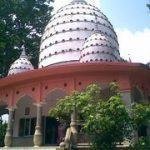
The architecture of Mahamaya Dham reflects the Assamese architectural style, distinct from the classical Nagara or Dravida styles of Southern India, yet sharing their spiritual intent. The temple structure is designed to align with the principles of Vastu Shastra, ensuring energy flow from the sanctum sanctorum to the outer precincts.
- The Sanctum (Garbhagriha): The inner shrine houses the deity in a traditional Shakti form. The sanctum is built using indigenous materials, showcasing the durability of ancient Assamese construction techniques.
- The Mandapas: The temple features a pillared Manchaha (mandapa) where devotees gather. The roof and pillars often bear motifs reflecting the agrarian culture of Lower Assam.
- Sculptural Details: Unlike stone-carved temples of Odisha, this shrine bears the marks of simpler craftsmanship, focusing on the symbolism of the divine mother rather than ornate external carvings.
The complex is not a protected monument under the ASI (Archaeological Survey of India) but is maintained by the local trust as a vital cultural heritage site.
Darshan & Ritual Logistics
The rituals at Mahamaya Dham are vibrant and deeply rooted in Shakta traditions. The priests perform daily pujas and arti, maintaining the sanctity of the space.
Daily Timings
Timings are subject to change during festivals. Below is the standard schedule for 2026.
| Darshan Type | Timing |
|---|---|
| Morning Darshan | 6:00 AM – 12:00 PM |
| Afternoon Break | 12:00 PM – 3:00 PM |
| Evening Darshan | 3:00 PM – 8:00 PM |
| Special Aarti | 6:30 PM (Sandhya Aarti) |
Key Sevas & Online Booking
Devotees can book specific Sevas. While online infrastructure is developing, the primary booking is often managed through the temple trust office.
- Abhishekam: Ritual bathing of the deity (Daily, 7:00 AM).
- Archana (Chanting): Offering flowers and chanting names of the Goddess.
- Special Puja on Tuesdays & Saturdays: Highly auspicious for ancestral peace.
Online Seva Booking Note: For 2026, devotees are advised to check the official Dhubri district administration portal or contact the temple trust directly for digital payment gateways.
Major 2026 Festivals
- Durga Puja (Shardiya Navratri): October 2 – October 11, 2026. This is the grandest festival here, marked by traditional animal sacrifices (though reducing due to modern sentiment) and massive community gatherings.
- Kali Puja: November 1, 2026. Deeply revered for tantric traditions in the region.
- Makar Sankranti (Bhogali Bihu): January 14, 2026. Celebrated with community feasts.
- Shakti Yagya (at Mahamaya Snaanghat): Mid-January 2026. A sacred fire ritual performed at the riverside ghat.
Practical Visitor Guidance
To ensure a smooth pilgrimage, please adhere to the following guidelines:
- Dress Code: Traditional Indian attire is recommended. Men should wear dhotis or trousers with shirts; women should wear sarees or salwar kameez. Avoid western clothing to maintain the devotional atmosphere.
- Photography: Photography inside the sanctum sanctorum is strictly prohibited. External photography is permitted with discretion.
- Mobile & Lockers: There are no electronic lockers available. Visitors are advised to carry minimal belongings. Mobile phones should be on silent mode.
- Crowd Management:
- Best Hours: Visit between 9:00 AM and 11:00 AM for a peaceful darshan.
- Seasonal Advice: Assam summers (April-June) are humid; carry water and a hand fan. Monsoon (June-August) requires rain gear; roads to Bogribari can be waterlogged.
Pilgrimage Connectivity
How to Reach Mahamaya Dham
Mahamaya Dham is located in Bogribari, roughly 30 km east of Dhubri town and 10 km west of Bilasipara town.
- By Air: The nearest airport is Lokpriya Gopinath Bordoloi International Airport in Guwahati (approx. 250 km). From there, take a train or bus to Dhubri.
- By Rail: The nearest major railway station is Dhubri Railway Station. From the station, hire a taxi or take a local bus to Bogribari (approx. 45 minutes).
- By Road: The temple is accessible via NH 31. Regular ASTC buses and private taxis are available from Dhubri and Bilasipara.
Nearby Sacred Sites
Enhance your pilgrimage circuit by visiting these nearby spiritual landmarks:
- Mahamaya Snaanghat: Located just a short distance from the main temple, this riverside ghat is where the goddess is believed to bathe. A Shakti Yagya is performed here annually in January.
- Chakrashila Wildlife Sanctuary: While primarily a nature reserve, it houses ancient shrines and is a place of meditation for local Sadhus.
- Tezpur (Ganesh Temple): Located further north, offering a blend of mythological history and scenic beauty.
Photo Gallery

Frequently Asked Questions (FAQ)
Is there a VIP or Special Entry darshan available?
Yes, the temple trust offers a “Special Entry” pass for elderly citizens, differently-abled devotees, and those in urgent need of medical attention. This can be obtained at the temple counter upon showing valid identification.
Are there accommodation facilities available at Mahamaya Dham?
While there is no deluxe accommodation inside the temple complex, there are several Dharamshalas and budget lodges in Bogribari and Bilasipara. For better amenities, it is recommended to stay in Dhubri (30 km away).
Is non-vegetarian food allowed near the temple?
Mahamaya Dham is a strict vegetarian zone within the temple premises. However, outside the temple, local restaurants serve non-vegetarian cuisine, reflecting the diverse culinary culture of Assam. Alcohol is strictly prohibited in the temple area.
What is the significance of animal sacrifice here?
Historically, animal sacrifice (Bali) was a central ritual at Mahamaya Dham, particularly during Durga Puja, symbolizing the surrender of the ego. However, due to changing societal views and animal rights activism, the practice has significantly reduced. Many devotees now offer pumpkins and gourds symbolically.
What is the contact number for the temple trust?
For the most current contact information and emergency alerts, please consult the official website of the Dhubri District Administration or visit the temple information office on-site.
Recent Posts

Shri Kaamkoteeshwar Mandir, Varanasi – History & Significance
In the heart of Kashi, the eternal city of Lord Shiva, where the Ganges flows with celestial grace, stands the Shri Kaamkoteeshwar Mandir. This sacred Sannidhi is not merely a temple but a profound spiritual bridge between the Northern…

ओ सांवरे तूने ही मुझको संभाला – Lyrics & Meaning
ओ सांवरे तूने ही मुझको संभाला – A Prayer to Shyam Origin & Spiritual Essence Why This Bhajan Resonates Devotees chant this when overwhelmed by life’s storms—the refrain ‘तूने ही मुझको संभाला’ is the soul’s sigh of relief: “You…

कथा ये है महाराज मेरे की – Lyrics & Meaning
कथा ये है महाराज मेरे की छत्रपति संभाजी महाराज – A Prayer to Chhatrapati Sambhaji Maharaj Origin & Spiritual Essence Why This Bhajan Resonates Devotees chant this when their spirit feels tested—its powerful refrain “महाराज मेरे” is a soul’s…

Rigveda Samhita Yathartha Anuvada (ऋग्वेद संहिता यथार्थ अनुवाद) – Complete Set with Anvayartha & Hindi/English Translation
The Rigveda is the oldest surviving scripture of humanity and the foundational text of Sanātana Dharma. For serious students, scholars, UPSC aspirants studying ancient Indian history, Sanskrit learners, and spiritual seekers, a precise and grammatically structured translation is indispensable.…

आना भी अकेला है जाना भी अकेला है – Lyrics & Meaning | BharatTemples
आना भी अकेला है जाना भी अकेला है – A Prayer to the Divine Witness Origin & Spiritual Essence Why This Bhajan Resonates Devotees turn to this bhajan in moments of deep reflection—when life’s attachments begin to ache. The…

माता शेरावाली के द्वार जो भी जाता है – Lyrics & Meaning
माता शेरावाली के द्वार जो भी जाता है – A Prayer to Maa Sherawali Origin & Spiritual Essence Why This Bhajan Resonates Devotees turn to this bhajan in times of fear or uncertainty—its promise that no one leaves Maa’s…

मार लेना सपणी उबार लेणा भवरा – Lyrics & Meaning
मार लेना सपणी उबार लेणा भवरा – A Prayer to the Divine Beloved Origin & Spiritual Essence Why This Bhajan Resonates Devotees chant this in moments of deep vulnerability—its cry of “मार लेना सपणी, उबार लेणा भवरा” is the…

हमें श्याम सुंदर भरोसा तुम्हारा – Lyrics & Meaning
हमें श्याम सुंदर भरोसा तुम्हारा – A Prayer to Shyam Sundar Origin & Spiritual Essence Why This Bhajan Resonates Devotees chant this when feeling alone—its refrain ‘de do sahara’ is the soul’s cry for divine support. Lyrics in Hindi…

Mere Satguru Ne Di Thi Davai Lyrics in Hindi & Meaning
Mere Satguru Ne Di Thi Davai: Invoking the Guru’s Liberating Wisdom This soul-stirring bhajan venerates the Satguru (True Spiritual Master) as the divine physician who dispenses the only remedy for life’s deepest sufferings. Composed by Sant Karmaveer Tufani, it…

Janm Diyo Thari Maa Dukh Dekhiyo Lyrics in Hindi & Meaning
जन्म दियो थारी माँ दुख देखियो (Maa’s Grief Upon Birthing You) This soul-stirring Chetavani Bhajan (admonitory hymn) is addressed to the Divine Mother (Maa) – a call for repentance when children forget their filial duties in the dark age…