
Contents
- 1 Sita Kund, Sitamarhi: The Sacred Birthplace of Goddess Sita
- 1.1 Introduction & Spiritual Essence
- 1.2 Historical Origins & Scriptural Legend
- 1.3 Architectural Marvels
- 1.4 Darshan & Ritual Logistics (2026 Guide)
- 1.5 Practical Visitor Guidance
- 1.6 Pilgrimage Connectivity
- 1.7 Architecture
- 1.8 Legend / Local stories
- 1.9 Photo Gallery
- 1.10 How to Reach:
- 1.11 Contact Details
- 1.12 Frequently Asked Questions (FAQ)
Sita Kund, Sitamarhi: The Sacred Birthplace of Goddess Sita
Introduction & Spiritual Essence
Sita Kund, also known as Punaura Dham or Janki Mandir, is a beacon of divine feminine energy and a primary pilgrimage site for devotees of the Ramayana. Located in the Sitamarhi district of Bihar, India, this temple complex is venerated as the literal birthplace of Goddess Sita (Janaki).
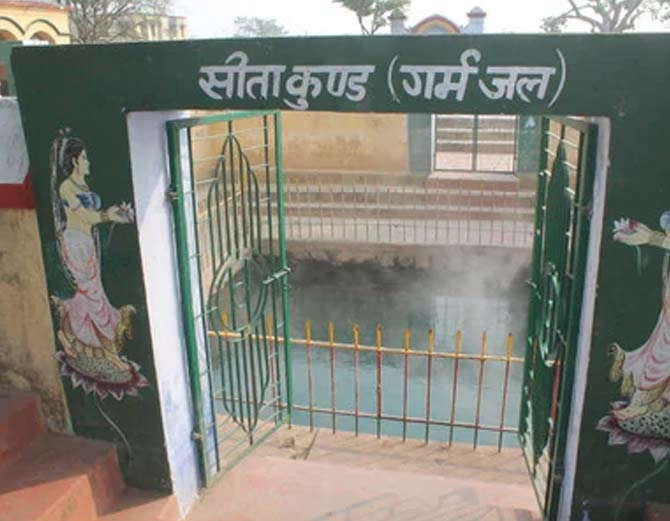
According to Hindu scripture, particularly the Valmiki Ramayana, Sita was not born from a human womb but was discovered by King Janaka while ploughing a field for a sacrificial yajna. This makes the site a Swayambhu (self-manifested) shrine. The central feature of the complex is a natural water reservoir known as Sita Kund, a stone-lined tank believed to be where the infant Sita was found.
Phalaśruti: The Benefits of Pilgrimage
Devotees visit this temple with deep faith, believing that a visit washes away sins and purifies the soul. The specific spiritual benefits (Phalaśruti) associated with Sita Kund include:
- Ancestral Liberation: Offering water and pinda to ancestors at this sacred tank is believed to grant them moksha (liberation).
- Marital Harmony: As the divine consort of Lord Rama, Goddess Sita is worshipped here by married women for the longevity and happiness of their husbands.
- Removal of Afflictions: It is said that bathing in the holy waters of Sita Kund cures physical ailments and mental stress.
Historical Origins & Scriptural Legend
The Legend of King Janaka
Tradition holds that the site dates back to the Treta Yuga. King Janaka of Mithila, while performing a yajna, struck the earth with his ploughshare, and a lotus bloomed from the furrow, holding a baby girl. He named her Sita. This event makes Sitamarhi one of the most ancient sites in Hindu mythology.
Historical Architecture & Renovation
While the roots are mythological, the current structure reflects historical architectural patronage. The temple is situated in Punaura, about 5 km west of Sitamarhi town. According to temple records and historical accounts, the site has been renovated and expanded over the centuries, particularly by local kings and wealthy patrons, preserving the sanctity of the ancient tank. The most recent major renovations have modernized the complex while maintaining its traditional sanctity, allowing for the millions of pilgrims that visit annually.
Architectural Marvels
The architecture of Sita Kund is a blend of Nagara and regional Bihari styles, characterized by tiered towers and intricate stone carvings.
Key Structural Elements
- The Sacred Kund: The heart of the complex is a large, square-shaped tank (approx. 300ft x 300ft). Steps surround the tank on all four sides, allowing pilgrims to descend for ritual bathing.
- The Mandapas: Several pillared halls surround the tank, featuring carved stone pillars depicting scenes from the Ramayana.
- The Inner Sanctum: The main temple housing the idol of Goddess Sita is a modern construction featuring a towering Shikhara (spire). The idols of Lord Rama, Lakshmana, and Hanuman are also present, depicting the Swayamvara scene.
While not a UNESCO World Heritage site, the temple is a protected monument under the oversight of local heritage trusts and the Bihar State Tourism Development Corporation.
Darshan & Ritual Logistics (2026 Guide)
Planning your visit requires understanding the daily schedule and key rituals. The atmosphere shifts from the quiet of dawn to the vibrancy of evening aarti.
Daily Timings
The temple generally remains open from early morning until late evening. Note that timings may vary during festivals.
| Session | Timings | Activity |
|---|---|---|
| Morning | 05:00 AM – 12:00 PM | Mangala Aarti, Abhishekam, Darshan |
| Afternoon | 12:00 PM – 03:00 PM | Temple Cleaning (Main Darshan Closed) |
| Evening | 03:00 PM – 09:00 PM | Shayan Aarti, Darshan |
Key Sevas & Online Booking
Devotees can participate in several Sevas (offerings):
- Abhishekam: Ritual bathing of the deity with milk, honey, and water (Morning session).
- Archana: Offering flowers and reciting the 108 names of Goddess Sita.
- Vividhajanani Puja: A special elaborate puja for childless couples.
Online Booking: As of 2026, the temple administration facilitates bookings through the official Bihar State Tourism portal. Devotees are advised to book at least 48 hours in advance for special pujas.
Major Festivals in 2026
- Vivah Panchami: The marriage anniversary of Lord Rama and Sita (December 2026). This is the most significant event here, marked by a grand procession.
- Janki Navami: Celebrated on the 9th day of the bright half of the Vaishakha month (April/May 2026), commemorating Sita’s birth.
- Navratri: Chaitra and Sharad Navratri see massive crowds for special yagnas.
Practical Visitor Guidance
Rules & Etiquette
- Dress Code: Traditional attire is recommended. Men should wear dhotis or trousers; women should wear sarees or salwar kameez. Avoid shorts and sleeveless tops.
- Photography: Photography is strictly prohibited inside the inner sanctum. It is allowed in the courtyard and around the Kund, but drone photography requires special permission from the district administration.
- Mobile Lockers: Shoe storage and mobile lockers are available near the entrance for a nominal fee. It is advisable to carry minimal electronics.
- Accessibility: The complex has steps leading to the Kund, which may be challenging for those with mobility issues. However, ramps have been installed recently to access the main temple hall.
Crowd Management
- Best Hours: For a peaceful darshan, visit between 9:00 AM and 11:00 AM (post-morning rush) or 4:00 PM (before evening aarti).
- Seasonal Advice: Summers (April-June) in Bihar are scorching; carry a water bottle, umbrella, and cover your head. Winters (November-February) are pleasant, ideal for travel.
Pilgrimage Connectivity
How to Reach Sita Kund
Sitamarhi is well-connected by rail and road.
- By Air: The nearest airport is Jay Prakash Narayan Airport (Patna), approximately 140 km away. Taxis and buses are available from Patna to Sitamarhi.
- By Rail: Sitamarhi Railway Station is the main railhead, well-connected to major cities like Patna, Muzaffarpur, and Kolkata. The temple is 5 km from the station.
- By Road: Sitamarhi is located on National Highway 122 (formerly NH 77). Regular buses ply from Patna, Muzaffarpur, and Darbhanga.
Nearby Sacred Sites
Extend your pilgrimage to these nearby locations:
- Janaki Mandir (Sitamarhi Town): Located closer to the railway station, this is a magnificent marble temple dedicated to Goddess Sita.
- Panth Pakar: Located 8 km from Sitamarhi, this is the legendary banyan tree under which Raja Janaka found the infant Sita.
- Danhara: A village 5 km from Sitamarhi where Sita is believed to have lived with her parents before marriage.
| Date built: | Before 17th century AD |
|---|---|
| Deity: | – |
| Architectural style: | – |
| Major festivals | Janki Navami, Vivah Panchami, Durgapuja |
| Locale: | Punaura, sitamarahi |
| District:: | – |
| Address: | – |
| Phone | – |
The Punaura Dham, janki mandir is a Hindu pilgrimage site in Sitamarhi district, in the Indian state of Bihar, which has an ancient Hindu temple. It is situated 5 km west of Sitamarhi town and a popular visitor’s attraction.
Punaura Dham Janki Mandir is one of the holiest Hindu temples dedicated to Goddess Sita, located in Sitamarhi, Bihar, India. Million of pilgrims visit the temple every year and most visited religious shrine in North India.
Punaura Dham is about 5 km west of Sitamarhi. Saint Pundrik’s Ashram was situated here. Sita-Kund place is the honour of being the birthplace of Hindu Goddess, Sita.
Architecture
The architecture of Sita Kund Temple blends traditional Nagara style with modern renovations. The central shrine features a tiered spire (shikhara) adorned with amalaka motifs. Surrounding the main tank, you’ll find rows of pillared mandapas (halls) that showcase intricate carvings of deities and mythological scenes. The layout follows the principles of Vastu Shastra, with the main deity facing east to catch the first rays of the sun.
Legend / Local stories
Besides the well-known story of King Janaka ploughing the field to find Sita, local folklore suggests that Saint Pundrik used to meditate at this very spot. It is believed that the natural spring feeding the Kund was created by the trident of Lord Shiva to quench the thirst of Sita’s adoptive parents. Another popular belief is that the water of Sita Kund has healing properties, directly linked to the divine touch of the Goddess.
Photo Gallery



How to Reach:
Sita Kund is located at Punaura, approximately 5 kilometers west of Sitamarhi town. The nearest major railway junction is Sitamarhi, which is connected to Patna, Muzaffarpur, and Kolkata. By road, it is accessible via the Sitamarhi-Muzaffarpur highway. Auto-rickshaws and cycle-rickshaws are readily available from Sitamarhi town to the temple complex.
Contact Details
Official Address:
Sita Kund (Punaura Dham),
Punaura, Sitamarhi District,
Bihar, India – 843301
Frequently Asked Questions (FAQ)
1. What is the significance of Sita Kund?
Sita Kund is believed to be the exact birthplace of Goddess Sita. The sacred tank contains 108 small ponds within it, representing the 108 names of Goddess Durga. Taking a dip here is considered highly auspicious for cleansing sins.
2. Is there a VIP darshan entry available?
Yes, the temple administration offers a special entry pass for senior citizens and differently-abled devotees. VIP passes for general devotees can be obtained at the office counter, though availability depends on the crowd.
3. Are there hotels near the temple?
Accommodation options are available in Sitamarhi town (5 km away). Several government lodges and private hotels offer stay facilities. It is recommended to book in advance during festivals like Vivah Panchami.
4. What is the best time to visit Sita Kund?
The ideal time to visit is between October and March when the weather is cool and pleasant. Summers (April-June) are very hot, and the monsoon season (July-September) sees heavy rainfall.
5. Can non-Hindus visit the temple?
While the temple is primarily a Hindu pilgrimage center, visitors of all backgrounds are welcome to admire the architecture and the tank from the courtyard. Entry into the inner sanctum is restricted to Hindus for worship.
Recent Posts

Shri Kaamkoteeshwar Mandir, Varanasi – History & Significance
In the heart of Kashi, the eternal city of Lord Shiva, where the Ganges flows with celestial grace, stands the Shri Kaamkoteeshwar Mandir. This sacred Sannidhi is not merely a temple but a profound spiritual bridge between the Northern…

ओ सांवरे तूने ही मुझको संभाला – Lyrics & Meaning
ओ सांवरे तूने ही मुझको संभाला – A Prayer to Shyam Origin & Spiritual Essence Why This Bhajan Resonates Devotees chant this when overwhelmed by life’s storms—the refrain ‘तूने ही मुझको संभाला’ is the soul’s sigh of relief: “You…

कथा ये है महाराज मेरे की – Lyrics & Meaning
कथा ये है महाराज मेरे की छत्रपति संभाजी महाराज – A Prayer to Chhatrapati Sambhaji Maharaj Origin & Spiritual Essence Why This Bhajan Resonates Devotees chant this when their spirit feels tested—its powerful refrain “महाराज मेरे” is a soul’s…

Rigveda Samhita Yathartha Anuvada (ऋग्वेद संहिता यथार्थ अनुवाद) – Complete Set with Anvayartha & Hindi/English Translation
The Rigveda is the oldest surviving scripture of humanity and the foundational text of Sanātana Dharma. For serious students, scholars, UPSC aspirants studying ancient Indian history, Sanskrit learners, and spiritual seekers, a precise and grammatically structured translation is indispensable.…

आना भी अकेला है जाना भी अकेला है – Lyrics & Meaning | BharatTemples
आना भी अकेला है जाना भी अकेला है – A Prayer to the Divine Witness Origin & Spiritual Essence Why This Bhajan Resonates Devotees turn to this bhajan in moments of deep reflection—when life’s attachments begin to ache. The…

माता शेरावाली के द्वार जो भी जाता है – Lyrics & Meaning
माता शेरावाली के द्वार जो भी जाता है – A Prayer to Maa Sherawali Origin & Spiritual Essence Why This Bhajan Resonates Devotees turn to this bhajan in times of fear or uncertainty—its promise that no one leaves Maa’s…

मार लेना सपणी उबार लेणा भवरा – Lyrics & Meaning
मार लेना सपणी उबार लेणा भवरा – A Prayer to the Divine Beloved Origin & Spiritual Essence Why This Bhajan Resonates Devotees chant this in moments of deep vulnerability—its cry of “मार लेना सपणी, उबार लेणा भवरा” is the…

हमें श्याम सुंदर भरोसा तुम्हारा – Lyrics & Meaning
हमें श्याम सुंदर भरोसा तुम्हारा – A Prayer to Shyam Sundar Origin & Spiritual Essence Why This Bhajan Resonates Devotees chant this when feeling alone—its refrain ‘de do sahara’ is the soul’s cry for divine support. Lyrics in Hindi…

Mere Satguru Ne Di Thi Davai Lyrics in Hindi & Meaning
Mere Satguru Ne Di Thi Davai: Invoking the Guru’s Liberating Wisdom This soul-stirring bhajan venerates the Satguru (True Spiritual Master) as the divine physician who dispenses the only remedy for life’s deepest sufferings. Composed by Sant Karmaveer Tufani, it…

Janm Diyo Thari Maa Dukh Dekhiyo Lyrics in Hindi & Meaning
जन्म दियो थारी माँ दुख देखियो (Maa’s Grief Upon Birthing You) This soul-stirring Chetavani Bhajan (admonitory hymn) is addressed to the Divine Mother (Maa) – a call for repentance when children forget their filial duties in the dark age…