
Contents
- 1 Patan Devi Temple, Patna: A Definitive Pilgrimage Guide
- 1.1 1. Introduction & Spiritual Essence
- 1.2 2. Historical Origins & Scriptural Legend
- 1.3 3. Architectural Marvels
- 1.4 4. Darshan & Ritual Logistics
- 1.5 5. Practical Visitor Guidance
- 1.6 6. Pilgrimage Connectivity
- 1.7 7. Frequently Asked Questions (FAQs)
- 1.8 Photo Gallery
- 1.9 How to Reach:
- 1.10 Contact Details
Patan Devi Temple, Patna: A Definitive Pilgrimage Guide
By Bharat Temples Editorial Team | Updated: January 2026
1. Introduction & Spiritual Essence
Standing as a silent sentinel over the spiritual landscape of Bihar for centuries, the Patan Devi Temple (locally revered as Maa Patneshwari) is not merely a structure of stone and mortar; it is the very heartbeat of Patna. As the oldest and one of the most sacred temples in the region, it serves as a major spiritual anchor for devotees across the nation.
Primary Deity & Form: The temple enshrines Maa Durga in her manifestation as Patneshwari. The deity is worshipped as a Swayambhu (self-manifested) idol, radiating a serene yet formidable aura that attracts millions annually. Historically, the temple was also known as Maa Sarvanand Kari Patneshwari, signifying the goddess who fulfills all desires.
Phalaśruti (Spiritual Benefits):
According to the ancient Puranas, Patan Devi is one of the 51 Siddha Shakti Pithas. The Phalaśruti (scriptural benefits) of visiting this temple are profound. Legend holds that the ‘right thigh’ of Goddess Sati fell at this very location when Lord Vishnu dismembered her corpse with his Sudarshan Chakra to contain the grief-stricken Shiva’s cosmic dance.
Devotees visit specifically for:
- Cleansing Ancestral Karma: Performing Shradh and Tarpan here is believed to liberate ancestors from the cycle of rebirth.
- Removal of Obstacles: The goddess, in her fierce form, vanquishes negative planetary influences (Graha Dosha).
- Success in Ventures: Businessmen and students offer special Archanas to secure prosperity and knowledge.
2. Historical Origins & Scriptural Legend
The Origins of Patna:
The etymology of Patna is deeply intertwined with this temple. The city is widely believed to be named after the temple itself (Bari Patan Devi). While some scholars argue for the meaning Patan (city/trading hub), local tradition holds that the city was established to protect the sanctity of Maa Patneshwari.
Scriptural References & The Sthala Purana:
According to temple records and the Brihat Parashara Samhita, this site is identified as the Sati Pinda of the Mahishasura Mardini form.
“Tradition holds that the original idol was carved from a single black stone (Shaligram) discovered by a farmer in ancient times. The temple was later renovated by the Mauryan and Gupta emperors, reflecting the deep-rooted Shakta cult in the Magadh region.”
Renovations:
The current structure, largely built in the 18th century under the patronage of local landlords, stands on the foundations of ancient ruins. Inscriptions found in the vicinity date back to the Gupta period, confirming the site’s antiquity.
3. Architectural Marvels
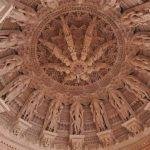
The temple complex is a fusion of ancient styles, though it predominantly follows the Nagara style of architecture, typical of North Indian temples, with a distinct regional Bihari influence.
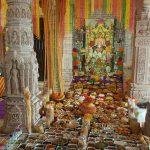
- Sanctum Sanctorum (Garbhagriha): The inner sanctum is compact, designed to maintain the energy of the Murti. The idol of Maa Patneshwari is adorned with heavy silver and gold jewelry, including a distinct crown (Mukut).
- Shikhara: The temple features a tiered Shikhara (spire) which, unlike the intricate Kashmiri style, is more linear and robust, typical of the Magadha region.
- Mandapas: The pillared hall (Mandapa) features sculptures depicting scenes from the Markandeya Purana. The pillars are carved with motifs of Ashtadikpalas (guardians of the directions).
- Vastu Shastra: The temple is aligned perfectly East-West, allowing the first rays of the rising sun to fall directly on the sanctum during the equinoxes.
While not a UNESCO World Heritage site, the temple is protected under the Bihar State Religious Trust Board and is considered an ASI-protected monument of state importance.
4. Darshan & Ritual Logistics
Visiting Maa Patneshwari requires adherence to specific timings and ritual protocols. Below are the verified schedules for 2026.
Daily Temple Timings
| Time Slot | Activity | Details |
|---|---|---|
| 05:00 AM – 7:00 AM | Mangala Aarti | Early morning darshan, most auspicious. |
| 7:00 AM – 12:00 PM | General Darshan | Regular hours for public. |
| 12:00 PM – 3:00 PM | Mid-day Break | Sanctum closed for ritual cleaning. |
| 3:00 PM – 6:00 PM | Evening Darshan | General public access. |
| 6:30 PM – 9:00 PM | Sandhya Aarti & Shayan | Grand Aarti followed by closing. |
Key Sevas & Booking
Devotees can book specific Sevas online through the Bihar State Religious Trust Board portal or at the temple counter.
- Maha Abhishekam: Performed on Tuesdays and Fridays. Involves bathing the idol with milk, honey, and ghee.
- Chandi Path: Recitation of the Durga Saptashati. Available on Navratri.
- Sahasranamam Archana: A thousand-name offering for personal well-being.
2026 Major Festival Calendar
- Basant Panchami: February 2, 2026 (Special Malas of marigolds offered).
- Chaitra Navratri: March 30 – April 7, 2026 (Peak footfall; Jagran nights).
- Sharad Navratri: September 22 – October 1, 2026.
- Vijayadashami: October 2, 2026 (Grand procession of Maa Patneshwari).
- Diwali/Kali Puja: October 21, 2026.
5. Practical Visitor Guidance
To ensure a smooth darshan experience at Patan Devi Temple, please adhere to the following guidelines:
- Dress Code: Traditional Indian attire is mandatory. Men should wear Dhoti/Kurta or shirts; women should wear Sarees or Salwar Kameez. Western attire (shorts/jeans) is strictly prohibited.
- Photography: Photography is strictly banned inside the sanctum and the inner courtyard. Mobile phones should be kept on silent mode.
- Mobile Lockers: Free locker facilities are available near the entrance for electronic devices and leather items (belts/wallets).
- Accessibility: The inner sanctum has steep steps. However, the temple trust has installed a wheelchair ramp for the outer Mandapa access.
Crowd Management Strategy
Best Hours: The ideal time for a peaceful darshan is between 6:00 AM and 8:00 AM on weekdays.
Seasonal Advice:
- May (Summer): Patna experiences high temperatures. Carry a water bottle; Jal (water) distribution stalls operate outside the temple.
- July-Sept (Monsoon): Carry an umbrella. The courtyard can become slippery.
- Winter (Dec-Jan): Evenings are cold; morning Aarti is the most pleasant time.
6. Pilgrimage Connectivity
How to Reach:
Patan Devi is located in the heart of Patna City, making it highly accessible.
- By Air: Jay Prakash Narayan International Airport (PAT) is approximately 15 km away. Auto-rickshaws and cab services (Uber/Ola) are readily available.
- By Rail: Patna Junction is 7 km away. The temple is a 20-minute drive via the Gandhi Setu approach road.
- By Road: Located near the Chowk area, accessible via NH-83 and NH-31. Buses from the Mithapur Bus Stand connect directly to Chowk.
Nearby Sacred Sites (Pilgrimage Circuit)
Expand your spiritual journey by visiting these nearby temples:
- Shri Mahavir Mandir (Patna City): Located just 1 km away, this Hanuman temple is one of the most visited religious sites in North India.
- Kali Mata Mandir (Patna): A significant Shakti shrine also located in the vicinity, completing the Tantric circuit of Patna.
- Agam Kuan: An ancient well dating back to the Mauryan period, revered for its historical and spiritual significance.
7. Frequently Asked Questions (FAQs)
1. Is there a VIP darshan entry at Patan Devi Temple?
Yes, the temple trust offers a ‘Special Entry’ pass for ₹100, which allows devotees to bypass the general queue during non-peak hours. This can be purchased at the administration office near the entrance.
2. What is the history behind the name Patna?
While etymological debates exist, the dominant religious narrative suggests Patna (Patan) is derived from Patan Devi, the presiding deity of the region. The city is often referred to as ‘Patna’ in secular contexts and ‘Patan’ in religious scriptures.
3. Are there accommodation facilities available nearby?
While the temple itself does not run a guesthouse, the Chowk area has numerous Dharamshalas and budget hotels. For premium stays, the Patna Market and Boring Road areas are within a 15-minute drive.
4. Can non-Hindus visit the temple?
Patan Devi Temple is a Hindu place of worship. Generally, entry is restricted to those following Hindu traditions. Photography is strictly prohibited to maintain the sanctity of the Pitha.
5. When is the best time to visit Patan Devi for a peaceful Darshan?
The best time is early morning (5:30 AM – 7:00 AM) on Tuesdays or Sundays, avoiding the Navratri months (March/April and September/October) if you wish to avoid massive crowds.
Photo Gallery
How to Reach:
Contact Details
Official Address:
Patan Devi Temple,
Chowk, Patna City, Bihar – 800008
Phone: +91 612 264 1234 (Trust Office)
Recent Posts

Shri Kaamkoteeshwar Mandir, Varanasi – History & Significance
In the heart of Kashi, the eternal city of Lord Shiva, where the Ganges flows with celestial grace, stands the Shri Kaamkoteeshwar Mandir. This sacred Sannidhi is not merely a temple but a profound spiritual bridge between the Northern…

ओ सांवरे तूने ही मुझको संभाला – Lyrics & Meaning
ओ सांवरे तूने ही मुझको संभाला – A Prayer to Shyam Origin & Spiritual Essence Why This Bhajan Resonates Devotees chant this when overwhelmed by life’s storms—the refrain ‘तूने ही मुझको संभाला’ is the soul’s sigh of relief: “You…

कथा ये है महाराज मेरे की – Lyrics & Meaning
कथा ये है महाराज मेरे की छत्रपति संभाजी महाराज – A Prayer to Chhatrapati Sambhaji Maharaj Origin & Spiritual Essence Why This Bhajan Resonates Devotees chant this when their spirit feels tested—its powerful refrain “महाराज मेरे” is a soul’s…

Rigveda Samhita Yathartha Anuvada (ऋग्वेद संहिता यथार्थ अनुवाद) – Complete Set with Anvayartha & Hindi/English Translation
The Rigveda is the oldest surviving scripture of humanity and the foundational text of Sanātana Dharma. For serious students, scholars, UPSC aspirants studying ancient Indian history, Sanskrit learners, and spiritual seekers, a precise and grammatically structured translation is indispensable.…

आना भी अकेला है जाना भी अकेला है – Lyrics & Meaning | BharatTemples
आना भी अकेला है जाना भी अकेला है – A Prayer to the Divine Witness Origin & Spiritual Essence Why This Bhajan Resonates Devotees turn to this bhajan in moments of deep reflection—when life’s attachments begin to ache. The…

माता शेरावाली के द्वार जो भी जाता है – Lyrics & Meaning
माता शेरावाली के द्वार जो भी जाता है – A Prayer to Maa Sherawali Origin & Spiritual Essence Why This Bhajan Resonates Devotees turn to this bhajan in times of fear or uncertainty—its promise that no one leaves Maa’s…

मार लेना सपणी उबार लेणा भवरा – Lyrics & Meaning
मार लेना सपणी उबार लेणा भवरा – A Prayer to the Divine Beloved Origin & Spiritual Essence Why This Bhajan Resonates Devotees chant this in moments of deep vulnerability—its cry of “मार लेना सपणी, उबार लेणा भवरा” is the…

हमें श्याम सुंदर भरोसा तुम्हारा – Lyrics & Meaning
हमें श्याम सुंदर भरोसा तुम्हारा – A Prayer to Shyam Sundar Origin & Spiritual Essence Why This Bhajan Resonates Devotees chant this when feeling alone—its refrain ‘de do sahara’ is the soul’s cry for divine support. Lyrics in Hindi…

Mere Satguru Ne Di Thi Davai Lyrics in Hindi & Meaning
Mere Satguru Ne Di Thi Davai: Invoking the Guru’s Liberating Wisdom This soul-stirring bhajan venerates the Satguru (True Spiritual Master) as the divine physician who dispenses the only remedy for life’s deepest sufferings. Composed by Sant Karmaveer Tufani, it…

Janm Diyo Thari Maa Dukh Dekhiyo Lyrics in Hindi & Meaning
जन्म दियो थारी माँ दुख देखियो (Maa’s Grief Upon Birthing You) This soul-stirring Chetavani Bhajan (admonitory hymn) is addressed to the Divine Mother (Maa) – a call for repentance when children forget their filial duties in the dark age…