
Contents
Introduction & Spiritual Essence: The Virgin Goddess of Kanyakumari
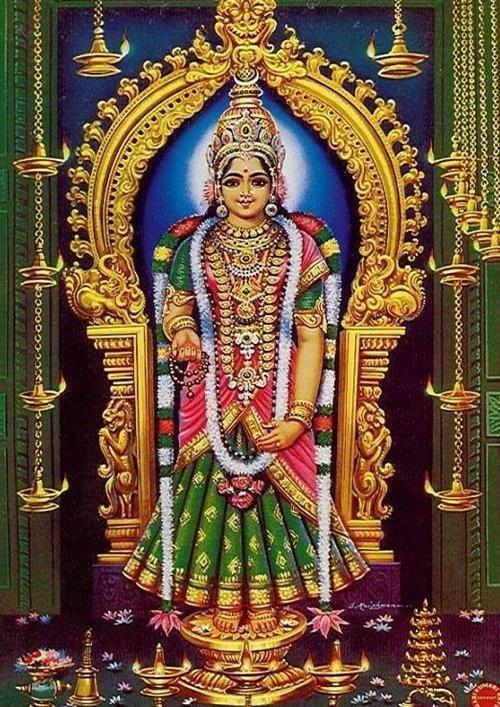
The Kumari Bhagavathy Amman Temple, situated at the southernmost tip of India in Kanyakumari, Tamil Nadu, is a site of profound spiritual magnetism. The primary deity here is Devi Kanya Kumari, worshipped as Kumari Amman—the eternal virgin goddess. This form of Goddess Parvati (Mahishasura Mardini) is depicted as a youthful maiden holding a garland, radiating serenity and power.
According to Phalaśruti (scriptural benefits of worship), a darshan of Kumari Amman bestows blessings for a happy marital life and the removal of obstacles in one’s path. The temple is particularly significant for ancestral karma cleansing. Devotees believe that offering prayers here liberates ancestors from Pitra Dosha, ensuring peace for their souls. It is one of the 108 Shakti Peethas, where the right shoulder and spine of Goddess Sati are said to have fallen, making it a powerhouse of divine feminine energy.
Historical Origins & Scriptural Legend
The Legend of the Unfulfilled Wedding
According to tradition holds, the temple is built on the spot where Goddess Parvati performed severe Tapasya (penance) to win Lord Shiva as her husband. However, due to a divine intervention by the sage Narada, the wedding never took place. Lord Shiva, tricked by the sound of a crowing cock (Narada in disguise) thinking dawn had broken, returned to the Himalayas. The Goddess remained here as a virgin Kumari.
Another major legend involves the demon Banasura. With the boon that he could only be killed by a virgin, the deities prayed to Goddess Parasakthi. The Devi took the form of Kumari and annihilated the demon, subsequently freeing the trapped deities. This reinforces the sanctity of the temple’s restrictions on male entry (see below).
Historical Lineage
While the temple is mentioned in ancient Sangam works like Manimekalai and the Skanda Purana, its physical structure evolved over centuries. According to temple records, the original shrine was built by the Pandya dynasty. It was subsequently rebuilt and renovated by the Vijayanagara rulers, the Nayakas, and the Cholas. Recent historical evidence suggests a mandapa and temple complex existed here as early as the 12th century, evolving into the architectural marvel seen today.
Architectural Marvels
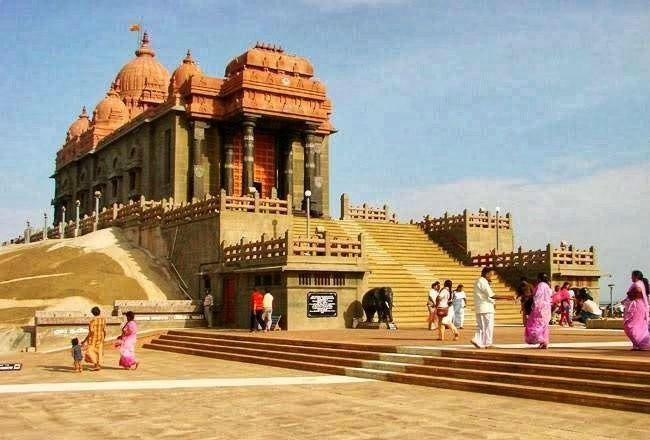
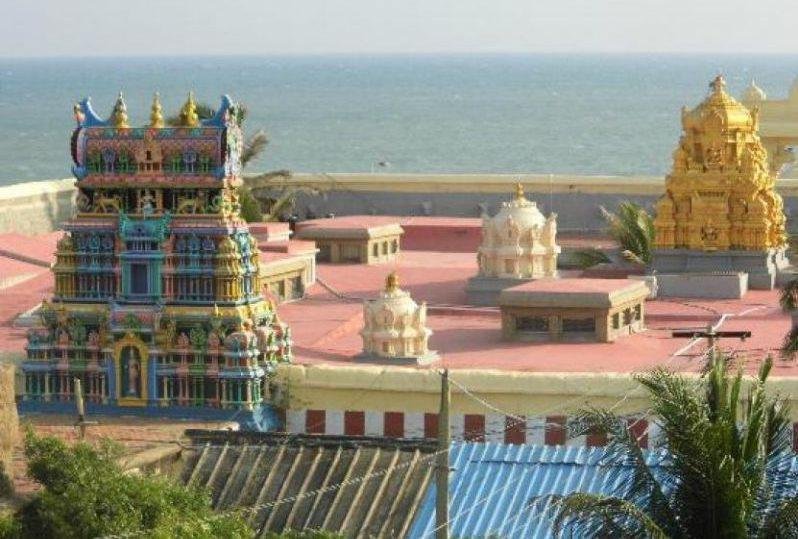
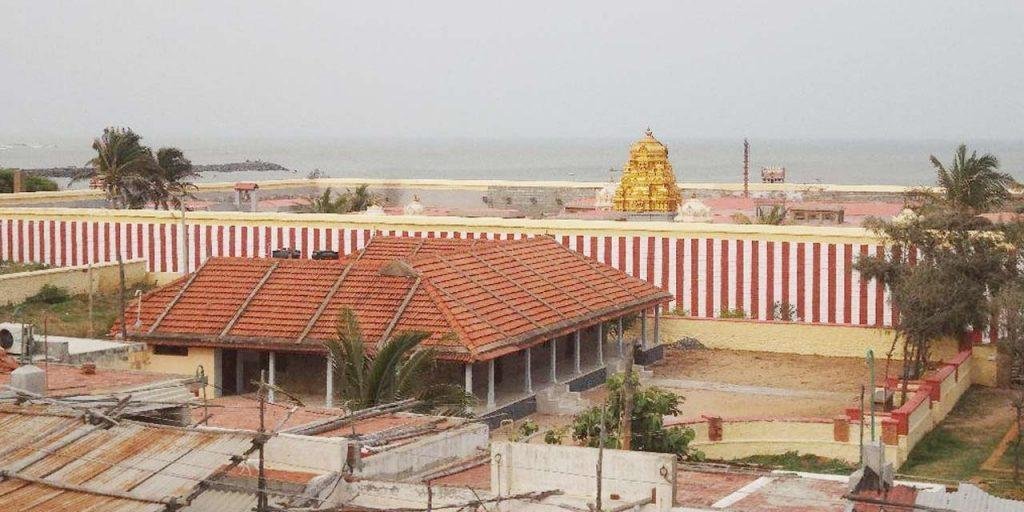
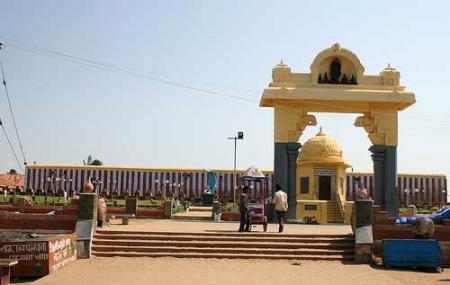
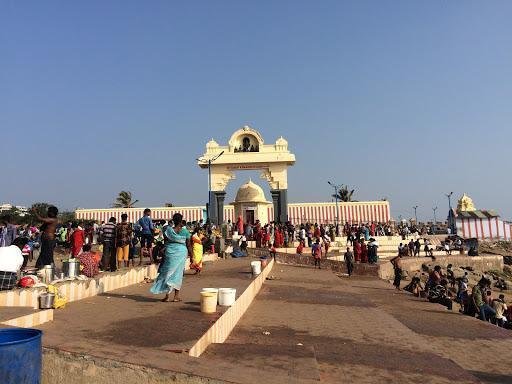
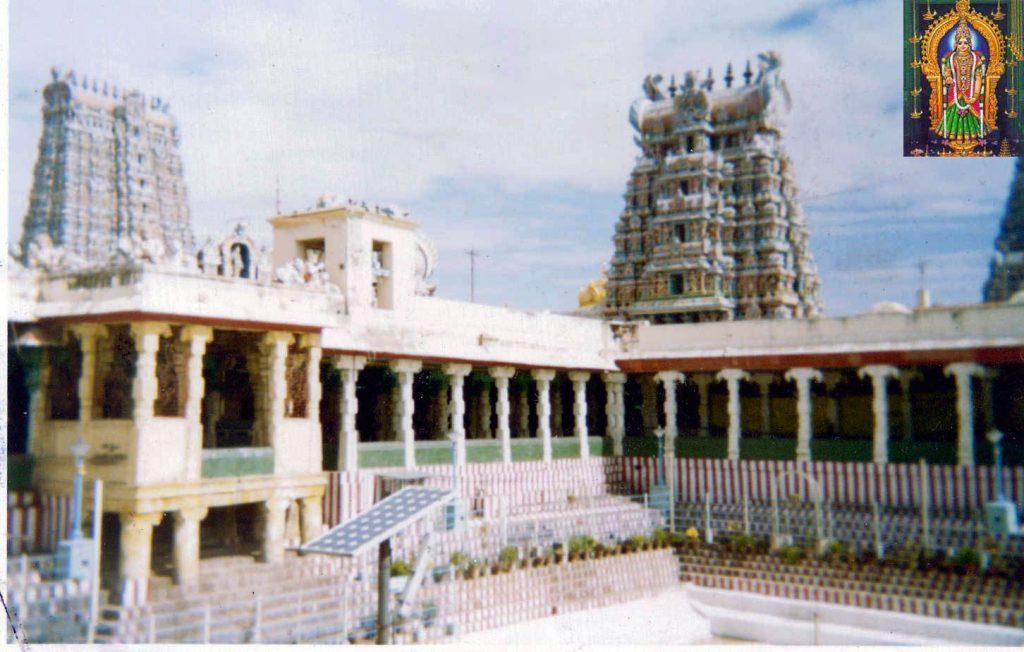
The Kumari Amman Temple showcases the classical Dravida style of architecture, defined by intricate stone carvings and imposing gateways (Gopurams). A distinctive feature of this temple’s Vastu Shastra is the Eastern Gopuram, which remains closed for most of the year and is opened only during specific auspicious occasions like new moon days.
Inside the sanctum sanctorum, the idol of Devi Kumari faces east. The most notable artifact is the Maragatha Chakra (Crystal Wheel) and the large nose-ring of the deity, renowned for its extraordinary lustre. The Moola Ganga Theertham, a sacred well within the temple complex, provides the water used for the consecration (Abhishekam) of the Goddess.
A unique architectural element is the pavilion built with sixteen pillars. While the temple is an active place of worship, its historical significance is protected by the Archaeological Survey of India (ASI) guidelines.
Darshan & Ritual Logistics
Visitors should note a unique and strict protocol: Only women are allowed inside the inner sanctum. Sanyasis (celibate men) may proceed to the gate, but married men are strictly prohibited from entering the inner premises. This rule is rooted in the legend of the unwed goddess.
Daily Timings (Standard Schedule)
Darshan timings are subject to change during festivals. The following is the standard schedule:
| Day | Morning Timing | Evening Timing |
|---|---|---|
| Monday | 4:30 AM – 12:30 PM | 4:00 PM – 8:00 PM |
| Tuesday | 4:30 AM – 12:30 PM | 4:00 PM – 8:00 PM |
| Wednesday | 4:30 AM – 12:30 PM | 4:00 PM – 8:00 PM |
| Thursday | 4:30 AM – 12:30 PM | 4:00 PM – 8:00 PM |
| Friday | 4:30 AM – 12:30 PM | 4:00 PM – 8:00 PM |
| Saturday | 4:30 AM – 12:30 PM | 4:00 PM – 8:00 PM |
| Sunday | 4:30 AM – 12:30 PM | 4:00 PM – 8:00 PM |
Key Sevas & Online Booking
Key rituals include Abhishekam (ritual bathing of the deity) and Archana (recitation of divine names). The Moola Ganga Theertham water is used for these rituals.
For the year 2026, devotees can book specific Sevas through the official Tamil Nadu Hindu Religious and Charitable Endowments (HR&CE) website or the temple administration office. Major festivals in 2026 include:
- Navaratri: October 2026 (The 9-day festival is celebrated with grandeur).
- Chitra Purnima Utsav: April 2026.
- Float Festival: January 2026 (Margazhi season).
Practical Visitor Guidance
Rules & Etiquette
- Gender Restriction: As noted, men cannot enter the inner sanctum. Men must view the deity from outside the sanctum grills.
- Dress Code: Traditional attire is mandatory. Men should wear Dhoti or formal trousers with a shirt; women should wear Saree or Salwar Kameez.
- Photography: Strictly prohibited inside the temple complex and inner sanctum.
- Lockers: Mobile phones and bags are not allowed inside. Free lockers are available at the entrance.
Crowd Management
- Best Time to Visit: Early morning (4:30 AM – 6:00 AM) or late evening (after 7:00 PM) for a peaceful Darshan.
- Seasonal Advice: Kanyakumari is humid year-round. In summer (April–June), carry a water bottle and an umbrella. The monsoon (October–November) brings heavy rains; an umbrella is essential.
Pilgrimage Connectivity
How to Reach
The temple is located at the heart of Kanyakumari town, near the famous Triveni Sangam (confluence of three oceans).
- By Air: Trivandrum International Airport (TCR) is the nearest airport, approximately 85 km away (approx. 2 hours by road).
- By Rail: Kanyakumari Railway Station (CAPE) is the terminal station, located just 1.6 km from the temple. It is well-connected to major cities like Delhi and Mumbai.
- By Road: Kanyakumari is connected via National Highway 66 (NH-66). Frequent state-run buses and taxis are available from Trivandrum, Madurai, and Tirunelveli.
Nearby Sacred Sites (The Kanyakumari Circuit)
- Vivekananda Rock Memorial: Located on a rocky island 500 meters offshore, accessible by ferry. It marks the spot where Swami Vivekananda meditated.
- Thiruvalluvar Statue: A 133-foot stone sculpture of the ancient Tamil poet Thiruvalluvar, located on a rock near the memorial.
- Suchindram Thanumalayan Temple: Located 12 km away, famous for its musical pillars and the idol of Lord Shiva, Vishnu, and Brahma combined.
Frequently Asked Questions (FAQs)
1. Is there a VIP darshan entry?
Yes, the temple administration offers a paid Special Darshan ticket (usually nominal, e.g., ₹50/-). This allows devotees to bypass the general queue. However, during peak festival days (like Navaratri), even VIP darshan may require waiting.
2. Can men offer prayers inside the temple?
Men can enter the temple courtyard, but they are prohibited from entering the inner sanctum (Garbhagriha) where the idol of Kumari Amman is located. Only women and Sanyasis (monks) are permitted inside the sanctum. Men must view the deity from the designated viewing area outside.
3. What is the significance of the Eastern Gate?
The Eastern Gopuram (gate) is historically significant and is usually kept closed. It is opened only on special occasions, such as new moon days (Amavasya) in the months of Vrischikam, Edavam, and Karkidakam. Tradition holds this gate faces the sunrise for auspiciousness.
4. What is the best time to visit Kanyakumari Temple?
The best time for weather is between October and March. For a spiritual experience, early morning (4:30 AM) is ideal as it aligns with the Brahma Muhurta and is less crowded.
5. Is there an entry fee?
General entry to the temple is free for all devotees. However, special sevas like Abhishekam or Archana require a ticket purchased from the counter.
Recent Posts

Shri Kaamkoteeshwar Mandir, Varanasi – History & Significance
In the heart of Kashi, the eternal city of Lord Shiva, where the Ganges flows with celestial grace, stands the Shri Kaamkoteeshwar Mandir. This sacred Sannidhi is not merely a temple but a profound spiritual bridge between the Northern…

ओ सांवरे तूने ही मुझको संभाला – Lyrics & Meaning
ओ सांवरे तूने ही मुझको संभाला – A Prayer to Shyam Origin & Spiritual Essence Why This Bhajan Resonates Devotees chant this when overwhelmed by life’s storms—the refrain ‘तूने ही मुझको संभाला’ is the soul’s sigh of relief: “You…

कथा ये है महाराज मेरे की – Lyrics & Meaning
कथा ये है महाराज मेरे की छत्रपति संभाजी महाराज – A Prayer to Chhatrapati Sambhaji Maharaj Origin & Spiritual Essence Why This Bhajan Resonates Devotees chant this when their spirit feels tested—its powerful refrain “महाराज मेरे” is a soul’s…

Rigveda Samhita Yathartha Anuvada (ऋग्वेद संहिता यथार्थ अनुवाद) – Complete Set with Anvayartha & Hindi/English Translation
The Rigveda is the oldest surviving scripture of humanity and the foundational text of Sanātana Dharma. For serious students, scholars, UPSC aspirants studying ancient Indian history, Sanskrit learners, and spiritual seekers, a precise and grammatically structured translation is indispensable.…

आना भी अकेला है जाना भी अकेला है – Lyrics & Meaning | BharatTemples
आना भी अकेला है जाना भी अकेला है – A Prayer to the Divine Witness Origin & Spiritual Essence Why This Bhajan Resonates Devotees turn to this bhajan in moments of deep reflection—when life’s attachments begin to ache. The…

माता शेरावाली के द्वार जो भी जाता है – Lyrics & Meaning
माता शेरावाली के द्वार जो भी जाता है – A Prayer to Maa Sherawali Origin & Spiritual Essence Why This Bhajan Resonates Devotees turn to this bhajan in times of fear or uncertainty—its promise that no one leaves Maa’s…

मार लेना सपणी उबार लेणा भवरा – Lyrics & Meaning
मार लेना सपणी उबार लेणा भवरा – A Prayer to the Divine Beloved Origin & Spiritual Essence Why This Bhajan Resonates Devotees chant this in moments of deep vulnerability—its cry of “मार लेना सपणी, उबार लेणा भवरा” is the…

हमें श्याम सुंदर भरोसा तुम्हारा – Lyrics & Meaning
हमें श्याम सुंदर भरोसा तुम्हारा – A Prayer to Shyam Sundar Origin & Spiritual Essence Why This Bhajan Resonates Devotees chant this when feeling alone—its refrain ‘de do sahara’ is the soul’s cry for divine support. Lyrics in Hindi…

Mere Satguru Ne Di Thi Davai Lyrics in Hindi & Meaning
Mere Satguru Ne Di Thi Davai: Invoking the Guru’s Liberating Wisdom This soul-stirring bhajan venerates the Satguru (True Spiritual Master) as the divine physician who dispenses the only remedy for life’s deepest sufferings. Composed by Sant Karmaveer Tufani, it…

Janm Diyo Thari Maa Dukh Dekhiyo Lyrics in Hindi & Meaning
जन्म दियो थारी माँ दुख देखियो (Maa’s Grief Upon Birthing You) This soul-stirring Chetavani Bhajan (admonitory hymn) is addressed to the Divine Mother (Maa) – a call for repentance when children forget their filial duties in the dark age…