
Contents
- 1 Introduction & Spiritual Essence
- 2 Historical Origins & Scriptural Legend
- 3 Architectural Marvels
- 4 Darshan & Ritual Logistics
- 5 Practical Visitor Guidance
- 6 Pilgrimage Connectivity
- 7 Frequently Asked Questions (FAQ)
- 7.1 1. Is there a VIP darshan entry at Heramba Vinayak Temple?
- 7.2 2. Can I book an online Seva for Heramba Vinayak?
- 7.3 3. What is the significance of the TSM Complex where the temple is located?
- 7.4 4. What is the best time of year to visit Varanasi for this Darshan?
- 7.5 5. Are there any special rituals for children?
Introduction & Spiritual Essence
The ancient lanes of Varanasi, the spiritual capital of India, are home to countless hidden sanctums. Among them stands the revered Heramba Vinayak Temple, a sanctuary dedicated to a unique form of Lord Ganesha. For the pilgrim seeking the blessings of the remover of obstacles, this temple offers a profound spiritual resonance rooted in the deep Vedic traditions of Kashi.
The Deity: Heramba Vinayak
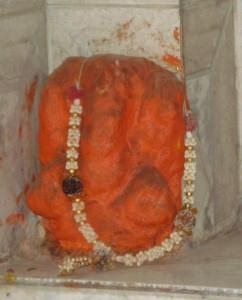
Heramba Vinayak is a distinct manifestation of Lord Ganesha, often depicted with five faces (Panchamukhi) and ten hands. In this form, the Lord rides a lion, symbolizing the conquest of ego and fear. The term “Heramba” means a protector who carries the weak and vulnerable. Devotees visit this temple specifically to seek:
- Protection from Enemies: The lion mount signifies courage and the destruction of malevolent forces.
- Mental Peace: Worshipping the five-faced Ganesha is believed to harmonize the five senses and the five elements (Pancha Bhutas).
- Fulfillment of Desires: As noted in local records, sincere prayer at this shrine fulfills the material and spiritual aspirations of the devotee.
Historical Origins & Scriptural Legend
While the exact date of construction is not formally recorded in modern archaeological surveys, the temple is deeply embedded in the fabric of Varanasi’s history. It is believed to have been established during the 18th century, a period of significant cultural patronage in the region.
The Sthala Purana
According to temple tradition, this location was originally a dense grove where the sage Parashurama performed penance. Legend holds that Lord Shiva granted the boon of the Ganesha Gayatri Mantra to Parashurama at this very spot. The energy of this ancient wisdom resides in the current deity.
Tradition also holds that the original murti (idol) was recovered from the banks of the Ganges and installed here to protect the sanctity of the area. Over the centuries, despite the urbanization of Varanasi—evident in the construction of the modern TSM Complex surrounding the temple—the spiritual center has remained preserved.
Architectural Marvels
The architecture of the Heramba Vinayak Temple is a testament to the resilience of faith. While the structure blends into the urban landscape of Maldahiya, the inner sanctum follows traditional Nagara-style influences, characterized by a beehive-shaped shikhara (tower).
Sculpture and Vastu
The temple features intricate stone carvings that depict various forms of Ganesha and other deities. The Vastu Shastra of the temple aligns with the directional placement of the deity facing the southeast (Ishanya), the direction traditionally associated with Ganesha’s wisdom and removal of Vastu doshas.
The structure is located on the second floor of a commercial building, a unique characteristic of urban temples in Kashi, symbolizing that divinity transcends physical limitations and thrives amidst humanity.
Darshan & Ritual Logistics
Visitors can perform daily worship through standard darshan or by booking specific sevas (rituals).
Daily Timings (2026 Schedule)
| Session | Timings | Activity |
|---|---|---|
| Morning | 08:00 AM – 12:00 PM | Opening, Abhishekam, and Morning Aarti |
| Afternoon | 12:00 PM – 05:00 PM | Temple Closed / Cleaning |
| Evening | 06:00 PM – 08:00 PM | Re-opening for Evening Darshan and Aarti |
Key Sevas & Online Booking
The primary Pujari (priest) is Shri Tulsi. While many sevas are performed in person, the Varanasi Devayatna Trust is progressively digitizing services.
- Sankalp Pooja: A personal offering for specific wishes. Can be booked via the Varanasi Devayatna portal.
- Modak Offering: 108 Modaks are offered on auspicious Wednesdays.
- Vastra Daan: Donation of clothes to the needy, performed in the name of the deity.
2026 Major Festival Dates
- Varad Vinayak Chaturthi: January 3, 2026 (A significant day for Ganesha worship).
- Sankashti Chaturthi: April 14, 2026 (Moonrise time is critical for fasting).
- Ganesh Chaturthi: August 26, 2026 (Celebrated with special Abhishekam).
- Magh Shukla Chaturthi: February 1, 2026 (Also known as Til Chaturthi).
Practical Visitor Guidance
To ensure a serene darshan experience, please adhere to the following guidelines.
- Dress Code: Traditional Indian attire is recommended. Men should wear dhoti or trousers with a shirt; women should wear saree, salwar kameez, or modest western wear.
- Photography: Photography is strictly prohibited inside the inner sanctum (Garbhagriha). Silence is requested within the temple premises.
- Crowd Management:
- Best Hours: Visit between 8:00 AM and 10:00 AM to avoid the morning rush. Evenings between 6:00 PM and 7:00 PM are relatively calm.
- Seasonal Advice: Varanasi summers (April–June) are hot; carry a water bottle and head covering. During the monsoon (July–August), the lanes can be slippery—wear rubber-soled footwear.
- Accessibility: The temple is located on the second floor of TSM Complex in Maldahiya. Access is via stairs. There is no elevator facility currently available.
Pilgrimage Connectivity
How to Reach
The Heramba Vinayak Temple is located in the heart of Varanasi, making it accessible via various modes of transport.
- By Air: Lal Bahadur Shastri International Airport (LBS) is approximately 25 km away. Taxis and pre-paid cabs are available.
- By Rail: Varanasi Junction (BSB) is the nearest major railway station, located about 7 km from Maldahiya. Auto-rickshaws are readily available.
- By Road: The temple is situated near Maldahiya Chauraha. If driving, navigate to C-21/14 via NH 19 (formerly NH 2) and enter the inner city lane system.
Nearby Sacred Sites (Pilgrimage Circuit)
Maximize your spiritual journey by visiting these nearby shrines:
- Kashi Vishwanath Temple (Approx. 4 km): The premier Jyotirlinga of Lord Shiva.
- Sankat Mochan Hanuman Temple (Approx. 3 km): Located on the banks of the Assi River, famous for removing troubles.
- Durga Temple (Approx. 3.5 km): Known as the Monkey Temple, built in the 18th century with Nagara-style architecture.
Frequently Asked Questions (FAQ)
1. Is there a VIP darshan entry at Heramba Vinayak Temple?
Unlike some larger temple complexes, Heramba Vinayak Temple generally does not have a formal VIP entry. However, during non-peak hours, the darshan line moves quickly. Donating to the temple trust or performing a specific Seva can sometimes grant priority access to the inner sanctum, subject to the Pujari’s discretion.
2. Can I book an online Seva for Heramba Vinayak?
While the temple administration is relatively small, the Varanasi Devayatna Trust manages many temple assets and sevas in the region. It is recommended to check their official portal for online booking availability. For direct priest services, it is often best to contact the temple a day in advance.
3. What is the significance of the TSM Complex where the temple is located?
The temple is uniquely situated within the TSM (Tulsi Shopping Mall) Complex in Maldahiya. This highlights the integration of modern commerce with ancient spirituality, a common feature in Varanasi. The temple is maintained on the second floor, preserving the sacred site amidst urban development.
4. What is the best time of year to visit Varanasi for this Darshan?
The ideal months are October to March. The weather is cool and pleasant, making it comfortable to walk through the narrow lanes of Varanasi to reach the temple. However, the temple is open year-round for devotees.
5. Are there any special rituals for children?
As Ganesha is the deity of wisdom and the remover of obstacles for the younger generation, parents often perform the “Aksharabhyasam” or “Vidyarambham” (initiation of education) here. This can be arranged by consulting with the head priest, Shri Tulsi.
Recent Posts

Shri Kaamkoteeshwar Mandir, Varanasi – History & Significance
In the heart of Kashi, the eternal city of Lord Shiva, where the Ganges flows with celestial grace, stands the Shri Kaamkoteeshwar Mandir. This sacred Sannidhi is not merely a temple but a profound spiritual bridge between the Northern…

ओ सांवरे तूने ही मुझको संभाला – Lyrics & Meaning
ओ सांवरे तूने ही मुझको संभाला – A Prayer to Shyam Origin & Spiritual Essence Why This Bhajan Resonates Devotees chant this when overwhelmed by life’s storms—the refrain ‘तूने ही मुझको संभाला’ is the soul’s sigh of relief: “You…

कथा ये है महाराज मेरे की – Lyrics & Meaning
कथा ये है महाराज मेरे की छत्रपति संभाजी महाराज – A Prayer to Chhatrapati Sambhaji Maharaj Origin & Spiritual Essence Why This Bhajan Resonates Devotees chant this when their spirit feels tested—its powerful refrain “महाराज मेरे” is a soul’s…

Rigveda Samhita Yathartha Anuvada (ऋग्वेद संहिता यथार्थ अनुवाद) – Complete Set with Anvayartha & Hindi/English Translation
The Rigveda is the oldest surviving scripture of humanity and the foundational text of Sanātana Dharma. For serious students, scholars, UPSC aspirants studying ancient Indian history, Sanskrit learners, and spiritual seekers, a precise and grammatically structured translation is indispensable.…

आना भी अकेला है जाना भी अकेला है – Lyrics & Meaning | BharatTemples
आना भी अकेला है जाना भी अकेला है – A Prayer to the Divine Witness Origin & Spiritual Essence Why This Bhajan Resonates Devotees turn to this bhajan in moments of deep reflection—when life’s attachments begin to ache. The…

माता शेरावाली के द्वार जो भी जाता है – Lyrics & Meaning
माता शेरावाली के द्वार जो भी जाता है – A Prayer to Maa Sherawali Origin & Spiritual Essence Why This Bhajan Resonates Devotees turn to this bhajan in times of fear or uncertainty—its promise that no one leaves Maa’s…

मार लेना सपणी उबार लेणा भवरा – Lyrics & Meaning
मार लेना सपणी उबार लेणा भवरा – A Prayer to the Divine Beloved Origin & Spiritual Essence Why This Bhajan Resonates Devotees chant this in moments of deep vulnerability—its cry of “मार लेना सपणी, उबार लेणा भवरा” is the…

हमें श्याम सुंदर भरोसा तुम्हारा – Lyrics & Meaning
हमें श्याम सुंदर भरोसा तुम्हारा – A Prayer to Shyam Sundar Origin & Spiritual Essence Why This Bhajan Resonates Devotees chant this when feeling alone—its refrain ‘de do sahara’ is the soul’s cry for divine support. Lyrics in Hindi…

Mere Satguru Ne Di Thi Davai Lyrics in Hindi & Meaning
Mere Satguru Ne Di Thi Davai: Invoking the Guru’s Liberating Wisdom This soul-stirring bhajan venerates the Satguru (True Spiritual Master) as the divine physician who dispenses the only remedy for life’s deepest sufferings. Composed by Sant Karmaveer Tufani, it…

Janm Diyo Thari Maa Dukh Dekhiyo Lyrics in Hindi & Meaning
जन्म दियो थारी माँ दुख देखियो (Maa’s Grief Upon Birthing You) This soul-stirring Chetavani Bhajan (admonitory hymn) is addressed to the Divine Mother (Maa) – a call for repentance when children forget their filial duties in the dark age…