
Contents
Introduction & Spiritual Essence
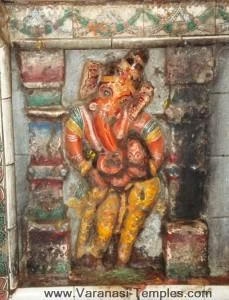
In the ancient city of Varanasi (Kashi), where spirituality permeates every stone and river ghat, the Jyeshta Vinayak Temple stands as a monumental testament to devotion and ancient lore. Dedicated to Lord Ganesha in his form as Jyeshta (the eldest), this temple is one of the vital stops on the Sapt Vinayak pilgrimage circuit in Kashi.
According to the Kashi Khand of the Skanda Purana, Lord Shiva had seven sons (Vinayaks), and Jyeshta Vinayak is the eldest among them. The name “Jyeshta” signifies seniority and primacy.
Phalaśruti: Why Devotees Visit
Devotees flock to this shrine not just for blessings but for a specific spiritual cleansing. It is believed that worshipping the eldest Ganesh here bestows the following benefits:
- Removal of Ancestral Karmic Debt: It is said that performing rituals here aids in the salvation of ancestors.
- Resolution of Sibling Conflicts: As the elder brother, Lord Jyeshta resolves disputes and brings harmony to families.
- Removal of Obstacles: Being the first among the Vinayaks, he grants swift relief from life’s hurdles.
Historical Origins & Scriptural Legend
The history of the Jyeshta Vinayak Temple is deeply intertwined with the scriptural texts of ancient India. While precise dynastic records are sparse, the oral traditions (Sthala Purana) are robust.
Scriptural References
The temple is rooted in the Kashi Khand (Chapter 57). According to tradition, the self-manifested (Swayambhu) murti of Lord Ganesha was installed here to protect the northern boundary of Kashi.
Local Legend
Legend holds that Lord Shiva addressed this form of Ganesha as “Jyeshta” because of his maturity and wisdom. Unlike other forms of Ganesha worshipped for material gains, the Jyeshta form is revered for his guidance and leadership.
Architectural Marvels
The temple exhibits a traditional Hindu temple architectural style, blending the Nagara and Bhumija idioms commonly found in North India. Although the structure has undergone renovations over the centuries to withstand the humidity of the Ganges plains, the sanctum retains its ancient charm.
Key Architectural Features
- The Shikhara: The temple features a tiered shikhara (spire) typical of North Indian temple architecture, symbolizing the ascent towards the divine.
- The Sanctum (Garbhagriha): The inner sanctum houses the black stone idol of Jyeshta Vinayak. The deity is depicted with a distinct, slightly larger right tusk (representing the sacrifice for the greater good).
- Vastu Shastra: The temple is oriented to face east, aligning with the rising sun, as prescribed by Vastu Shastra for Ganesh temples to absorb maximum solar energy.
Darshan & Ritual Logistics
The temple follows a strict schedule of rituals passed down through generations of local priests (Pandas). Here are the updated timings and rituals for 2026.
Daily Timings
| Session | Timing | Activity |
|---|---|---|
| Morning | 05:30 AM – 12:30 PM | Mangala Aarti, Shringar, Darshan |
| Evening | 05:00 PM – 08:30 PM | Bhog Aarti, Darshan |
Key Sevas and Offerings
- Abhishekam: Ritual bathing of the deity with milk, honey, and curd.
- Modak Archana: Offering of sweet dumplings (21 modaks), the favorite food of Ganesha.
- Sankalp Puja: For specific wishes or family well-being.
Online Seva Booking: While the temple is traditionally managed by local pandas, many services are now accessible through the official Kashi Vishwanath Temple Trust portals or third-party aggregators. It is advisable to book specific Sevas (like the Maha Aarti) at least 48 hours in advance.
2026 Festival Dates
Special significance is attached to Jyeshta month (May/June), Chaturthi after Amavasya.
- Ganesh Chaturthi: August 23, 2026
- Bhadrapad Shuddh Chaturthi: September 7, 2026
- Magh Shuddh Chaturthi: January 20, 2026
Practical Visitor Guidance
Dress Code and Etiquette
Visitors are required to dress modestly. Men should wear dhotis or full-length trousers, and women should wear sarees or full-length skirts. Avoid western attire like shorts or sleeveless tops to maintain the sanctity of the temple.
Photography and Electronic Devices
Photography is strictly prohibited inside the sanctum sanctorum. Mobile phones should be switched to silent mode. Many temples in Varanasi offer mobile lockers for a nominal fee; however, it is best to carry minimal luggage.
Crowd Management
- Best Hours: The least crowded time for darshan is immediately after the morning Aarti (5:30 AM – 7:00 AM) or just before the evening Aarti (4:30 PM – 5:00 PM).
- Seasonal Advice: Varanasi can be extremely hot in May and June. Carry a water bottle and a head covering. During the monsoon (July-September), the humidity is high, so breathable cotton clothing is recommended.
Pilgrimage Connectivity
How to Reach Jyeshta Vinayak Temple
The temple is located at K-62/144, Sapt Sagar Mohalla, in the premises of Jyeshteshwar Ling, near the famous Maidagin locality.
- By Air: Lal Bahadur Shastri International Airport (LBS) is approximately 25 km away. Taxis and pre-paid cabs are readily available.
- By Rail: Varanasi Junction (BSB) is the nearest railway station, about 7 km from Maidagin. Auto-rickshaws are the most common mode of transport from the station.
- By Road: Maidagin is a major hub connected via NH 19 (formerly NH 2). From Maidagin, the temple is best accessed on foot through the narrow lanes of Varanasi.
Nearby Sacred Sites
Extend your pilgrimage by visiting these nearby temples:
- Bhaironath Temple: Located near Manikarnika Ghat, closely associated with the Shakti Peeth.
- Sankat Mochan Hanuman Temple: A temple dedicated to Lord Hanuman, located 2 km away, known for healing ailments.
- Kashi Vishwanath Temple: The main spiritual complex of Kashi, a short distance away via the lanes.
Frequently Asked Questions (FAQ)
1. Is there a VIP darshan entry?
Currently, the temple does not have a designated VIP entry queue. Darshan is generally based on first-come-first-served, though special passes exist for Seva participants (those who have booked Abhishekam or Aarti) to access the inner sanctum during rituals.
2. What is the specific location of the temple?
The temple is situated at K-62/144, Sapt Sagar Mohalla, Maidagin, Varanasi. It is located within the compound of the Jyeshteshwar Mahadev Temple.
3. What is the ideal time to visit Jyeshta Vinayak Temple?
The ideal months are October to March when the weather in Varanasi is pleasant and cool. However, the temple remains open year-round.
4. Is there a specific Vrat associated with this temple?
Yes, the Chaturthi Vrat observed in the month of Jyeshta (May-June) is highly auspicious here. It is believed that worshipping the Lord on this day yields excellent results for devotees.
5. Are there accommodation facilities nearby?
Varanasi offers a wide range of accommodations, from Dharamshalas to luxury hotels. Maidagin has several guest houses and Dharamshalas specifically catering to pilgrims.
Photo Gallery
Images of the Jyeshta Vinayak Temple will be loaded here via WordPress Shortcode.
Recent Posts

Shri Kaamkoteeshwar Mandir, Varanasi – History & Significance
In the heart of Kashi, the eternal city of Lord Shiva, where the Ganges flows with celestial grace, stands the Shri Kaamkoteeshwar Mandir. This sacred Sannidhi is not merely a temple but a profound spiritual bridge between the Northern…

ओ सांवरे तूने ही मुझको संभाला – Lyrics & Meaning
ओ सांवरे तूने ही मुझको संभाला – A Prayer to Shyam Origin & Spiritual Essence Why This Bhajan Resonates Devotees chant this when overwhelmed by life’s storms—the refrain ‘तूने ही मुझको संभाला’ is the soul’s sigh of relief: “You…

कथा ये है महाराज मेरे की – Lyrics & Meaning
कथा ये है महाराज मेरे की छत्रपति संभाजी महाराज – A Prayer to Chhatrapati Sambhaji Maharaj Origin & Spiritual Essence Why This Bhajan Resonates Devotees chant this when their spirit feels tested—its powerful refrain “महाराज मेरे” is a soul’s…

Rigveda Samhita Yathartha Anuvada (ऋग्वेद संहिता यथार्थ अनुवाद) – Complete Set with Anvayartha & Hindi/English Translation
The Rigveda is the oldest surviving scripture of humanity and the foundational text of Sanātana Dharma. For serious students, scholars, UPSC aspirants studying ancient Indian history, Sanskrit learners, and spiritual seekers, a precise and grammatically structured translation is indispensable.…

आना भी अकेला है जाना भी अकेला है – Lyrics & Meaning | BharatTemples
आना भी अकेला है जाना भी अकेला है – A Prayer to the Divine Witness Origin & Spiritual Essence Why This Bhajan Resonates Devotees turn to this bhajan in moments of deep reflection—when life’s attachments begin to ache. The…

माता शेरावाली के द्वार जो भी जाता है – Lyrics & Meaning
माता शेरावाली के द्वार जो भी जाता है – A Prayer to Maa Sherawali Origin & Spiritual Essence Why This Bhajan Resonates Devotees turn to this bhajan in times of fear or uncertainty—its promise that no one leaves Maa’s…

मार लेना सपणी उबार लेणा भवरा – Lyrics & Meaning
मार लेना सपणी उबार लेणा भवरा – A Prayer to the Divine Beloved Origin & Spiritual Essence Why This Bhajan Resonates Devotees chant this in moments of deep vulnerability—its cry of “मार लेना सपणी, उबार लेणा भवरा” is the…

हमें श्याम सुंदर भरोसा तुम्हारा – Lyrics & Meaning
हमें श्याम सुंदर भरोसा तुम्हारा – A Prayer to Shyam Sundar Origin & Spiritual Essence Why This Bhajan Resonates Devotees chant this when feeling alone—its refrain ‘de do sahara’ is the soul’s cry for divine support. Lyrics in Hindi…

Mere Satguru Ne Di Thi Davai Lyrics in Hindi & Meaning
Mere Satguru Ne Di Thi Davai: Invoking the Guru’s Liberating Wisdom This soul-stirring bhajan venerates the Satguru (True Spiritual Master) as the divine physician who dispenses the only remedy for life’s deepest sufferings. Composed by Sant Karmaveer Tufani, it…

Janm Diyo Thari Maa Dukh Dekhiyo Lyrics in Hindi & Meaning
जन्म दियो थारी माँ दुख देखियो (Maa’s Grief Upon Birthing You) This soul-stirring Chetavani Bhajan (admonitory hymn) is addressed to the Divine Mother (Maa) – a call for repentance when children forget their filial duties in the dark age…