
Contents
Introduction & Spiritual Essence: The Grace of Kali Priya Vinayak
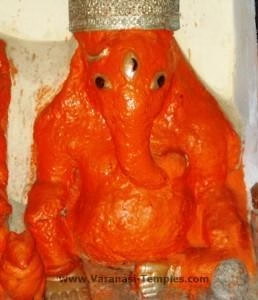
Nestled within the sacred labyrinthine lanes of Kashi (Varanasi), the Kali Priya Vinayak Temple stands as a testament to unwavering faith. This ancient shrine is dedicated to Lord Ganesha, revered here as Kali Priya Vinayak. The name itself holds profound meaning: Kali refers to the consort of Lord Shiva, Priya translates to “beloved,” and Vinayak is one of Ganesha’s most sacred names, signifying the remover of obstacles.
Unlike the colossal monolithic structures found elsewhere, this temple offers an intimate spiritual connection. Devotees believe that offering prayers here ensures protection for the sincere devotee against all forms of enemies and evil energies. According to the local Sthala Purana (local oral legends), the deity here creates formidable barriers for the ill-wishers of the devotee, while removing obstacles from the devotee’s own path.
Phalaśruti (The Fruit of Devotion): It is said that circumambulating this temple in Kashi washes away the accumulated karmic debts of past lives. By placing one’s head at the feet of this Ganesha, devotees seek blessings for a life free of trials and tribulations.
Historical Origins & Scriptural Legend
While the precise inscription date of the Kali Priya Vinayak Temple remains elusive in modern historical records, its origins are deeply woven into the ancient fabric of Kashi. Varanasi is often described as the Kashi Kanda of the Skanda Purana, and every corner of this city is associated with epic mythology.
The Legend: Tradition holds that this specific form of Ganesha was worshipped by a devout sage who wished to remain anonymous. He performed intense Tapasya (penance) to Lord Shiva and Goddess Parvati to invoke a protector for the holy city of Varanasi. It is believed that the existing murti (idol) is a Swayambhu (self-manifested) manifestation, arising from the earth during the Treta Yuga.
Local priests note that the temple has undergone several renovations, specifically in the late 19th and early 20th centuries, to preserve the sanctity of the inner sanctum. The architecture reflects the traditional North Indian (Nagara) style, though modest in scale, emphasizing the spiritual power of the deity over material grandeur.
Architectural Marvels
The architecture of the Kali Priya Vinayak Temple is a classic example of the Nagara style, which is prevalent in Northern India. While the exterior might appear unassuming—typical of the dense urban layout of Varanasi—the interior showcases intricate craftsmanship.
Key Features:
- The Shikhara (Spire): The temple features a multi-tiered shikhara that rises towards the sky, symbolizing the spiritual ascent of the devotee. Unlike the towering spires of temples in South India (Dravida style), this spire is more curvilinear.
- The Mandapa: A modest prayer hall allows devotees to gather, though the space is intimate due to the urban setting.
- Vastu Shastra: The temple layout adheres to Vastu principles, with the sanctum sanctorum facing the northeast (Ishanya) direction, aligning the energy flow with the divine consciousness of Lord Ganesha.
- Sculptural Details: The inner walls often feature carvings depicting stories from the Puranas, specifically the childhood leelas of Lord Ganesha. The idol itself is adorned with fresh flowers and silk garments.
Darshan & Ritual Logistics
The temple maintains a schedule typical of ancient Kashi temples—early morning openings and evening sanctity. Devotees can perform pooja by themselves, as the atmosphere encourages personal devotion.
Daily Timings
| Session | Timing |
|---|---|
| Morning Darshan | 05:00 AM – 12:00 PM |
| Evening Darshan | 04:00 PM – 09:00 PM |
Key Sevas & Rituals
- Abhishekam: Ritual bathing of the deity (usually performed with milk, honey, and sandalwood paste).
- Archana: Recitation of 108 names of Ganesha.
- Modak Offering: Offering of sweet dumplings, Lord Ganesha’s favorite, available at shops nearby.
Online Seva Booking: While many ancient temples rely on physical presence, Varanasi is modernizing. For major festivals, the Varanasi Municipal Corporation or temple trusts may open portals. Generally, for this specific shrine, seva is conducted on-site. However, for the broader Kashi Vishwanath Corridor area, devotees are advised to check the official Kashi Vishwanath website for integrated passes.
2026 Festival Calendar (Major Dates)
- Ganesh Chaturthi: Wednesday, August 26, 2026 – The most significant day here; expect special morning rituals and decoration.
- Magh Shivaratri: Sunday, February 22, 2026 – While dedicated to Shiva, the entire Kashi area celebrates with Ganesha as the gateway deity.
- Sankashti Chaturthi: Occurs monthly; consult the lunar calendar for specific dates in 2026.
Practical Visitor Guidance
Visiting Kali Priya Vinayak requires preparation, as it is located in the bustling core of Varanasi.
- Dress Code: Traditional attire is recommended. Men should wear dhotis or trousers (no shorts), and women should wear sarees, salwar kameez, or long skirts. Modesty is paramount.
- Photography: Strictly prohibited inside the inner sanctum (Garbhagriha). Photography may be allowed in the outer courtyard, but always ask the priest or security personnel first.
- Mobile & Lockers: Large electronic devices and bags are generally not allowed inside. Since the temple is in the dense old city, it is advisable to carry minimal luggage. Mobile lockers are available at the entrance of the larger Kashi Vishwanath Corridor, but small personal safety is best.
- Accessibility: The lanes are narrow and often crowded. The temple is accessible by foot, but not suitable for wheelchairs due to steps and narrow passages.
- Crowd Management:
- Best Time: Early morning (5:00 AM – 7:00 AM) offers the most peaceful darshan.
- Seasonal Advice: Varanasi summers (April-June) are extremely hot; carry a water bottle and umbrella. Winters (Dec-Jan) are foggy and cool; warm layers are necessary.
Pilgrimage Connectivity
How to Reach
- By Air: The nearest airport is Lal Bahadur Shastri International Airport (LBS), Varanasi (approx. 25 km from the city center). Taxis and pre-paid cabs are readily available.
- By Rail: Varanasi Junction (BSB) and Kashi Junction (KEI) are the two main railway stations. Both are well-connected to major Indian cities.
- By Road: Varanasi is connected via NH-19 (formerly NH-2) and NH-35. The new Kashi Vishwanath Corridor facilitates better access to the temple area. From Dasaswamedh Ghat, it is a short rickshaw ride followed by a walk.
Nearby Sacred Sites
Extend your pilgrimage by visiting these nearby shrines:
- Sakshi Vinayak Temple: Located very close to Kali Priya Vinayak, this is another ancient Ganesha shrine in Kashi. It is believed that one must visit Sakshi Vinayak after darshan of Kashi Vishwanath to validate the completion of the pilgrimage.
- Manaprakameshwar Temple: Situated at D-10/50, this shrine is dedicated to Lord Shiva and is intimately connected to the local legends of Kali Priya Vinayak.
- Kashi Vishwanath Temple: The main Jyotirlinga, a mere 10-15 minute walk through the bustling lanes of the old city.
Frequently Asked Questions (FAQ)
1. Is there a VIP or special entry darshan available?
For the Kali Priya Vinayak Temple specifically, VIP entry is rarely formalized as the temple is relatively small. However, visiting early in the morning (5 AM) ensures a quick and crowd-free darshan. For the larger Kashi Vishwanath Corridor, VIP passes can be booked online via the official government portal.
2. Can I carry Prasad from home?
Yes, you can carry homemade sweets like modaks or laddus. However, due to security protocols in the Kashi Vishwanath Corridor, packaged food items might be scrutinized. It is often easier to purchase fresh Prasad from authorized stalls outside the temple.
3. Is the temple accessible during monsoons?
Yes, but caution is advised. Varanasi can experience waterlogging during heavy rains in July and August. Wearing waterproof footwear and checking the weather forecast is recommended.
4. Is there an entry fee?
No, there is no entry fee for darshan at Kali Priya Vinayak Temple. Donations are accepted voluntarily at the Hundi (donation box).
5. How safe is the old city area for tourists?
The area is generally very safe for pilgrims. However, it is crowded. Keep valuables secure, beware of unauthorized guides, and stick to marked pathways. Women are advised to dress modestly and avoid isolated lanes after dark.
Photo Gallery
[Image Placeholder: A serene view of the Kali Priya Vinayak idol adorned with flowers]
[Image Placeholder: The narrow stone-paved lanes of Varanasi leading to the temple]
Official Address & Contact
Address: Kali Priya Vinayak Temple, D-10/50, behind Sakshi Vinayak, Manaprakameshwar Temple, Varanasi, Uttar Pradesh 221001, India.
Note: Direct phone contact details for this specific ancient shrine are not publicly listed. For general Varanasi tourism assistance, contact the UP Tourism helpline.
Recent Posts

Shri Kaamkoteeshwar Mandir, Varanasi – History & Significance
In the heart of Kashi, the eternal city of Lord Shiva, where the Ganges flows with celestial grace, stands the Shri Kaamkoteeshwar Mandir. This sacred Sannidhi is not merely a temple but a profound spiritual bridge between the Northern…

ओ सांवरे तूने ही मुझको संभाला – Lyrics & Meaning
ओ सांवरे तूने ही मुझको संभाला – A Prayer to Shyam Origin & Spiritual Essence Why This Bhajan Resonates Devotees chant this when overwhelmed by life’s storms—the refrain ‘तूने ही मुझको संभाला’ is the soul’s sigh of relief: “You…

कथा ये है महाराज मेरे की – Lyrics & Meaning
कथा ये है महाराज मेरे की छत्रपति संभाजी महाराज – A Prayer to Chhatrapati Sambhaji Maharaj Origin & Spiritual Essence Why This Bhajan Resonates Devotees chant this when their spirit feels tested—its powerful refrain “महाराज मेरे” is a soul’s…

Rigveda Samhita Yathartha Anuvada (ऋग्वेद संहिता यथार्थ अनुवाद) – Complete Set with Anvayartha & Hindi/English Translation
The Rigveda is the oldest surviving scripture of humanity and the foundational text of Sanātana Dharma. For serious students, scholars, UPSC aspirants studying ancient Indian history, Sanskrit learners, and spiritual seekers, a precise and grammatically structured translation is indispensable.…

आना भी अकेला है जाना भी अकेला है – Lyrics & Meaning | BharatTemples
आना भी अकेला है जाना भी अकेला है – A Prayer to the Divine Witness Origin & Spiritual Essence Why This Bhajan Resonates Devotees turn to this bhajan in moments of deep reflection—when life’s attachments begin to ache. The…

माता शेरावाली के द्वार जो भी जाता है – Lyrics & Meaning
माता शेरावाली के द्वार जो भी जाता है – A Prayer to Maa Sherawali Origin & Spiritual Essence Why This Bhajan Resonates Devotees turn to this bhajan in times of fear or uncertainty—its promise that no one leaves Maa’s…

मार लेना सपणी उबार लेणा भवरा – Lyrics & Meaning
मार लेना सपणी उबार लेणा भवरा – A Prayer to the Divine Beloved Origin & Spiritual Essence Why This Bhajan Resonates Devotees chant this in moments of deep vulnerability—its cry of “मार लेना सपणी, उबार लेणा भवरा” is the…

हमें श्याम सुंदर भरोसा तुम्हारा – Lyrics & Meaning
हमें श्याम सुंदर भरोसा तुम्हारा – A Prayer to Shyam Sundar Origin & Spiritual Essence Why This Bhajan Resonates Devotees chant this when feeling alone—its refrain ‘de do sahara’ is the soul’s cry for divine support. Lyrics in Hindi…

Mere Satguru Ne Di Thi Davai Lyrics in Hindi & Meaning
Mere Satguru Ne Di Thi Davai: Invoking the Guru’s Liberating Wisdom This soul-stirring bhajan venerates the Satguru (True Spiritual Master) as the divine physician who dispenses the only remedy for life’s deepest sufferings. Composed by Sant Karmaveer Tufani, it…

Janm Diyo Thari Maa Dukh Dekhiyo Lyrics in Hindi & Meaning
जन्म दियो थारी माँ दुख देखियो (Maa’s Grief Upon Birthing You) This soul-stirring Chetavani Bhajan (admonitory hymn) is addressed to the Divine Mother (Maa) – a call for repentance when children forget their filial duties in the dark age…