Introduction & Spiritual Essence: The Divine Union of Lakshmi & Saraswati
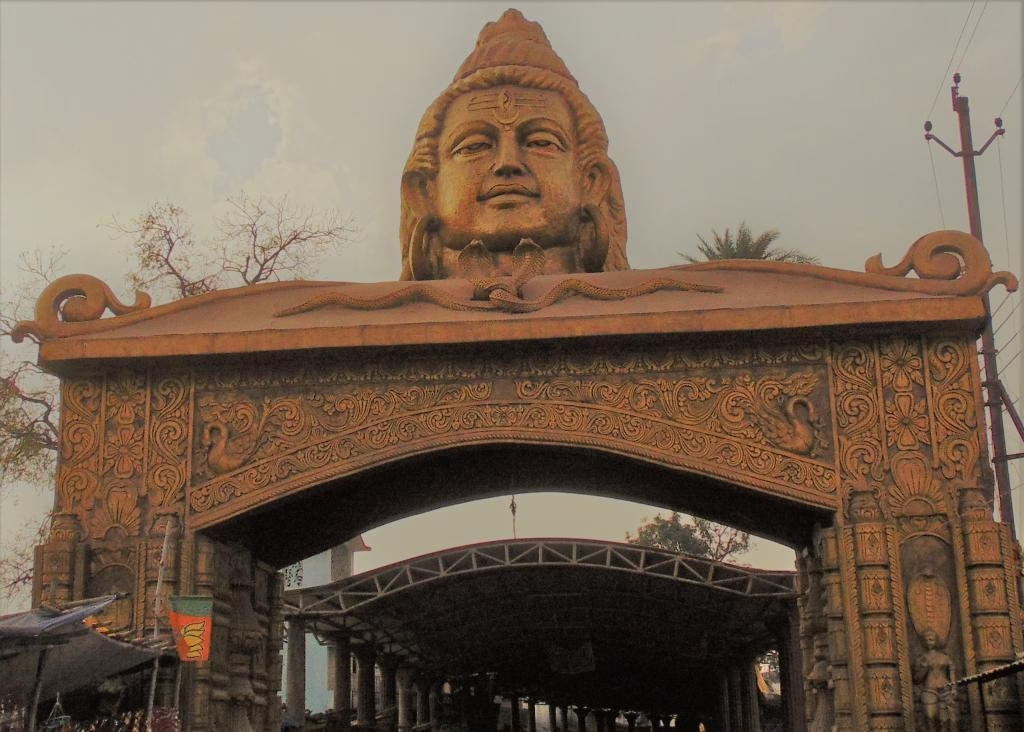
Deep within the heart of Chhattisgarh lies a spiritual sanctuary where power meets wisdom. The Mahamaya Temple in Ratanpur, near Bilaspur, is not merely a structure of stone but a living celestial abode. Dedicated to the dual Goddess forms of Maha Lakshmi (provider of prosperity) and Maha Saraswati (bestower of knowledge), this temple stands as one of the revered 52 Shakti Peethas of India. Known locally as the Kuldevi of the Ratanpur state, the deity here is also revered as Kosaleswari, the presiding mother of the ancient Daksin Kosal region.
For the devotee, a visit to this Shakti Peetha transcends ritual; it is a journey toward inner balance. The temple is unique because it houses two formidable forms of Shakti under a single sanctum. While Lakshmi governs the material abundance of the universe, Saraswati governs the spiritual light of consciousness. Pilgrims believe that worshipping Mahamaya here helps in cleansing ancestral karma and resolving obstacles in education and wealth.
Phalaśruti: The Spiritual Benefits
According to ancient traditions and the faith of millions, the Phalaśruti (fruits of worship) of visiting Mahamaya Temple includes:
Removal of Planetary Obstacles: Particularly those caused by Rahu and Ketu.
Ancestral Peace: Performing rites here is believed to pacify ancestors.
Knowledge & Wisdom: Students and seekers offer prayers to Saraswati for clarity and success.
Prosperity: Lakshmi’s grace is invoked for stability in business and career.
Historical Origins & Scriptural Legend
The history of the Mahamaya Temple is a tapestry woven with royal patronage and divine intervention. Built primarily in the 12th–13th century during the reign of the Kalachuris of Ratnapura, the temple complex has undergone significant renovations, most notably by the Archaeological Survey of India (ASI).
According to the Sthala Purana (local oral legend), the temple marks the precise spot where King Ratnadeva had a divine darshan of Goddess Kali. Originally, the sanctum housed three deities: Maha Kali, Maha Lakshmi, and Maha Saraswati. However, folklore states that the fierce energy of Maha Kali eventually departed the original shrine. Later, King Bahar Sai constructed the current temple structure in Vikram Samvat 1552 (1492 AD), dedicating it to the remaining dual forms of Lakshmi and Saraswati.
Timeline of Legacy
12th Century: Initial construction by the Kalachuri dynasty.
1492 AD: Re-construction and expansion by King Bahar Sai.
18th Century: Addition of the fortified courtyard in the Maratha period.
Modern Era: ASI restoration of the Kantideval temple within the complex.
Architectural Marvels: Nagara Style & Vastu
The temple is a masterpiece of Nagara style architecture, characterized by its towering Shikhara (spire) and intricate carvings. The structure faces North, adhering to Vastu Shastra principles that align the devotee with the flow of positive cosmic energy.
Key Architectural Highlights
The Sanctum & Mandapa: The Garbhagriha (sanctum sanctorum) is guarded by a fortified courtyard built during the Maratha period, showcasing a synthesis of defense and devotion.
Kantideval Temple: Located within the campus, this is the oldest cluster structure, built by ascetic Santosh Giri in 1039 AD and expanded by King Prithivideva II. It features four distinct gates and exquisite carvings.
Ancillary Shrines: The complex includes temples dedicated to Lord Shiva and Lord Hanuman, creating a complete pilgrimage circuit within one campus.
The Water Tank: A massive historic tank sits beside the temple, a typical feature of Shakti Peethas, used for ritual purification before darshan.
ASI/UNESCO Status: While the main Mahamaya temple is actively worshipped, the adjacent Kantideval and Kadeideol temples have been restored and protected by the Archaeological Survey of India.
Darshan & Ritual Logistics (2026 Update)
Devotees are encouraged to plan their visit around the daily rituals to experience the full vibrancy of the temple atmosphere. Special Sevas are performed to honor the dual deities.
Daily Darshan Timings
Session
Timing
Activity
Morning
06:00 AM – 12:00 PM
Mangala Aarti & Abhishekam
Afternoon
12:00 PM – 04:00 PM
Temple Closed / Shringar
Evening
04:00 PM – 08:30 PM
Sandhya Aarti & Darshan
Note: Timings may vary slightly during festivals. Arrive 30 minutes before Aarti for security clearance.
Key Sevas & Online Booking
To facilitate pilgrims, the temple trust (where applicable) or local organizers offer several Sevas. For 2026, it is recommended to contact the Bilaspur District Administration or the Ratanpur Temple Committee for the latest online portal updates.
Abhishekam: Performed with milk, honey, and sacred herbs.
Archana: Personalized chanting of mantras for family well-being.
Naivedyam: Offering of traditional Chhattisgarhi sweets.
Online Booking: While physical tokens are available at the temple counter, pilgrims are increasingly advised to check the official Chhattisgarh Temple Trust portal or the Bilaspur district website for “Online Darshan” slots, especially during peak seasons.
2026 Major Festival Calendar
Navratri (Shardiya):September 22 – October 1, 2026. The peak season where the temple is illuminated with thousands of lamps (Jyotikalash).
Chaitra Navratri:March 30 – April 7, 2026.
Maha Shivaratri:February 26, 2026. Special procession of Lord Kalbhairav.
Deepavali:November 1, 2026. Night-long Kirtan and lamp lighting.
Practical Visitor Guidance
Ensuring a smooth pilgrimage requires preparation. Ratanpur is a serene town, but it attracts heavy crowds during festivals.
Code of Conduct
Dress Code: Traditional attire is preferred. Men should wear dhotis or trousers with shirts; women should wear sarees, salwar kameez, or modest dresses. Avoid shorts and sleeveless tops.
Photography: Strictly prohibited inside the Garbhagriha. Photography of the outer campus is generally allowed, but respect devotees in prayer.
Mobile Phones: Electronic devices are allowed but must be switched to silent mode. Some sanctums may require phones to be deposited at the entrance counter.
Footwear: Remove shoes at the designated paid locker areas near the temple entrance.
Crowd Management & Seasonal Advice
Best Hours: For a peaceful darshan, visit between 9:00 AM and 11:00 AM or post-5:00 PM on weekdays.
Summer (April–June): Bilaspur experiences high temperatures. Carry a water bottle and cover your head with a scarf. The temple complex offers shaded areas in the courtyard.
Monsoon (July–September): The surrounding ponds fill up, adding to the scenic beauty, but the paths can be slippery. Wear rubber-soled footwear.
Accessibility: The main temple entrance has a few steps. Wheelchair access is available via the side ramp, but assistance is required due to the historic uneven flooring of the inner sanctum.
Pilgrimage Connectivity
How to Reach Mahamaya Temple, Ratanpur
By Air: The nearest airport is Swami Vivekananda Airport, Raipur (RPR), located approximately 125 km away. Taxis and private cabs are readily available from Raipur to Bilaspur/Ratanpur.
By Rail: The nearest major railway station is Bilaspur Junction (BSP), just 25 km from Ratanpur. Auto-rickshaws and local buses ply regularly on this route.
By Road:
NH 30 & NH 130: Ratanpur is well-connected via National Highway 30, linking it to Raipur and Ambikapur.
State Highway: Local state highways connect Bilaspur city to Ratanpur (approx. 30-40 minutes drive).
Bus Services: Regular buses are available from Bilaspur New Bus Stand to Ratanpur.
Extend your pilgrimage to these nearby spiritual destinations:
Kadeideol Shiva Temple: Located a few kilometers away on a hilltop fort ruins. Built in the 11th century, it offers a panoramic view and intense spiritual vibration.
Kalbhairav Temple: Located on the approach road to Mahamaya Temple. Tradition holds that visiting Mahamaya is incomplete without paying obeisance to Kalbhairav, the guardian deity.
Ratanpur Fort & Lakha Jhula: Explore the historic fort ruins and the famous hanging bridge, adding a historical dimension to your spiritual journey.
Frequently Asked Questions (FAQ)
1. What is the significance of the dual deities at Mahamaya Temple?
The temple is unique because it houses Maha Lakshmi (Goddess of Wealth) and Maha Saraswati (Goddess of Knowledge) together. This symbolizes the balance required for a successful life—both material prosperity and spiritual/mental wisdom.
2. Is there a VIP or special entry darshan available?
Currently, there is no formal “VIP” entry system like at Tirupati. However, during peak festival days, special tokens for Shringar Darshan are issued by the temple committee for a nominal fee. It is best to inquire at the ticket counter upon arrival.
3. What are the accommodation options in Ratanpur and Bilaspur?
Ratanpur has limited guest houses, primarily run by the district administration or trusts. For better amenities, most pilgrims stay in Bilaspur city (25 km away), which offers a range of hotels from budget to 3-star categories. Booking in advance is recommended during Navratri.
4. Can we carry Prasad inside the temple?
Outside food and Prasad are generally not allowed inside the inner sanctum. However, the temple has a dedicated counter where you can purchase official Prasad (usually laddoos or seasonal sweets) to offer to the deity.
5. Is the temple accessible for elderly devotees?
Yes. While the inner sanctum has a few steps, the outer Mandapa is spacious. There are seating arrangements for the elderly. Wheelchairs are available upon request at the main entrance, though availability during peak hours cannot be guaranteed.
A visit to the Mahamaya Temple in Ratanpur is a return to the roots of Chhattisgarh’s cultural and spiritual heritage. Whether you seek the blessings of Lakshmi for a prosperous year or the guidance of Saraswati for academic success, the temple stands as a timeless beacon of divine grace. Plan your 2026 pilgrimage with reverence and practicality, and immerse yourself in the ancient energy of this Shakti Peetha.
In the heart of Kashi, the eternal city of Lord Shiva, where the Ganges flows with celestial grace, stands the Shri Kaamkoteeshwar Mandir. This sacred Sannidhi is not merely a temple but a profound spiritual bridge between the Northern…
ओ सांवरे तूने ही मुझको संभाला – A Prayer to Shyam Origin & Spiritual Essence Why This Bhajan Resonates Devotees chant this when overwhelmed by life’s storms—the refrain ‘तूने ही मुझको संभाला’ is the soul’s sigh of relief: “You…
कथा ये है महाराज मेरे की छत्रपति संभाजी महाराज – A Prayer to Chhatrapati Sambhaji Maharaj Origin & Spiritual Essence Why This Bhajan Resonates Devotees chant this when their spirit feels tested—its powerful refrain “महाराज मेरे” is a soul’s…
The Rigveda is the oldest surviving scripture of humanity and the foundational text of Sanātana Dharma. For serious students, scholars, UPSC aspirants studying ancient Indian history, Sanskrit learners, and spiritual seekers, a precise and grammatically structured translation is indispensable.…
आना भी अकेला है जाना भी अकेला है – A Prayer to the Divine Witness Origin & Spiritual Essence Why This Bhajan Resonates Devotees turn to this bhajan in moments of deep reflection—when life’s attachments begin to ache. The…
माता शेरावाली के द्वार जो भी जाता है – A Prayer to Maa Sherawali Origin & Spiritual Essence Why This Bhajan Resonates Devotees turn to this bhajan in times of fear or uncertainty—its promise that no one leaves Maa’s…
मार लेना सपणी उबार लेणा भवरा – A Prayer to the Divine Beloved Origin & Spiritual Essence Why This Bhajan Resonates Devotees chant this in moments of deep vulnerability—its cry of “मार लेना सपणी, उबार लेणा भवरा” is the…
हमें श्याम सुंदर भरोसा तुम्हारा – A Prayer to Shyam Sundar Origin & Spiritual Essence Why This Bhajan Resonates Devotees chant this when feeling alone—its refrain ‘de do sahara’ is the soul’s cry for divine support. Lyrics in Hindi…
Mere Satguru Ne Di Thi Davai: Invoking the Guru’s Liberating Wisdom This soul-stirring bhajan venerates the Satguru (True Spiritual Master) as the divine physician who dispenses the only remedy for life’s deepest sufferings. Composed by Sant Karmaveer Tufani, it…
जन्म दियो थारी माँ दुख देखियो (Maa’s Grief Upon Birthing You) This soul-stirring Chetavani Bhajan (admonitory hymn) is addressed to the Divine Mother (Maa) – a call for repentance when children forget their filial duties in the dark age…