
Contents
- 1 The Definitive Pilgrimage Guide: Akshardham New Delhi
| Date built: | 6 November 2005 |
|---|---|
| Deity: | Swaminarayan |
| Architectural style: | – |
| Major festivals | – |
| Locale: | – |
| District:: | – |
| Address: | Noida Mor, Pandav Nagar, New Delhi, Delhi 110092 |
| Phone | – |
The Definitive Pilgrimage Guide: Akshardham New Delhi
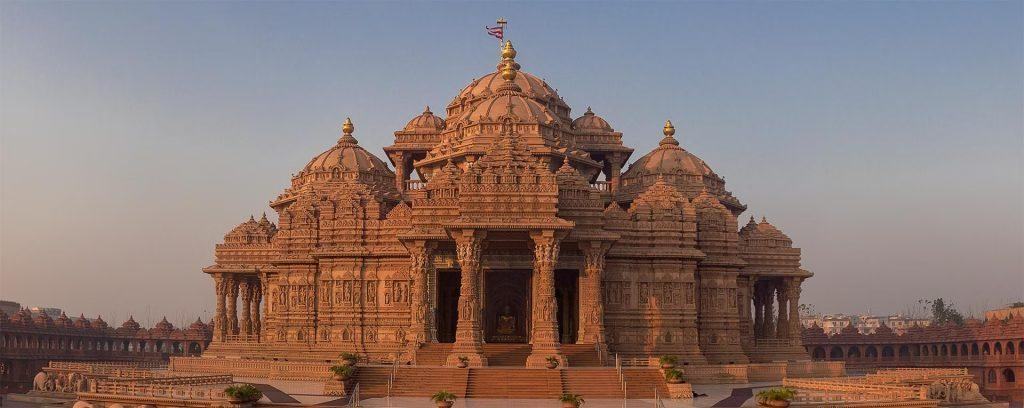
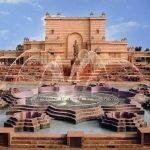
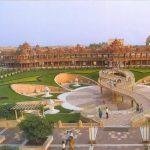
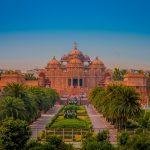
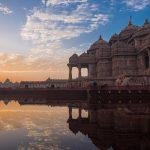
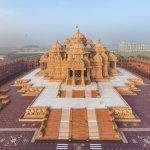
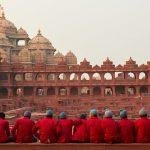
Akshardham, located in the heart of the nation’s capital, is more than a temple; it is a spiritual sanctuary that encapsulates 10,000 years of Indian culture and Sanatana Dharma. Officially known as Swaminarayan Akshardham, it stands as a monument to devotion, harmony, and architectural excellence.
Akshardham means the divine abode of God. It is hailed as an eternal place of devotion, purity, and peace. Swaminarayan Akshardham at New Delhi is a Mandir – an abode of God, a Hindu house of worship, and a spiritual and cultural campus dedicated to devotion, learning, and harmony. Timeless Hindu spiritual messages, vibrant devotional traditions, and ancient architecture all are echoed in its art and architecture. The mandir is a humble tribute to Bhagwan Swaminarayan (1781-1830), the avatars, devas, and great sages of Hinduism. The traditionally-styled complex was inaugurated on 6 November 2005 with the blessings of HH Pramukh Swami Maharaj and through the devoted efforts of skilled artisans and volunteers.
1. Introduction & Spiritual Essence
The Akshardham Mandir is a Swayambhu (self-existent) vision of sanctity. The central deity is the 11-foot high murti of Bhagwan Swaminarayan, carved from paanch dhaatu (five metals) and seated in Abhayamudra (the gesture of fearlessness). He is flanked by the images of the Guru Parampara (lineage) in postures of devotion and service.
Phalaśruti: The Spiritual Benefits
Devotees visit Akshardham not merely for sightseeing, but for seeking adarsh darshan (ideal vision). According to Vedic traditions, visiting a Mahamandir dedicated to the Supreme Being fulfills:
- Shanti (Peace): The complex is designed to instill inner tranquility, reducing mental stress.
- Karma Shuddhi: Devotees believe that circumambulating the temple and offering prayers cleanses past karma and ancestral burdens.
- Atma-Jnana: The exhibitions and the central shrine serve as a teaching ground for understanding the eternal soul and its connection to the Divine.
2. Historical Origins & Scriptural Legend
While the structure is contemporary, its roots are deeply embedded in the ancient Shilpa Shastras (architectural canons) and Pancharatra Shastra.
Construction Timeline
The vision for Akshardham New Delhi was inspired by Yogiji Maharaj in 1968. However, the physical construction began in 1997. It was meticulously built by BAPS Swaminarayan Sanstha. After nearly a decade of labor by 11,000 artisans and 300 million volunteer hours, the temple was inaugurated on November 6, 2005, by Dr. A.P.J. Abdul Kalam, the 11th President of India.
Scriptural Legend
According to temple records and the teachings of the sect, the idol represents Bhagwan Swaminarayan, a 19th-century yogi and reformer of the Swaminarayan faith. The temple follows the Bhagavata Purana, which emphasizes the preservation of Dharma. The mandir was designed not using any ferrous metal or concrete, strictly adhering to Vastu Shastra and Pancharatra Shastra, ensuring the temple can stand for millennia.
3. Architectural Marvels
Designed in accordance with the standards of Maharishi Vastu Architecture, the Akshardham complex is a fusion of architectural styles from across India.
The Mandir Structure
- Material: Built entirely from Rajasthani pink sandstone and Italian Carrara marble. No steel or concrete supports are used.
- Dimensions: The monument rises 141 feet high, spans 316 feet wide, and extends 356 feet long.
- Features: It consists of 234 ornately carved pillars, nine domes, and 20,000 murtis of sadhus, devotees, and acharyas.
The Gajendra Pith
A unique feature at the base is the Gajendra Pith, a plinth paying tribute to the elephant (a symbol of Hindu culture). It contains 148 life-sized elephants weighing a total of 3,000 tons.
Note on ASI/UNESCO Status: As a modern construction (inaugurated in 2005), Akshardham is not a UNESCO World Heritage Site or an ASI-protected monument, though it follows ancient traditional norms strictly.
4. Darshan & Ritual Logistics (2026 Guide)
Visitors must note that no electronic items are permitted inside the temple complex. Secure mobile lockers are provided free of charge at the entrance.
Daily Timings
While timings may vary slightly during festivals, the general schedule is as follows:
| Session | Timings |
|---|---|
| Morning Darshan | 10:00 AM – 12:30 PM |
| Afternoon Break | Closed (12:30 PM – 3:00 PM) |
| Evening Darshan | 3:00 PM – 6:30 PM |
| Exhibitions Only | 10:00 AM – 6:30 PM |
*Note: The Mandir closes at 8:00 PM. The ticket counter closes at 6:00 PM.
Key Sevas and Online Booking
Unlike traditional ancient temples, Akshardham does not allow individual Archana or Abhishekam inside the main sanctum. However, visitors can participate in the Thali Seva (offering food to the deity) which is later distributed as Prasad.
- Online Booking: For the Mandir and Exhibition tickets, visitors should book through the official Akshardham website.
- Thali Seva: Can be booked at the on-site ticket counter or via the website. This is a symbolic offering that funds the BAPS charitable activities.
2026 Festival Dates & Special Timings
Akshardham celebrates major Hindu festivals with grandeur. Special darshan times (often extending to 10:00 PM) are announced on the website.
- Republic Day: January 26, 2026 (Flag hoisting and special cultural presentation).
- Maha Shivaratri: February 26, 2026 (Special evening program).
- Akshardham Chariot Festival (Palkhi Yatra): Usually held in April/May (date varies by Hindu calendar).
- Diwali (Annakut): October 21, 2026 (The most awaited event featuring mountain of sweets).
- Gita Jayanti: December 10, 2026 (Celebrating the Bhagavad Gita).
5. Practical Visitor Guidance
- Dress Code: Decent, traditional attire is recommended. Shorts, sleeveless tops, and torn jeans are not permitted.
- Photography Rules: Photography is strictly prohibited inside the Mandir and Exhibition Halls. Phones must be stored in lockers.
- Accessibility: The complex is wheelchair-friendly with ramps and designated entry points.
- Crowd Management: Tuesdays are usually closed for maintenance. Weekdays see fewer crowds than weekends. The best time to visit is 10:00 AM sharp or post 3:00 PM.
- Seasonal Advice: In summer (April–June), the marble floors reflect heat; carry a water bottle (empty bottles allowed, water provided inside). In winter, cover up.
6. Pilgrimage Connectivity
How to Reach
By Metro (Recommended): Take the Delhi Metro Blue Line to Akshardham Metro Station. The temple is a 5-minute walk from the station. Alternatively, one can take the Pink Line to Pandav Nagar or Nirman Vihar.
By Road: Located on NH 24 (Delhi–Meerut Expressway). The nearest bus stop is Noida Mor.
Nearest Railway Station: Anand Vihar ISBT (approx. 4 km).
Nearest Airport: Indira Gandhi International Airport (Terminal 3, approx. 30 km).
Nearby Sacred Sites
- Pandav Gufa (Cave): Located 1 km from Akshardham, believed to be where the Pandavas stayed during their exile.
- Swaminarayan Akshardham, Gandhinagar: The original inspiration in Gujarat (2 hours from Ahmedabad airport).
- Chhatarpur Temple (South Delhi): Another grand modern temple complex dedicated to Goddess Durga (approx. 30 min drive).

7. Frequently Asked Questions (FAQs)
1. Is there a VIP Darshan entry?
There is no separate VIP entry for the main Mandir. All devotees enter through a common queue. However, physically disabled visitors and senior citizens are provided with wheelchair assistance and priority queuing.
2. Can I bring my children inside?
Yes, children are welcome. However, infants may not be allowed inside the theater for the IMAX film due to loud sound effects. Strollers are available at the entrance.
3. Is there an entry fee for the temple?
Entry to the temple complex and the gardens is free. Separate tickets are required for the exhibitions (Sahajanand Darshan, Neelkanth Darshan, and Sanskruti Darshan) and the musical fountain.
4. What is the significance of the boat ride?
The Sanskruti Darshan boat ride is a 12-minute journey through 10,000 years of India’s history, showcasing Vedic inventions, mathematicians, and cultural values.
5. Can we carry food inside?
Outside food is not permitted. However, the complex houses a pure vegetarian restaurant (Premvati Aharg) serving traditional Indian meals.
Contact Details
Official Address: Akshardham, Noida Mor, Pandav Nagar, New Delhi, Delhi 110092
Contact Number: +91 11 4344 2344 (General Inquiry)
Recent Posts

Shri Kaamkoteeshwar Mandir, Varanasi – History & Significance
In the heart of Kashi, the eternal city of Lord Shiva, where the Ganges flows with celestial grace, stands the Shri Kaamkoteeshwar Mandir. This sacred Sannidhi is not merely a temple but a profound spiritual bridge between the Northern…

ओ सांवरे तूने ही मुझको संभाला – Lyrics & Meaning
ओ सांवरे तूने ही मुझको संभाला – A Prayer to Shyam Origin & Spiritual Essence Why This Bhajan Resonates Devotees chant this when overwhelmed by life’s storms—the refrain ‘तूने ही मुझको संभाला’ is the soul’s sigh of relief: “You…

कथा ये है महाराज मेरे की – Lyrics & Meaning
कथा ये है महाराज मेरे की छत्रपति संभाजी महाराज – A Prayer to Chhatrapati Sambhaji Maharaj Origin & Spiritual Essence Why This Bhajan Resonates Devotees chant this when their spirit feels tested—its powerful refrain “महाराज मेरे” is a soul’s…

Rigveda Samhita Yathartha Anuvada (ऋग्वेद संहिता यथार्थ अनुवाद) – Complete Set with Anvayartha & Hindi/English Translation
The Rigveda is the oldest surviving scripture of humanity and the foundational text of Sanātana Dharma. For serious students, scholars, UPSC aspirants studying ancient Indian history, Sanskrit learners, and spiritual seekers, a precise and grammatically structured translation is indispensable.…

आना भी अकेला है जाना भी अकेला है – Lyrics & Meaning | BharatTemples
आना भी अकेला है जाना भी अकेला है – A Prayer to the Divine Witness Origin & Spiritual Essence Why This Bhajan Resonates Devotees turn to this bhajan in moments of deep reflection—when life’s attachments begin to ache. The…

माता शेरावाली के द्वार जो भी जाता है – Lyrics & Meaning
माता शेरावाली के द्वार जो भी जाता है – A Prayer to Maa Sherawali Origin & Spiritual Essence Why This Bhajan Resonates Devotees turn to this bhajan in times of fear or uncertainty—its promise that no one leaves Maa’s…

मार लेना सपणी उबार लेणा भवरा – Lyrics & Meaning
मार लेना सपणी उबार लेणा भवरा – A Prayer to the Divine Beloved Origin & Spiritual Essence Why This Bhajan Resonates Devotees chant this in moments of deep vulnerability—its cry of “मार लेना सपणी, उबार लेणा भवरा” is the…

हमें श्याम सुंदर भरोसा तुम्हारा – Lyrics & Meaning
हमें श्याम सुंदर भरोसा तुम्हारा – A Prayer to Shyam Sundar Origin & Spiritual Essence Why This Bhajan Resonates Devotees chant this when feeling alone—its refrain ‘de do sahara’ is the soul’s cry for divine support. Lyrics in Hindi…

Mere Satguru Ne Di Thi Davai Lyrics in Hindi & Meaning
Mere Satguru Ne Di Thi Davai: Invoking the Guru’s Liberating Wisdom This soul-stirring bhajan venerates the Satguru (True Spiritual Master) as the divine physician who dispenses the only remedy for life’s deepest sufferings. Composed by Sant Karmaveer Tufani, it…

Janm Diyo Thari Maa Dukh Dekhiyo Lyrics in Hindi & Meaning
जन्म दियो थारी माँ दुख देखियो (Maa’s Grief Upon Birthing You) This soul-stirring Chetavani Bhajan (admonitory hymn) is addressed to the Divine Mother (Maa) – a call for repentance when children forget their filial duties in the dark age…