
Contents
- 1 Introduction & Spiritual Essence
- 2 Historical Origins & Scriptural Legend
- 3 Architectural Marvels
- 4 Darshan & Ritual Logistics
- 5 Practical Visitor Guidance
- 6 Pilgrimage Connectivity
- 7 Photo Gallery
- 8 Frequently Asked Questions (FAQ)
- 8.1 1. What is the history of the EME Temple in Vadodara?
- 8.2 2. Why is the EME Temple also called the Dakshinamurti Temple?
- 8.3 3. Is there a VIP Darshan entry available at EME Temple?
- 8.4 4. What are the opening hours of EME Temple?
- 8.5 5. Is photography allowed inside the temple complex?
- 8.6 6. How is the architecture of the EME Temple different from other temples?
- 9 Contact Details
Introduction & Spiritual Essence
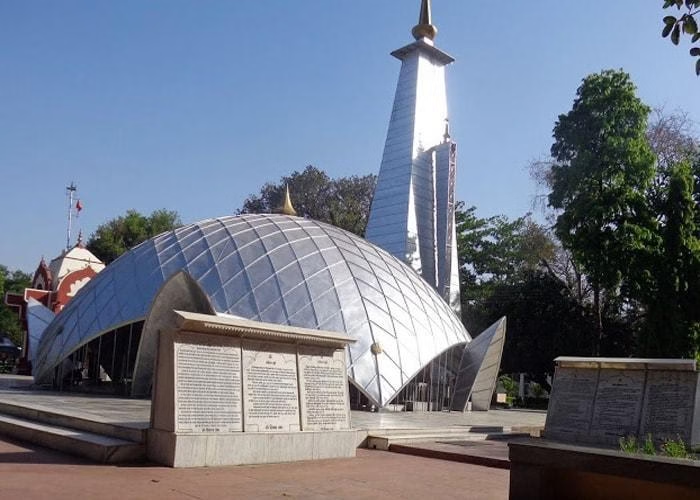
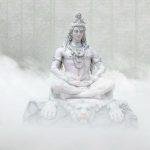
The EME Temple, formally known as the Dakshinamurti Temple, stands as a beacon of spirituality and architectural innovation in Vadodara, Gujarat. Under the administration of the 505 Army Base Workshop of the Indian Army, this temple is unique in its concept, reflecting the secular fabric of the Indian Armed Forces. It is dedicated to Lord Dakshinamurti, a distinct form of Lord Shiva depicted as the supreme teacher (Adi Guru), facing south.
Phalaśruti: Why Visit?
Devotees visit the EME Temple not only for its serene ambiance but also to seek blessings for spiritual knowledge and wisdom. Lord Dakshinamurti is revered as the embodiment of cosmic knowledge who teaches the silent language of silence. According to temple lore, offering prayers here helps in:
- Dispelling Ignorance: Ideal for students and seekers of truth.
- Removing Ancestral Karmic Blockages: Through regular Shiva worship.
- Harmony: The temple promotes religious unity, housing symbols of all major faiths.
Historical Origins & Scriptural Legend
Construction and Legacy
Built in 1966, the temple was constructed by the Electrical and Mechanical Engineering (EME) Corps of the Indian Army. Unlike ancient stone edifices, this structure reflects the modern industrial capabilities of its creators. The complex houses a vast collection of 106 ancient statues ranging from the 6th to the 16th century, relocated here from the Baroda Museum and other sites to preserve India’s heritage.
Scriptural Legend: The Guru of the South
The primary deity, Dakshinamurti, is a form of Lord Shiva described in the Suta Samhita and various Agamic texts. Legend holds that Shiva appeared in this form to impart Brahma Vidya (supreme knowledge) to the Saptarishis (seven sages) in Mount Kailash. This aspect of Shiva represents the silent teacher who imparts wisdom without spoken words.
Architectural Marvels
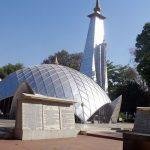
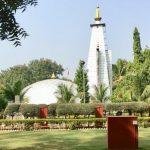
The EME Temple is a masterpiece of Modern Architecture blended with traditional Vastu principles. It breaks away from the conventional Nagara or Dravida styles, utilizing a Geodesic Design.
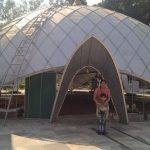
- Geodesic Structure: The sanctum sanctorum (Garbhagriha) is a dome-like structure covered entirely with aluminium sheets, reflecting the Army’s engineering prowess. The shape provides excellent acoustic properties and durability.
- Vastu Orientation: The temple faces east, welcoming the rising sun, while the deity faces south, aligning with the southern direction of Lord Dakshinamurti.
- The Mandapa: The assembly hall is designed to be spacious, allowing devotees to sit and meditate. The flooring utilizes traditional mosaic patterns.
- Enclosure: The temple is surrounded by a well-maintained garden and a brick enclosure that houses the collection of ancient sculptures, creating an open-air museum effect.
The sanctum is adorned with silver-coated doors, and the inner walls feature intricate carvings depicting various forms of Hindu deities, yet the overall aesthetic remains minimalist and futuristic.
Darshan & Ritual Logistics
Unlike civilian-managed temples, the EME Temple maintains strict discipline and timing, reflecting military precision. Below are the current timings for 2026.
Daily Darshan Timings
| Session | Timings |
|---|---|
| Morning Darshan | 09:00 AM – 11:30 AM |
| Afternoon Break | 11:30 AM – 05:00 PM (Closed) |
| Evening Darshan | 05:00 PM – 08:30 PM |
| Weekly Holiday | Friday |
Sevas and Online Booking
Given the temple is managed by the Army, operational procedures are straightforward. While a dedicated “VIP Entry” is not generally available to the public (security protocols apply equally), special access is sometimes arranged for groups through prior written permission from the 505 Army Base Workshop.
- Daily Sevas: Regular Abhishekam (ritual bathing of the deity) and Archana are performed by the resident priests.
- Booking: As of 2026, the temple does not have a live consumer-facing “online booking” portal for sevas. Devotees are requested to contact the temple administration via phone for advance arrangements for group prayers or special occasions.
Major Festivals (2026 Calendar)
- Maha Shivaratri: February 26, 2026 (Special night-long darshan and chanting).
- Pradosh Vrat: Monthly (13th day of the lunar fortnight).
- Navratri: September 22 – October 1, 2026 (Special Garba may be organized within the Army campus).
- Makar Sankranti: January 14, 2026.
Practical Visitor Guidance
As the temple is situated within an Army cantonment area (Fatehgunj), certain protocols are strictly enforced.
- Dress Code: Decent, traditional attire is recommended. Men should wear dhoti/kurta or full pants; women should wear saree/salwar kameez.
- Photography: Photography is strictly prohibited inside the sanctum and the complex housing the ancient statues. Mobile phones are allowed but must be kept on silent mode.
- Security: All visitors must pass through a security checkpoint. ID proof may be required for entry.
- Crowd Management:
- Best Time: Weekday mornings (9 AM – 10 AM) are the least crowded.
- Seasonal Advice: Summers (April–June) in Vadodara are extremely hot. Carry a water bottle and sun protection. The temple interior is cool due to the geodesic design, but the garden area is exposed.
Pilgrimage Connectivity
How to Reach EME Temple, Vadodara
The temple is located in the Fatehgunj area, strategically situated on National Highway 8 (now NH 48).
- By Air: Vadodara Airport (BDQ) is the nearest airport, located approximately 8-10 km from the temple (approx. 20 mins drive).
- By Rail: Vadodara Railway Station (also known as BCR or Vadodara Junction) is a major rail hub on the Mumbai-Delhi main line. It is about 5 km from the temple.
- By Road: From the city center (Sayaji Baug area), it is a 15-minute drive via Fatehgunj Main Road. Local city buses (VTC) and auto-rickshaws are easily available.
Nearby Sacred Sites
Enhance your pilgrimage circuit by visiting these nearby attractions:
- Shri Hanuman Temple (Fatehgunj): Located very close to the EME Temple, known for its peaceful atmosphere.
- Khodiyar Temple (Atmiya Sadan): A prominent shrine dedicated to Goddess Khodiyar, located about 4 km away.
- Sayaji Baug (Kamati Baug): While primarily a garden, it houses a Ganesh temple and a planetarium, ideal for family visits.
Photo Gallery
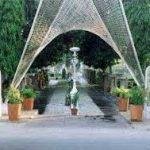
Frequently Asked Questions (FAQ)
1. What is the history of the EME Temple in Vadodara?
The EME Temple was built in 1966 by the Electrical and Mechanical Engineering Corps of the Indian Army. It is a geodesic structure dedicated to Lord Dakshinamurti, a form of Lord Shiva as the cosmic teacher. It is unique because it incorporates religious symbols of all faiths within its complex.
2. Why is the EME Temple also called the Dakshinamurti Temple?
The temple is named after the primary deity installed in the sanctum, Dakshinamurti. This form of Lord Shiva faces south and is revered as the ultimate teacher (Guru) who imparts spiritual knowledge through silence. This form is rarely found in Hindu temples, making this temple distinct.
3. Is there a VIP Darshan entry available at EME Temple?
No, the temple is managed by the Indian Army, and standard security protocols apply to all visitors. There is no specific “VIP Darshan” queue for the general public. All devotees enter through the main gate after security screening.
4. What are the opening hours of EME Temple?
The temple is open for two sessions daily: 9:00 AM to 11:30 AM and 5:00 PM to 8:30 PM. It remains closed on Fridays and during specific maintenance periods or security drills.
5. Is photography allowed inside the temple complex?
Photography is prohibited inside the temple complex, specifically around the sanctum sanctorum and the garden area where ancient statues are displayed. Visitors are advised to deposit cameras and mobile phones in lockers provided at the entrance if requested by security.
6. How is the architecture of the EME Temple different from other temples?
The EME Temple utilizes a Geodesic Dome structure covered in aluminium sheets, which is a hallmark of modern architecture. Unlike traditional stone temples (Nagara or Dravida styles), it focuses on geometric efficiency and modern materials, symbolizing the fusion of technology and spirituality.
Contact Details
Address: EME Temple, Near Fatehgunj, Vadodara, Gujarat 390002, India.
Phone: +91 88958 83823
Management: 505 Army Base Workshop, Indian Army.
Note: For the most up-to-date security timings or closures due to army events, it is advisable to call the temple office before planning your visit.
Recent Posts

Shri Kaamkoteeshwar Mandir, Varanasi – History & Significance
In the heart of Kashi, the eternal city of Lord Shiva, where the Ganges flows with celestial grace, stands the Shri Kaamkoteeshwar Mandir. This sacred Sannidhi is not merely a temple but a profound spiritual bridge between the Northern…

ओ सांवरे तूने ही मुझको संभाला – Lyrics & Meaning
ओ सांवरे तूने ही मुझको संभाला – A Prayer to Shyam Origin & Spiritual Essence Why This Bhajan Resonates Devotees chant this when overwhelmed by life’s storms—the refrain ‘तूने ही मुझको संभाला’ is the soul’s sigh of relief: “You…

कथा ये है महाराज मेरे की – Lyrics & Meaning
कथा ये है महाराज मेरे की छत्रपति संभाजी महाराज – A Prayer to Chhatrapati Sambhaji Maharaj Origin & Spiritual Essence Why This Bhajan Resonates Devotees chant this when their spirit feels tested—its powerful refrain “महाराज मेरे” is a soul’s…

Rigveda Samhita Yathartha Anuvada (ऋग्वेद संहिता यथार्थ अनुवाद) – Complete Set with Anvayartha & Hindi/English Translation
The Rigveda is the oldest surviving scripture of humanity and the foundational text of Sanātana Dharma. For serious students, scholars, UPSC aspirants studying ancient Indian history, Sanskrit learners, and spiritual seekers, a precise and grammatically structured translation is indispensable.…

आना भी अकेला है जाना भी अकेला है – Lyrics & Meaning | BharatTemples
आना भी अकेला है जाना भी अकेला है – A Prayer to the Divine Witness Origin & Spiritual Essence Why This Bhajan Resonates Devotees turn to this bhajan in moments of deep reflection—when life’s attachments begin to ache. The…

माता शेरावाली के द्वार जो भी जाता है – Lyrics & Meaning
माता शेरावाली के द्वार जो भी जाता है – A Prayer to Maa Sherawali Origin & Spiritual Essence Why This Bhajan Resonates Devotees turn to this bhajan in times of fear or uncertainty—its promise that no one leaves Maa’s…

मार लेना सपणी उबार लेणा भवरा – Lyrics & Meaning
मार लेना सपणी उबार लेणा भवरा – A Prayer to the Divine Beloved Origin & Spiritual Essence Why This Bhajan Resonates Devotees chant this in moments of deep vulnerability—its cry of “मार लेना सपणी, उबार लेणा भवरा” is the…

हमें श्याम सुंदर भरोसा तुम्हारा – Lyrics & Meaning
हमें श्याम सुंदर भरोसा तुम्हारा – A Prayer to Shyam Sundar Origin & Spiritual Essence Why This Bhajan Resonates Devotees chant this when feeling alone—its refrain ‘de do sahara’ is the soul’s cry for divine support. Lyrics in Hindi…

Mere Satguru Ne Di Thi Davai Lyrics in Hindi & Meaning
Mere Satguru Ne Di Thi Davai: Invoking the Guru’s Liberating Wisdom This soul-stirring bhajan venerates the Satguru (True Spiritual Master) as the divine physician who dispenses the only remedy for life’s deepest sufferings. Composed by Sant Karmaveer Tufani, it…

Janm Diyo Thari Maa Dukh Dekhiyo Lyrics in Hindi & Meaning
जन्म दियो थारी माँ दुख देखियो (Maa’s Grief Upon Birthing You) This soul-stirring Chetavani Bhajan (admonitory hymn) is addressed to the Divine Mother (Maa) – a call for repentance when children forget their filial duties in the dark age…