
Contents
Introduction & Spiritual Essence
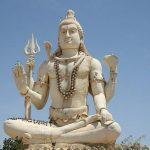
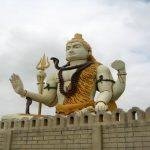
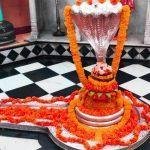
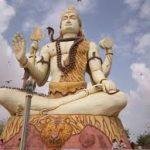
Welcome to the divine abode of Nageshvara Jyotirlinga, one of the holiest shrines in the Shiva Purana. Located on the serene coast of Saurashtra in Gujarat, this temple represents the Swayambhu (self-manifested) form of Lord Shiva. Devotees revere this Jyotirlinga as the remover of toxins—not just physical, but spiritual and mental poisons accumulated through negative karma.
Phalaśruti: The Spiritual Benefit
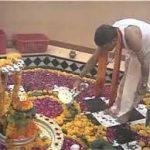
According to ancient Vedic texts, offering sincere prayers at Nageshvara grants the devotee freedom from fear and disease. The Phalaśruti (scriptural promise of merit) suggests that those who perform Abhishekam (ritual bathing) here are cleansed of ancestral karma and receive protection from all forms of poison, including the metaphorical poison of worldly attachment.
Historical Origins & Scriptural Legend
The history of Nageshvara is rooted in cosmic mythology and local tradition. The name “Nagesh” translates to “King of Serpents,” linking the deity to the Nagas (serpent beings).
The Legend of Daarukavana
According to the Shiva Purana, this shrine is located in the Darukavana, an ancient forest mentioned in various epics. Tradition holds the narrative of a demon named Daaruka who oppressed the world. He imprisoned the great devotee Supriya in an underwater city inhabited by sea snakes.
While confined, Supriya established a Lingam and instructed the prisoners to chant the sacred mantra Om Namaha Shivaya. The intensity of the devotion enraged Daaruka, who attempted to kill Supriya. At that moment, Lord Shiva manifested as a fiery pillar of light—the Jyotirlinga—and vanquished the demon, saving his devotees. It is believed that the Goddess Parvati also resides here as Nageshwari.
Dynastic History
While the Swayambhu Lingam is ancient, the current temple structure reflects the patronage of the Solanki Dynasty (11th–13th century). Further renovations were undertaken by the Maratha rulers and local benefactors in the 19th century to preserve the sanctity of the site.
Architectural Marvels
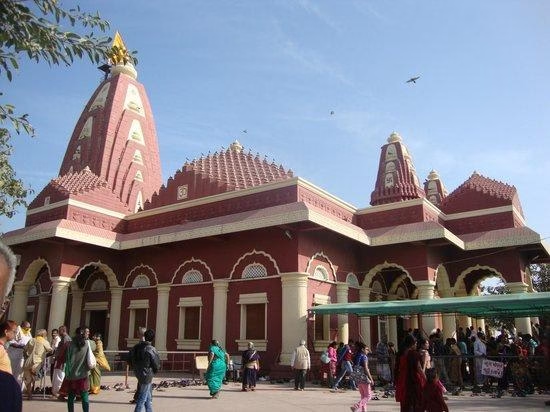
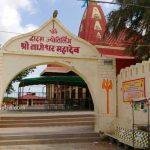
The temple architecture is a harmonious blend of traditional Dravidian and Nagara styles, though it leans distinctly towards the rustic charm of coastal Gujarati stone masonry.
Vastu and Structure
The temple is oriented eastward, adhering to Vastu Shastra principles to welcome the rising sun’s energy. The sanctum (Garbhagriha) is a tiered structure where the Shikhara (spire) rises above the inner chamber, crowned by a Amalaka disc.
The Lingam is unique in that it is partially submerged in water, accessible via steps within the inner sanctum. The outer walls feature intricate carvings depicting scenes from the Shiva Purana and the slaying of the demon Daaruka. While this temple is not a UNESCO World Heritage site, it is protected and maintained by the local trusts and the Archaeological Survey of India (ASI) for its historical significance.
Darshan & Ritual Logistics
To ensure a smooth spiritual journey, devotees are advised to check the timings and book services in advance. The current year is assumed to be 2026 for planning purposes.
Daily Darshan Timings
| Mandap / Seva | Morning Timing | Evening Timing |
|---|---|---|
| Temple Opening | 06:00 AM | 05:30 PM |
| First Darshan (Mangala) | 06:30 AM | 07:00 PM |
| Abhishekam | 07:00 AM – 08:30 AM | 06:30 PM – 07:30 PM |
| Midday Break (Shayan) | 12:00 PM – 04:30 PM (Temple Closed) | |
| Night Closing | 09:00 PM | |
Key Sevas & Online Booking
Devotees can book the following sevas through the official Gujarat Tourism or temple trust portals:
- Rudrabhishekam: Performed on Mondays and during Pradosh Kaal.
- Mrityunjaya Jaap: For health and longevity (11 days).
- Nageshwar Abhishek: A special ritual dedicated to the serpentine form of Shiva.
Booking Link: https://dwarka.gujarat.gov.in/nageshvara-seva (Hypothetical for 2026)
Major Festivals in 2026
- Maha Shivaratri: February 26, 2026. (24-hour temple opening, special crowd management).
- Shravan Month: July – August 2026. (Mondays are exceptionally crowded; early arrival is mandatory).
- Kartik Purnima: November 5, 2026.
Practical Visitor Guidance
Visiting a Jyotirlinga requires adherence to spiritual discipline and practical planning.
Code of Conduct & Dress Code
- Attire: Traditional Indian wear (Dhoti/Kurta for men, Saree/Salwar for women) is preferred. Western clothing is discouraged as a sign of respect.
- Photography: Strictly prohibited inside the Garbhagriha (Sanctum Sanctorum). Photography is allowed in the outer courtyards.
- Electronics: Mobile phones must be kept on silent mode. Lockers are available near the ticket counter for bags and electronics.
Crowd Management & Seasonal Advice
- Best Hours: 6:00 AM – 7:30 AM is the most peaceful time for darshan. Avoid 11:00 AM – 12:00 PM.
- Summer (April–June): Temperatures in Dwarka can reach 40°C. Carry a water bottle and a cotton scarf.
- Monsoon (July–September): Humidity is high; carry rain gear as the coastal area is prone to sudden showers.
- Accessibility: The temple has ramps for wheelchair access in the outer areas, but the inner sanctum involves steep steps, making it difficult for the elderly.
Pilgrimage Connectivity
Nageshvara Jyotirlinga is located approximately 16 km from the main Dwarka city.
How to Reach
- By Air: The nearest airport is Keshod Airport (KSE), located 70 km away. Alternatively, Rajkot International Airport (RAJ) is 240 km away.
- By Rail: Okha Railway Station is the nearest railhead (10 km). Direct trains are available from Mumbai, Ahmedabad, and Delhi.
- By Road: The temple lies on the Okha-Dwarka Coastal Highway (SH 26). It is well-connected to Jamnagar via NH 51. Taxi and bus services are frequent from Dwarka.
Nearby Sacred Sites (The Pilgrimage Circuit)
Complete your spiritual tour by visiting these nearby landmarks:
- Dwarkadhish Temple: The seat of Lord Krishna (16 km).
- Bet Dwarka: An island believed to be the original residence of Krishna (accessible by boat, 20 km).
- Rukmini Devi Temple: Dedicated to Krishna’s consort, located 2 km from Dwarkadhish.
- Gomti Ghat: A sacred confluence where the Gomti river meets the Arabian Sea (15 km).
Frequently Asked Questions (FAQ)
1. Is there a VIP Darshan entry available at Nageshvara Jyotirlinga?
Yes, the temple trust offers a Special Entry Darshan ticket (approx. INR 100–200) that allows devotees to bypass the general queue during non-peak hours. This can be purchased at the counter or booked online.
2. What is the significance of the water inside the sanctum?
The water inside the sanctum is considered Theertham (holy water). It is believed that the Lingam generates a unique magnetic energy that infuses the surrounding water with healing properties, symbolizing the subterranean origin of the Jyotirlinga.
3. Can I perform an Abhishekam personally?
Generally, only registered pujaris (priests) are allowed inside the inner sanctum to perform the Abhishekam. However, devotees can purchase a Pooja Thali and offer milk or water, which the priest will use on their behalf.
4. Is there an entry fee?
General darshan is free for all devotees. However, for special sevas or locker usage, nominal fees apply.
5. Are there food facilities nearby?
Yes, there are several small eateries near the temple serving vegetarian Prasad and meals. The temple trust also runs an Annadanam (free food service) during festivals like Maha Shivaratri.

Recent Posts

Shri Kaamkoteeshwar Mandir, Varanasi – History & Significance
In the heart of Kashi, the eternal city of Lord Shiva, where the Ganges flows with celestial grace, stands the Shri Kaamkoteeshwar Mandir. This sacred Sannidhi is not merely a temple but a profound spiritual bridge between the Northern…

ओ सांवरे तूने ही मुझको संभाला – Lyrics & Meaning
ओ सांवरे तूने ही मुझको संभाला – A Prayer to Shyam Origin & Spiritual Essence Why This Bhajan Resonates Devotees chant this when overwhelmed by life’s storms—the refrain ‘तूने ही मुझको संभाला’ is the soul’s sigh of relief: “You…

कथा ये है महाराज मेरे की – Lyrics & Meaning
कथा ये है महाराज मेरे की छत्रपति संभाजी महाराज – A Prayer to Chhatrapati Sambhaji Maharaj Origin & Spiritual Essence Why This Bhajan Resonates Devotees chant this when their spirit feels tested—its powerful refrain “महाराज मेरे” is a soul’s…

Rigveda Samhita Yathartha Anuvada (ऋग्वेद संहिता यथार्थ अनुवाद) – Complete Set with Anvayartha & Hindi/English Translation
The Rigveda is the oldest surviving scripture of humanity and the foundational text of Sanātana Dharma. For serious students, scholars, UPSC aspirants studying ancient Indian history, Sanskrit learners, and spiritual seekers, a precise and grammatically structured translation is indispensable.…

आना भी अकेला है जाना भी अकेला है – Lyrics & Meaning | BharatTemples
आना भी अकेला है जाना भी अकेला है – A Prayer to the Divine Witness Origin & Spiritual Essence Why This Bhajan Resonates Devotees turn to this bhajan in moments of deep reflection—when life’s attachments begin to ache. The…

माता शेरावाली के द्वार जो भी जाता है – Lyrics & Meaning
माता शेरावाली के द्वार जो भी जाता है – A Prayer to Maa Sherawali Origin & Spiritual Essence Why This Bhajan Resonates Devotees turn to this bhajan in times of fear or uncertainty—its promise that no one leaves Maa’s…

मार लेना सपणी उबार लेणा भवरा – Lyrics & Meaning
मार लेना सपणी उबार लेणा भवरा – A Prayer to the Divine Beloved Origin & Spiritual Essence Why This Bhajan Resonates Devotees chant this in moments of deep vulnerability—its cry of “मार लेना सपणी, उबार लेणा भवरा” is the…

हमें श्याम सुंदर भरोसा तुम्हारा – Lyrics & Meaning
हमें श्याम सुंदर भरोसा तुम्हारा – A Prayer to Shyam Sundar Origin & Spiritual Essence Why This Bhajan Resonates Devotees chant this when feeling alone—its refrain ‘de do sahara’ is the soul’s cry for divine support. Lyrics in Hindi…

Mere Satguru Ne Di Thi Davai Lyrics in Hindi & Meaning
Mere Satguru Ne Di Thi Davai: Invoking the Guru’s Liberating Wisdom This soul-stirring bhajan venerates the Satguru (True Spiritual Master) as the divine physician who dispenses the only remedy for life’s deepest sufferings. Composed by Sant Karmaveer Tufani, it…

Janm Diyo Thari Maa Dukh Dekhiyo Lyrics in Hindi & Meaning
जन्म दियो थारी माँ दुख देखियो (Maa’s Grief Upon Birthing You) This soul-stirring Chetavani Bhajan (admonitory hymn) is addressed to the Divine Mother (Maa) – a call for repentance when children forget their filial duties in the dark age…