
Contents
- 1 Navlakha Temple Ghumli: The Ancient Sun Temple of Gujarat
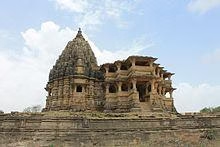
Nestled amidst the rolling hills of Ghumli in the Devbhoomi Dwarka district, the Navlakha Temple stands as a silent testament to the architectural zenith of the Solanki dynasty. Dedicated to Surya Devta (the Sun God), this 11th-century marvel is widely regarded as the oldest and grandest sun temple in Gujarat. As we approach the year 2026, the temple continues to draw pilgrims and historians alike, offering a unique blend of spiritual solace and historical wonder.
Introduction & Spiritual Essence
The Navlakha Temple is not merely a structure of stone; it is a celestial abode on earth. The primary deity, Surya Narayan, is depicted here in a majestic form, worshipped as the illuminator of darkness and the granter of health and vitality.
- Primary Deity: Surya Devta (Sun God).
- Alternate Names: Ghumli Sun Temple, Surya Mandir Ghumli.
- Form: The idol is unique to the Solanki style, often associated with the Trimurti concept where Surya represents the sustaining power of the universe.
Phalaśruti: Why Devotees Visit
According to ancient Vedic traditions, worshipping Surya brings clarity, wisdom, and removes Rahu-Ketu afflictions. Pilgrims visit the Navlakha Temple for:
- Ancestral Cleansing: It is believed that offering water (Arghya) to Surya here aids in cleansing ancestral karma, specifically aiding the ancestors’ journey in the afterlife.
- Health & Vitality: Surya is the cosmic healer; devotees suffering from chronic ailments seek blessings for recovery.
- Prosperity: As the god of gold and wealth, Surya Darshan is auspicious for business growth.
Historical Origins & Scriptural Legend
The history of Navlakha Temple is a saga of glory and resilience. Built during the peak of the Solanki (Chaulukya) Empire, it reflects the might of rulers like Raja Bhimdev and Rana Bhanji.
Construction & Dynastic Legacy
According to temple records and historical inscriptions:
The temple was constructed in the 11th century AD (early 1000s). The name “Navlakha” is derived from the Sanskrit term for “Nine Lakhs” (900,000), believed to be the cost incurred in gold coins to build the edifice. It rivals the grandeur of the Modhera Sun Temple and the Somnath Temple in its intricate detailing.
The Fall of Ghumli
Tradition holds that the temple complex suffered significant damage during the sack of Ghumli in 1313 AD. This attack was led by Jadeja Jam Barmaniyaji to avenge the defeat of his father, Jam Unaji, who had been defeated by the Jethwa ruler Rana Bhanji in 1309 AD. Despite this, the sanctity of the shrine remained intact.
Architectural Marvels
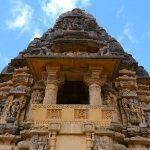
The Navlakha Temple is a masterpiece of the Maru-Gurjara style of architecture, synonymous with the Solanki era. It is a classic example of Nagara style, characterized by soaring heights and intricate carvings.
Key Structural Elements
- The Base (Uagati): The temple boasts the largest base in Gujarat, measuring approximately 45.72 x 30.48 meters. It raises the sanctum high above the surrounding plain.
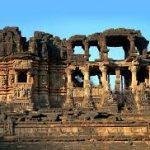
- Garbhagriha & Mandapa: The sanctum sanctorum (Garbhagriha) is covered by a circular path (Pradakshina). The assembly hall (Mandapa) features distinctive eight-sided pillars. The ceilings are supported by Shringar Chokis (decorated niches).
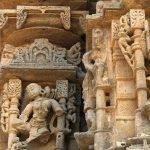
- Sculptural Iconography: The outer walls are adorned with niches housing deities. Notably, the rear wall features two massive elephants fighting with their trunks. The niches (Gavakshas) display:
- South: Brahma-Savitri
- West: Shiva-Parvati
- North: Lakshmi Narayan
- The Lost Kirti Toran: Historically, the temple was guarded by a magnificent entrance arch (Kirti Toran), a symbol of victory. While the original structure is lost to time, its remnants speak of its former glory.
- Trademark Motif: The Solanki style is recognized by the three entwining tusks of elephants carved into the architecture, representing the high noon of this artistic era.
While the ASI protects the site, it currently holds UNESCO tentative listing status due to its significance in the historic Chaulukya kingdom landscape.

Darshan & Ritual Logistics
The temple follows a strict routine for Seva and Darshan. With the advent of digital integration in 2026, devotees can now plan their visit with ease.
Daily Timings
The temple opens early to offer prayers to the rising sun.
| Session | Timing | Activity |
|---|---|---|
| Morning Darshan | 06:00 AM – 12:00 PM | Morning Aarti & General Darshan |
| Afternoon Break | 12:00 PM – 03:00 PM | Temple remains closed |
| Evening Darshan | 04:00 PM – 08:00 PM | Evening Aarti & Special Pujas |
Key Sevas & Online Booking
Devotees can book specific rituals. While the temple management is overseen by local trusts (often linked to the Dwarkadhish administration), online booking for the Navlakha temple specifically is facilitated through the Gujarat Tourism and local trust portals.
- Aditya Hridayam Stotra: Recited for longevity (Morning slot).
- Surya Namaskar Yajna: Ritualistic sun salutations (Special dates).
- Rudrabhishekam: Available on request at the temple office.
2026 Festival Calendar
Mark your calendars for these auspicious dates. The temple is most vibrant during these times.
- Maha Shivaratri: February 26, 2026 (Special night darshan).
- Ram Navami: April 5, 2026 (Celebrating the birth of Lord Rama, an incarnation of Vishnu).
- Chhath Puja: November 2–5, 2026 (Dedicated to Surya, significant for devotees from North India).
- Winter Solstice (Makar Sankranti): January 14, 2026 (Peak solar significance).
Practical Visitor Guidance
To ensure a serene experience at this historical site, please adhere to the following guidelines.
- Dress Code: Traditional Indian attire is recommended. Men should wear Dhoti or trousers with a shirt; women should wear Saree or Salwar Kameez. Avoid shorts and sleeveless tops.
- Photography: Photography is permitted in the outer courtyard and gardens. However, it is strictly prohibited inside the Garbhagriha (sanctum sanctorum).
- Mobile Lockers: Free mobile deposit counters are available near the entrance. Electronic items are discouraged during the Aarti.
- Accessibility: The temple has stone steps (Ghats). While the inner sanctum has narrow passages, the outer circumambulatory path is wheelchair accessible via a ramp.
- Crowd Management:
- Best Hours: Visit between 8:00 AM and 10:00 AM to avoid morning rush. Evening Aarti at 6:30 PM offers a mesmerizing view of the sun setting behind the hills.
- Seasonal Advice: Summers (May–June) are extremely hot. Carry ample water, coconut water, and wear a hat. Monsoons (July–September) transform the Ghumli hills into a lush green paradise.
Pilgrimage Connectivity
The temple is located in the Ghumli village, approximately 45 km from Porbandar and 25 km from Dwarka.
- By Air: The nearest airport is in Porbandar (approx. 45 km), which connects to major cities like Mumbai and Ahmedabad.
- By Rail: The nearest major railway junction is Porbandar Railway Station. From there, taxis and state transport buses are available to Ghumli.
- By Road: The temple is accessible via the State Highway 54 (Ghumli Road). It connects to the NH 51. From Ahmedabad, it is a 5-6 hour drive (approx. 350 km).
Nearby Sacred Sites
Extend your pilgrimage to these nearby landmarks:
- Bhadkeshwar Mahadev Temple (Dwarka): Located on the edge of the sea, approximately 30 km away.
- Ghumli Ganesha Temple: Situated just outside the main Navlakha complex, this 10th-century temple is dedicated to Lord Ganesha and is a must-visit.
- Modhera Sun Temple: If you are an architecture enthusiast, this Sun Temple (though 300 km away) offers a comparative study of Solanki architecture.
Frequently Asked Questions (FAQs)
Unlike the Dwarkadhish Temple, Navlakha Ghumli does not have an extensive VIP entry system. However, devotees performing specific Sevas (like Abhishekam) get priority access during their scheduled time slots.
2. What is the significance of the elephant trunks carved on the temple wall?
The three entwining elephant trunks are the trademark symbol of the high Solanki (Maru-Gurjara) architecture. It symbolizes strength, royal power, and the structural integrity of the temple foundation.
3. Is there a dress code for foreigners?
While there is no strict policing of traditional attire for foreigners, modest clothing is mandatory. Shoulders and knees should be covered for both men and women to respect the sanctity of the Surya temple.
4. Can we carry our own puja materials?
Yes, you can carry flowers and fruits. However, metal containers (like copper pots) for Abhishekam might be inspected at security. Traditional priests are available on-site for performing rituals.
5. Is the temple open year-round?
Yes, the Navlakha Temple is open year-round. However, during heavy monsoons or specific administrative events, timings may vary slightly. It is advisable to check local notices before travel.
Photo Gallery
Contact Details
Official Address:
Navlakha Temple, Ghumli, Dwarka District, Gujarat, India.
Nearest Tourist Information Center: Porbandar & Dwarka Tourism Office (Run by Gujarat Tourism).
For further assistance regarding 2026 bookings or specific rituals, please contact the local temple trust office in Ghumli village.
Recent Posts

Shri Kaamkoteeshwar Mandir, Varanasi – History & Significance
In the heart of Kashi, the eternal city of Lord Shiva, where the Ganges flows with celestial grace, stands the Shri Kaamkoteeshwar Mandir. This sacred Sannidhi is not merely a temple but a profound spiritual bridge between the Northern…

ओ सांवरे तूने ही मुझको संभाला – Lyrics & Meaning
ओ सांवरे तूने ही मुझको संभाला – A Prayer to Shyam Origin & Spiritual Essence Why This Bhajan Resonates Devotees chant this when overwhelmed by life’s storms—the refrain ‘तूने ही मुझको संभाला’ is the soul’s sigh of relief: “You…

कथा ये है महाराज मेरे की – Lyrics & Meaning
कथा ये है महाराज मेरे की छत्रपति संभाजी महाराज – A Prayer to Chhatrapati Sambhaji Maharaj Origin & Spiritual Essence Why This Bhajan Resonates Devotees chant this when their spirit feels tested—its powerful refrain “महाराज मेरे” is a soul’s…

Rigveda Samhita Yathartha Anuvada (ऋग्वेद संहिता यथार्थ अनुवाद) – Complete Set with Anvayartha & Hindi/English Translation
The Rigveda is the oldest surviving scripture of humanity and the foundational text of Sanātana Dharma. For serious students, scholars, UPSC aspirants studying ancient Indian history, Sanskrit learners, and spiritual seekers, a precise and grammatically structured translation is indispensable.…

आना भी अकेला है जाना भी अकेला है – Lyrics & Meaning | BharatTemples
आना भी अकेला है जाना भी अकेला है – A Prayer to the Divine Witness Origin & Spiritual Essence Why This Bhajan Resonates Devotees turn to this bhajan in moments of deep reflection—when life’s attachments begin to ache. The…

माता शेरावाली के द्वार जो भी जाता है – Lyrics & Meaning
माता शेरावाली के द्वार जो भी जाता है – A Prayer to Maa Sherawali Origin & Spiritual Essence Why This Bhajan Resonates Devotees turn to this bhajan in times of fear or uncertainty—its promise that no one leaves Maa’s…

मार लेना सपणी उबार लेणा भवरा – Lyrics & Meaning
मार लेना सपणी उबार लेणा भवरा – A Prayer to the Divine Beloved Origin & Spiritual Essence Why This Bhajan Resonates Devotees chant this in moments of deep vulnerability—its cry of “मार लेना सपणी, उबार लेणा भवरा” is the…

हमें श्याम सुंदर भरोसा तुम्हारा – Lyrics & Meaning
हमें श्याम सुंदर भरोसा तुम्हारा – A Prayer to Shyam Sundar Origin & Spiritual Essence Why This Bhajan Resonates Devotees chant this when feeling alone—its refrain ‘de do sahara’ is the soul’s cry for divine support. Lyrics in Hindi…

Mere Satguru Ne Di Thi Davai Lyrics in Hindi & Meaning
Mere Satguru Ne Di Thi Davai: Invoking the Guru’s Liberating Wisdom This soul-stirring bhajan venerates the Satguru (True Spiritual Master) as the divine physician who dispenses the only remedy for life’s deepest sufferings. Composed by Sant Karmaveer Tufani, it…

Janm Diyo Thari Maa Dukh Dekhiyo Lyrics in Hindi & Meaning
जन्म दियो थारी माँ दुख देखियो (Maa’s Grief Upon Birthing You) This soul-stirring Chetavani Bhajan (admonitory hymn) is addressed to the Divine Mother (Maa) – a call for repentance when children forget their filial duties in the dark age…