

Contents
- 1 1. Introduction & Spiritual Essence
- 2 2. Historical Origins & Scriptural Legend
- 3 3. Architectural Marvels
- 4 4. Darshan & Ritual Logistics (2026 Update)
- 5 5. Practical Visitor Guidance
- 6 6. Pilgrimage Connectivity
- 7 7. Frequently Asked Questions (FAQs)
- 7.1 1. Is there a VIP darshan entry available at Kera Shiva Temple?
- 7.2 2. What is the historical significance of the name “Lakheshwara”?
- 7.3 3. Are there accommodation facilities available in Kera village?
- 7.4 4. What safety measures are in place after the earthquakes?
- 7.5 5. Is the temple wheelchair accessible?
Welcome to bharattemples.com, your spiritual compass. As the Lead Heritage Architect and SEO Strategist, I invite you to explore the timeless sanctity of the Shiva Temple at Kera, also revered as the Lakheshwara Temple. Nestled in the rugged landscape of the Kutch district, this temple is a testament to the devotion of the Chaulukya dynasty and the resilience of faith against nature’s fury.
1. Introduction & Spiritual Essence
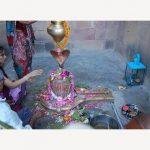
The Shiva Temple Kera (also known locally as Kerakot Temple) houses a Swayambhu (self-manifested) Lingam. Unlike crafted idols, the Lingam here is believed to have emerged naturally from the earth, radiating immense spiritual energy. The presiding deity is worshipped as Lakheshwara (The Lord of Lakha, referring to the immense wealth and devotees served by King Lakha).
Phalaśruti: Why Visit Kera?
According to the temple traditions and the Phalaśruti (benefits of worship), visiting this ancient shrine offers profound spiritual cleansing:
- Ancestral Karma Cleansing: It is believed that offering milk and water here on Mondays washes away the Pitru Dosha (ancestral curses), bringing peace to departed souls.
- Overcoming Obstacles: Lord Shiva in his form as Chandrasekhara helps devotees remove planetary afflictions, particularly those related to Rahu and Ketu.
- Prosperity: The sanctity of the Lakheshwara form is associated with gaining stability in life and removing financial blockages.
2. Historical Origins & Scriptural Legend
The temple is a jewel of the Chaulukya (Solanki) dynasty, constructed between the 9th and 11th centuries. This period was the golden age of temple architecture in Gujarat, marked by intricate carvings and imposing structures.
The Legend of King Lakha
Tradition holds that the temple is ascribed to Ra Lakha Phulani, a Solanki ruler whose capital was situated at the nearby Kapilkot Fort. Legend states that the King, a devout follower of Shiva, commissioned the construction of this temple to honor the Lord who guided him in battle and governance.
Resilience Against Nature
According to historical records, the temple has faced two major seismic events: the 1819 Rann of Kutch earthquake and the devastating 2001 Bhuj earthquake. While the surrounding complex suffered damage, the inner sanctum and the majestic spire remained largely intact, leading devotees to believe this is a divine miracle protecting the Shiva Lingam.
3. Architectural Marvels
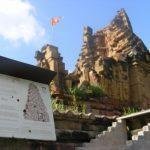
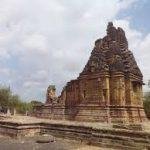
The temple is a classic example of early Nagara style architecture, infused with local Gujarati aesthetics. It adheres to the principles of Vastu Shastra, aligning the structure with cosmic energies.
The Spire (Shikhara) and Mandapa
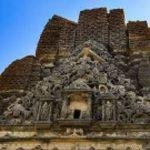
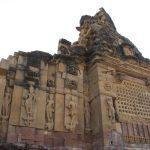
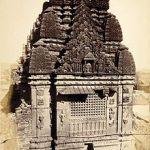
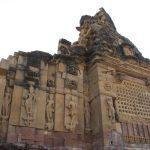
The most striking feature is the Shikhara (spire). It is not merely a peak but a complex interplay of miniature spires (Urushringas) rising tier upon tier. The external faces are adorned with elegantly carved sculptures of celestial beings (Apsaras) and deities.
The inner sanctum (Garbhagriha) is square-shaped (approx. 2.59 meters per side) with thick walls and a narrow Pradakshina (circumambulation path). This passage features open cut-stone perforated windows that allow natural light to filter in, creating a mystical ambiance. Though the main hall (Mandapa) is partially ruined (only the northern wall survives), the surviving structures showcase intricate Chaitya windows and geometric precision.
4. Darshan & Ritual Logistics (2026 Update)
Visitors are encouraged to participate in the daily rituals which maintain the temple’s vibrancy. Given the historical significance, the temple trust has streamlined the darshan process.
Daily Temple Timings
Based on standard temple schedules for heritage sites in the Kutch region:
| Session | Timings | Activity |
|---|---|---|
| Morning | 06:00 AM – 12:00 PM | Mangala Aarti, Abhishekam, Shringar Darshan |
| Afternoon | 12:00 PM – 04:00 PM | Raja Bhog (Temple usually closed for 2-3 hours) |
| Evening | 04:00 PM – 08:30 PM | Sandhya Aarti, Shayan Darshan |
Key Sevas & Online Booking
To ensure a seamless experience, devotees can book specific Sevas in advance. The temple follows the traditional Vedic rituals.
- Abhishekam: Performed with milk, honey, and rose water. (Timing: 7:00 AM)
- Rudra Archana: Recitation of Rudram Chamakam for personal well-being. (Timing: 8:00 AM)
- Maha Aarti: A grand ritual involving lamps and chanting. (Timing: 7:00 PM)
Online Seva Booking: Devotees can book these services via the official Gujarat Tourism portal or the local temple committee office in Bhuj. Look for the “Kera Shiva Temple Trust” link for the 2026 calendar.
2026 Festival Calendar Highlights
- Shivratri (Feb/March): A 3-day festival with special night-long chanting and a fair in the village.
- Pradosh Vrat (Monthly): Every 13th day of the lunar cycle. Next major Pradosh: March 10, 2026.
- Kartik Purnima (Nov): Special lamp lighting ceremony (Deep Daan).
5. Practical Visitor Guidance
As a protected heritage site, certain protocols must be followed to preserve the architecture and maintain sanctity.
- Dress Code: Traditional attire is highly recommended. Men should wear dhotis or trousers with shirts; women should wear sarees or salwar kameez. Modesty is key.
- Photography: Photography is allowed in the outer complex and courtyard. Strictly prohibited inside the Garbhagriha (sanctum sanctorum).
- Footwear: There is a designated footwear stall near the entrance. A nominal fee is charged for maintenance.
- Crowd Management: Weekends and Mondays see the highest footfall. To avoid crowds, visit between 10:00 AM and 11:30 AM on weekdays.
- Seasonal Advice: The Kutch desert can be scorching in May and June. Carry ample water, sunglasses, and a head cover. Winters (Nov-Feb) are the ideal time to visit.
6. Pilgrimage Connectivity
The temple is located in Kera village, approximately 22 kilometers south of Bhuj. It is accessible via well-maintained roads.
How to Reach
- By Air: Bhuj Airport (BHUJ) is the nearest airport, located about 25 km away. Taxis and auto-rickshaws are readily available.
- By Rail: Bhuj Railway Station is the nearest railhead. Trains like the Bhuj Express and Kutch Express connect Bhuj to Mumbai and Ahmedabad.
- By Road: From Bhuj, take the Kera Road (State Highway 42) leading directly to the village. The drive is scenic, showcasing the arid landscape of Kutch.
Nearby Sacred Sites (Pilgrimage Circuit)
Extend your spiritual journey by visiting these nearby sites:
- Kapilkot Fort: Located very close to the temple, this ancient fort offers historical ruins and a panoramic view of the terrain.
- Hamirsar Lake (Bhuj): A central point in Bhuj for relaxation and evening aartis, roughly 22 km north.
- Shri Swaminarayan Temple (Bhuj): An architectural marvel made of pure white marble, located in the heart of Bhuj.
7. Frequently Asked Questions (FAQs)
1. Is there a VIP darshan entry available at Kera Shiva Temple?
As a heritage site, the temple does not have a typical commercial VIP entry. However, devotees who book specific Sevas (like Abhishekam) in advance are allowed entry before the general public during the scheduled ritual time.
2. What is the historical significance of the name “Lakheshwara”?
The name is linked to King Lakha Phulani of the Chaulukya dynasty, who is believed to have built the temple. It signifies the Lord’s connection to the prosperity and power of the Solanki empire.
3. Are there accommodation facilities available in Kera village?
Kera is a small village. While there are limited homestays, most pilgrims prefer to stay in Bhuj (22 km away), which offers hotels ranging from budget to luxury.
4. What safety measures are in place after the earthquakes?
The Archaeological Survey of India (ASI) and the State Archaeology Department regularly monitor the structure. The inner sanctum is safe for darshan, but visitors are advised to avoid touching the fragile walls of the remaining mandapa.
5. Is the temple wheelchair accessible?
The outer courtyard has a relatively flat surface. However, due to the ancient nature of the structure, the inner sanctum has high stone steps, which may require assistance for wheelchair users.
For further inquiries, you may contact the local tourism office in Bhuj.
Recent Posts

Shri Kaamkoteeshwar Mandir, Varanasi – History & Significance
In the heart of Kashi, the eternal city of Lord Shiva, where the Ganges flows with celestial grace, stands the Shri Kaamkoteeshwar Mandir. This sacred Sannidhi is not merely a temple but a profound spiritual bridge between the Northern…

ओ सांवरे तूने ही मुझको संभाला – Lyrics & Meaning
ओ सांवरे तूने ही मुझको संभाला – A Prayer to Shyam Origin & Spiritual Essence Why This Bhajan Resonates Devotees chant this when overwhelmed by life’s storms—the refrain ‘तूने ही मुझको संभाला’ is the soul’s sigh of relief: “You…

कथा ये है महाराज मेरे की – Lyrics & Meaning
कथा ये है महाराज मेरे की छत्रपति संभाजी महाराज – A Prayer to Chhatrapati Sambhaji Maharaj Origin & Spiritual Essence Why This Bhajan Resonates Devotees chant this when their spirit feels tested—its powerful refrain “महाराज मेरे” is a soul’s…

Rigveda Samhita Yathartha Anuvada (ऋग्वेद संहिता यथार्थ अनुवाद) – Complete Set with Anvayartha & Hindi/English Translation
The Rigveda is the oldest surviving scripture of humanity and the foundational text of Sanātana Dharma. For serious students, scholars, UPSC aspirants studying ancient Indian history, Sanskrit learners, and spiritual seekers, a precise and grammatically structured translation is indispensable.…

आना भी अकेला है जाना भी अकेला है – Lyrics & Meaning | BharatTemples
आना भी अकेला है जाना भी अकेला है – A Prayer to the Divine Witness Origin & Spiritual Essence Why This Bhajan Resonates Devotees turn to this bhajan in moments of deep reflection—when life’s attachments begin to ache. The…

माता शेरावाली के द्वार जो भी जाता है – Lyrics & Meaning
माता शेरावाली के द्वार जो भी जाता है – A Prayer to Maa Sherawali Origin & Spiritual Essence Why This Bhajan Resonates Devotees turn to this bhajan in times of fear or uncertainty—its promise that no one leaves Maa’s…

मार लेना सपणी उबार लेणा भवरा – Lyrics & Meaning
मार लेना सपणी उबार लेणा भवरा – A Prayer to the Divine Beloved Origin & Spiritual Essence Why This Bhajan Resonates Devotees chant this in moments of deep vulnerability—its cry of “मार लेना सपणी, उबार लेणा भवरा” is the…

हमें श्याम सुंदर भरोसा तुम्हारा – Lyrics & Meaning
हमें श्याम सुंदर भरोसा तुम्हारा – A Prayer to Shyam Sundar Origin & Spiritual Essence Why This Bhajan Resonates Devotees chant this when feeling alone—its refrain ‘de do sahara’ is the soul’s cry for divine support. Lyrics in Hindi…

Mere Satguru Ne Di Thi Davai Lyrics in Hindi & Meaning
Mere Satguru Ne Di Thi Davai: Invoking the Guru’s Liberating Wisdom This soul-stirring bhajan venerates the Satguru (True Spiritual Master) as the divine physician who dispenses the only remedy for life’s deepest sufferings. Composed by Sant Karmaveer Tufani, it…

Janm Diyo Thari Maa Dukh Dekhiyo Lyrics in Hindi & Meaning
जन्म दियो थारी माँ दुख देखियो (Maa’s Grief Upon Birthing You) This soul-stirring Chetavani Bhajan (admonitory hymn) is addressed to the Divine Mother (Maa) – a call for repentance when children forget their filial duties in the dark age…