
Contents
Introduction & Spiritual Essence
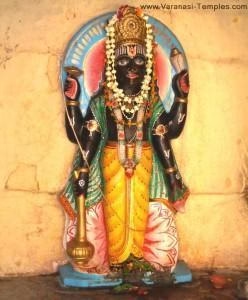
Perched on the sacred ghats of Varanasi, the Bhrigu Keshav Temple stands as a testament to ancient Vedic tradition. This sanctum is dedicated to Lord Vishnu, enshrined here in his form as Bhrigu Keshav. According to spiritual texts, this deity is not merely a representation but a manifestation of the divine energy residing in the Bhargav Teerth.
Phalaśruti: The Fruits of Devotion
Why do pilgrims seek this specific form of Vishnu? Legend dictates that Bindu Rishi was granted a vision by Lord Vishnu here. The Phalaśruti (scriptural benefit) of visiting this temple is profound: devotees who bathe in the Bhargav Teerth (now integrated with the Ganga waters at Gola Ghat) and offer prayers to Bhrigu Keshav are believed to receive the blessings of Lord Vishnu. It is said that ancestral karma is cleansed, and genuine desires are fulfilled for those who visit with a pure heart.
Historical Origins & Scriptural Legend
While the exact stone-laying date remains elusive in public records, the temple’s roots are deep in the mythological history of Varanasi, also known as Kashi. Varanasi is described in the Kashi Khanda of the Skanda Purana as a land of innumerable temples and sacred waters.
The Sthala Purana
Tradition holds that Bhrigu Rishi, one of the Saptarishis (the seven great sages), performed severe penance here. It was during this tapasya that the Bhargav Teerth manifested. While the physical traces of the teerth have dissolved into the river, the spiritual essence remains. The temple serves as the dwelling place for Bhrigu Keshav—the lord (Ishwar) of the Bhrigu lineage—guarding the ghats of Gola.
Architectural Marvels
The architecture of the Bhrigu Keshav Temple follows the traditional Nagara style, characterized by a tall tower (Shikhara) that narrows as it rises toward the sky, symbolizing the connection between earth and heaven. Situated at Gola Ghat, the temple structure is integrated into the steps leading to the river, allowing for a seamless blend of ritual bathing and deity worship.
The sanctum (Garbhagriha) is compact yet profound, housing the Shaligram Shila or carved deity of Bhrigu Keshav. The exterior walls often feature carvings of dvarapalas (gatekeepers) and floral motifs typical of North Indian temple architecture. The surrounding Mandapa (hall) is open to the elements, allowing the breeze from the Ganga to permeate the worship space, creating a unique Vastu alignment where the river’s energy flows directly toward the deity.
Darshan & Ritual Logistics
Since this is a shrine located on the banks of the Ganga, darshan is closely linked to the river’s tide and the morning rituals of the priests. Unlike massive fortified temples, the atmosphere here is intimate and meditative.
Daily Timings
The temple typically opens early to coincide with the morning Ganga Aarti at nearby ghats.
| Session | Timing | Activity |
|---|---|---|
| Morning | 06:00 AM – 12:00 PM | Mangala Aarti & Darshan |
| Evening | 04:00 PM – 09:00 PM | Sandhya Aarti & Shayan Aarti |
Note: As a shrine located on public ghats, specific entry timings may vary slightly during monsoon floods or major festivals. It is advisable to visit during the morning hours for the clearest river view.
Key Sevas & Online Booking
While the temple is ancient, the administration of Sevas may be managed by the Gola Ghat Trust or the local Mahant. For 2026, most major rituals can be arranged either directly at the temple office or through the Kashi Vishwanath Temple administration portal, which oversees many smaller shrines in the zone.
- Abhishekam: Ritual bathing of the deity with Ganga Jal, milk, and honey. (Best performed: 7:00 AM).
- Archana: Recitation of 108 names of Lord Vishnu. (Available throughout the day).
- Sahasra Namarchana: 1000-name recitation for specific blessings.
Online Booking: Refer to the official Kashi Vishwanath Temple website or the Varanasi district portal for “Gola Ghat Seva.”
2026 Festival Calendar (Key Dates)
- Ekadashi Tithis: Vital for Vishnu temples. (e.g., February 10, 2026 – Jaya Ekadashi).
- Rama Navami: Birth of Lord Rama. (April 6, 2026).
- Janmashtami: Birth of Lord Krishna. (August 14, 2026).
- Deepavali: Vishnu worship during Kali Puja. (October 21, 2026).
Practical Visitor Guidance
Code of Conduct & Dress Code
Because the temple is integrated into the ghats, visitors must be respectful of the river.
- Dress Code: Modest clothing is mandatory. For darshan at the Ganga steps, men should wear dhotis or long trousers, and women should wear sarees or full-length dresses. Avoid shorts or sleeveless tops.
- Photography: Allowed in the outer courtyard. Forbidden inside the Garbhagriha (inner sanctum).
- Electronics: Mobile phones are allowed but must be kept silent. No lockers are available on-site; it is advisable to carry minimal luggage.
Crowd Management & Seasons
Varanasi is perennially crowded, but Gola Ghat is slightly less chaotic than Dashashwamedh Ghat.
- Best Time to Visit: October to March (Winter). The weather is pleasant, and the Ganga is calm.
- Summer Advice (April-June): Temperatures can exceed 40°C. Carry a water bottle and visit very early in the morning (before 8:00 AM). The stone steps become scorching hot by noon.
- Monsoon Advice (July-Sept): The Ganga levels rise, and steps may be submerged. Darshan may be restricted to upper levels. Wear slip-resistant footwear.
Pilgrimage Connectivity
How to Reach Bhrigu Keshav Temple
Location: Gola Ghat, Varanasi, Uttar Pradesh 221001.
- By Air: Lal Bahadur Shastri International Airport (VNS) is approx. 25 km away. Taxis/Auto-rickshaws are available to Assi Ghat.
- By Rail: Varanasi Junction (BSB) is the nearest major railway station (4 km).
- Local Transport:
- Rickshaw: Take an auto-rickshaw to Prahlad Ghat crossroads. From there, it is a short walk down to Gola Ghat.
- Boat: Hiring a boat from Assi Ghat or Dashashwamedh Ghat and dropping off at Gola Ghat offers a majestic view of the temple from the river.
Nearby Sacred Sites (Pilgrimage Circuit)
- Kashi Vishwanath Temple: The primary Jyotirlinga, located about 2 km north.
- Panchganga Ghat: A confluence of five rivers, significant for rituals, just a short walk south.
- Manikarnika Ghat: The holy cremation ground, sacred for Moksha, visible via boat ride nearby.
Frequently Asked Questions
1. Is there a VIP darshan entry at Bhrigu Keshav Temple?
Since this is a smaller, historic shrine on the ghats, there is no formal VIP entry system. However, visiting early in the morning (around 6 AM) ensures a peaceful, uninterrupted darshan.
2. Can I perform rituals for my ancestors (Pinda Daan) here?
Yes. Gola Ghat is a recognized spot for performing Pinda Daan. Priests are available on-site to assist with the rituals. It is recommended to bring black sesame seeds and rice.
3. Is the temple accessible for elderly visitors?
The temple is located on the ghats, which requires walking down stone steps. While boat access gets you close to the base, there is no elevator. Please assess mobility requirements before visiting.
4. Is there an entry fee?
No, entry to the temple and darshan is free for all devotees. Donations for temple maintenance are accepted but not mandatory.
5. What is the significance of the name “Bhrigu Keshav”?
It combines Bhrigu (the sage associated with the location) and Keshav (a name of Lord Vishnu). It signifies the divine protection of Vishnu over the penance grounds of the sage.
Recent Posts

Shri Kaamkoteeshwar Mandir, Varanasi – History & Significance
In the heart of Kashi, the eternal city of Lord Shiva, where the Ganges flows with celestial grace, stands the Shri Kaamkoteeshwar Mandir. This sacred Sannidhi is not merely a temple but a profound spiritual bridge between the Northern…

ओ सांवरे तूने ही मुझको संभाला – Lyrics & Meaning
ओ सांवरे तूने ही मुझको संभाला – A Prayer to Shyam Origin & Spiritual Essence Why This Bhajan Resonates Devotees chant this when overwhelmed by life’s storms—the refrain ‘तूने ही मुझको संभाला’ is the soul’s sigh of relief: “You…

कथा ये है महाराज मेरे की – Lyrics & Meaning
कथा ये है महाराज मेरे की छत्रपति संभाजी महाराज – A Prayer to Chhatrapati Sambhaji Maharaj Origin & Spiritual Essence Why This Bhajan Resonates Devotees chant this when their spirit feels tested—its powerful refrain “महाराज मेरे” is a soul’s…

Rigveda Samhita Yathartha Anuvada (ऋग्वेद संहिता यथार्थ अनुवाद) – Complete Set with Anvayartha & Hindi/English Translation
The Rigveda is the oldest surviving scripture of humanity and the foundational text of Sanātana Dharma. For serious students, scholars, UPSC aspirants studying ancient Indian history, Sanskrit learners, and spiritual seekers, a precise and grammatically structured translation is indispensable.…

आना भी अकेला है जाना भी अकेला है – Lyrics & Meaning | BharatTemples
आना भी अकेला है जाना भी अकेला है – A Prayer to the Divine Witness Origin & Spiritual Essence Why This Bhajan Resonates Devotees turn to this bhajan in moments of deep reflection—when life’s attachments begin to ache. The…

माता शेरावाली के द्वार जो भी जाता है – Lyrics & Meaning
माता शेरावाली के द्वार जो भी जाता है – A Prayer to Maa Sherawali Origin & Spiritual Essence Why This Bhajan Resonates Devotees turn to this bhajan in times of fear or uncertainty—its promise that no one leaves Maa’s…

मार लेना सपणी उबार लेणा भवरा – Lyrics & Meaning
मार लेना सपणी उबार लेणा भवरा – A Prayer to the Divine Beloved Origin & Spiritual Essence Why This Bhajan Resonates Devotees chant this in moments of deep vulnerability—its cry of “मार लेना सपणी, उबार लेणा भवरा” is the…

हमें श्याम सुंदर भरोसा तुम्हारा – Lyrics & Meaning
हमें श्याम सुंदर भरोसा तुम्हारा – A Prayer to Shyam Sundar Origin & Spiritual Essence Why This Bhajan Resonates Devotees chant this when feeling alone—its refrain ‘de do sahara’ is the soul’s cry for divine support. Lyrics in Hindi…

Mere Satguru Ne Di Thi Davai Lyrics in Hindi & Meaning
Mere Satguru Ne Di Thi Davai: Invoking the Guru’s Liberating Wisdom This soul-stirring bhajan venerates the Satguru (True Spiritual Master) as the divine physician who dispenses the only remedy for life’s deepest sufferings. Composed by Sant Karmaveer Tufani, it…

Janm Diyo Thari Maa Dukh Dekhiyo Lyrics in Hindi & Meaning
जन्म दियो थारी माँ दुख देखियो (Maa’s Grief Upon Birthing You) This soul-stirring Chetavani Bhajan (admonitory hymn) is addressed to the Divine Mother (Maa) – a call for repentance when children forget their filial duties in the dark age…