
Contents
Introduction & Spiritual Essence
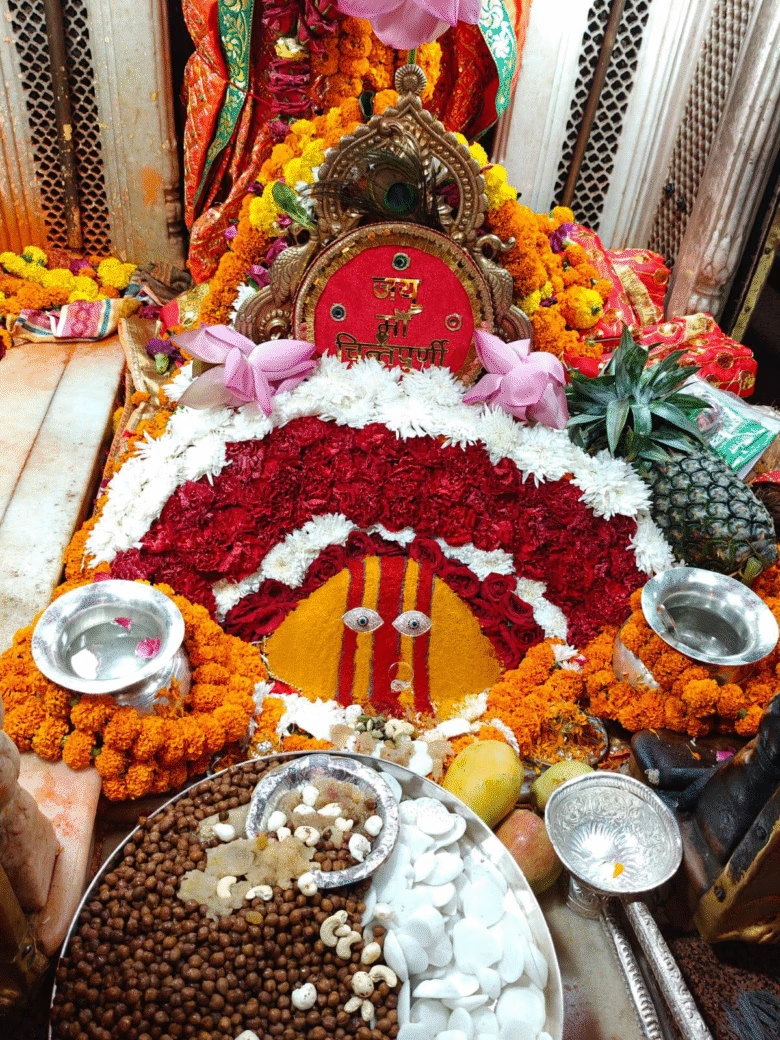
Perched in the serene Shivalik hills of Una district, Chintpurni Shakti Peeth (चिंतपूर्णी शक्तिपीठ) stands as a luminous beacon of devotion. This ancient shrine is dedicated to Goddess Chinnamasta, a fierce manifestation of the Divine Mother. Known locally as Chinnamastika Devi, the name translates to “the self-decapitated goddess.” This form symbolizes the ultimate transcendence of the ego and the cosmic balance between creation and destruction.
While the physical form of the deity is a swayambhu (self-manifested) Shila (stone), the spiritual energy is palpable. The temple derives its name from Chinta (worry) and Purni (fulfillment). It is a sanctuary where devotees shed their worldly anxieties, seeking the blessings of the Goddess to find peace and resolution.
Phalaśruti (Spiritual Benefits): Devotees visit Chintpurni not merely for ritualistic fulfillment but to cleanse ancestral karma and resolve deep-seated emotional distress. The primary belief is that sincere prayer here lifts the veil of worry (Chinta) that clouds the mind. As one of the holiest Shakti Peethas, it is believed that Sati’s feet fell here, grounding the land with divine stability and spiritual power.
Historical Origins & Scriptural Legend
The Mythology of Sati
According to the sacred lore recorded in the Puranas, Chintpurni holds a pivotal place in the narrative of the Shakti Peethas. Following the self-immolation of Goddess Sati at the Daksha Yagna, Lord Shiva wandered the cosmos carrying her charred body in his Tandava (cosmic dance). To quell his grief and rage, Lord Vishnu utilized his Sudarshan Chakra to dismember Sati’s body. Her body parts fell at 51 locations across the subcontinent, each becoming a powerhouse of spiritual energy.
At Chintpurni, tradition holds that Sati’s feet (पाद) fell to earth, sanctifying the peaks of the Shivalik range. Consequently, the Goddess is worshipped here as Chhinnamastika (Chinnamasta), representing the detachment from the physical vessel and the freedom of pure consciousness.
Historical Establishment
While the mythological roots trace back millennia, the formal establishment of the shrine is attributed to Pandit Mai Das, a Saraswat Brahmin, approximately 26 generations ago. He established the deity in the village of Chhaproh, which eventually evolved into the name Chintpurni. The temple administration has remained in the hands of his descendants, who serve as the official priests, maintaining centuries-old oral traditions and Hindu genealogy registers (Vanshavali) that record family lineages.
Surrounding the temple are four ancient Shiva temples—Kaleshwar Mahadev (East), Narayana Mahadev (West), Muchkund Mahadev (North), and Shiva Bari (South). Puranic tradition suggests these deities protect the Shakti Peeth, forming a divine geometric shield around Chhinnamastika Devi.
Architectural Marvels
The architecture of Chintpurni Temple is a blend of traditional Himachali wooden style and the classic Nagara order of temple architecture. The sanctum sanctorum is compact and intimate, focusing the devotee’s attention on the Shila (stone) representing the Goddess, rather than vast structural grandeur.
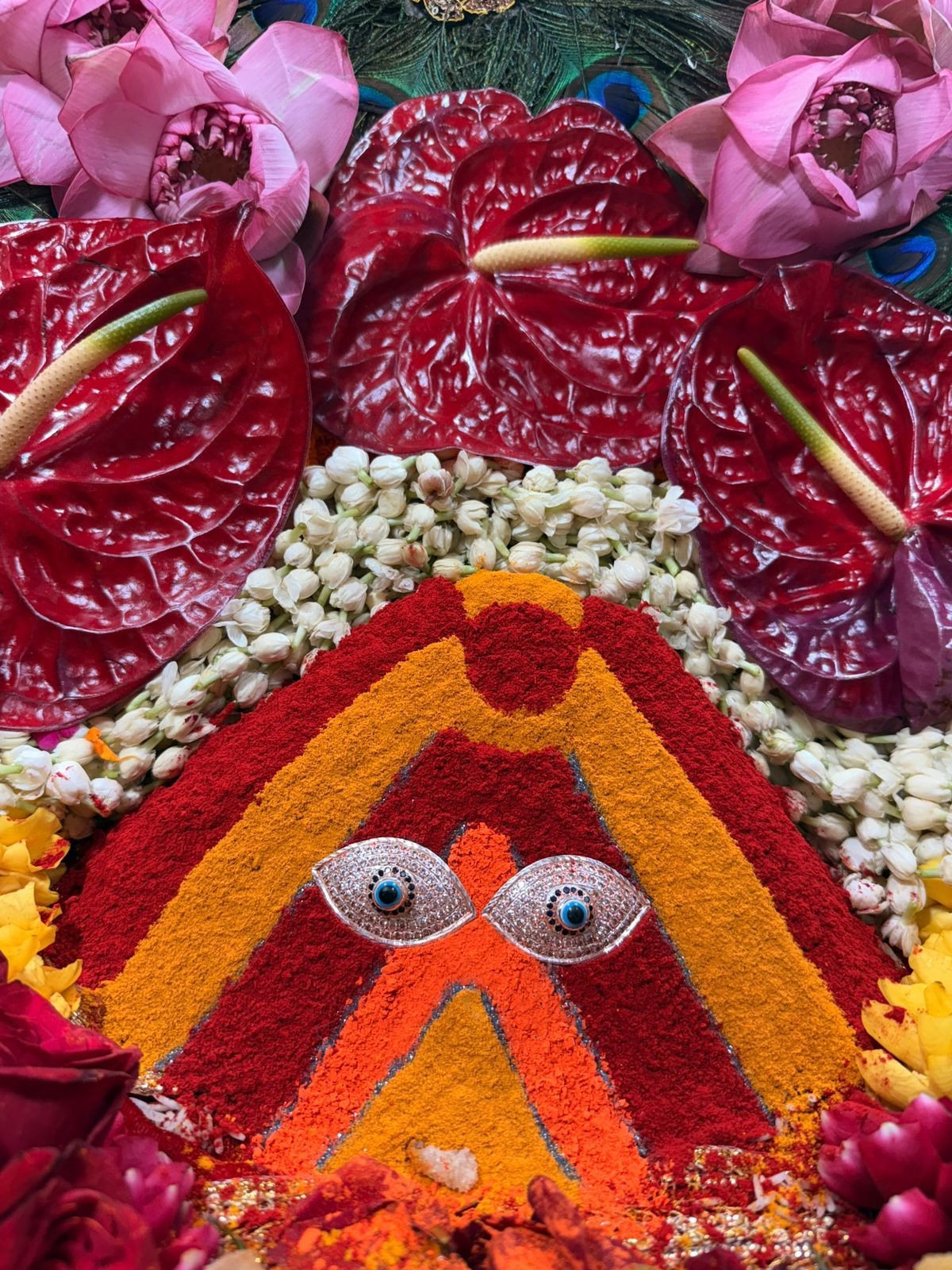
- The Sanctum (Garbhagriha): The deity is represented as a Shila upon which a Mukhavaktra (face) is superimposed. The stone is naturally cool to the touch, grounding the intense spiritual energy of the deity.
- The Shikhara: The tower above the sanctum is relatively modest compared to South Indian temple towers but is adorned with intricate Himachali woodwork, featuring carvings of floral motifs and divine figures.
- The Mandapas: The temple features pillared halls (Mandapas) where devotees gather. The architecture prioritizes flow, allowing the circumambulation (Parikrama) of the sanctum.
- Decorative Elements: The exterior and interior walls are often painted in vibrant colors (vermilion red and ochre gold), symbolic of the Shakta tradition.
While the temple complex has undergone renovations over the centuries to accommodate the influx of pilgrims, its core structure retains the ancient aesthetic of the Himalayan region.
Darshan & Ritual Logistics
The daily rhythm at Chintpurni is governed by the Mangala Aarti and evening rituals. The temple remains open throughout the year, attracting peak crowds during the Navratri festivals (Chaitra and Ashwin).
Daily Darshan Timings (2026)
Note: Temple timings may vary slightly during major festivals. It is advisable to arrive 30 minutes prior to the Aarti slots for security clearance.
| Session | Activity | Timings |
|---|---|---|
| Morning | Mangala Darshan (Opening) | 05:00 AM |
| Morning | Morning Aarti (Sringar) | 06:00 AM – 7:30 AM |
| Morning | Bhog / General Darshan | 08:00 AM – 12:00 PM |
| Mid-Day | Sanctum Rest (Darshan Closed) | 12:00 PM – 2:00 PM |
| Evening | Evening Darshan Opens | 02:00 PM |
| Evening | Evening Aarti (Sandhya) | 07:30 PM – 8:00 PM |
| Night | Shayan Darshan (Closing) | 10:00 PM |
Key Sevas & Online Booking
Devotees can book specific rituals and offer donations. The temple trust has digitized many offerings to manage the high volume of pilgrims.
- Abhishekam: Ritual bathing of the deity with milk, honey, and ghee. Performed during the early morning hours.
- Archana: Personal chanting of the Goddess’s names. Can be performed by the devotee or by the appointed Purohit.
- Sringar (Adornment): Offering clothes and adornments to the deity.
Online Seva Booking: To book sevas, visit the official Chintpurni Temple Committee website. Select the desired service, date, and quantity of offerings (lamps, flowers). Payment is processed via the government gateway (UPI/Net Banking).
2026 Festival Calendar
- Chaitra Navratri: March 30 – April 7, 2026 (Peak Crowds)
- Sharad Navratri: September 22 – October 1, 2026 (Major Fair)
- Maha Shivaratri: February 26, 2026
- Diwali: November 1, 2026
Practical Visitor Guidance
To ensure a safe and spiritually fulfilling visit, adhering to the following guidelines is essential:
- Dress Code: Traditional Indian attire is recommended. Men should wear dhoti or trousers; women should wear sarees, salwar kameez, or modest full-length dresses. Avoid shorts or sleeveless tops.
- Photography & Mobiles: Photography is strictly prohibited inside the sanctum sanctorum. Mobile phones must be kept in silent mode. Lockers are available near the entrance to store electronics and footwear (free of cost for basic items).
- Crowd Management:
- Best Hours: For a peaceful darshan, visit between 11:00 AM – 1:00 PM or 3:00 PM – 5:00 PM on weekdays.
- Peak Season: During Navratri, queues can stretch for kilometers. It is advisable to book accommodation months in advance.
- Seasonal Advice:
- Summer (April-June): Himachal summers are warm. Carry reusable water bottles.
- Winter (Nov-Feb): Nights are cold; carry heavy woolens.
- Accessibility: The main temple is accessible via a flight of stairs. However, the temple trust provides a Dolly/Palki service (palanquin) for elderly devotees and those unable to walk, from the base of the hill to the temple entrance.
Pilgrimage Connectivity
Chintpurni is strategically located near the borders of Himachal Pradesh, Punjab, and Jammu & Kashmir, making it a central hub for a spiritual circuit.
How to Reach
- By Air: The nearest airport is Gaggal Airport (Dharamshala), approximately 100 km away. The second nearest is Sri Guru Ram Dass Jee International Airport (Amritsar), roughly 115 km away.
- By Rail: The closest broad-gauge railway station is Pathankot (approx. 70 km). From Pathankot, taxis and buses are readily available to Una and Chintpurni.
- By Road:
- From Delhi: Approx. 400 km via NH 44 (Ambala-Pathankot Highway).
- From Chandigarh: Approx. 160 km via NH 503.
- Direct HRTC and private buses ply regularly from major cities in Himachal and Punjab.
Nearby Sacred Sites (Pilgrimage Circuit)
- Jawalamukhi Temple (35 km): A sacred site where the Goddess manifests as eternal blue flames.
- Baglamukhi Temple (45 km): Located at Bankhandi, this temple is dedicated to the eighth Mahavidya, known for granting victory.
- Naina Devi Temple (75 km): A Shakti Peeth located on a hilltop in Bilaspur district, marking the spot where Sati’s eyes fell.
| Date built: | Founded ~26 generations ago (Current structure evolved over centuries) |
|---|---|
| Deity: | Goddess Chinnamasta (Chhinnamastika Devi) |
| Architectural style: | Himachali Vernacular & Nagara |
| Major festivals | Navratri (Chaitra & Sharad), Diwali |
| Locale: | Chintpurni, 177110 |
| District:: | Una district |
| Address: | Vpo chintpurni, teh Amb, Moien, Chintpurni, Himachal Pradesh 177110 |
| Phone | +91-1976-272120 (Temple Office) |
Frequently Asked Questions (FAQ)
Is there a VIP darshan entry at Chintpurni Temple?
Yes, the temple committee offers a ‘Special Darshan’ pass for a nominal fee, which allows pilgrims to bypass the general queue during peak hours. This can be obtained at the counter near the main gate or booked online. However, during major Aarti sessions, even pass holders may need to wait.
Can I book accommodation inside the temple premises?
The Shri Chintpurni Temple Committee manages several guest houses and Yatri Niwas (pilgrim rest houses) at the base of the hill and in the nearby town. These rooms must be booked in advance via the official website. Private hotels and Dharamshalas are also available in abundance.
What is the significance of the Hindu genealogy registers here?
Chintpurni is unique for maintaining detailed Vanshavali (genealogy) records. Devotees visit to record significant family events like births and marriages. This tradition allows pilgrims to trace their lineage back generations, linking their personal history to the divine presence of the Goddess.
Is there a specific ritual for solving worries?
Devotees often perform the ‘Chinta Visarjan’ (floating of worries). It is common to see people writing their worries on a piece of paper or floating a small clay lamp in the nearby water bodies or fountains surrounding the temple premises, symbolizing the surrender of their burdens to the Goddess.
What is the best way to avoid crowds?
Visiting on a weekday (Tuesday to Thursday) outside of the Navratri festival season is ideal. Early morning darshan (6:00 AM – 8:00 AM) is generally less crowded compared to evening hours.
Recent Posts

Shri Kaamkoteeshwar Mandir, Varanasi – History & Significance
In the heart of Kashi, the eternal city of Lord Shiva, where the Ganges flows with celestial grace, stands the Shri Kaamkoteeshwar Mandir. This sacred Sannidhi is not merely a temple but a profound spiritual bridge between the Northern…

ओ सांवरे तूने ही मुझको संभाला – Lyrics & Meaning
ओ सांवरे तूने ही मुझको संभाला – A Prayer to Shyam Origin & Spiritual Essence Why This Bhajan Resonates Devotees chant this when overwhelmed by life’s storms—the refrain ‘तूने ही मुझको संभाला’ is the soul’s sigh of relief: “You…

कथा ये है महाराज मेरे की – Lyrics & Meaning
कथा ये है महाराज मेरे की छत्रपति संभाजी महाराज – A Prayer to Chhatrapati Sambhaji Maharaj Origin & Spiritual Essence Why This Bhajan Resonates Devotees chant this when their spirit feels tested—its powerful refrain “महाराज मेरे” is a soul’s…

Rigveda Samhita Yathartha Anuvada (ऋग्वेद संहिता यथार्थ अनुवाद) – Complete Set with Anvayartha & Hindi/English Translation
The Rigveda is the oldest surviving scripture of humanity and the foundational text of Sanātana Dharma. For serious students, scholars, UPSC aspirants studying ancient Indian history, Sanskrit learners, and spiritual seekers, a precise and grammatically structured translation is indispensable.…

आना भी अकेला है जाना भी अकेला है – Lyrics & Meaning | BharatTemples
आना भी अकेला है जाना भी अकेला है – A Prayer to the Divine Witness Origin & Spiritual Essence Why This Bhajan Resonates Devotees turn to this bhajan in moments of deep reflection—when life’s attachments begin to ache. The…

माता शेरावाली के द्वार जो भी जाता है – Lyrics & Meaning
माता शेरावाली के द्वार जो भी जाता है – A Prayer to Maa Sherawali Origin & Spiritual Essence Why This Bhajan Resonates Devotees turn to this bhajan in times of fear or uncertainty—its promise that no one leaves Maa’s…

मार लेना सपणी उबार लेणा भवरा – Lyrics & Meaning
मार लेना सपणी उबार लेणा भवरा – A Prayer to the Divine Beloved Origin & Spiritual Essence Why This Bhajan Resonates Devotees chant this in moments of deep vulnerability—its cry of “मार लेना सपणी, उबार लेणा भवरा” is the…

हमें श्याम सुंदर भरोसा तुम्हारा – Lyrics & Meaning
हमें श्याम सुंदर भरोसा तुम्हारा – A Prayer to Shyam Sundar Origin & Spiritual Essence Why This Bhajan Resonates Devotees chant this when feeling alone—its refrain ‘de do sahara’ is the soul’s cry for divine support. Lyrics in Hindi…

Mere Satguru Ne Di Thi Davai Lyrics in Hindi & Meaning
Mere Satguru Ne Di Thi Davai: Invoking the Guru’s Liberating Wisdom This soul-stirring bhajan venerates the Satguru (True Spiritual Master) as the divine physician who dispenses the only remedy for life’s deepest sufferings. Composed by Sant Karmaveer Tufani, it…

Janm Diyo Thari Maa Dukh Dekhiyo Lyrics in Hindi & Meaning
जन्म दियो थारी माँ दुख देखियो (Maa’s Grief Upon Birthing You) This soul-stirring Chetavani Bhajan (admonitory hymn) is addressed to the Divine Mother (Maa) – a call for repentance when children forget their filial duties in the dark age…