

Contents
Definitive Pilgrimage Guide: Aihole Temples (Aryapura)
Author’s Note: As the Lead Heritage Architect and SEO Strategist for BharatTemples.com, I present this guide blending spiritual devotion with architectural precision. While Aihole is primarily an archaeological site housing over 120 temples, specific shrines within this complex require individual attention. This guide focuses on the Lad Khan Temple and the Durga Temple as the spiritual anchors of the complex, set within the historic village of Aihole, Bagalkot District, Karnataka.
| Location | Bagalkot, Karnataka, India |
|---|---|
| Primary Deity | Shiva (Lad Khan), Vishnu (Durga Temple) |
| Era | 4th – 12th Century CE (Chalukya Dynasty) |
| Status | ASI Protected Monument |
1. Introduction & Spiritual Essence
Aihole, historically known as Aryapura and Aivalli, is not just a village but an open-air museum of devotional evolution. While it houses Jain and Buddhist monuments, the heart of the site beats for Lord Shiva and Lord Vishnu. The temples here are not of a single era but a cumulative library of stone, documenting the transition from experimental wooden structures to the grand stone monuments of the Deccan.
Phalaśruti: Why Devotees Visit
While the complex is a historical wonder, specific shrines hold deep spiritual significance:
- The Lad Khan Temple (Shiva): The primary sanctum represents the Swayambhu (self-manifested) form of Lord Shiva. Devotees believe that circumambulating the massive stone slab roof washes away the sins of past lives.
- The Durga Temple: Though dedicated to Vishnu (by some interpretations) or Shiva, the sanctum houses a majestic trident-bearing deity. It is known as the “Fortress Temple” and is believed to provide protection (Raksha) against malefic planetary influences.
- Ancestral Cleansing: Aihole is unique for its memorial stones (Hero stones). Performing rituals here is traditionally believed to liberate ancestors from the cycle of Karma and grant them Moksha.
2. Historical Origins & Scriptural Legend
The documented history of Aihole is traceable to the Early Chalukya dynasty in the 6th century. It served as a primary cultural hub alongside Badami (Vatapi) and Pattadakal.
The Legend of Parashurama
According to the Sthala Purana and local folklore, Aihole is the site where Parashurama (the sixth avatar of Vishnu) washed his axe after destroying the arrogance of abusive Kshatriyas. A natural axe-shaped rock on the Malaprabha river bank and a rock imprint in the river are traditionally shown as evidence of this divine act, giving the soil its characteristic reddish hue.
Scriptural and Inscriptional Evidence
According to temple records and ASI inscriptions, the region flourished under the Ayyavole 500, a guild of merchants and artisans celebrated in Deccan history. The experimentations in architecture that began here in the 5th century (under Gupta influence) were refined in Badami and culminated in the UNESCO World Heritage site of Pattadakal.
3. Architectural Marvels
Aihole is known as the “Cradle of Indian Temple Architecture.” It features 16 types of free-standing temples and 4 types of rock-cut shrines.
Distinct Styles
- Experimental Fusion: Aihole marks the transition from wooden (trabeate) to stone (arcuate) architecture.
- Vastu Shastra: The temples align with specific Vastu principles, often facing east to catch the first rays of the sun, symbolizing the dispelling of ignorance.
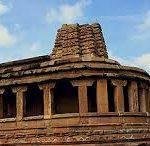
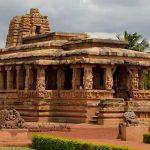
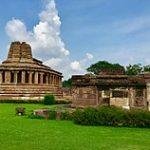
- The Durga Temple: A classic example of the Nagara style influence, featuring a Apisidal (curved) sanctum and a barrel-shaped roof (Shikhara), likely adapted from Buddhist Chaitya halls.
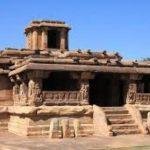
- Lad Khan Temple: An early Dravida style prototype. It features a large open Mandapa (hall) with stone pillars, supporting a massive sloping roof made of stone slabs (mimicking thatch), resting on a wooden beam ceiling.
4. Darshan & Ritual Logistics
Unlike a single temple complex, Aihole is a protected archaeological park managed by the ASI. Darshan is self-guided through the complex. Below are the standard operating timings.
Daily Timings
| Session | Timing |
|---|---|
| Morning Opening | 06:00 AM |
| Closing (Noon Break) | 06:00 PM (Closed 12:00 PM – 2:00 PM) |
Key Sevas & Bookings
For specific Pujas within the complex (such as the Abhishekam at the active Lad Khan shrine), booking is handled locally. However, for the wider Aihole Group of Monuments:
- Entry Ticket: Required for foreigners and domestic visitors (ASI ticket counter at the entrance).
- Online Booking: General entry tickets can be booked via the ASI Payumoney portal or the Karnataka Tourism website.
- Photography Permit: Separate fee required at the counter for commercial cameras.
Festival Dates for 2026
While Aihole is a historical site, the local village deities participate in major festivals. The temple complex at Meguti Hill is active during:
- Mahashivratri: February 26, 2026 (Special Darshan until late night).
- Deepavali: November 2, 2026 (Illumination of the entire complex).
- Navaratri: October 3 – October 12, 2026 (Special Pujas at the Durga Temple).
5. Practical Visitor Guidance
Visiting Aihole requires preparation as the site involves walking on uneven sandstone and through open fields.
- Dress Code: Traditional attire is recommended (Kurta-Pajama/Dhoti for men, Saree/Salwar for women). Modesty is advised as this is a living heritage site.
- Photography Rules: Photography is allowed in the open complex. However, photography is strictly prohibited inside the ASI Museum.
- Mobile Lockers: There are no high-tech digital lockers at the entrance, but the ticket counter offers a basic storage facility for large bags. Carry essentials in a small sling bag.
- Crowd Management:
- Best Hours: Arrive between 7:00 AM and 9:00 AM to avoid the mid-day sun and the weekend crowd from Badami.
- Seasonal Advice: March to May is extremely hot in the Bagalkot region. Carry at least 2 liters of water per person and wear sunglasses. The monsoon (June-Sept) makes the sandstone slippery; tread carefully.
- Accessibility: The site has uneven ground. It is not fully wheelchair accessible, though the main Durga Temple path is relatively level.
6. Pilgrimage Connectivity
How to Reach Aihole
Aihole is located 190 km southeast of Belgaum and is part of the “Chalukya Trail.”
- By Air: The nearest airport is Sambra Belgaum Airport (IXG), approximately 4 hours (190 km) away. Flights connect to Mumbai, Bangalore, and Chennai.
- By Rail: The nearest major railway station is Badami (6 km away). Badami is well-connected to Bangalore, Mumbai, and Pune via Hubballi.
- By Road: Aihole is on the Bagalkot – Ilkal Highway. It is 6 km from Pattadakal and 14 km (22 km by road) from Badami. State-run buses and private taxis ply frequently between these towns.
Nearby Sacred Sites (Pilgrimage Circuit)
Aihole is the experimental first step of the Chalukya spiritual triangle.
- Pattadakal (6 km): A UNESCO World Heritage Site featuring the pinnacle of Chalukya architecture, including the Virupaksha Temple. Essential for understanding Aihole’s experiments.
- Badami Cave Temples (14 km): Rock-cut cave temples dedicated to Shiva (1st Cave) and Vishnu (2nd & 3rd Caves). Famous for the iconic carving of Nataraja with 18 arms.
- Mahakuta Temple (18 km): A complex of Shiva temples with a natural water tank, believed to be the place where the Virupaksha deity was originally installed.
Photo Gallery
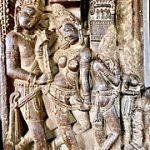
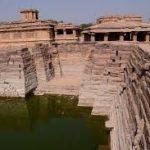
Visual documentation of the architectural experimentation found at Aihole.
7. Frequently Asked Questions (FAQ)
Is there a VIP darshan entry at Aihole?
As a protected archaeological monument managed by the ASI, Aihole does not have a VIP darshan system like a functioning temple. However, visitors can hire certified guides at the ticket counter to access restricted areas and learn about the sculptures in detail.
Can I book the Aihole ticket online?
Yes, you can book general entry tickets for the Aihole Group of Monuments via the official Karnataka Tourism website or the ASI Payumoney portal. It is advisable to carry a printout or digital copy.
Is the Durga Temple dedicated to Goddess Durga?
Surprisingly, no. Despite the name, the Durga Temple at Aihole is dedicated to Lord Vishnu (or a composite form of Shiva and Vishnu). The name “Durga” likely derives from the fort-like (Durg) appearance of the structure, not the deity.
How much time is needed to cover Aihole?
A minimum of 3 to 4 hours is required to explore the main group of temples (Durga, Lad Khan, Meguti). If you wish to visit the ASI Museum and the Jain temples on the hill, allocate a full morning.
Is mobile connectivity good?
Connectivity can be patchy within the valley area. Airtel and Jio networks work best near the main entrance. It is recommended to download offline maps before heading to Aihole from Badami.
Recent Posts

Shri Kaamkoteeshwar Mandir, Varanasi – History & Significance
In the heart of Kashi, the eternal city of Lord Shiva, where the Ganges flows with celestial grace, stands the Shri Kaamkoteeshwar Mandir. This sacred Sannidhi is not merely a temple but a profound spiritual bridge between the Northern…

ओ सांवरे तूने ही मुझको संभाला – Lyrics & Meaning
ओ सांवरे तूने ही मुझको संभाला – A Prayer to Shyam Origin & Spiritual Essence Why This Bhajan Resonates Devotees chant this when overwhelmed by life’s storms—the refrain ‘तूने ही मुझको संभाला’ is the soul’s sigh of relief: “You…

कथा ये है महाराज मेरे की – Lyrics & Meaning
कथा ये है महाराज मेरे की छत्रपति संभाजी महाराज – A Prayer to Chhatrapati Sambhaji Maharaj Origin & Spiritual Essence Why This Bhajan Resonates Devotees chant this when their spirit feels tested—its powerful refrain “महाराज मेरे” is a soul’s…

Rigveda Samhita Yathartha Anuvada (ऋग्वेद संहिता यथार्थ अनुवाद) – Complete Set with Anvayartha & Hindi/English Translation
The Rigveda is the oldest surviving scripture of humanity and the foundational text of Sanātana Dharma. For serious students, scholars, UPSC aspirants studying ancient Indian history, Sanskrit learners, and spiritual seekers, a precise and grammatically structured translation is indispensable.…

आना भी अकेला है जाना भी अकेला है – Lyrics & Meaning | BharatTemples
आना भी अकेला है जाना भी अकेला है – A Prayer to the Divine Witness Origin & Spiritual Essence Why This Bhajan Resonates Devotees turn to this bhajan in moments of deep reflection—when life’s attachments begin to ache. The…

माता शेरावाली के द्वार जो भी जाता है – Lyrics & Meaning
माता शेरावाली के द्वार जो भी जाता है – A Prayer to Maa Sherawali Origin & Spiritual Essence Why This Bhajan Resonates Devotees turn to this bhajan in times of fear or uncertainty—its promise that no one leaves Maa’s…

मार लेना सपणी उबार लेणा भवरा – Lyrics & Meaning
मार लेना सपणी उबार लेणा भवरा – A Prayer to the Divine Beloved Origin & Spiritual Essence Why This Bhajan Resonates Devotees chant this in moments of deep vulnerability—its cry of “मार लेना सपणी, उबार लेणा भवरा” is the…

हमें श्याम सुंदर भरोसा तुम्हारा – Lyrics & Meaning
हमें श्याम सुंदर भरोसा तुम्हारा – A Prayer to Shyam Sundar Origin & Spiritual Essence Why This Bhajan Resonates Devotees chant this when feeling alone—its refrain ‘de do sahara’ is the soul’s cry for divine support. Lyrics in Hindi…

Mere Satguru Ne Di Thi Davai Lyrics in Hindi & Meaning
Mere Satguru Ne Di Thi Davai: Invoking the Guru’s Liberating Wisdom This soul-stirring bhajan venerates the Satguru (True Spiritual Master) as the divine physician who dispenses the only remedy for life’s deepest sufferings. Composed by Sant Karmaveer Tufani, it…

Janm Diyo Thari Maa Dukh Dekhiyo Lyrics in Hindi & Meaning
जन्म दियो थारी माँ दुख देखियो (Maa’s Grief Upon Birthing You) This soul-stirring Chetavani Bhajan (admonitory hymn) is addressed to the Divine Mother (Maa) – a call for repentance when children forget their filial duties in the dark age…