

Contents
Introduction & Spiritual Essence
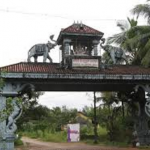
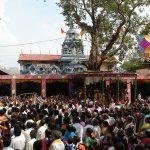
Perched atop a serene hillock in the coastal district of Udupi, the Anegudde Temple, also known as the Lord Vinayaka Temple at Kumbashi, stands as a beacon of divine grace and ancient legend. It is one of the revered Mukti Sthalas (Liberation Sites) of Karnataka, believed to be blessed by Lord Parashurama. The temple derives its name from the Kannada words Aane (Elephant) and Gudde (Hillock), signifying the abode of the elephant-headed deity, Lord Ganesha.
Phalaśruti: The Spiritual Benefit
Devotees believe that a visit to Anegudde grants the boon of Mukti (liberation from the cycle of birth and death). Specifically, worship here is known to cleanse Pitru Dosha (ancestral karma) and remove obstacles (Vighna) from one’s path. As the remover of difficulties, Lord Ganesha here is worshipped as the powerful slayer of demons, making this temple a vital stop for those seeking mental peace and spiritual progression.
Historical Origins & Scriptural Legend
The Legend of Kumbhasura
According to the Sthala Purana, the region was once ravaged by a severe drought. The great sage Agasthya Muni performed intense penance to appease Varuna, the Rain God. However, his meditation was disrupted by a demon named Kumbhasura. To protect the sages, the Pandava prince Bheemasena engaged in battle with the demon. Unable to defeat him, Bheema prayed to Lord Ganesha, who granted him a divine weapon. At this very spot on the hillock, Bheema slew Kumbhasura, liberating the land from drought and terror. Hence, the place came to be known as Kumbhashi (Slayer of Kumbhasura).
Historical Timeline
While the oral traditions date back to the Mahabharata era, temple records indicate significant structural development in the 18th century. The current sanctum and the circular stone shrine were established through the devotion of a local Brahmin, Vishweshwara Upadhyaya. Tradition holds that Lord Ganesha appeared in his dream as a hungry Brahmin boy, leading Upadhyaya to the granite stone near the Nagachala pond, where a cow was naturally pouring milk onto the stone. This miraculous event led to the construction of the first shrine. The temple has undergone renovations over the centuries, preserving its ancient heritage while modernizing facilities for pilgrims.
Architectural Marvels
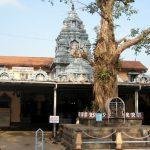
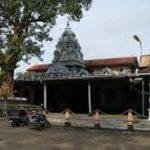
The Anegudde Temple exemplifies the traditional Dravida architectural style, adapted to the coastal Karnataka region. Despite its compact footprint atop the hill, the structure is a masterpiece of stone craftsmanship.
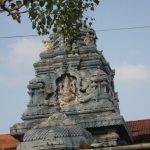
- The Shikhara (Tower): The temple features a modest yet elegant Shikhara (tower) over the sanctum sanctorum (Garbhagriha). It is adorned with intricate carvings of divine figures and floral motifs, typical of Hoysala and Dravida influences.
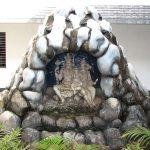
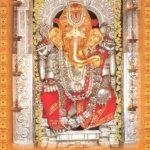
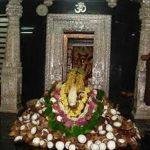
- The Sanctum (Garbhagriha): The inner sanctum houses the Swayambhu (self-manifested) idol of Lord Ganesha. The deity is depicted in a seated posture with his trunk curved to the left (Vamamukhi), exuding a calm and benevolent expression.
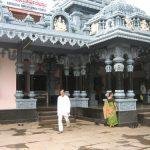
- The Mandapa: A pillared hall provides space for devotees to gather during prayers. The ceiling of the mandapa features lotus motifs, and the pillars are carved with guardian deities.
- Surroundings: The temple is located amidst lush greenery, offering panoramic views of the Western Ghats and the Arabian Sea in the distance.
Darshan & Ritual Logistics
The temple administration follows a strict schedule to ensure smooth Darshan (viewing of the deity) for all visitors. Below are the daily timings for 2026.
| Daily Darshan Timings | |
|---|---|
| Morning Session | 6:00 AM – 1:00 PM |
| Afternoon Break | 1:00 PM – 3:00 PM |
| Evening Session | 3:00 PM – 9:00 PM |
| Special Note | Closed during lunch break (1:00 PM – 3:00 PM) |
Key Sevas and Online Booking
Devotees can participate in various rituals to enhance their spiritual experience. While basic Darshan is free, specific Sevas require prior booking.
- Abhishekam: Ritual bathing of the deity with milk, honey, and curd (Timing: 7:00 AM).
- Ganahoma: A fire ritual dedicated to Ganesha for prosperity (Timing: 8:00 AM on specific days).
- Archana: Recitation of 108 names of Ganesha (Ongoing throughout the day).
Online Seva Booking 2026
To book sevas, devotees are advised to visit the official temple trust portal or authorized platforms. As of 2026, the temple trust has streamlined the process for festivals.
Major Festivals in 2026
- Ganesh Chaturthi: September 5, 2026 (Friday). The biggest celebration here, marked by special Panchamrita Abhishekam and cultural programs.
- Sankashta Chaturthi: Celebrated monthly. The most significant monthly event is on January 25, 2026 (Sunday).
Practical Visitor Guidance
- Dress Code: Traditional attire is recommended. Men should wear dhotis or formal trousers with shirts; women should wear sarees, salwar kameez, or churidars. Avoid shorts and sleeveless tops.
- Photography: Strictly prohibited inside the Garbhagriha and near the sanctum. Photography in the outer courtyards is allowed.
- Mobile Lockers: Electronic items and mobile phones are to be kept in lockers provided at the entrance (free of cost) before ascending the hill. This maintains the sanctity of the space.
- Crowd Management:
- Best Hours: Early morning (6:00 AM – 8:00 AM) or late evening (after 6:00 PM) to avoid peak crowds.
- Seasonal Advice: The coastal climate is humid. Carry a water bottle, especially during May. During the monsoon (June–August), the hill paths can be slippery; wear rubber-soled footwear.
- Accessibility: The temple is atop a hillock. There are stairs to reach the top. A vehicle ramp exists for those unable to climb, but access to the mandapa entrance requires a short walk.
Pilgrimage Connectivity
How to Reach Anegudde Temple
- By Air: The nearest airport is Mangalore International Airport (IXE), located approximately 85 km away (approx. 2 hours by road).
- By Rail: The nearest railway station is Barkur (approx. 18 km) or Kundapura (approx. 9 km).
- By Road: The temple is located on the scenic NH 66 (formerly NH 17) connecting Mumbai and Kochi.
- From Mangalore: 96 km south.
- From Udupi: 30 km north.
- From Bengaluru: Approximately 400 km.
- Local Transit: Frequent KSRTC buses stop at Kumbashi. From the bus stand, pilgrims can walk up the stairs or take an auto-rickshaw to the temple entrance.
Nearby Sacred Sites
Expand your pilgrimage circuit by visiting these nearby attractions:
- Udupi Sri Krishna Matha: Located 30 km south, this is one of the most famous Krishna temples in India, known for its vegetarian cuisine and devotion to Lord Krishna.
- Sri Kundeshwara Temple: Located in Kundapura, this ancient temple is dedicated to Lord Shiva and is built in the typical Dravidian style.
- Mookambika Temple, Kollur: Situated about 35 km north, this is a famous Shakti (Goddess) temple nestled in the Western Ghats.
Photo Gallery
Frequently Asked Questions (FAQ)
1. Is there a VIP darshan entry at Anegudde Temple?
Yes, the temple administration offers a special break darshan queue for senior citizens, differently-abled devotees, and those requiring urgent darshan. This is usually facilitated during the afternoon break hours (2:00 PM to 3:00 PM).
2. Can we book Abhishekam tickets online?
While general information is available on the temple’s contact page, direct booking for sevas at Anegudde is typically handled at the temple counter upon arrival. However, for major festivals like Ganesh Chaturthi, the Udupi district administration may open online portals. It is best to contact the temple office at 08254272221 prior to your visit.
4. What is the significance of the stone idol?
The deity at Anegudde is a Swayambhu murti, meaning it is naturally formed rather than carved by human hands. The idol is formed from a single granite stone, which is believed to have emerged from the earth near the Nagachala pond.
5. Are there accommodation facilities available nearby?
There are no guest houses directly at the temple, but the town of Kundapura (9 km away) offers numerous lodges, homestays, and hotels. There are also Sri Krishna Matha guest houses in Udupi.
6. Is non-vegetarian food allowed near the temple?
As a mark of respect to the deity, the temple premises and the immediate vicinity (Kumbashi village) are strictly vegetarian zones. Alcohol and non-vegetarian food are prohibited in the area.
Recent Posts

Shri Kaamkoteeshwar Mandir, Varanasi – History & Significance
In the heart of Kashi, the eternal city of Lord Shiva, where the Ganges flows with celestial grace, stands the Shri Kaamkoteeshwar Mandir. This sacred Sannidhi is not merely a temple but a profound spiritual bridge between the Northern…

ओ सांवरे तूने ही मुझको संभाला – Lyrics & Meaning
ओ सांवरे तूने ही मुझको संभाला – A Prayer to Shyam Origin & Spiritual Essence Why This Bhajan Resonates Devotees chant this when overwhelmed by life’s storms—the refrain ‘तूने ही मुझको संभाला’ is the soul’s sigh of relief: “You…

कथा ये है महाराज मेरे की – Lyrics & Meaning
कथा ये है महाराज मेरे की छत्रपति संभाजी महाराज – A Prayer to Chhatrapati Sambhaji Maharaj Origin & Spiritual Essence Why This Bhajan Resonates Devotees chant this when their spirit feels tested—its powerful refrain “महाराज मेरे” is a soul’s…

Rigveda Samhita Yathartha Anuvada (ऋग्वेद संहिता यथार्थ अनुवाद) – Complete Set with Anvayartha & Hindi/English Translation
The Rigveda is the oldest surviving scripture of humanity and the foundational text of Sanātana Dharma. For serious students, scholars, UPSC aspirants studying ancient Indian history, Sanskrit learners, and spiritual seekers, a precise and grammatically structured translation is indispensable.…

आना भी अकेला है जाना भी अकेला है – Lyrics & Meaning | BharatTemples
आना भी अकेला है जाना भी अकेला है – A Prayer to the Divine Witness Origin & Spiritual Essence Why This Bhajan Resonates Devotees turn to this bhajan in moments of deep reflection—when life’s attachments begin to ache. The…

माता शेरावाली के द्वार जो भी जाता है – Lyrics & Meaning
माता शेरावाली के द्वार जो भी जाता है – A Prayer to Maa Sherawali Origin & Spiritual Essence Why This Bhajan Resonates Devotees turn to this bhajan in times of fear or uncertainty—its promise that no one leaves Maa’s…

मार लेना सपणी उबार लेणा भवरा – Lyrics & Meaning
मार लेना सपणी उबार लेणा भवरा – A Prayer to the Divine Beloved Origin & Spiritual Essence Why This Bhajan Resonates Devotees chant this in moments of deep vulnerability—its cry of “मार लेना सपणी, उबार लेणा भवरा” is the…

हमें श्याम सुंदर भरोसा तुम्हारा – Lyrics & Meaning
हमें श्याम सुंदर भरोसा तुम्हारा – A Prayer to Shyam Sundar Origin & Spiritual Essence Why This Bhajan Resonates Devotees chant this when feeling alone—its refrain ‘de do sahara’ is the soul’s cry for divine support. Lyrics in Hindi…

Mere Satguru Ne Di Thi Davai Lyrics in Hindi & Meaning
Mere Satguru Ne Di Thi Davai: Invoking the Guru’s Liberating Wisdom This soul-stirring bhajan venerates the Satguru (True Spiritual Master) as the divine physician who dispenses the only remedy for life’s deepest sufferings. Composed by Sant Karmaveer Tufani, it…

Janm Diyo Thari Maa Dukh Dekhiyo Lyrics in Hindi & Meaning
जन्म दियो थारी माँ दुख देखियो (Maa’s Grief Upon Birthing You) This soul-stirring Chetavani Bhajan (admonitory hymn) is addressed to the Divine Mother (Maa) – a call for repentance when children forget their filial duties in the dark age…