
Contents
Introduction & Spiritual Essence
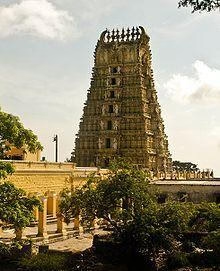
Perched atop the historic Chamundi Hills, rising 3,489 feet above sea level, stands the majestic Chamundeshwari Temple. Known affectionately as the Naada Devathe (State Goddess) of Karnataka, the presiding deity here is an incarnation of Shakti. The temple is dedicated to Chamundeshwari, the fierce form of the Goddess Parvati, who vanquished the buffalo-headed demon Mahishasura. This makes the temple a Shakti Peetha of immense power and reverence.
Phalaśruti (Spiritual Benefits): Devotees climb the 1,000 stone steps or drive up the ghat road not merely for a view of Mysore, but for spiritual liberation. According to the Devi Mahatmya, sincere worship here cleanses ancestral karma (Pitru Dosha) and grants the Ashta Aishwaryas (eight forms of wealth). The temple is particularly significant for those seeking protection from malefic planetary influences and the removal of obstacles in life.
| Date built: | – |
|---|---|
| Deity: | – |
| Architectural style: | – |
| Major festivals | Navaratri |
| Locale: | Chamundi Hill |
| District:: | Mysore |
| Address: | – |
| Phone | – |
Historical Origins & Scriptural Legend
The Legend of Mahishasura Mardini
Tradition holds that the idol of Chamundeshwari is Swayambhu (self-manifested). The name Chamundi is derived from the demons Chanda and Munda, whom the Goddess slew to protect the cosmos. The Skanda Purana references this region as part of the sacred Trimuta Kshetra, surrounded by eight hills.
Architectural Evolution
While the origins of worship here are ancient, the temple structure as we see it today has evolved over centuries. The base structure is believed to date back to the 12th century during the rule of the Hoysalas and later the Vijayanagara Empire (17th century), which added the towering gateway. However, the most significant renovation occurred in 1827 A.D. under the patronage of Krishnaraja Wodeyar III. It was he who built the magnificent Gopura (entrance tower) and gifted the silver-plated doors and the golden Simha-vahana (lion vehicle) used in processions today.
Architectural Marvels
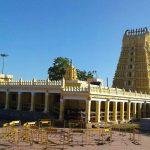
The temple is a masterpiece of the Dravidian style of temple architecture, constructed entirely of granite.
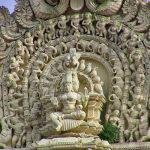
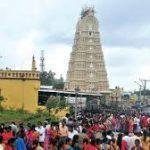
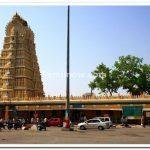
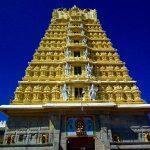
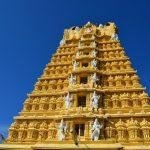
- The Gopuram (Tower): The seven-tiered Gopuram at the entrance rises majestically, adorned with seven golden Kalashas. It features intricate carvings of deities and Dwarapalakas (door guardians).
- The Sanctum (Vimana): Inside the Garbhagriha (sanctum sanctorum), the 6-foot idol of Mahishasura Mardini is depicted with eight arms (Ashta Bhujas) holding various weapons, standing triumphantly over the buffalo demon. Legend attributes this idol’s installation to the great sage Markandeya.
- The Mandapas: The temple includes a Navaranga (hall of pillars) and an Antharala. Notably, in the Antharala, there is a life-sized statue of Krishnaraja Wodeyar III standing with folded hands, flanked by his three queens.
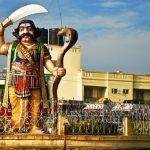
- Monoliths: Approaching the temple, pilgrims pass a massive monolithic Nandi statue (15 feet high) on the 700th step, facing a small Shiva shrine. Further up, a statue of the demon Mahishasura marks the site of the battle.
Darshan & Ritual Logistics
Daily Temple Timings
The temple follows a strict daily schedule. While timings can vary slightly during festivals, the following is the standard schedule for 2026:
| Session | Timings | Activity |
|---|---|---|
| Morning | 7:30 AM – 1:00 PM | Morning Seva & General Darshan |
| Afternoon | 1:00 PM – 3:30 PM | Closed (Temple Rest) |
| Evening | 4:00 PM – 8:30 PM | Evening Seva & General Darshan |
Key Sevas & Online Booking
Devotees can book special Sevas online via the official Mysore Devalaya Parichalana website. Key rituals include:
- Abhishekam: Ritual bathing of the deity (performed early morning).
- Rudrabhishekam: A potent Vedic ritual for Lord Shiva (associated with the hill).
- Archana: Individual prayers offering flowers and coconuts.
- Chandika Homa: A fire ritual performed on special days for fulfillment of desires.
2026 Festival Calendar
- Navaratri (Dasara): October 2 – October 11, 2026. This is the peak season. The Goddess is adorned with 9 different costumes over 9 days. On the 7th day (Kalaratri), royal jewels from the Mysore treasury are displayed.
- Ashada Shukravara: Fridays in July 2026 are considered highly auspicious for darshan.
- Chamundi Jayanti: Celebrated on the anniversary of the Utsava Murthy‘s consecration (Date varies by Tamil calendar).
Practical Visitor Guidance
Rules & Etiquette
- Dress Code: Traditional attire is mandatory. Men should wear dhotis or formal trousers with shirts; women should wear sarees, salwars, or formal skirts.
- Prohibited Items: Leather belts, bags, and large electronic devices are strictly prohibited inside the sanctum. Deposit lockers are available at the base near the ticket counter.
- Photography: Photography is allowed in the temple complex and courtyard but strictly forbidden inside the sanctum sanctorum.
- Accessibility: A motorable road leads to the temple entrance. However, the inner sanctum involves steep steps. Wheelchair access is limited to the outer courtyard.
Crowd Management
- Best Time to Visit: Weekdays between 10:00 AM and 12:00 PM offer a balance of open hours and manageable crowds.
- Seasonal Advice: March to May is extremely hot; carry plenty of water. The monsoon (June–September) brings fog; driving up the hill requires caution.
Pilgrimage Connectivity
How to Reach Chamundeshwari Temple
By Air: The nearest airport is Kempegowda International Airport in Bangalore (approx. 170 km). From there, hire a cab or take a bus to Mysore.
By Rail: Mysore Junction (MYS) is the nearest railway station, well-connected to Bangalore and other major cities. From the station, the temple is roughly a 45-minute drive.
By Road: From Mysore city, take the Mysore-Chamundi Hill Road (SH-33). KSRTC operates regular buses from the Mysore bus stand to Chamundi Hill. Private vehicles can park at the designated lot near the base steps.
Nearby Sacred Sites
Complete your pilgrimage by visiting these nearby landmarks:
- St. Philomena’s Church: A stunning Gothic structure located on the road back to Mysore city.
- Jwalamukhi Tripurasundari Temple: Located in Utthanahalli at the foothills, this temple houses the Goddess considered the sister of Chamundi.
- Sri Nandi Mahadeswara Temple: Situated on the same hill, near the giant Nandi statue.
How to Reach:
Located 13 km from the Mysore Palace. Drive via the Mysore-Chamundi Hill Road. Buses are available every 30 minutes from the Central Bus Stand.
Contact Details
Official Address: Executive Officer,
Chamundeshwari Temple, Chamundi Hill,
Mysore, Karnataka – 570010
Frequently Asked Questions (FAQs)
1. Is there a VIP Darshan entry?
Yes, the temple offers a Special Darshan ticket (typically priced at ₹30 – ₹50). This allows devotees to bypass the general queue. VIP entry is generally reserved for dignitaries, but special passes can sometimes be obtained from the Deputy Director of Tourism office in Mysore.
2. What are the fees for the vehicle to go up the hill?
There is a toll fee for private vehicles entering the Chamundi Hill road. It is typically nominal (approx. ₹100 for cars). However, parking at the top is limited. KSRTC buses are a preferred option during Dasara.
3. Is there a dress code for the temple?
Yes, as per temple rules, wearing decent, traditional attire is required. Western casual wear like shorts and sleeveless tops is not permitted inside the temple premises.
4. Can I book Seva online?
Absolutely. The Temple Board has an official website where you can book Abhishekam and Archana. It is highly recommended to book at least 24 hours in advance for festival days.
5. Is the temple open 24 hours?
No, the temple closes in the afternoon (1 PM to 3:30 PM) for ritual cleaning and rest. It reopens for evening darshan.
Recent Posts

Shri Kaamkoteeshwar Mandir, Varanasi – History & Significance
In the heart of Kashi, the eternal city of Lord Shiva, where the Ganges flows with celestial grace, stands the Shri Kaamkoteeshwar Mandir. This sacred Sannidhi is not merely a temple but a profound spiritual bridge between the Northern…

ओ सांवरे तूने ही मुझको संभाला – Lyrics & Meaning
ओ सांवरे तूने ही मुझको संभाला – A Prayer to Shyam Origin & Spiritual Essence Why This Bhajan Resonates Devotees chant this when overwhelmed by life’s storms—the refrain ‘तूने ही मुझको संभाला’ is the soul’s sigh of relief: “You…

कथा ये है महाराज मेरे की – Lyrics & Meaning
कथा ये है महाराज मेरे की छत्रपति संभाजी महाराज – A Prayer to Chhatrapati Sambhaji Maharaj Origin & Spiritual Essence Why This Bhajan Resonates Devotees chant this when their spirit feels tested—its powerful refrain “महाराज मेरे” is a soul’s…

Rigveda Samhita Yathartha Anuvada (ऋग्वेद संहिता यथार्थ अनुवाद) – Complete Set with Anvayartha & Hindi/English Translation
The Rigveda is the oldest surviving scripture of humanity and the foundational text of Sanātana Dharma. For serious students, scholars, UPSC aspirants studying ancient Indian history, Sanskrit learners, and spiritual seekers, a precise and grammatically structured translation is indispensable.…

आना भी अकेला है जाना भी अकेला है – Lyrics & Meaning | BharatTemples
आना भी अकेला है जाना भी अकेला है – A Prayer to the Divine Witness Origin & Spiritual Essence Why This Bhajan Resonates Devotees turn to this bhajan in moments of deep reflection—when life’s attachments begin to ache. The…

माता शेरावाली के द्वार जो भी जाता है – Lyrics & Meaning
माता शेरावाली के द्वार जो भी जाता है – A Prayer to Maa Sherawali Origin & Spiritual Essence Why This Bhajan Resonates Devotees turn to this bhajan in times of fear or uncertainty—its promise that no one leaves Maa’s…

मार लेना सपणी उबार लेणा भवरा – Lyrics & Meaning
मार लेना सपणी उबार लेणा भवरा – A Prayer to the Divine Beloved Origin & Spiritual Essence Why This Bhajan Resonates Devotees chant this in moments of deep vulnerability—its cry of “मार लेना सपणी, उबार लेणा भवरा” is the…

हमें श्याम सुंदर भरोसा तुम्हारा – Lyrics & Meaning
हमें श्याम सुंदर भरोसा तुम्हारा – A Prayer to Shyam Sundar Origin & Spiritual Essence Why This Bhajan Resonates Devotees chant this when feeling alone—its refrain ‘de do sahara’ is the soul’s cry for divine support. Lyrics in Hindi…

Mere Satguru Ne Di Thi Davai Lyrics in Hindi & Meaning
Mere Satguru Ne Di Thi Davai: Invoking the Guru’s Liberating Wisdom This soul-stirring bhajan venerates the Satguru (True Spiritual Master) as the divine physician who dispenses the only remedy for life’s deepest sufferings. Composed by Sant Karmaveer Tufani, it…

Janm Diyo Thari Maa Dukh Dekhiyo Lyrics in Hindi & Meaning
जन्म दियो थारी माँ दुख देखियो (Maa’s Grief Upon Birthing You) This soul-stirring Chetavani Bhajan (admonitory hymn) is addressed to the Divine Mother (Maa) – a call for repentance when children forget their filial duties in the dark age…