
Contents
| Date built: | – |
|---|---|
| Deity: | Mahabal Narsimha |
| Architectural style: | Hindu Temple architecture |
| Major festivals | – |
| Locale: | Varanasi |
| District:: | Varanasi |
| Address: | – |
| Phone | – |
1. Introduction & Spiritual Essence
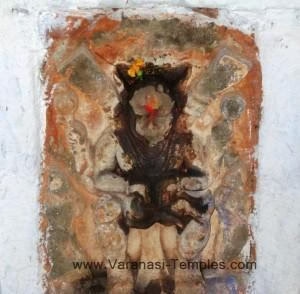
Nestled within the divine labyrinth of Kashi (Varanasi) stands the Mahabal Narsimha Temple, a sacred abode dedicated to Lord Narsimha, the ferocious yet benevolent avatar of Lord Vishnu. Known also as Maha Bal Narsimha (The Great Mighty Narsimha), this temple is a powerful center of spiritual energy for devotees seeking protection and liberation.
The primary deity here is a Swayambhu (self-manifested) idol of Lord Narsimha. Unlike the fierce form depicted in many scriptures, the idol in Kashi holds a unique spiritual promise. Phalaśruti (the spiritual benefit of visiting) states that sincere devotees worshipping Mahabal Narsimha will never encounter Yamdoot (the messengers of the God of Death). Instead, upon death, they attain eternal salvation (Moksha) and reach heaven, protected by the Lord’s mighty grace.
2. Historical Origins & Scriptural Legend
The exact construction date of the Mahabal Narsimha Temple remains shrouded in the antiquity typical of Kashi, where history often blurs into mythology. However, local records and the architectural foundation suggest origins tracing back to ancient dynasties that ruled Varanasi, possibly the Maratha or Gupta periods, though major renovations were likely commissioned by royalty in the medieval era.
The Legend (Sthala Purana):
According to tradition holds, this site is deeply connected to Prahlad, the ardent devotee of Lord Vishnu. While the demon king Hiranyakashipu could not be killed by any living being, man, or beast, Lord Vishnu manifested from a pillar in this very region of Kashi as Narsimha. The name “Mahabal” signifies the immense cosmic strength possessed by the Lord here. It is believed that Lord Narsimha appeared here to protect his devotee, and the Swayambhu murti eternally radiates this protective shield.
3. Architectural Marvels
The temple showcases a blend of traditional Hindu Nagara-style architecture with influences specific to the Kashi region. Unlike the towering gopurams of South India, the Shikhara (spire) here is more modest yet intricately carved, symbolizing the vertical ascent of the soul toward the divine.
- The Mandapas: The temple features a pillared hall (Mandapa) where devotees gather for prayers. The pillars are adorned with carvings depicting scenes from the Ramayana and Mahabharata, alongside intricate floral motifs.
- The Sanctum Sanctorum: The Garbhagriha is designed according to Vastu Shastra principles, ensuring positive energy flow. The idol of Lord Narsimha is depicted with a lion’s head and a human body, standing in a posture ready to subdue negativity.
- Proximity to the Ganges: Located near the ghats, the architecture has evolved to withstand the humid river climate, utilizing traditional stone and lime mortar.
4. Darshan & Ritual Logistics
Planning your visit to Mahabal Narsimha Temple is made easier with a clear schedule. Below are the daily darshan timings. Note: Timings may vary slightly during festivals.
Daily Darshan Timings (2026 Schedule)
| Mandir Section | Opening Time | Closing Time |
|---|---|---|
| Morning Darshan | 06:00 AM | 12:00 PM |
| Midday Break | 12:00 PM | 04:00 PM |
| Evening Darshan | 04:00 PM | 10:00 PM |
Key Sevas and Offerings
Devotees can participate in various rituals to enhance their spiritual experience:
- Narsimha Abhishekam: Ritual bathing of the deity with milk, honey, and ghee. Best performed on Tuesdays and Fridays.
- Archana: Offering of flowers and recitation of the 108 names of Lord Narsimha.
- Special Aarti: Held during the evening transition.
Online Seva Booking: While direct online booking for this specific ancient temple may be limited via the temple’s own portal, visitors can often book specialized Kashi pilgrimage packages through the Kashi Vishwanath Corridor official website or local authorized tour operators. For specific sevas, it is recommended to contact the temple trust or visit in person.
2026 Major Festival Dates
- Narasimha Jayanti: Sunday, May 10, 2026 (Grand Abhishekam and special discourses).
- Diwali: October 21, 2026 (Deep Daan and lighting of 1008 lamps).
- Mahashivratri: Due to proximity to Omkareshwar, special processions are observed on February 26, 2026.
5. Practical Visitor Guidance
To ensure a serene darshan experience, adhere to the following guidelines:
- Dress Code: Traditional Indian attire is preferred (Kurta-Pajama for men, Saree/ Salwar Kameez for women). Avoid shorts or sleeveless tops.
- Photography & Mobiles: Photography inside the sanctum sanctorum is strictly prohibited. It is advisable to switch off mobile phones before entering the inner chamber.
- Crowd Management: The temple is located in a dense locality near Prahlad Ghat. Early morning darshan (6:00 AM – 8:00 AM) is the least crowded.
- Seasonal Advice: Varanasi summers (May-June) are extremely hot; carry water and a head covering. Monsoon (July-August) brings humidity; wear waterproof footwear.
- Footwear: Shoes must be removed outside the temple. Paid cloaks are usually available near Prahlad Ghat parking.
6. Pilgrimage Connectivity
The Mahabal Narsimha Temple is located in the heart of the ancient city, accessible primarily by foot or light vehicles due to narrow lanes.
How to Reach
- Nearest Airport: Lal Bahadur Shastri International Airport (LBS), Varanasi (Approx. 30 km). Taxi/Auto can take you to Manduadih or Godaulia.
- Nearest Railway Station: Varanasi Junction (BSB) – 6 km. Autos and E-Rickshaws are available.
- Road Access: From the railway station, take a taxi to Prahlad Ghat (Machhodari). The temple is a short walk from the ghat steps. Large vehicles cannot enter the narrow lanes; walking is required.
Nearby Sacred Sites (Pilgrimage Circuit)
Make the most of your visit by exploring these nearby landmarks:
- Omkareshwar Temple: Located just 500 meters away, it is one of the 12 Jyotirlingas.
- Kashi Vishwanath Temple (New Corridor): Approximately 2 km north of Prahlad Ghat. Accessible via rickshaw or boat.
- Panchganga Ghat: A historic bathing ghat located nearby, where five rivers are believed to meet.
7. Frequently Asked Questions (FAQ)
Is there a VIP darshan entry at Mahabal Narsimha Temple?
As an ancient temple located in a dense locality, dedicated VIP entry queues are generally not enforced like in large corporate-managed temples. However, devotees can speak to the head priest (Pujari) for access during non-peak hours.
What is the best time to visit Varanasi for this darshan?
The ideal time to visit is between October and March when the weather is cool and pleasant, making the walk through the ghats comfortable.
Are there hotels near Mahabal Narsimha Temple?
Yes, the area near Dashashwamedh Ghat and Godaulia offers numerous guest houses (Dharamshalas) and hotels. It is recommended to book in advance during festival seasons.
Is the temple accessible for senior citizens?
Due to the heritage nature of the site and the lanes of Kashi, movement can be difficult for wheelchairs. However, electric rickshaws can get close to the ghat, and porters are available to assist senior citizens up the steps.
Photo Gallery
Contact Details
Official Address
Recent Posts

Shri Kaamkoteeshwar Mandir, Varanasi – History & Significance
In the heart of Kashi, the eternal city of Lord Shiva, where the Ganges flows with celestial grace, stands the Shri Kaamkoteeshwar Mandir. This sacred Sannidhi is not merely a temple but a profound spiritual bridge between the Northern…

ओ सांवरे तूने ही मुझको संभाला – Lyrics & Meaning
ओ सांवरे तूने ही मुझको संभाला – A Prayer to Shyam Origin & Spiritual Essence Why This Bhajan Resonates Devotees chant this when overwhelmed by life’s storms—the refrain ‘तूने ही मुझको संभाला’ is the soul’s sigh of relief: “You…

कथा ये है महाराज मेरे की – Lyrics & Meaning
कथा ये है महाराज मेरे की छत्रपति संभाजी महाराज – A Prayer to Chhatrapati Sambhaji Maharaj Origin & Spiritual Essence Why This Bhajan Resonates Devotees chant this when their spirit feels tested—its powerful refrain “महाराज मेरे” is a soul’s…

Rigveda Samhita Yathartha Anuvada (ऋग्वेद संहिता यथार्थ अनुवाद) – Complete Set with Anvayartha & Hindi/English Translation
The Rigveda is the oldest surviving scripture of humanity and the foundational text of Sanātana Dharma. For serious students, scholars, UPSC aspirants studying ancient Indian history, Sanskrit learners, and spiritual seekers, a precise and grammatically structured translation is indispensable.…

आना भी अकेला है जाना भी अकेला है – Lyrics & Meaning | BharatTemples
आना भी अकेला है जाना भी अकेला है – A Prayer to the Divine Witness Origin & Spiritual Essence Why This Bhajan Resonates Devotees turn to this bhajan in moments of deep reflection—when life’s attachments begin to ache. The…

माता शेरावाली के द्वार जो भी जाता है – Lyrics & Meaning
माता शेरावाली के द्वार जो भी जाता है – A Prayer to Maa Sherawali Origin & Spiritual Essence Why This Bhajan Resonates Devotees turn to this bhajan in times of fear or uncertainty—its promise that no one leaves Maa’s…

मार लेना सपणी उबार लेणा भवरा – Lyrics & Meaning
मार लेना सपणी उबार लेणा भवरा – A Prayer to the Divine Beloved Origin & Spiritual Essence Why This Bhajan Resonates Devotees chant this in moments of deep vulnerability—its cry of “मार लेना सपणी, उबार लेणा भवरा” is the…

हमें श्याम सुंदर भरोसा तुम्हारा – Lyrics & Meaning
हमें श्याम सुंदर भरोसा तुम्हारा – A Prayer to Shyam Sundar Origin & Spiritual Essence Why This Bhajan Resonates Devotees chant this when feeling alone—its refrain ‘de do sahara’ is the soul’s cry for divine support. Lyrics in Hindi…

Mere Satguru Ne Di Thi Davai Lyrics in Hindi & Meaning
Mere Satguru Ne Di Thi Davai: Invoking the Guru’s Liberating Wisdom This soul-stirring bhajan venerates the Satguru (True Spiritual Master) as the divine physician who dispenses the only remedy for life’s deepest sufferings. Composed by Sant Karmaveer Tufani, it…

Janm Diyo Thari Maa Dukh Dekhiyo Lyrics in Hindi & Meaning
जन्म दियो थारी माँ दुख देखियो (Maa’s Grief Upon Birthing You) This soul-stirring Chetavani Bhajan (admonitory hymn) is addressed to the Divine Mother (Maa) – a call for repentance when children forget their filial duties in the dark age…