
Contents
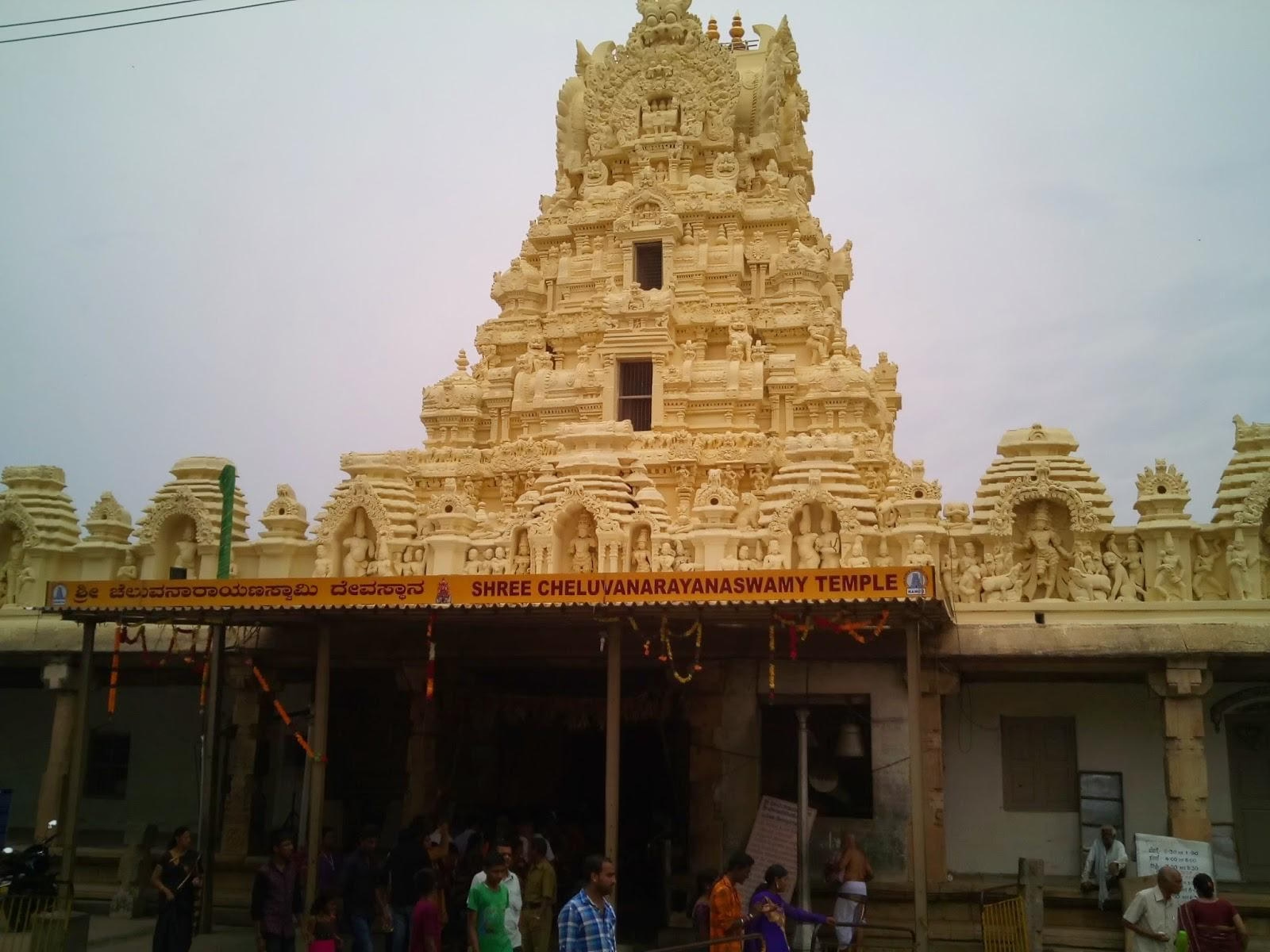
Cheluvanarayana Swamy Temple, located in the serene hills of Melukote, Mandya District, Karnataka, stands as a timeless beacon of Sanatana Dharma. Known locally as Thirunarayanapura, this ancient shrine is perched atop Yadavagiri, offering panoramic views of the Cauvery valley. For over a millennium, it has drawn devotees seeking the divine grace of Lord Vishnu in his Cheluva Narayana form.
Introduction & Spiritual Essence
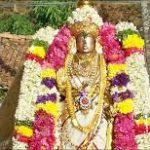
The primary deity of this temple is Cheluva Narayana Swamy, a mesmerizing form of Lord Vishnu. He is also revered as Tirunarayana or affectionately as Cheluvapille Raya. Unlike many other forms, this murti is regarded as Swayambhu (self-manifested) or highly ancient, having been worshipped through the Yugas.
Phalaśruti: The Fruits of Pilgrimage
Why do devotees undertake this pilgrimage to the rocky hills of Melukote? The temple holds immense spiritual potency (Shakti).
- Ancestral Liberation: It is believed that performing Shraddha and offering prayers here helps cleanse ancestral karma, granting Moksha (liberation) to forefathers.
- Vaikuntha Connection: Being one of the Pancha Narayana Kshetras of Karnataka, a visit here is said to bring the devotee closer to the gates of Vaikuntha (the abode of Vishnu).
- Remover of Afflictions: Devotees visit specifically to overcome Shani Dosha and planetary afflictions, as the temple energy is deeply soothing and stabilizing.
Historical Origins & Scriptural Legend
The history of Melukote is a tapestry woven with devotion and royal patronage, dating back to the 12th Century.
The Ramanujacharya Connection
According to temple records and tradition, the temple flourished significantly under the influence of the great Vaishnava saint, Sri Ramanujacharya. Historical evidence suggests he visited this region around 1098 CE. Legend holds that the metallic utsavamurthi (processional deity) was once lost and was recovered by Ramanujacharya himself.
Royal Patronage
The Wodeyar Dynasty of Mysore were the principal patrons of Cheluvanarayana Swamy. As early as 1614 CE, King Raja Wodeyar I granted vast estates to the temple. Inscriptions on the pillars of the Navaranga (hall) depict Raja Wodeyar standing in folded hands, eternally surrendering to the Lord.
Architectural Marvels
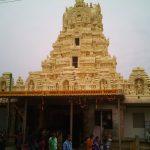
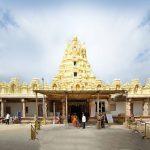
The temple architecture is a blend of Hoysala and early Vijayanagara styles, though it maintains a distinct Karnataka Dravida influence.
Structure and Sculptures
The temple is a massive square structure built of stone, appearing relatively plain from the exterior but radiating grandeur inside. The sanctum sanctorum houses the Cheluva Narayana Swamy idol.
- The Navaranga: The pillared hall features exquisite bas-reliefs and sculptures depicting various forms of Vishnu and scenes from the Puranas.
- Vastu Alignment: The temple is aligned with Vastu Shastra principles, facing east, allowing the first rays of the sun to illuminate the deity.
- ASI Status: The temple is a protected monument under the Archaeological Survey of India (ASI), ensuring the preservation of its ancient inscriptions and structures.
Darshan & Ritual Logistics
Visitors must adhere to the temple schedule. Below are the standard timings, though they may vary slightly during festivals.
| Session | Timings | Description |
|---|---|---|
| Morning Darshan | 08:00 AM – 1:00 PM | Includes Morning Suprabhata, Thomala, and Archana. |
| Afternoon Break | 1:00 PM – 3:00 PM | Temple remains closed for Deity rest. |
| Evening Darshan | 3:00 PM – 8:30 PM | Includes Evening Aarti and Sahasranama Archana. |
Key Sevas & Online Booking
Devotees can book specific Sevas online through the official Cheluvanarayana Swamy Temple Devasthanam portal or at the counter near the entrance.
- Abhishekam: Performed daily at 9:00 AM. Tickets required.
- Archana: Can be performed individually or for families.
- Kalyanotsava: Annual marriage ceremony of the deity (requires prior booking).
2026 Festival Dates (Tentative)
Plan your visit around these major events:
- Vairamudi Brahmotsava: March 8 – March 16, 2026 (The most grandeur festival).
- Ratha Saptami: February 3, 2026.
- Narayana Jayanti: May 23, 2026.
Practical Visitor Guidance
To ensure a serene darshan experience, please follow these guidelines:
Code of Conduct
- Dress Code: Traditional attire is mandatory. Men: Dhoti or Pants with Shirt. Women: Saree, Salwar Kameez, or traditional skirt/blouse.
- Photography: Strictly prohibited inside the sanctum sanctorum. Photography is allowed in the outer courtyards.
- Mobile Phones: Please switch to silent mode. Lockers are available near the entrance for electronic devices.
Crowd Management
During the Vairamudi Festival (March), crowds exceed 4 lakh people. It is advisable to book accommodation in Melukote or Mandya months in advance.
- Best Time to Visit: October to February (Winter months) for pleasant weather.
- Summer Advice: April and May are extremely hot. Carry water and cover your head while walking up the hill.
Pilgrimage Connectivity
Melukote is well-connected by road and rail to major cities in Karnataka.
How to Reach
- By Air: The nearest airport is Kempegowda International Airport (BLR) in Bangalore, approximately 150 km away.
- By Rail: The nearest railway junction is Mandya (28 km) or Mysore Junction (45 km).
- By Road: Melukote is located on the Mandya–Pandavapura Road. It is 25 km from Mandya. KSRTC runs regular buses from Mandya and Mysore.
Nearby Sacred Sites
Expand your pilgrimage circuit with these nearby destinations:
- Yog Narayana Swamy Temple: Located on the same hill, facing the Cauvery river.
- Ranganathaswamy Temple, Srirangapatna: A major Vaishnava shrine (40 km away).
- Pandavapura: Known for its historical caves and Lord Shiva temples.
Photo Gallery
Frequently Asked Questions (FAQ)
1. Is there a VIP darshan entry available?
Yes, the temple offers a Suprabhata Seva and a VIP entry ticket, which allows devotees to have a closer darshan during specific hours. These can be booked online or at the counter.
2. Can we carry Prasadam inside the temple?
Outside food is not allowed inside the sanctum. However, the temple provides its own Prasadam (Thuni Thengol and Puliyogare) which can be purchased from the temple counters.
3. What is the significance of the Raja-mudi and Vairamudi crowns?
The Raja-mudi was gifted by King Raja Wodeyar, and the Krishnaraja-mudi by Krishnaraja Wodeyar III. The Vairamudi (Diamond Crown) is the oldest. They are brought out only during the Brahmotsava festival.
4. Is the temple accessible for senior citizens?
While the temple is on a hill, there is a motorable road up to the base. From there, steps lead to the temple. Wheelchairs are available near the entrance for assistance inside the temple.
5. What are the accommodation options in Melukote?
The Melukote Temple Trust runs Choultry (guest houses) with basic facilities. Additionally, private hotels and homestays are available in Mandya town, 25 km away.
Contact Details
- Address: Melukote, Pandavapura Taluk, Mandya District, Karnataka – 571431
- Phone: 08236299839 (Temple Office)
Recent Posts

Shri Kaamkoteeshwar Mandir, Varanasi – History & Significance
In the heart of Kashi, the eternal city of Lord Shiva, where the Ganges flows with celestial grace, stands the Shri Kaamkoteeshwar Mandir. This sacred Sannidhi is not merely a temple but a profound spiritual bridge between the Northern…

ओ सांवरे तूने ही मुझको संभाला – Lyrics & Meaning
ओ सांवरे तूने ही मुझको संभाला – A Prayer to Shyam Origin & Spiritual Essence Why This Bhajan Resonates Devotees chant this when overwhelmed by life’s storms—the refrain ‘तूने ही मुझको संभाला’ is the soul’s sigh of relief: “You…

कथा ये है महाराज मेरे की – Lyrics & Meaning
कथा ये है महाराज मेरे की छत्रपति संभाजी महाराज – A Prayer to Chhatrapati Sambhaji Maharaj Origin & Spiritual Essence Why This Bhajan Resonates Devotees chant this when their spirit feels tested—its powerful refrain “महाराज मेरे” is a soul’s…

Rigveda Samhita Yathartha Anuvada (ऋग्वेद संहिता यथार्थ अनुवाद) – Complete Set with Anvayartha & Hindi/English Translation
The Rigveda is the oldest surviving scripture of humanity and the foundational text of Sanātana Dharma. For serious students, scholars, UPSC aspirants studying ancient Indian history, Sanskrit learners, and spiritual seekers, a precise and grammatically structured translation is indispensable.…

आना भी अकेला है जाना भी अकेला है – Lyrics & Meaning | BharatTemples
आना भी अकेला है जाना भी अकेला है – A Prayer to the Divine Witness Origin & Spiritual Essence Why This Bhajan Resonates Devotees turn to this bhajan in moments of deep reflection—when life’s attachments begin to ache. The…

माता शेरावाली के द्वार जो भी जाता है – Lyrics & Meaning
माता शेरावाली के द्वार जो भी जाता है – A Prayer to Maa Sherawali Origin & Spiritual Essence Why This Bhajan Resonates Devotees turn to this bhajan in times of fear or uncertainty—its promise that no one leaves Maa’s…

मार लेना सपणी उबार लेणा भवरा – Lyrics & Meaning
मार लेना सपणी उबार लेणा भवरा – A Prayer to the Divine Beloved Origin & Spiritual Essence Why This Bhajan Resonates Devotees chant this in moments of deep vulnerability—its cry of “मार लेना सपणी, उबार लेणा भवरा” is the…

हमें श्याम सुंदर भरोसा तुम्हारा – Lyrics & Meaning
हमें श्याम सुंदर भरोसा तुम्हारा – A Prayer to Shyam Sundar Origin & Spiritual Essence Why This Bhajan Resonates Devotees chant this when feeling alone—its refrain ‘de do sahara’ is the soul’s cry for divine support. Lyrics in Hindi…

Mere Satguru Ne Di Thi Davai Lyrics in Hindi & Meaning
Mere Satguru Ne Di Thi Davai: Invoking the Guru’s Liberating Wisdom This soul-stirring bhajan venerates the Satguru (True Spiritual Master) as the divine physician who dispenses the only remedy for life’s deepest sufferings. Composed by Sant Karmaveer Tufani, it…

Janm Diyo Thari Maa Dukh Dekhiyo Lyrics in Hindi & Meaning
जन्म दियो थारी माँ दुख देखियो (Maa’s Grief Upon Birthing You) This soul-stirring Chetavani Bhajan (admonitory hymn) is addressed to the Divine Mother (Maa) – a call for repentance when children forget their filial duties in the dark age…