

Contents
Introduction & Spiritual Essence
Nestled on the tranquil western coast of Karnataka, where the Arabian Sea kisses the shore, lies the sacred temple town of Gokarna. Translating to “Cow’s Ear” in Sanskrit, this pilgrimage site is believed to be where Lord Shiva emerged from the ear of the divine cow, Kamadhenu. The temple is one of the seven most important Mokshapuri (liberation cities) in Hinduism, holding immense significance for devotees seeking spiritual release.
The Primary Deity
The main deity is Lord Mahabaleshwara, a form of Lord Shiva, worshipped as a Swayambhu (self-manifested) Atmalinga. Unlike typical Shiva Lingas, this one is a cylinder-shaped structure of carbonatite rock, believed to hold the very life force of the universe. The temple also houses shrines for Goddess Parvati, Lord Ganesha, and Lord Kartikeya.
Phalaśruti: The Benefits of Pilgrimage
According to ancient texts, visiting the Gokarna Mahabaleshwara Temple absolves devotees of sins and ancestral karma. It is particularly renowned for Pinda Pradana (ancestral rites). Devotees believe that offering prayers here liberates the souls of forefathers, bringing peace to the family lineage. It is often said that a visit to Gokarna is equivalent to a pilgrimage to Kashi (Varanasi), making it a vital stop for those seeking Moksha (liberation).
Historical Origins & Scriptural Legend
The history of Gokarna spans the Treta Yuga, deeply rooted in the epic conflict between the Devas (Gods) and the Asuras (Demons).
The Legend of the Atmalinga
Tradition holds that Ravana, the demon king of Lanka, performed rigorous penance to obtain the Atmalinga from Lord Shiva. Shiva granted the boon with a condition: the Linga must never touch the earth until Ravana reached Lanka. Fearing Ravana’s immense power, Lord Vishnu and Lord Ganesha devised a plan.
As Ravana neared Gokarna, Vishnu obscured the sun, making it appear dusk. Ravana, compelled to perform his evening rites (Sandhyavandana), sought a passerby to hold the Linga. Lord Ganesha, disguised as a Brahmin boy, agreed on the condition that if Ravana did not return by the time he could no longer bear the weight, he would place it down. Ganesha called out three times and, receiving no answer, placed the Linga on the ground.
The Linga instantly rooted itself into the earth. Ravana tried desperately to uproot it, but his efforts were in vain. He threw the earthen covers of the Linga to five locations—Dhareshwara, Gunavanteshwara, Murudeshwara, and Shejjeshwara. These five places collectively form the Pancha Kshetras of Gokarna. The Linga, immovable and powerful, was named Mahabaleshwara (The God of Great Strength).
Architectural Timeline and Renovations
Historical records indicate that the temple structure has undergone significant changes over the centuries. During the 15th and 16th centuries, when the Portuguese occupied nearby Goa, a sect of Brahmins migrated to Gokarna, enriching its religious fabric. The original structure was destroyed by Portuguese invaders in 1714 and subsequently rebuilt in the 18th century. In 1928, under the spiritual guidance of Guru H.H. Shrimad Anandashram Swamiji, the temple underwent major renovations, giving it the form we see today.
Architectural Marvels
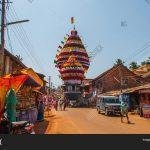
The Gokarna Temple is a masterpiece of Dravidian architectural style, characterized by its imposing gateway tower (Gopuram) and intricate stone carvings.
Structure and Design
The temple complex is built within a walled courtyard. The Rajagopuram (main gateway) is a towering structure adorned with colorful sculptures of deities and mythological narratives. Inside, the Mandapa (hall) features massive stone pillars carved with figures of Narasimha, Varaha, and other avatars of Vishnu, reflecting the syncretic devotion of the region.
The sanctum sanctorum (Garbhagriha) is unique; it has two entrances—one for the deity (accessed by priests only) and another for devotees to view the deity. The Linga is situated in a depression, requiring devotees to step down to offer prayers, symbolizing the Linga’s presence deep within the earth.
Darshan & Ritual Logistics (2026 Guide)
To ensure a seamless spiritual experience, we have compiled the latest timings and seva schedules for 2026.
Daily Darshan Timings
| Session | Timings |
|---|---|
| Morning Darshan | 6:00 AM – 12:30 PM |
| Afternoon Break | 12:30 PM – 5:00 PM |
| Evening Darshan | 5:00 PM – 9:00 PM |
Key Sevas & Booking
Devotees can book the following Sevas online via the official temple portal (refer to the “Contact Details” section below for the link).
- Maha Abhishekam: Performed at 6:00 AM. Sacred bathing of the Atmalinga with milk, honey, and ghee.
- Rudrabhishekam: A powerful Vedic ritual for removing obstacles.
- Kumkum Archana: Offering vermilion powder to the deity for prosperity.
- Gokarna Pushpa Karanjane: A floral offering service available throughout the day.
Major Festivals in 2026
- Shivaratri (Feb 26, 2026): The most significant celebration. The temple remains open 24 hours. Special decorations and cultural programs are held.
- Karthika Deepam (Nov 5, 2026): Lamps are lit throughout the temple complex, symbolizing the victory of light over darkness.
- Magha Utsava: A post-winter festival celebrated in February with a grand procession of Lord Mahabaleshwara.
Practical Visitor Guidance
Respecting the sanctity of the temple and managing logistics is crucial for a fulfilling visit.
Dress Code & Etiquette
Visitors must dress modestly. Men are required to remove shirts and wear dhotis or formal pants; women should wear sarees, salwars, or full-length dresses. Shorts and sleeveless tops are strictly prohibited.
Crowd Management & Best Time to Visit
Seasonal Advice: Summers (March–May) in Gokarna are humid. Carry a water bottle and a head cover (scarf) as the marble floors can get hot.
Crowd Timing: To avoid long queues, plan your Darshan between 8:00 AM and 10:00 AM or post 7:00 PM. Weekends and Shivaratri attract massive crowds; booking accommodation and darshan slots well in advance is mandatory.
Photography & Lockers
Photography is strictly prohibited inside the inner sanctum. Mobile phones and cameras must be deposited at the free locker facility provided at the temple entrance.
Pilgrimage Connectivity
How to Reach Gokarna
- By Air: The nearest airport is Mangalore International Airport (IXE), approximately 150 km away. Taxis are available for the 3-hour drive.
- By Rail: The nearest railway head is Gokarna Road station (10 km away). Most trains from Bangalore/Mumbai halt here. Alternatively, Ankola (20 km) and Kumta (25 km) are major railway stations on the Konkan Railway line.
- By Road: Gokarna is well-connected via National Highway 66. Regular buses ply from Bangalore, Dharwad, and Hubli to the Gokarna Bus Stand.
Nearby Sacred Sites (Pilgrimage Circuit)
Make the most of your trip by visiting the Pancha Kshetras:
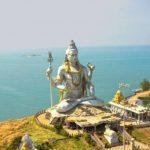
- Murudeshwara Temple: Famous for the world’s second-tallest Shiva statue (approx. 60 km north).
- Shejjeshwar Temple: A small shrine dedicated to Lord Shiva, located on the seashore.
- Dhareshwara Temple: Located in Dhareshwar, known for its unique Shiva Linga.



Frequently Asked Questions (FAQ)
1. Is there a VIP Darshan entry available?
Yes, the temple authorities offer a Quick Darshan or VIP Darshan ticket (usually priced at a nominal fee like ₹100 or ₹150) to help devotees bypass the general queue. These tickets are available at the counter inside the temple complex.
2. Can non-Hindus visit the Mahabaleshwara Temple?
While Gokarna is a cosmopolitan town, the inner sanctum of the Mahabaleshwara Temple is traditionally restricted to Hindus. Non-Hindu visitors can admire the architecture from the outer courtyard and enjoy the spiritual atmosphere of the town.
3. What is the significance of the Atmalinga in Gokarna?
The Atmalinga is believed to contain the spiritual essence of the universe. Worshipping it is said to grant the same spiritual merit as performing a Yajna (fire sacrifice) or visiting the Himalayas. It is also the central reason why Gokarna is revered as a ‘Moksha Puri’.
4. Is online booking available for sevas?
Yes, the temple trust has digitized the booking process. Devotees can visit the official Gokarna Temple website to book Abhishekam, Archana, and other sevas in advance. However, for daily darshan, tickets can be purchased at the temple counter.
5. What are the accommodation options in Gokarna?
Gokarna offers everything from budget guesthouses to luxury resorts. For pilgrims, staying near the temple or on Main Beach Road is recommended for easy access. Ashrams like the Gokarna Mahabaleshwara Temple Rest House also offer basic, clean accommodation.
Contact Details
Official Address:
Shri Mahabaleshwara Temple,
Gokarna, Uttara Kannada District,
Karnataka – 581326.
Contact: +91 8389 226 111 (Office)
How to Reach:
Gokarna is located on National Highway 66 (formerly NH-17). It is a scenic 5-hour drive from Goa. The town is small and walkable, but auto-rickshaws are available for local transport.
Recent Posts

Shri Kaamkoteeshwar Mandir, Varanasi – History & Significance
In the heart of Kashi, the eternal city of Lord Shiva, where the Ganges flows with celestial grace, stands the Shri Kaamkoteeshwar Mandir. This sacred Sannidhi is not merely a temple but a profound spiritual bridge between the Northern…

ओ सांवरे तूने ही मुझको संभाला – Lyrics & Meaning
ओ सांवरे तूने ही मुझको संभाला – A Prayer to Shyam Origin & Spiritual Essence Why This Bhajan Resonates Devotees chant this when overwhelmed by life’s storms—the refrain ‘तूने ही मुझको संभाला’ is the soul’s sigh of relief: “You…

कथा ये है महाराज मेरे की – Lyrics & Meaning
कथा ये है महाराज मेरे की छत्रपति संभाजी महाराज – A Prayer to Chhatrapati Sambhaji Maharaj Origin & Spiritual Essence Why This Bhajan Resonates Devotees chant this when their spirit feels tested—its powerful refrain “महाराज मेरे” is a soul’s…

Rigveda Samhita Yathartha Anuvada (ऋग्वेद संहिता यथार्थ अनुवाद) – Complete Set with Anvayartha & Hindi/English Translation
The Rigveda is the oldest surviving scripture of humanity and the foundational text of Sanātana Dharma. For serious students, scholars, UPSC aspirants studying ancient Indian history, Sanskrit learners, and spiritual seekers, a precise and grammatically structured translation is indispensable.…

आना भी अकेला है जाना भी अकेला है – Lyrics & Meaning | BharatTemples
आना भी अकेला है जाना भी अकेला है – A Prayer to the Divine Witness Origin & Spiritual Essence Why This Bhajan Resonates Devotees turn to this bhajan in moments of deep reflection—when life’s attachments begin to ache. The…

माता शेरावाली के द्वार जो भी जाता है – Lyrics & Meaning
माता शेरावाली के द्वार जो भी जाता है – A Prayer to Maa Sherawali Origin & Spiritual Essence Why This Bhajan Resonates Devotees turn to this bhajan in times of fear or uncertainty—its promise that no one leaves Maa’s…

मार लेना सपणी उबार लेणा भवरा – Lyrics & Meaning
मार लेना सपणी उबार लेणा भवरा – A Prayer to the Divine Beloved Origin & Spiritual Essence Why This Bhajan Resonates Devotees chant this in moments of deep vulnerability—its cry of “मार लेना सपणी, उबार लेणा भवरा” is the…

हमें श्याम सुंदर भरोसा तुम्हारा – Lyrics & Meaning
हमें श्याम सुंदर भरोसा तुम्हारा – A Prayer to Shyam Sundar Origin & Spiritual Essence Why This Bhajan Resonates Devotees chant this when feeling alone—its refrain ‘de do sahara’ is the soul’s cry for divine support. Lyrics in Hindi…

Mere Satguru Ne Di Thi Davai Lyrics in Hindi & Meaning
Mere Satguru Ne Di Thi Davai: Invoking the Guru’s Liberating Wisdom This soul-stirring bhajan venerates the Satguru (True Spiritual Master) as the divine physician who dispenses the only remedy for life’s deepest sufferings. Composed by Sant Karmaveer Tufani, it…

Janm Diyo Thari Maa Dukh Dekhiyo Lyrics in Hindi & Meaning
जन्म दियो थारी माँ दुख देखियो (Maa’s Grief Upon Birthing You) This soul-stirring Chetavani Bhajan (admonitory hymn) is addressed to the Divine Mother (Maa) – a call for repentance when children forget their filial duties in the dark age…