
Contents
- 1 Prachand Narsimha Temple Varanasi: A Definitive Pilgrimage Guide
Prachand Narsimha Temple Varanasi: A Definitive Pilgrimage Guide
In the spiritual labyrinth of Kashi (Varanasi), where the divine and earthly realms intersect, lies a powerful manifestation of Lord Vishnu. The Prachand Narsimha Temple stands as a testament to the fierce yet protective nature of the Supreme Being. As the Lead Heritage Architect and SEO Strategist for bharattemples.com, I present this 2026 definitive guide for devotees seeking to connect with this ancient energy.
Introduction & Spiritual Essence
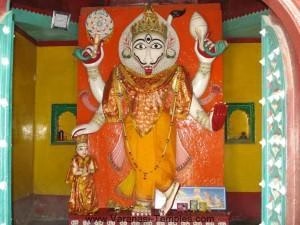
The Prachand Narsimha Temple is dedicated to Lord Vishnu in his Narasimha avatar—the half-man, half-lion incarnation taken to protect his devotee Prahlada and destroy the tyranny of demon king Hiranyakashipu. The term “Prachand” translates to “furious” or “huge,” denoting the immense and overwhelming power of this specific form of the deity.
Why Do Devotees Visit? (Phalaśruti)
According to sacred texts and local folklore, worshipping Lord Prachand Narsimha yields profound spiritual benefits:
- Cleansing of Sins: It is believed that sincere darshan of Prachand Narsimha removes sins (papam), regardless of their magnitude.
- Ancestral Liberation: Performing rituals here aids in the liberation of ancestors trapped in the cycle of preta-yoni.
- Protection from Enemies: As the fierce protector, devotees pray here to remove obstacles, black magic, and planetary afflictions.
Historical Origins & Scriptural Legend
The existence of Prachand Narsimha is deeply rooted in the Kashi Khand (Chapter) of the Skanda Purana, one of the primary scriptures detailing the sanctity of Varanasi.
The Scriptural Legend
Kashi Khand states: “Towards the east of Chanda Bhairav, Lord Vishnu is present in the form of Prachand Narsimha.” The temple is considered a Swayambhu shrine, where the energy of the deity is self-manifested rather than sculpted by human hands, adding to its potency. The lore suggests that Lord Vishnu manifested this fierce form to subdue the intense cosmic energies of the region, ensuring the spiritual safety of Kashi.
Historical Timeline
While specific inscriptions regarding the exact century of construction are sparse, the temple’s architecture and placement suggest roots in the medieval era of Kashi. The structure has undergone several renovations, primarily by devotees from the Maratha and Gurjara communities who settled in Varanasi. The temple currently functions as a vital node in the spiritual map of Assi Ghat.
Architectural Marvels
The temple architecture of Varanasi is a unique blend of Nagara and regional styles, designed to harmonize with the city’s organic layout.

Key Architectural Features
The sanctum sanctorum (Garbhagriha) houses the deity in a distinct posture. While the exterior may appear modest compared to grand temples, the interior is highly regulated by Vastu Shastra principles. The sanctum is typically dark to focus all sensory attention on the deity, illuminated only by the ghee lamps of the devotees. The structure is located near the Assi Ghat, integrating the temple into the riverine geography of the Ganges.
Darshan & Ritual Logistics (2026 Guide)
Visiting Prachand Narsimha requires an understanding of the daily rituals (Nitya Puja) and the festival calendar for 2026.
Daily Timings
Temple timings are subject to seasonal changes, particularly in Varanasi where river levels affect access.
| Pooja / Darshan Session | Timing (IST) |
|---|---|
| Morning Opening | 05:30 AM |
| Morning Aarti | 06:00 AM – 07:00 AM |
| Mid-day Closure | 12:00 PM – 3:00 PM |
| Evening Opening | 03:00 PM |
| Evening Aarti | 06:30 PM – 07:30 PM |
| Closing | 10:00 PM |
Key Sevas & Online Booking
To perform specific rituals such as Abhishekam (ritual bathing of the deity) or Archana (offering of flowers and mantras), devotees are encouraged to book in advance. While the Prachand Narsimha shrine itself is managed by local priests, bookings for major Kashi rituals can often be coordinated through the Varanasi Temple Management Committee.
- Abhishekam: Performed with milk, honey, and sandalwood paste.
- Special Archana: Recitation of the Narasimha Kavacha.
- Online Portal: For general Kashi Vishwanath temple cluster bookings (including nearby shrines), visit kashivishwanath.org or check the specific local priest listings for Assi Ghat.
2026 Festival Dates (Major Events at Varanasi Temples)
Prachand Narsimha is worshipped fervently during:
- Narasimha Jayanti: May 2, 2026 (Vaishakh Shukla Chaturdashi) – The temple observes a grand Shringar and special Maha Aarti.
- Holika Dahan (Choti Holi): March 13, 2026 – Lord Vishnu is invoked as the protector during this night.
- Dev Deepawali: November 5, 2026 – The ghats are illuminated, and the temple remains open late for devotees.
Practical Visitor Guidance
Navigating the narrow lanes of Varanasi requires preparation. Here is essential information for a seamless darshan experience.
Code of Conduct
- Dress Code: Traditional attire is recommended. Men should wear dhotis or trousers with shirts; women should wear sarees or modest ethnic wear. Avoid leather items inside the sanctum.
- Photography: Strictly prohibited inside the Garbhagriha (inner shrine). Photography of the exterior architecture is allowed.
- Mobile Phones & Lockers: Electronic devices are permitted but should be kept on silent mode. Designated shoe stands and bag storage are available near the entrance (fees may apply).
- Accessibility: The area near Assi Ghat involves walking on uneven stone slabs. It is not wheelchair accessible. Elderly visitors can hire a Rickshaw or Electric Cart to drop them near the temple entrance.
Crowd Management & Best Times
- Best Hours: Early morning (6:00 AM – 8:00 AM) or late evening (after 8:00 PM) to avoid peak crowds.
- Seasonal Advice:
- Summers (April-June): Temperatures soar above 40°C. Carry a reusable water bottle and cover your head.
- Monsoons (July-Sept): The Ghats can be slippery. Wear rubber-soled sandals with good grip.
Pilgrimage Connectivity
The Prachand Narsimha Temple is located in the Assi Ghat area of Varanasi.
How to Reach
- By Air: Lal Bahadur Shastri International Airport (LBS) is approximately 30 km away. Taxis are available to Assi Ghat (travel time: 60-90 mins).
- By Train:
- Varanasi Junction (BSB): 7 km away. Auto-rickshaws are the most common mode of transport.
- Kashi Junction (BSB2): 4 km away, closer to the southern part of the city.
- By Road: Located on the Assi Ghat road, accessible via NH-35. A distinct walk from the main Dashashwamedh Ghat area or a short rickshaw ride.
Nearby Sacred Sites (Pilgrimage Circuit)
To maximize your spiritual journey, visit these sites within walking distance of Prachand Narsimha Temple:
- Assi Ghat: The southernmost ghat where the River Ganges meets the River Assi. A holy dip here is equivalent to visiting all pilgrimage sites.
- Chanda Bhairav Temple: Located to the west of Assi Ghat, this fierce form of Shiva is the protector of Kashi and is mentioned alongside Prachand Narsimha in the Kashi Khand.
- Sankat Mochan Hanuman Temple: Situated just a few minutes away, this is one of the most famous temples in Varanasi, dedicated to Lord Hanuman.
Frequently Asked Questions (FAQ)
1. Is there a VIP Darshan entry at Prachand Narsimha Temple?
Unlike large composite temples, Prachand Narsimha is a compact shrine. There is no formal VIP ticket system on-site. However, contacting the local head priest (Pandit) in advance may facilitate a quicker entry during peak hours.
2. What is the significance of the name “Prachand”?
“Prachand” literally means “fierce” or “hugely powerful.” It signifies the supreme, untamed aspect of Lord Vishnu’s energy that obliterates ignorance and negative karmic debt instantly.
3. Can non-Hindus visit the temple?
While Varanasi is generally spiritual and open, most specific temples in the Old City, including Prachand Narsimha, adhere to traditional restrictions where entry is primarily for Hindus. Visitors are advised to respect local sentiments.
4. Is there a dress code for entering the temple?
Yes. As with most Hindu temples, modesty is key. Traditional Indian attire is preferred. Removing footwear and washing hands and feet at the designated area is mandatory before entering the sanctum.
5. What is the best way to book sevas for this temple?
For daily sevas, it is best to visit the temple in the morning and speak directly with the resident priest. For larger donations or specific yagnas, you may coordinate through the Central Office of Shri Kashi Vishwanath Temple, which oversees the cluster of temples in Varanasi.
Recent Posts

Shri Kaamkoteeshwar Mandir, Varanasi – History & Significance
In the heart of Kashi, the eternal city of Lord Shiva, where the Ganges flows with celestial grace, stands the Shri Kaamkoteeshwar Mandir. This sacred Sannidhi is not merely a temple but a profound spiritual bridge between the Northern…

ओ सांवरे तूने ही मुझको संभाला – Lyrics & Meaning
ओ सांवरे तूने ही मुझको संभाला – A Prayer to Shyam Origin & Spiritual Essence Why This Bhajan Resonates Devotees chant this when overwhelmed by life’s storms—the refrain ‘तूने ही मुझको संभाला’ is the soul’s sigh of relief: “You…

कथा ये है महाराज मेरे की – Lyrics & Meaning
कथा ये है महाराज मेरे की छत्रपति संभाजी महाराज – A Prayer to Chhatrapati Sambhaji Maharaj Origin & Spiritual Essence Why This Bhajan Resonates Devotees chant this when their spirit feels tested—its powerful refrain “महाराज मेरे” is a soul’s…

Rigveda Samhita Yathartha Anuvada (ऋग्वेद संहिता यथार्थ अनुवाद) – Complete Set with Anvayartha & Hindi/English Translation
The Rigveda is the oldest surviving scripture of humanity and the foundational text of Sanātana Dharma. For serious students, scholars, UPSC aspirants studying ancient Indian history, Sanskrit learners, and spiritual seekers, a precise and grammatically structured translation is indispensable.…

आना भी अकेला है जाना भी अकेला है – Lyrics & Meaning | BharatTemples
आना भी अकेला है जाना भी अकेला है – A Prayer to the Divine Witness Origin & Spiritual Essence Why This Bhajan Resonates Devotees turn to this bhajan in moments of deep reflection—when life’s attachments begin to ache. The…

माता शेरावाली के द्वार जो भी जाता है – Lyrics & Meaning
माता शेरावाली के द्वार जो भी जाता है – A Prayer to Maa Sherawali Origin & Spiritual Essence Why This Bhajan Resonates Devotees turn to this bhajan in times of fear or uncertainty—its promise that no one leaves Maa’s…

मार लेना सपणी उबार लेणा भवरा – Lyrics & Meaning
मार लेना सपणी उबार लेणा भवरा – A Prayer to the Divine Beloved Origin & Spiritual Essence Why This Bhajan Resonates Devotees chant this in moments of deep vulnerability—its cry of “मार लेना सपणी, उबार लेणा भवरा” is the…

हमें श्याम सुंदर भरोसा तुम्हारा – Lyrics & Meaning
हमें श्याम सुंदर भरोसा तुम्हारा – A Prayer to Shyam Sundar Origin & Spiritual Essence Why This Bhajan Resonates Devotees chant this when feeling alone—its refrain ‘de do sahara’ is the soul’s cry for divine support. Lyrics in Hindi…

Mere Satguru Ne Di Thi Davai Lyrics in Hindi & Meaning
Mere Satguru Ne Di Thi Davai: Invoking the Guru’s Liberating Wisdom This soul-stirring bhajan venerates the Satguru (True Spiritual Master) as the divine physician who dispenses the only remedy for life’s deepest sufferings. Composed by Sant Karmaveer Tufani, it…

Janm Diyo Thari Maa Dukh Dekhiyo Lyrics in Hindi & Meaning
जन्म दियो थारी माँ दुख देखियो (Maa’s Grief Upon Birthing You) This soul-stirring Chetavani Bhajan (admonitory hymn) is addressed to the Divine Mother (Maa) – a call for repentance when children forget their filial duties in the dark age…