
Contents
Introduction & Spiritual Essence
The Hoysaleswara Temple, located in Halebidu, Karnataka, is a monumental testament to the spiritual and artistic zenith of the Hoysala Empire. This 12th-century sanctum is dedicated to Lord Shiva, revered here in the form of Hoysaleswara and Santaleswara. Unlike many ancient temples, this is not a Swayambhu (self-manifested) linga, but a meticulously sculpted twin-temple complex.
Phalaśruti (Spiritual Benefits): Devotees visit this Shaivite shrine to cleanse ancestral karma and attain mental stability. The temple’s unique layout, facing east towards the rising sun (despite current visitor access from the north), symbolizes the dispelling of darkness. The presence of a dedicated Surya (Sun God) shrine within the complex integrates Saura traditions, allowing pilgrims to perform rituals for solar blessings, vital for career growth and health.
Historical Origins & Scriptural Legend
Builders and Era: According to temple records and inscriptions, the temple’s construction began in 1121 CE and was completed around 1160 CE. It was sponsored by King Vishnuvardhana of the Hoysala Empire. The chief architect is believed to be the officer Ketamalla, mentioned in a distinct inscription found at the nearby Kallesvara temple ruins in Ghattadahalli.
The Legend of Halebidu: The town was originally known as Dvarasamudra (derived from Dvara meaning gateway and Samudra meaning ocean). Tradition holds that the temple was built on the banks of a large man-made lake, representing the gateway to the cosmic ocean of consciousness. The temple lacks a primary dedication inscription, which is thought to have been lost during the invasions of the early 14th century.
Scriptural Context: While the Stala Purana is rooted in local Kannada oral tradition, the iconography follows the Puranas. The temple reverentially includes themes from Vaishnavism and Shaktism, alongside extensive Jain imagery, reflecting the empire’s religious syncretism.
Architectural Marvels
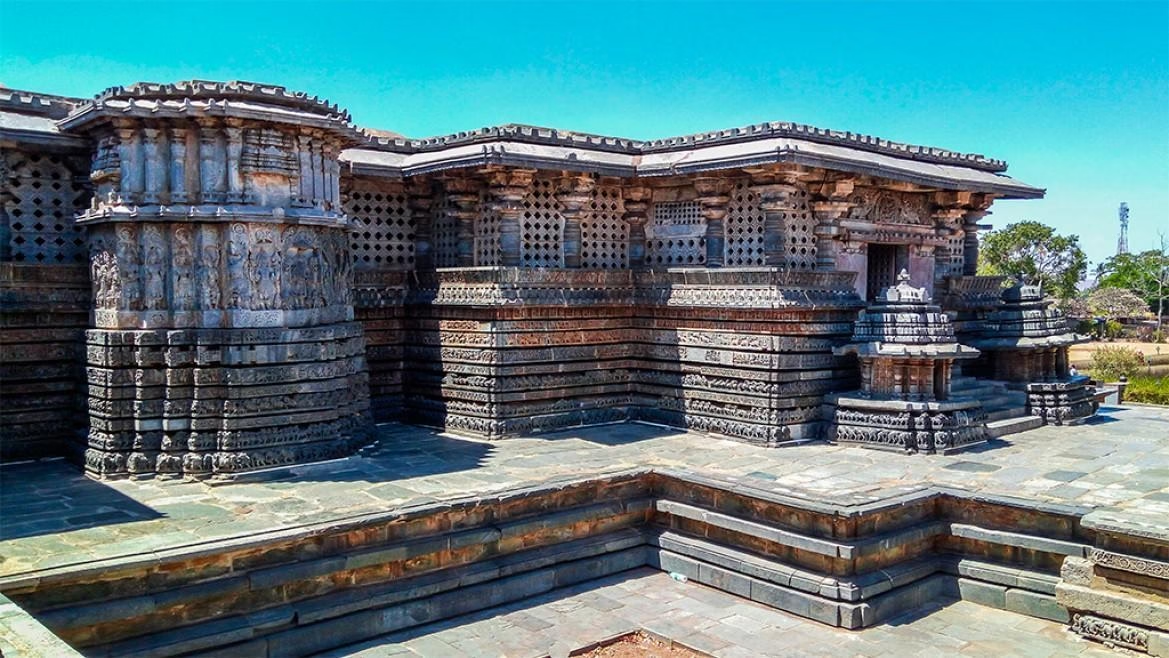
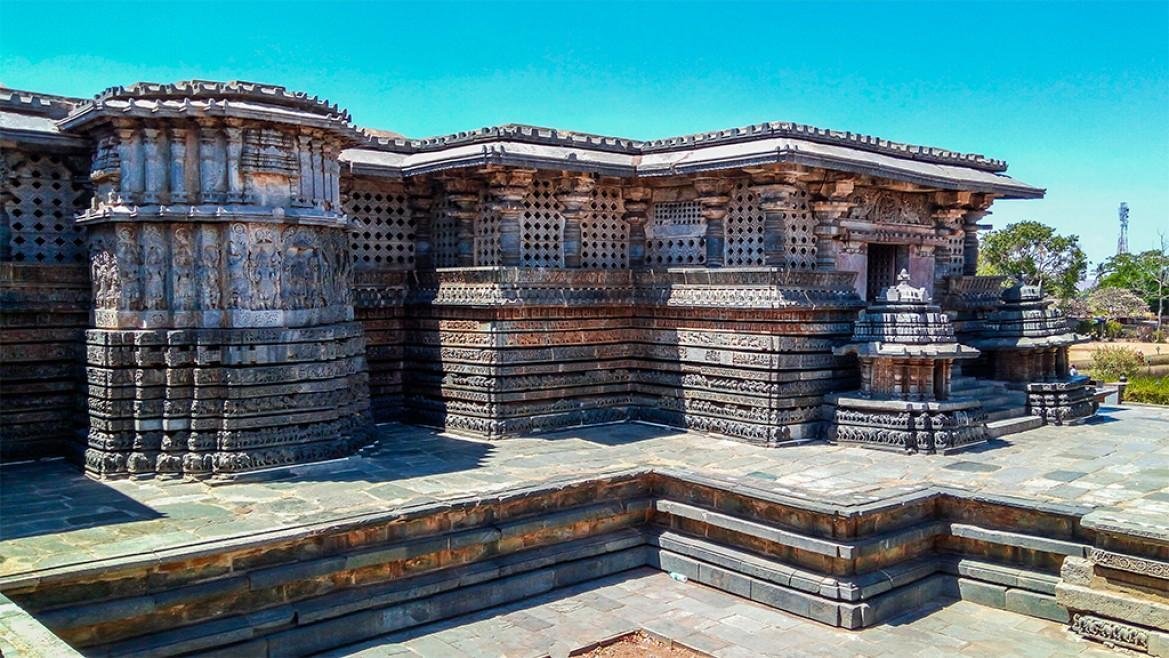
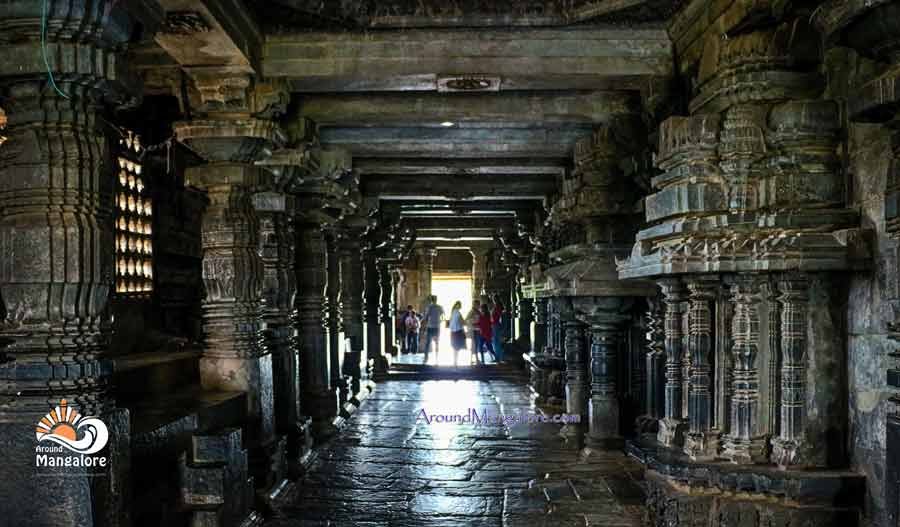
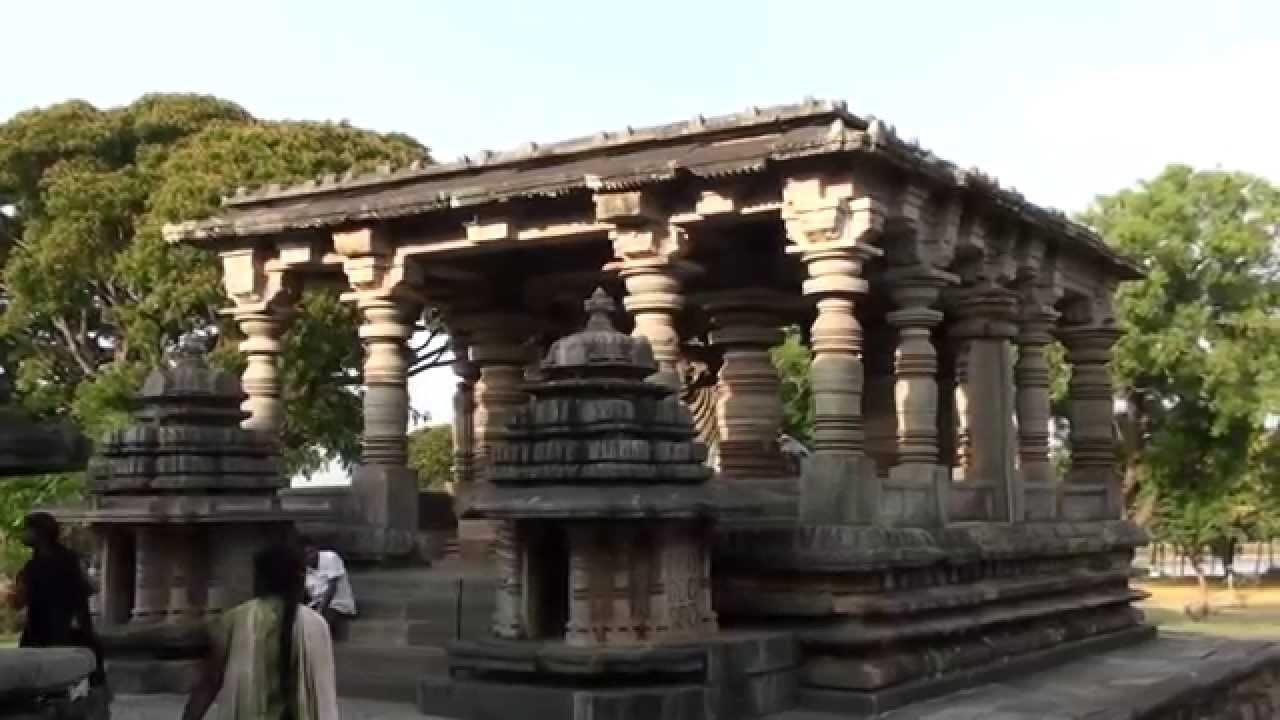
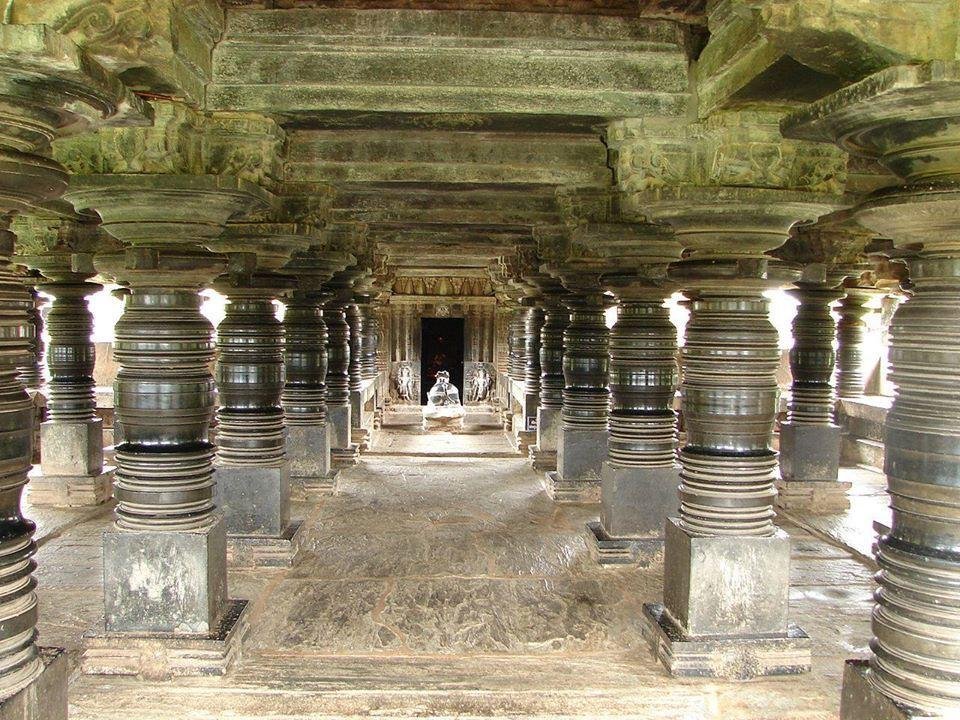
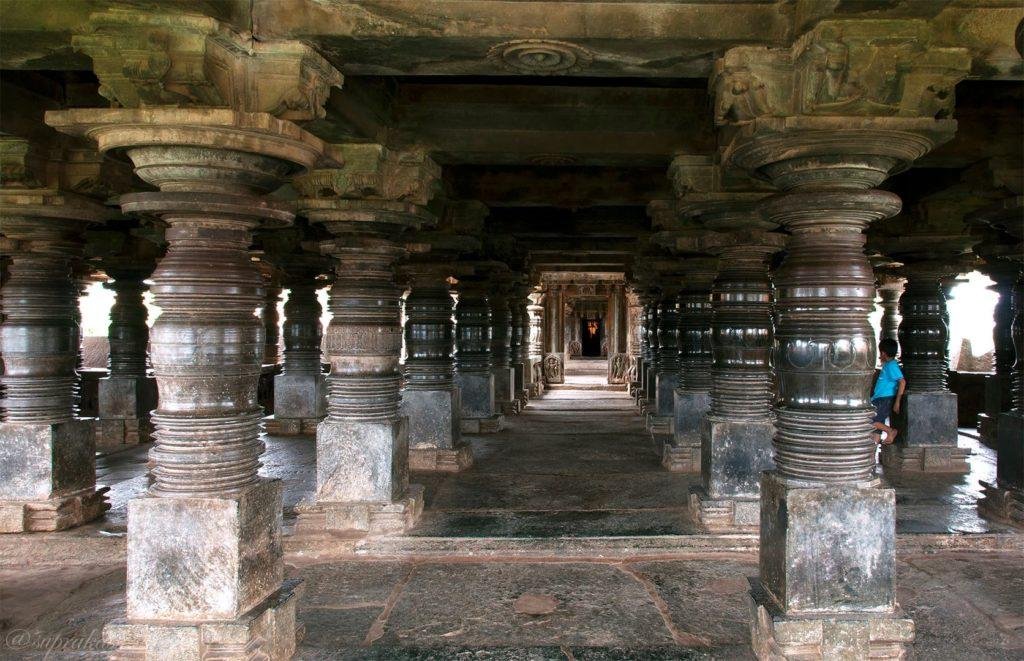
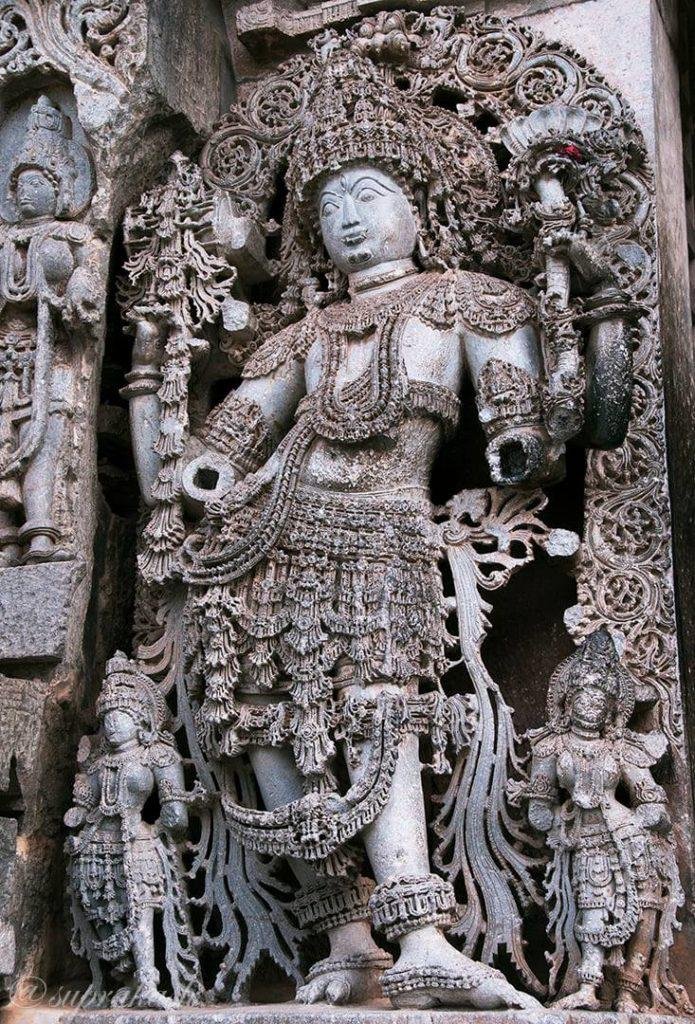
The Hoysaleswara Temple is the largest Hoysala temple in South India. The entire structure is carved from soft soapstone (stalactite), allowing for incredibly intricate detailing that has survived centuries of weathering.
Style and Layout: The temple follows the Hoysala architectural style, characterized by a stellate (star-shaped) platform. It is a twin-temple, housing two garbhagrihas (sanctums) dedicated to Hoysaleswara (male aspect) and Santaleswara (female aspect), joined at the transept.
Notable Features:
- Shikhara: Unlike typical Hoysala temples with tiered superstructures, the towers here were demolished or never completed, giving the temple a unique flat appearance against the skyline.
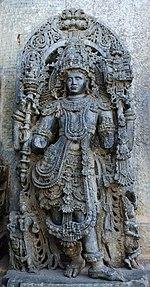
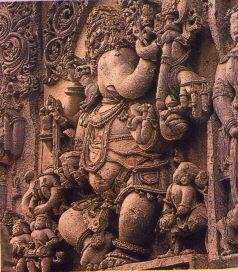
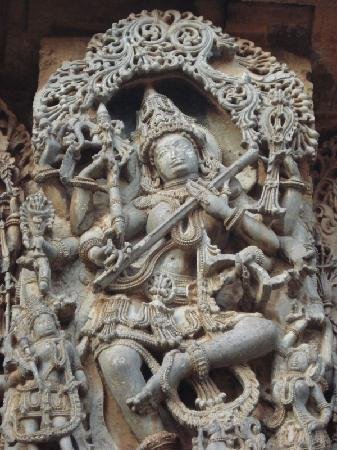
- Sculptures: Over 340 large relief panels depict scenes from the Epics and Puranas. The Narasimha pillar and the Saptamatrika sculptures are masterpieces.
- UNESCO Status: The temple, along with the Jain temples and Kedareshwara temple in Halebidu, is on the tentative list for UNESCO World Heritage Sites.
Darshan & Ritual Logistics
While the Hoysaleswara temple is a historical monument maintained by the ASI, a small Shiva Linga is installed for daily worship. Visitors can perform Abhishekam and Archana at the designated area near the sanctum.
| Ritual / Event | Details |
|---|---|
| Daily Darshan Timings | 06:00 AM – 06:00 PM |
| Special Pooja / Abhishekam | 08:30 AM (Requires prior notice to ASI/Trust) |
| Evening Aarti | 06:15 PM (Subject to season) |
Online Seva Booking
Currently, the Hoysaleswara Temple relies on physical ticketing for entry. However, for accommodation and general Kannada tourism packages, the Karnataka Tourism portal is the primary interface. For specific Sevas during festivals, check the DAKSHTA portal (Karnataka’s religious endowment portal).
2026 Festival Calendar
- Shivaratri: February 26, 2026 – Special night-long darshan and cultural programs.
- Karthika Deepam: November 5, 2026 – Lighting of lamps around the temple premises.
- Hanuman Jayanti: April 12, 2026.
Practical Visitor Guidance
Dress Code: As a site of worship and archaeological importance, modest attire is required. Covered shoulders and knees are mandatory.
Photography & Mobiles: Photography is allowed. However, tripods and drones require prior permission from the ASI (Archaeological Survey of India) office in Hassan. Mobile lockers are available near the ticket counter for a nominal fee.
Crowd Management:
- Best Time to Visit: Weekdays between 9:00 AM and 11:00 AM.
- Seasonal Advice: Halebidu can get warm in April/May. Carry a water bottle and wear sunglasses. The stone floor reflects sunlight intensely.
Pilgrimage Connectivity
How to Reach:
- By Air: Nearest airport is Kempegowda International Airport, Bengaluru (approx. 210 km). A 4-hour drive via NH 75 connects you to Hassan.
- By Rail: Hassan Railway Station (approx. 30 km) is the nearest major railhead.
- By Road: Halebidu is well-connected via State Highway 126. KSRTC buses run frequently from Hassan, Belur, and Bengaluru.
Nearby Sacred Sites (Pilgrimage Circuit)
- Belur Chennakeshava Temple (16 km): Dedicated to Lord Vishnu, a sister Hoysala temple.
- Kedareswara Temple (Halebidu): Another twin-temple dedicated to Shiva, located very close to Hoysaleswara.
- Jain Basadi Complex (Halebidu): Located within the same complex, housing richly carved Jain sanctuaries.
Frequently Asked Questions
Is there a VIP darshan entry at Hoysaleswara Temple?
No, the temple does not have a VIP entry system. Darshan is first-come, first-served. However, entry is free for children below 15 years.
What is the significance of the twin lingas?
The twin lingas represent the union of Purusha (consciousness) and Prakriti (nature). Hoysaleswara represents the masculine aspect, while Santaleswara represents the feminine (Shakti).
Are there accommodation facilities available near the temple?
Yes, Halebidu has several budget guesthouses and private hotels. For a spiritual experience, the KSRTC Mayura Hoysala hotel is located nearby. For luxury stays, Hassan city (30 km away) offers more options.
Is the temple accessible for differently-abled visitors?
Due to the ancient nature of the site, the inner sanctum has steps. However, the outer circumambulatory path and the museum are wheelchair accessible to a large extent.
Why are the temple towers missing?
The temple was left unfinished or suffered damage during the invasions of the 14th century. Historians believe the structural integrity of the superstructure could not be maintained over time, leading to its dismantling or collapse, leaving the massive platform and walls intact.
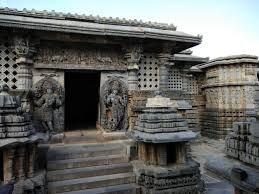
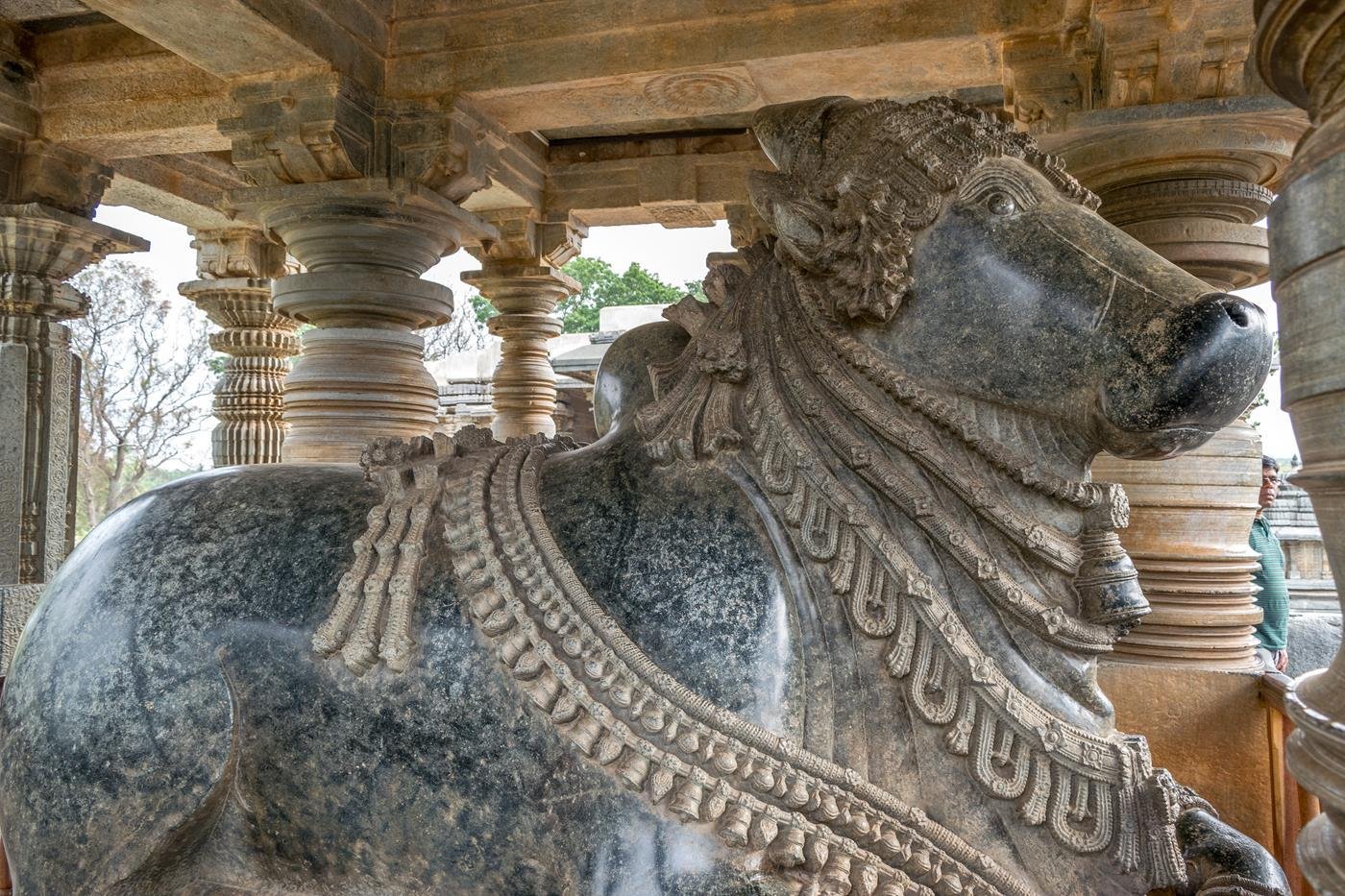
The Hoysaleswara temple is a Shaivism tradition monument, yet reverentially includes many themes from Vaishnavism and Shaktismtradition of Hinduism, as well as images from Jainism. The Hoysaleswara temple is a twin-temple dedicated to Hoysaleswara and Santaleswara Shiva lingas, named after the masculine and feminine aspects, both equal and joined at their transept. It has two Nandi shrines outside, where each seated Nandi face the respective Shiva linga inside. The temple includes a smaller sanctum for the Hindu Sun god Surya. It once had superstructure towers, but no longer and the temple looks flat.The temple faces east, though the monument is presently visited from the north side. Both the main temples and the Nandi shrines are based on a square plan.The temple was carved from soapstone. It is notable for its sculptures, intricate reliefs, detailed friezes as well its history, iconography, inscriptions in North Indian and South Indian scripts. The temple artwork provides a pictorial window into the life and culture in the 12th century South India. About 340 large reliefs depict the Hindu theology and associated legends. Numerous smaller friezes narrate Hindu texts such as the Ramayana, the Mahabharata and the Bhagavata Purana. Some friezes below large reliefs portray its narrative episodes.
Recent Posts

Shri Kaamkoteeshwar Mandir, Varanasi – History & Significance
In the heart of Kashi, the eternal city of Lord Shiva, where the Ganges flows with celestial grace, stands the Shri Kaamkoteeshwar Mandir. This sacred Sannidhi is not merely a temple but a profound spiritual bridge between the Northern…

ओ सांवरे तूने ही मुझको संभाला – Lyrics & Meaning
ओ सांवरे तूने ही मुझको संभाला – A Prayer to Shyam Origin & Spiritual Essence Why This Bhajan Resonates Devotees chant this when overwhelmed by life’s storms—the refrain ‘तूने ही मुझको संभाला’ is the soul’s sigh of relief: “You…

कथा ये है महाराज मेरे की – Lyrics & Meaning
कथा ये है महाराज मेरे की छत्रपति संभाजी महाराज – A Prayer to Chhatrapati Sambhaji Maharaj Origin & Spiritual Essence Why This Bhajan Resonates Devotees chant this when their spirit feels tested—its powerful refrain “महाराज मेरे” is a soul’s…

Rigveda Samhita Yathartha Anuvada (ऋग्वेद संहिता यथार्थ अनुवाद) – Complete Set with Anvayartha & Hindi/English Translation
The Rigveda is the oldest surviving scripture of humanity and the foundational text of Sanātana Dharma. For serious students, scholars, UPSC aspirants studying ancient Indian history, Sanskrit learners, and spiritual seekers, a precise and grammatically structured translation is indispensable.…

आना भी अकेला है जाना भी अकेला है – Lyrics & Meaning | BharatTemples
आना भी अकेला है जाना भी अकेला है – A Prayer to the Divine Witness Origin & Spiritual Essence Why This Bhajan Resonates Devotees turn to this bhajan in moments of deep reflection—when life’s attachments begin to ache. The…

माता शेरावाली के द्वार जो भी जाता है – Lyrics & Meaning
माता शेरावाली के द्वार जो भी जाता है – A Prayer to Maa Sherawali Origin & Spiritual Essence Why This Bhajan Resonates Devotees turn to this bhajan in times of fear or uncertainty—its promise that no one leaves Maa’s…

मार लेना सपणी उबार लेणा भवरा – Lyrics & Meaning
मार लेना सपणी उबार लेणा भवरा – A Prayer to the Divine Beloved Origin & Spiritual Essence Why This Bhajan Resonates Devotees chant this in moments of deep vulnerability—its cry of “मार लेना सपणी, उबार लेणा भवरा” is the…

हमें श्याम सुंदर भरोसा तुम्हारा – Lyrics & Meaning
हमें श्याम सुंदर भरोसा तुम्हारा – A Prayer to Shyam Sundar Origin & Spiritual Essence Why This Bhajan Resonates Devotees chant this when feeling alone—its refrain ‘de do sahara’ is the soul’s cry for divine support. Lyrics in Hindi…

Mere Satguru Ne Di Thi Davai Lyrics in Hindi & Meaning
Mere Satguru Ne Di Thi Davai: Invoking the Guru’s Liberating Wisdom This soul-stirring bhajan venerates the Satguru (True Spiritual Master) as the divine physician who dispenses the only remedy for life’s deepest sufferings. Composed by Sant Karmaveer Tufani, it…

Janm Diyo Thari Maa Dukh Dekhiyo Lyrics in Hindi & Meaning
जन्म दियो थारी माँ दुख देखियो (Maa’s Grief Upon Birthing You) This soul-stirring Chetavani Bhajan (admonitory hymn) is addressed to the Divine Mother (Maa) – a call for repentance when children forget their filial duties in the dark age…