
Contents
Introduction & Spiritual Essence
Nestled within the spiritual labyrinth of Varanasi, specifically at the revered Dasaswamedh Ghat, lies the Prayag Madhav Temple. This ancient shrine is dedicated to Lord Vishnu in the form of Prayag Madhav, the Lord of Prayag (Allahabad/Prayagraj). While the physical Prayag Teerth (confluence of rivers) is located in Prayagraj, this temple holds a unique significance within the sacred geography of Kashi.
The deity is revered as a Swayambhu (self-manifested) form of Lord Vishnu. According to the sacred Kashi Khand of the Skanda Purana, worshipping Prayag Madhav is equivalent to bathing in the holy confluence of the Ganga, Yamuna, and Saraswati rivers.
Phalaśruti: Spiritual Benefits
Devotees visit this temple seeking liberation from the cycle of birth and death (Moksha). As per scriptural records, a single darshan of Prayag Madhav washes away sins accumulated over lifetimes. The temple is particularly significant for:
- Cleansing Ancestral Karma: Performing Shraddha rituals here is believed to grant peace to departed souls.
- Wealth and Prosperity: Worshipping the Madhav form of Vishnu blesses devotees with food grains and financial stability.
- Family Harmony: Couples visit to seek blessings for a happy married life.
Historical Origins & Scriptural Legend
The history of Prayag Madhav Temple is deeply embedded in the ancient texts of Sanatana Dharma. It is not merely a structure built by a king, but a spot sanctified by divine mythology.
The Scriptural Reference (Kashi Khand)
According to the Skanda Purana, specifically the Kashi Khand section, there exists a celestial Teerth named Prayag Teerth located to the north of the Dasaswamedh Ghat. In the era when Sage Ved Vyas composed the Puranas, Varanasi had five primary bathing ghats: Assi, Dasaswamedh, Manikarnika, Panchganga, and Varuna.
The text reveals that the Prayag Teerth mentioned in the scriptures merges with the Dasaswamedh area. Therefore, devotees consider the waters here and the temple premises synonymous with the holy Prayag.
Local Tradition and Renovation
While the exact century of the original structure is lost to the mists of time, it is believed to be over 1,000 years old. The temple has undergone several renovations to preserve its sanctity. Some locals, as referenced in Varanasi Vaibhav by Pt. Kuber Nath Sukul, also refer to the deity as Dharani Varaha. The temple stands today as a testament to the resilience of Kashi’s spiritual heritage.
Architectural Marvels
The architecture of Prayag Madhav Temple is a classic example of the Nagara style blended with the vernacular temple aesthetics of Varanasi. Unlike the towering stone temples of South India, the sanctity of this temple is preserved within a more intimate, brick-and-stone structure that merges with the ghats.
Key Architectural Elements
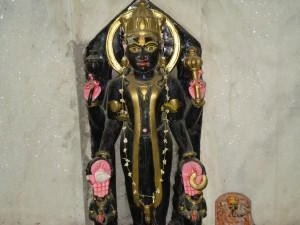
- The Garbhagriha (Sanctum Sanctorum): The shrine is compact, housing the idol of Lord Prayag Madhav. The deity is depicted with four arms, holding the Shankha (conch), Chakra (discus), Gada (mace), and Padma (lotus).
- The Mandapa: A small prayer hall allows devotees to sit and offer prayers, though the space is often bustling during peak hours.
- Integration with the Ghat: The temple is architecturally integrated into the steps of Dasaswamedh Ghat, making it accessible to pilgrims performing the Ganga Snan (bath).
Currently, the temple is maintained by local trust bodies. While it does not hold an ASI or UNESCO tag, its value is immense as a protected heritage monument of Varanasi’s religious landscape.
Darshan & Ritual Logistics (2026 Season)
The temple follows a flexible schedule typical of Kashi temples, allowing for morning and evening worship aligned with the Ganga Aarti.
Daily Timings
| Session | Timings |
|---|---|
| Morning Darshan | 05:00 AM – 12:00 PM |
| Evening Darshan | 04:00 PM – 09:30 PM |
| Major Aartis | Morning (6:00 AM) & Evening (7:00 PM) |
Note: Timings may vary slightly during festivals or extreme weather conditions. It is advisable to confirm locally.
Key Sevas & Booking
Though a smaller shrine, the temple offers significant ritual opportunities:
- Abhishekam: Ritual bathing of the deity with Panchamrit (milk, yogurt, honey, ghee, sugar). Best performed in the morning.
- Archana: Recitation of the 108 names of Lord Vishnu/Prayag Madhav.
- Special Prayers: For ancestors (Tarpan) during Pitru Paksha or Amavasya.
Online Seva Booking: As of 2026, for major festivals like Deepawali and Guru Purnima, bookings can often be made through the Varanasi Municipal Corporation portal or via the trusted Kashi Vishwanath Corridor booking platform. However, for Prayag Madhav Temple, it is recommended to book directly through the temple trust representatives or authorized local Pandits on-site.
2026 Festival Calendar
Mark your calendars for these auspicious dates to visit Prayag Madhav Temple:
- Deepawali: October 18, 2026
- Maha Shivaratri: February 26, 2026
- Dev Deepawali: November 5, 2026 (Grand celebrations at Dasaswamedh Ghat)
- Chhath Puja: October 27–28, 2026
Practical Visitor Guidance
Visiting a temple located on the ghats of Varanasi requires specific preparations.
Dress Code & Etiquette
Modesty is paramount. Visitors should dress traditionally (Kurtas, Sarees, or modest western attire). Avoid shorts or sleeveless tops. The temple is a space of high spiritual vibration, so maintain silence and respect during prayers.
Photography & Electronics
- Photography: Generally permitted in the outer areas but restricted inside the sanctum sanctorum. Flash photography is discouraged.
- Mobile Lockers: Since the temple is at the ghats, there are no official lockers inside. It is advisable to carry minimal luggage or use private locker services available near Dasaswamedh Ghat.
Crowd Management & Accessibility
- Best Time to Visit: 7:00 AM to 9:00 AM offers the most peaceful darshan.
- Seasonal Advice: In summer (May-June), the ghats become very hot. Carry a water bottle, an umbrella, and wear slippers. In winter (December-January), a light jacket is sufficient.
- Accessibility: The temple is at the base of the Dasaswamedh Ghat steps. While the steps are wide, they are steep. Wheelchair access is challenging; assistance may be required.
Pilgrimage Connectivity
How to Reach
By Air: The nearest airport is Lal Bahadur Shastri International Airport (VNS), located approximately 25 km from Dasaswamedh Ghat.
By Train: Varanasi Junction (BSB) is the main railway station, about 5 km away. From there, auto-rickshaws are readily available.
By Road: The temple is located off National Highway 19. To reach the ghat, vehicles must be parked at designated parking areas near the ghats. The final approach is on foot or by cycle-rickshaw through the narrow alleys of the old city.
Nearby Sacred Sites (The Kashi Circuit)
To complete your pilgrimage, visit these nearby sites:
- Kashi Vishwanath Temple: Located just 5-10 minutes walking distance from Dasaswamedh Ghat. The main Jyotirlinga.
- Durga Temple (Durga Kund): Approximately 2 km away. Famous for its red color and association with the Divine Mother.
- Sankat Mochan Hanuman Temple: Located on the banks of the Assi Ghat, roughly 3 km away.
Frequently Asked Questions (FAQ)
1. Is there a VIP darshan entry for Prayag Madhav Temple?
Unlike the Kashi Vishwanath Temple, Prayag Madhav does not have a formal VIP entry system. Darshan is generally open to all, and the crowd is manageable except during major festivals like Dev Deepawali.
2. Can I perform Shraddha (Ancestral rites) at this temple?
Yes. In fact, this temple is highly recommended for Shraddha ceremonies. Being part of the Dasaswamedh Ghat area (associated with the five ancient ghats), it is considered a potent site for fulfilling Pitru Tarpan rituals.
3. Is the temple accessible by vehicle?
No. The temple is located at the base of Dasaswamedh Ghat. To reach it, you must park your vehicle at the nearest designated parking lot and walk or take a cycle-rickshaw through the old city lanes.
4. What is the significance of the name “Prayag Madhav” in Varanasi?
While Prayag (Prayagraj) is geographically distinct, this temple establishes the spiritual equivalence of the Dasaswamedh Ghat. It signifies that taking a bath in the Ganga here yields the same religious merit as bathing at the Sangam in Prayagraj.
5. Are there any accommodation options nearby?
Yes, the Varanasi Ghats area is dotted with Dharamshalas and hotels. Popular options include the Brijrama Palace and various budget guesthouses near Dashashwamedh.
Recent Posts

Shri Kaamkoteeshwar Mandir, Varanasi – History & Significance
In the heart of Kashi, the eternal city of Lord Shiva, where the Ganges flows with celestial grace, stands the Shri Kaamkoteeshwar Mandir. This sacred Sannidhi is not merely a temple but a profound spiritual bridge between the Northern…

ओ सांवरे तूने ही मुझको संभाला – Lyrics & Meaning
ओ सांवरे तूने ही मुझको संभाला – A Prayer to Shyam Origin & Spiritual Essence Why This Bhajan Resonates Devotees chant this when overwhelmed by life’s storms—the refrain ‘तूने ही मुझको संभाला’ is the soul’s sigh of relief: “You…

कथा ये है महाराज मेरे की – Lyrics & Meaning
कथा ये है महाराज मेरे की छत्रपति संभाजी महाराज – A Prayer to Chhatrapati Sambhaji Maharaj Origin & Spiritual Essence Why This Bhajan Resonates Devotees chant this when their spirit feels tested—its powerful refrain “महाराज मेरे” is a soul’s…

Rigveda Samhita Yathartha Anuvada (ऋग्वेद संहिता यथार्थ अनुवाद) – Complete Set with Anvayartha & Hindi/English Translation
The Rigveda is the oldest surviving scripture of humanity and the foundational text of Sanātana Dharma. For serious students, scholars, UPSC aspirants studying ancient Indian history, Sanskrit learners, and spiritual seekers, a precise and grammatically structured translation is indispensable.…

आना भी अकेला है जाना भी अकेला है – Lyrics & Meaning | BharatTemples
आना भी अकेला है जाना भी अकेला है – A Prayer to the Divine Witness Origin & Spiritual Essence Why This Bhajan Resonates Devotees turn to this bhajan in moments of deep reflection—when life’s attachments begin to ache. The…

माता शेरावाली के द्वार जो भी जाता है – Lyrics & Meaning
माता शेरावाली के द्वार जो भी जाता है – A Prayer to Maa Sherawali Origin & Spiritual Essence Why This Bhajan Resonates Devotees turn to this bhajan in times of fear or uncertainty—its promise that no one leaves Maa’s…

मार लेना सपणी उबार लेणा भवरा – Lyrics & Meaning
मार लेना सपणी उबार लेणा भवरा – A Prayer to the Divine Beloved Origin & Spiritual Essence Why This Bhajan Resonates Devotees chant this in moments of deep vulnerability—its cry of “मार लेना सपणी, उबार लेणा भवरा” is the…

हमें श्याम सुंदर भरोसा तुम्हारा – Lyrics & Meaning
हमें श्याम सुंदर भरोसा तुम्हारा – A Prayer to Shyam Sundar Origin & Spiritual Essence Why This Bhajan Resonates Devotees chant this when feeling alone—its refrain ‘de do sahara’ is the soul’s cry for divine support. Lyrics in Hindi…

Mere Satguru Ne Di Thi Davai Lyrics in Hindi & Meaning
Mere Satguru Ne Di Thi Davai: Invoking the Guru’s Liberating Wisdom This soul-stirring bhajan venerates the Satguru (True Spiritual Master) as the divine physician who dispenses the only remedy for life’s deepest sufferings. Composed by Sant Karmaveer Tufani, it…

Janm Diyo Thari Maa Dukh Dekhiyo Lyrics in Hindi & Meaning
जन्म दियो थारी माँ दुख देखियो (Maa’s Grief Upon Birthing You) This soul-stirring Chetavani Bhajan (admonitory hymn) is addressed to the Divine Mother (Maa) – a call for repentance when children forget their filial duties in the dark age…