
Contents
Introduction & Spiritual Essence: The Amla Spring of Grace
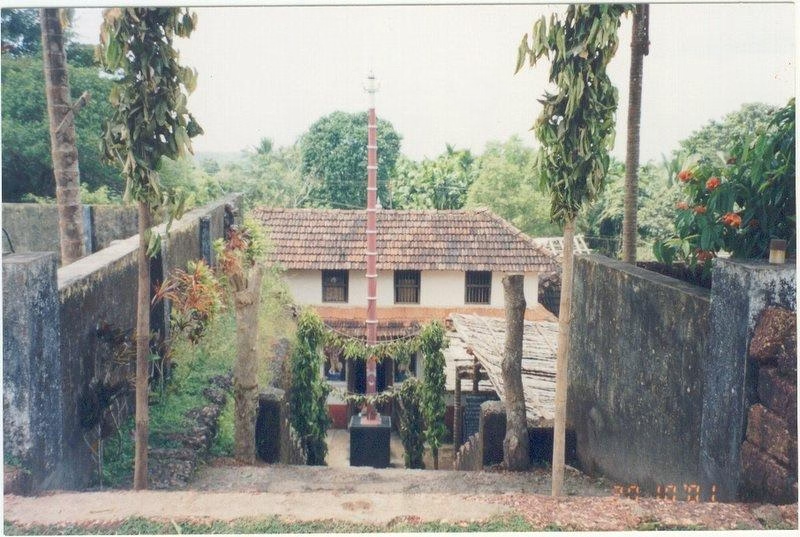
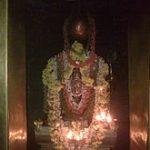
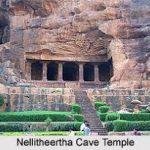
Nestled amidst the verdant landscapes of Dakshina Kannada, approximately 15 kilometers from the coastal city of Mangalore, lies the Nellitheertha Cave Temple. Known locally in Tulu as Nellithirtha Guhalaya, this shrine is a sanctuary of introspection and physical humility. The temple is a devoted abode of Sri Somanatheshwara, a manifestation of Lord Shiva.
The etymology of the name holds deep spiritual significance; Nelli refers to the Indian Gooseberry (Amla), and Theertha means holy water. Legend suggests that the natural spring flowing through the cave has a taste reminiscent of the sacred Amla fruit, symbolizing the nectar of immortality and health.
The Phalaśruti: Why Devotees Visit
Devotees visit the Nellitheertha Cave Temple for multiple spiritual and temporal benefits (Phalaśruti):
- Cleansing of Ancestral Karma: The holy waters within the cave are believed to wash away sins carried over from past lives and purify the lineage of the devotee.
- Removal of Blockages: Just as one must crawl physically to enter the sanctum, it symbolizes surrendering the ego. It is believed to help remove career blockages and mental stagnation.
- Healing Energies: The mud inside the cave is considered to have immense healing properties. Devotees collect a pinch of this sacred soil (Prasada) to cure ailments and protect their homes.
Historical Origins & The Legend of Sage Jabali
According to temple records and oral folklore, the origins of this sacred site are tied to the era of the 1487 CE. However, the mythological roots go much deeper, intertwining with the grand narrative of the Puranas.
The Sthala Purana: Arunasura & Gayatri Mantra
Tradition holds that the sage Jabali performed intense penance at this very location. During the Treta Yuga, a powerful demon (Asura) named Arunasura obtained the sacred Gayatri Mantra from Sage Jabali and began misusing its divine power to harass the world. Realizing the error caused by his inadvertent blessing, Sage Jabali performed a severe penance to Goddess Durga.
The Goddess appeared and promised to end the terror. She confronted Arunasura and vanquished him at the nearby holy town of Kateel. Pleased by Jabali’s devotion, the Divine Trinity—Devi Durga, Lord Shiva, and Lord Vishnu—decided to reside permanently in this region to bestow blessings upon humanity. Lord Shiva took up residence in the Nellitheertha Cave, establishing himself as Sri Somanatheshwara.
Architectural Marvels & The Cave Structure
The temple is a unique blend of natural geological formation and traditional South Indian temple architecture (Dravida style). Unlike typical structural temples built entirely by man, Nellitheertha is a natural cave temple.
The Sacred Cave
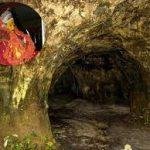
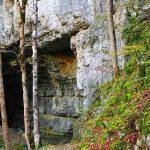
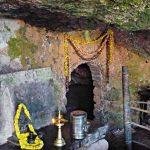
The cave extends approximately 200 meters (660 feet) into the earth. The architecture here is dictated by nature itself:
- The Approach: The passage is narrow and low, requiring devotees to crawl on their knees. This physical act of bowing down is an essential architectural element that enforces humility before entering the sanctum.
- The Interior Reservoir: Deep within the cave lies a natural pond fed by underground springs. The water level remains constant and is the source of the “Theertha.”
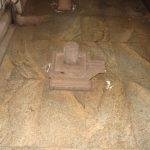
- The Sanctum Sanctorum: At the end of the crawl, a naturally formed Shivalinga (Swayambhu) resides, bathed perpetually by the dripping waters of the cave.
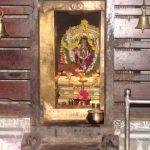
Outside the cave entrance is a compact Mandapa (pillared hall) and a shrine for Lord Ganesha, built in the traditional Kerala-Karnataka border architectural style, featuring sloping tiled roofs supported by wooden beams.
Darshan, Sevas & Ritual Logistics
Given the physical constraints of the cave, darshan is a unique experience. The temple administration manages the flow carefully to ensure safety and sanctity.
Daily Timings (2026 Schedule)
Note: Timings are subject to seasonal changes and local rituals.
| Session | Opening Time | Closing Time | Special Note |
|---|---|---|---|
| Morning | 6:00 AM | 1:00 PM | Best time for peaceful darshan |
| Evening | 4:00 PM | 8:30 PM | Closes earlier on weekends |
Key Sevas & Booking
- Abhishekam: Performed on Mondays and Maha Shivaratri. Requires prior notice.
- Rudrabhishekam: A grand ritual for planetary alignment correction.
- Archana: Can be performed by offering flowers and bilva leaves at the outer shrine.
- Online Seva Booking: While the temple primarily handles rituals physically, current updates suggest contacting the local temple office at the Karnataka Hindu Religious Institutions & Charitable Endowments (HRICE) portal for specific festival bookings.
2026 Festival Calendar
- Shivaratri (Feb 26, 2026): The temple remains open 24 hours. Special lighting and Abhishekam are performed every 3 hours.
- Pradosh (Monthly): Trayodashi days are significant for special evening darshans.
- Karthika Deepam (Nov 2026): Lighting of lamps surrounding the cave entrance.
Practical Visitor Guidance
Dress Code & Etiquette
Modesty is paramount. Men are required to wear Dhoti or Kurta (no shorts/trousers). Women should wear Saree or traditional Salwar Kameez. Western attire is strictly prohibited within the cave premises.
Physical Constraints & Safety
Important: The cave crawl requires physical fitness. It is not recommended for those with severe claustrophobia, high blood pressure, or pregnant women. Elderly devotees can offer prayers at the main entrance sanctum (outer).
Crowd Management
- Best Hours: Tuesday and Thursday mornings (6:00 AM – 8:00 AM) are the least crowded.
- Weekends: Expect significant crowds from Mangalore; arrive by 5:30 AM.
- Seasonal Advice: During the monsoon (June-September), the steps can be slippery; wear rubber-soled sandals. In May (summer), carry water as the humidity inside the cave rises.
- Lockers: Small bags and mobile phones are allowed, but large luggage should be left in vehicles or use available cloakrooms (ask the trust office).
Pilgrimage Connectivity
How to Reach Nellitheertha
By Air: The nearest airport is Mangalore International Airport (IXE), located approximately 15 km away (approx. 40 mins by cab).
By Rail: The nearest major railway junction is Mangalore Central (MAQ) or Mangalore Junction (MAJN). From there, hire a taxi or take a local bus to Nellitheertha via Kavoor.
By Road: The temple is well-connected via the Mangalore-Udupi Highway (NH 66). Take the deviation toward Nellitheertha/Baje. Local buses are available from Mangalore’s K.S.R.T.C. bus stand.
Nearby Sacred Sites (The Pilgrimage Circuit)
To enrich your spiritual journey, plan a visit to these nearby shrines:
- Kateel Sri Durga Parameshwari Temple (6 km): The very spot where Goddess Durga vanquished Arunasura. A must-visit after Nellitheertha.
- Kadri Manjunath Temple (12 km): One of the oldest temples in Mangalore, housing a unique bronze statue of Lord Manjunatha.
- Kumbhashi Kanchika Devi Temple (8 km): A powerful Shakti temple known for fulfilling wishes regarding childbirth and prosperity.
Photo Gallery
Frequently Asked Questions (FAQ)
1. Is there a VIP or special entry for darshan?
No. Due to the narrow nature of the cave (only one person can crawl at a time), there is no VIP darshan facility. All devotees must proceed on foot. However, physically challenged or elderly visitors can offer prayers from the outer sanctum.
2. What is the significance of the mud inside the cave?
The cave is closed for devotees for six months (during the monsoon). It is believed that this is the resting period for the deities and rishis, and the mud regains its potency. Devotees believe this soil possesses medicinal properties and take a small amount home for worship and healing.
3. Are there accommodation facilities nearby?
While there are no hotels directly at the cave, the town of Kateel (6 km away) offers decent lodges and guest houses. For more options, Mangalore city (15 km) has a wide range of hotels.
4. Is photography allowed inside the cave?
Strictly prohibited inside the cave due to safety concerns (low light and narrow passages) and to maintain sanctity. Photography is allowed in the outer courtyard and Mandapa.
5. How far is Nellitheertha from Udupi?
It is approximately 50 km from Udupi. The drive along the NH66 takes about 1 hour to 1 hour 15 minutes.
Recent Posts

Shri Kaamkoteeshwar Mandir, Varanasi – History & Significance
In the heart of Kashi, the eternal city of Lord Shiva, where the Ganges flows with celestial grace, stands the Shri Kaamkoteeshwar Mandir. This sacred Sannidhi is not merely a temple but a profound spiritual bridge between the Northern…

ओ सांवरे तूने ही मुझको संभाला – Lyrics & Meaning
ओ सांवरे तूने ही मुझको संभाला – A Prayer to Shyam Origin & Spiritual Essence Why This Bhajan Resonates Devotees chant this when overwhelmed by life’s storms—the refrain ‘तूने ही मुझको संभाला’ is the soul’s sigh of relief: “You…

कथा ये है महाराज मेरे की – Lyrics & Meaning
कथा ये है महाराज मेरे की छत्रपति संभाजी महाराज – A Prayer to Chhatrapati Sambhaji Maharaj Origin & Spiritual Essence Why This Bhajan Resonates Devotees chant this when their spirit feels tested—its powerful refrain “महाराज मेरे” is a soul’s…

Rigveda Samhita Yathartha Anuvada (ऋग्वेद संहिता यथार्थ अनुवाद) – Complete Set with Anvayartha & Hindi/English Translation
The Rigveda is the oldest surviving scripture of humanity and the foundational text of Sanātana Dharma. For serious students, scholars, UPSC aspirants studying ancient Indian history, Sanskrit learners, and spiritual seekers, a precise and grammatically structured translation is indispensable.…

आना भी अकेला है जाना भी अकेला है – Lyrics & Meaning | BharatTemples
आना भी अकेला है जाना भी अकेला है – A Prayer to the Divine Witness Origin & Spiritual Essence Why This Bhajan Resonates Devotees turn to this bhajan in moments of deep reflection—when life’s attachments begin to ache. The…

माता शेरावाली के द्वार जो भी जाता है – Lyrics & Meaning
माता शेरावाली के द्वार जो भी जाता है – A Prayer to Maa Sherawali Origin & Spiritual Essence Why This Bhajan Resonates Devotees turn to this bhajan in times of fear or uncertainty—its promise that no one leaves Maa’s…

मार लेना सपणी उबार लेणा भवरा – Lyrics & Meaning
मार लेना सपणी उबार लेणा भवरा – A Prayer to the Divine Beloved Origin & Spiritual Essence Why This Bhajan Resonates Devotees chant this in moments of deep vulnerability—its cry of “मार लेना सपणी, उबार लेणा भवरा” is the…

हमें श्याम सुंदर भरोसा तुम्हारा – Lyrics & Meaning
हमें श्याम सुंदर भरोसा तुम्हारा – A Prayer to Shyam Sundar Origin & Spiritual Essence Why This Bhajan Resonates Devotees chant this when feeling alone—its refrain ‘de do sahara’ is the soul’s cry for divine support. Lyrics in Hindi…

Mere Satguru Ne Di Thi Davai Lyrics in Hindi & Meaning
Mere Satguru Ne Di Thi Davai: Invoking the Guru’s Liberating Wisdom This soul-stirring bhajan venerates the Satguru (True Spiritual Master) as the divine physician who dispenses the only remedy for life’s deepest sufferings. Composed by Sant Karmaveer Tufani, it…

Janm Diyo Thari Maa Dukh Dekhiyo Lyrics in Hindi & Meaning
जन्म दियो थारी माँ दुख देखियो (Maa’s Grief Upon Birthing You) This soul-stirring Chetavani Bhajan (admonitory hymn) is addressed to the Divine Mother (Maa) – a call for repentance when children forget their filial duties in the dark age…