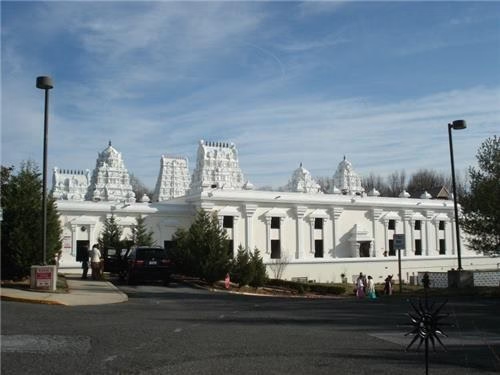
Shree Vishnumurthy Temple: The Definitive Pilgrimage Guide
1. Introduction & Spiritual Essence
Perched on the serene coastal belt of Kulai, just north of Mangalore, stands the Shree Vishnumurthy Temple. This ancient sanctuary is dedicated to Lord Vishnu, specifically in his form as Vishnumurthy, revered as the protector of the universe. The temple holds a unique spiritual resonance in the Tuluva region, drawing devotees seeking protection from negative influences and the blessings of prosperity.
Deity & Form: The primary deity, Shree Vishnumurthy, is a Swayambhu (self-manifested) murti. The idol is carved from saligrama stone and is estimated to be over 600 years old. Unlike the common depictions of Lord Vishnu, this form is unique to the coastal Karnataka tradition.
Phalaśruti: The Fruits of Visitation
Why do devotees undertake this pilgrimage? According to the Shree Vishnumurthy Temple Stotra, the spiritual benefits (Phalaśruti) of offering prayers here are profound:
Protection from Evil: Devotees believe that a sincere darshan here cleanses ancestral karma and removes Drishti Dosha (evil eye).
Resolution of Conflicts: It is highly revered for bringing harmony to families and resolving legal disputes.
Health & Well-being: Ritual offerings are believed to cure chronic ailments and provide physical stability.
2. Historical Origins & Scriptural Legend
The history of Shree Vishnumurthy Temple is a blend of oral tradition and modern discovery. While hard historical documents regarding its exact founding are scarce, the consensus among historians places its origin in the 15th or 16th century.
The Discovery of 1911: Tradition holds that the temple was not always a structured complex. Around 1911, Venkatramana Hebbar, a local archaeologist and historian, discovered a small shrine in a ruined state amidst the dense forest and shrubs. Recognizing the sanctity of the site, he spearheaded the reconstruction of the shrine with the help of local villagers. His son, Shri Ramakrishna Hebbar, continued this noble legacy, leading to the step-by-step renovation that preserves the temple today.
Scriptural Reference: While the temple does not feature in major Puranic texts, the local Sthala Purana (oral legend) suggests that the region, once known as Kulgram, was a focal point for ancient Brahminical settlements, with the deity manifesting to protect the paddy fields from natural calamities.
3. Architectural Marvels
The temple showcases a distinctive blend of traditional Dravida and local Tuluva architectural styles. The structure is designed according to Vastu Shastra principles, ensuring a flow of positive energy from the eastern plains towards the sanctum.
The Sanctum (Garbhagriha): The inner sanctum is compact and houses the Swayambhu idol of Vishnumurthy, carved with intricate details that reflect the craftsmanship of the medieval period.
The Mandapas: A spacious Mukha Mandapa (entrance hall) allows for ritual gatherings, while the exterior walls feature sculptures of Dwarapalakas (guardian deities).
Surroundings: The temple faces the eastern plains of paddy fields, symbolizing the deity’s role as the guardian of agriculture and nature.
Although the temple is not designated by the Archaeological Survey of India (ASI) or UNESCO, it stands as a vital heritage site preserving the unique Bhuta Kola and Daiva traditions of coastal Karnataka.
4. Darshan & Ritual Logistics
Planning your visit requires understanding the daily schedule and the specific Sevas offered. The temple follows a traditional daily routine with morning and evening rituals.
Devotees can book specific rituals. While standard darshan is open to all, special Sevas require prior registration.
Abhishekam: Performed on Tuesdays and Fridays. Requires booking 24 hours in advance.
Archana: Can be performed daily. Offerings include Tulasi and lotus flowers.
Sahasranama Archana: A 1000-name recitation held on specific auspicious days.
Online Booking: Visit the official temple trust website (linked in contact section) or use general platforms like BookMyPooja for seamless registration.
2026 Festival Calendar
Key dates for 2026 to plan your pilgrimage:
Brahmotsava: March 15 – March 23, 2026 (Phalguna Maasa).
Narashima Jayanti: April 26, 2026 (High significance for this region).
Vishnu Sahasranama Parayana: Fridays of Shravana Maasa (July – August 2026).
Deepavali: October 18, 2026 (Special Alankara and Deeparadhana).
5. Practical Visitor Guidance
To ensure a smooth and respectful darshan, please adhere to the following guidelines.
Dress Code: Traditional attire is mandatory. Men must wear dhotis or pants with shirts; women should wear sarees, salwar kameez, or traditional skirts. Avoid western attire.
Photography: Photography is strictly prohibited inside the sanctum sanctorum. Permitted in the outer courtyards, but flash must be disabled.
Mobile Lockers: A free locker facility is available at the entrance for electronic devices and leather items, as these are not allowed inside.
Accessibility: The temple premises are generally flat, but the sanctum has a single step. Wheelchair access is limited to the outer mandapa.
Crowd Management & Seasonal Advice
Best Hours: For a peaceful darshan, visit between 8:00 AM and 10:00 AM on weekdays. Avoid weekends between 5:00 PM and 7:00 PM.
Summer (March–May): Coastal Karnataka can get humid. Carry a reusable water bottle (drinking water is available at the temple well).
Monsoon (June–September): The West Coast Highway (NH-66) can experience heavy rains. Carry an umbrella and check local transport alerts.
6. Pilgrimage Connectivity
The temple is strategically located along the bustling coastal corridor, making it easily accessible.
How to Reach
By Air: The nearest airport is Mangalore International Airport (IXE), approximately 20 km away (35-40 minutes by taxi).
By Rail: The closest railway station is Surathkal (5 km). Alternatively, Mangalore Central (15 km) is a major hub.
By Road: The temple is located just off National Highway 66 (NH-66) (formerly NH-17). It is a 10-minute walk from the Kulai bus stop. Local buses from Mangalore to Udupi/Kundapura halt at Kulai.
Enhance your spiritual journey by visiting these nearby destinations:
Śrī Kanyāyāna Temple (Mulki): Located just 5 km south, this temple is dedicated to Lord Shiva and is famous for its association with the philosopher Madhvacharya.
St. Mary’s Island: A short ferry ride from Malpe Beach, offering geological marvels and a chapel dedicated to Mother Mary.
Adi Keshava Temple (Ullal): Situated 12 km south, this ancient temple is dedicated to Lord Vishnu and is an architectural gem of the Tuluva dynasty.
7. Frequently Asked Questions (FAQ)
Is there a VIP darshan entry?
No, the Shree Vishnumurthy Temple operates on a egalitarian darshan system. However, purchasing a specific Seva ticket (like Abhishekam) allows for priority access during the ritual time.
What is the best time to visit with family?
Weekday mornings (8:00 AM – 10:00 AM) are ideal. The weather is cooler, and the crowds are manageable, allowing children and elderly members to offer prayers comfortably.
Are there accommodation facilities near the temple?
The temple trust does not have an attached guest house. However, numerous lodges and homestays are available in Surathkal (5 km) and Mangalore (15 km) ranging from budget to premium categories.
Is non-vegetarian food allowed near the temple?
While the temple premises are strictly vegetarian, the town of Kulai and Surathkal are cosmopolitan. However, devotees are requested to avoid consuming non-vegetarian food before entering the temple complex as a mark of respect.
Can I contact the temple for specific rituals?
Yes, you can contact the temple administration during working hours (9:00 AM to 1:00 PM) for bookings and inquiries.
In the heart of Kashi, the eternal city of Lord Shiva, where the Ganges flows with celestial grace, stands the Shri Kaamkoteeshwar Mandir. This sacred Sannidhi is not merely a temple but a profound spiritual bridge between the Northern…
ओ सांवरे तूने ही मुझको संभाला – A Prayer to Shyam Origin & Spiritual Essence Why This Bhajan Resonates Devotees chant this when overwhelmed by life’s storms—the refrain ‘तूने ही मुझको संभाला’ is the soul’s sigh of relief: “You…
कथा ये है महाराज मेरे की छत्रपति संभाजी महाराज – A Prayer to Chhatrapati Sambhaji Maharaj Origin & Spiritual Essence Why This Bhajan Resonates Devotees chant this when their spirit feels tested—its powerful refrain “महाराज मेरे” is a soul’s…
The Rigveda is the oldest surviving scripture of humanity and the foundational text of Sanātana Dharma. For serious students, scholars, UPSC aspirants studying ancient Indian history, Sanskrit learners, and spiritual seekers, a precise and grammatically structured translation is indispensable.…
आना भी अकेला है जाना भी अकेला है – A Prayer to the Divine Witness Origin & Spiritual Essence Why This Bhajan Resonates Devotees turn to this bhajan in moments of deep reflection—when life’s attachments begin to ache. The…
माता शेरावाली के द्वार जो भी जाता है – A Prayer to Maa Sherawali Origin & Spiritual Essence Why This Bhajan Resonates Devotees turn to this bhajan in times of fear or uncertainty—its promise that no one leaves Maa’s…
मार लेना सपणी उबार लेणा भवरा – A Prayer to the Divine Beloved Origin & Spiritual Essence Why This Bhajan Resonates Devotees chant this in moments of deep vulnerability—its cry of “मार लेना सपणी, उबार लेणा भवरा” is the…
हमें श्याम सुंदर भरोसा तुम्हारा – A Prayer to Shyam Sundar Origin & Spiritual Essence Why This Bhajan Resonates Devotees chant this when feeling alone—its refrain ‘de do sahara’ is the soul’s cry for divine support. Lyrics in Hindi…
Mere Satguru Ne Di Thi Davai: Invoking the Guru’s Liberating Wisdom This soul-stirring bhajan venerates the Satguru (True Spiritual Master) as the divine physician who dispenses the only remedy for life’s deepest sufferings. Composed by Sant Karmaveer Tufani, it…
जन्म दियो थारी माँ दुख देखियो (Maa’s Grief Upon Birthing You) This soul-stirring Chetavani Bhajan (admonitory hymn) is addressed to the Divine Mother (Maa) – a call for repentance when children forget their filial duties in the dark age…