
Contents
Introduction & Spiritual Essence
The Udupi Sri Krishna Matha (Kannada: ಉಡುಪಿ ಶ್ರೀ ಕೃಷ್ಣ ಮಠ) is not merely a temple; it is the epicenter of the Ashta Mathas (eight monasteries) of Udupi and the birthplace of the Dvaita (dualism) school of Vedanta philosophy. Dedicated to Lord Krishna in his form as Sri Balkrishna, the deity is revered as the Sanathana Bala Krishna—the eternal child form.
Deity and Form: The presiding deity is a Swayambhu (self-manifested) idol believed to have been discovered by Sri Madhvacharya in the 13th century. The murti is enclosed within a unique silver-plated window featuring nine holes, known as the Navagraha Kindi. Uniquely, the deity is worshipped facing West (Pashchimabhimukha), a rare orientation in temple architecture explained in the Tantrasara Sangraha.
“The temple atmosphere resembles a living ashram, a sanctuary where the eternal sound of bells and the scent of sandalwood merge with the prayers of devotees.”
Phalaśruti: Why Visit?
According to temple tradition and oral legends, devotees visit Udupi Sri Krishna Matha for specific spiritual benefits:
- Ancestral Liberation: It is believed that performing Seva here helps cleanse ancestral karma, offering peace to departed souls.
- Removal of Ignorance: As the seat of the Dvaita philosophy, the temple is said to grant wisdom (Jnana) and clarity of mind.
- Protection: Devotees seek blessings for protection from worldly troubles and the Navagrahas (nine planets), as invoked through the Navagraha Kindi window.
Historical Origins & Scriptural Legend
Founders and Era: The Krishna Matha was established in the 13th century (specifically 1285 CE) by the Vaishnavite saint Jagadguru Sri Madhvacharya. He was the propounder of the Dvaita school of Vedanta, which interprets the universe as dualistic—predominantly independent entities of God and souls.
The Discovery of the Murti: Tradition holds that Madhvacharya recovered the idol of Lord Krishna from a large ball of Gopichandana (sacred mud) while the saint was visiting the Malpe coast near Udupi. Upon instruction from the deity, he installed the idol in the current location. The Sthala Purana recounts that this idol was originally carved by Vishwakarma for Lord Krishna’s wife, Rukmini, and was later covered in layers of sandalwood paste while in Dwaraka before manifesting in Udupi.
Renovations: While the original structure dates back to the 13th century, the temple has undergone several renovations under the patronage of the Ashta Mathas. The current stone and plaster structure reflects contributions from the Vijayanagara era, evident in the heavy usage of oil lamps and stone carvings.
Architectural Marvels
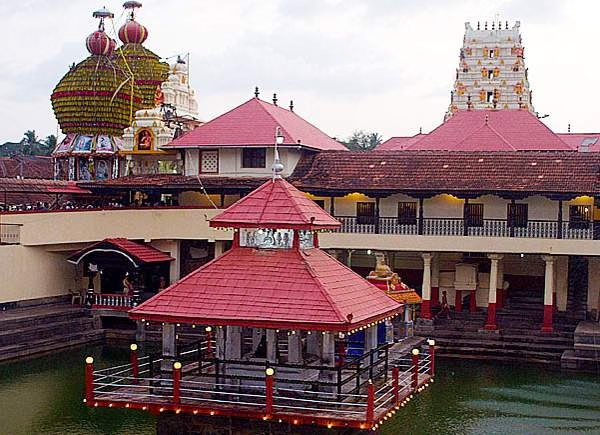
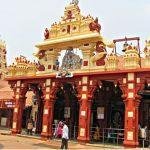
The architecture of Udupi Sri Krishna Matha is a sublime blend of Dravidian aesthetics and monastic functionality. It is designed not just for worship but for the daily rhythm of monastic life (Sampradaya).
Key Architectural Elements
- The Kanakadasa Window (Navagraha Kindi): The most famous feature is the nine-holed silver window through which the Lord gives darshan. Adjacent to this is the Kanakana Kindi, a window arch dedicated to Kanakadasa, a devotee who was granted vision of the Lord through a crack in the outer wall.
- Chandrasala Hall: A hall with an arched entrance adorned with bells and earthen lamps. It provides a serene ambiance for meditation.
- Madhwapushkarani: The holy tank located near the southern entrance, essential for ritual purification before Darshan.
- Panchadhatu Figures: The eastern entrance (used only on Vijaya Dashami) features a five-metal (Panchadhatu) figure of Lord Vishnu mounted on Garuda.
Note: This temple does not hold a UNESCO or ASI protected status as it functions as a living monastic site under the continuous maintenance of the Ashta Mathas.
Darshan & Ritual Logistics
The Matha follows a strict traditional schedule. The deity is worshipped through the silver window, and rituals are performed with precision.
Daily Timings (2026 Schedule)
| Session | Timings | Details |
|---|---|---|
| Morning | 05:30 AM – 1:00 PM | Opening with Mangala Vaikalya. Maha Pooja typically at 10:00 AM. |
| Evening | 5:00 PM – 9:00 PM | Closing with Maha Pooja. Mantra Pushpa is a key evening ritual. |
Key Sevas & Online Booking
The temple administration utilizes a centralized system for the Ashta Mathas. While standard darshan is free, specific Sevas require advance booking via the official Udupi Ashta Matha website.
- Ashta Vrundavana Seva: Performed at 10:00 AM daily.
- Maha Pooja: The primary mid-day ritual.
- Abhishekam: Limited to specific dates; usually performed on Ekadashi or full moon days.
Note: While physical tickets are available at the Matha office, it is highly recommended to book online (Sri Krishna Matha website) to secure your slot for specific Sevas like Ashhta Vrundavana.
2026 Major Festival Dates
- Maha Shivaratri: February 26, 2026 (Observed at the Anantheshwara Temple complex).
- Rama Navami: April 5, 2026.
- Sri Krishna Janmashtami: August 14, 2026 (The grandest celebration in Udupi).
- Navaratri: October 1–9, 2026.
- Deepotsava (Vijaya Dashami): October 1, 2026 (Eastern gate opens).
Practical Visitor Guidance
Dress Code: Strict traditional attire is mandatory. Men must wear Dhoti or formal trousers with a shirt/towel; vests are not permitted. Women should wear sarees, salwar kameez, or traditional attire.
Photography & Mobiles: Photography is strictly prohibited inside the inner sanctum and the courtyard. Mobile phones should be switched to silent mode. Lockers are available at the entrance for electronic devices.
Crowd Management:
Peak Times: Avoid 10:00 AM – 11:30 AM and 6:00 PM – 7:30 PM due to evening rituals.
Seasonal Advice: Udupi is humid. Carry a water bottle, but ensure plastic is disposed of properly. During the monsoon (June–August), rain gear is essential.
Pilgrimage Connectivity
How to Reach: Udupi is well-connected via the Mangalore-Udupi highway (NH-66).
- Nearest Airport: Mangalore International Airport (IXE) (approx. 50 km / 1 hour 15 mins). Taxis and airport shuttles are readily available.
- Nearest Railway: Udupi Railway Station (3 km from the temple). Auto-rickshaws are the preferred mode of transport from the station.
- By Road: KSRTC and private buses run frequently from Bangalore, Mangalore, and Manipal.
Nearby Sacred Sites (Pilgrimage Circuit)
- Udupi Anantheshwara Temple: Located within the same complex, this Shiva temple is over 1,000 years old and is the origin of the Matha (legend says it was the seat of Lord Vishnu in serpent form).
- Chandramoulishwara Temple: Located on the outskirts of Udupi, built by the same royal lineage that patronized the Anantheshwara temple.
- Mookambika Temple, Kollur: A significant Shakti shrine located about 60 km away in the Western Ghats, often visited as a day trip from Udupi.
Photo Gallery
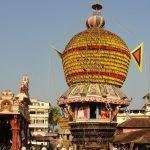
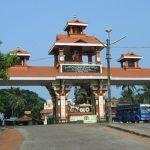
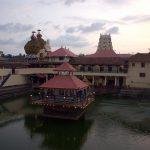
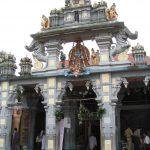
Frequently Asked Questions (FAQs)
Is there a VIP darshan entry available at Udupi Sri Krishna Matha?
Yes, the Matha offers an Ashhta Vrundavana Seva which functions as a premium darshan experience. While it is not a commercial VIP ticket, devotees who book this specific Seva get a dedicated entry and a closer view of the deity. General darshan is open to all at no cost.
What is the significance of the 9-holed window?
The window is called the Navagraha Kindi. It is believed that the Lord gives darshan through these nine holes to bless devotees and protect them from the malefic effects of the nine planets (Navagrahas). It is a unique feature found nowhere else in India.
Can I have lunch at the Matha?
Yes, the Matha serves Prasadam (lunch) to all devotees daily at noon (usually around 12:00 PM to 1:30 PM). This is known as Anna Daana and is a community meal offered by the Ashta Mathas.
Where can I park my vehicle?
Parking is available in designated lots around the Car Street (Temple Car St). However, during festivals like Janmashtami, parking can be limited, and it is advisable to use public transport or walk from nearby accommodations.
Is Udupi Sri Krishna Matha open 24 hours?
No, the temple closes in the afternoon between 1:00 PM and 5:00 PM. The morning session begins at 5:30 AM and continues until closing, and the evening session resumes at 5:00 PM.
Recent Posts

Shri Kaamkoteeshwar Mandir, Varanasi – History & Significance
In the heart of Kashi, the eternal city of Lord Shiva, where the Ganges flows with celestial grace, stands the Shri Kaamkoteeshwar Mandir. This sacred Sannidhi is not merely a temple but a profound spiritual bridge between the Northern…

ओ सांवरे तूने ही मुझको संभाला – Lyrics & Meaning
ओ सांवरे तूने ही मुझको संभाला – A Prayer to Shyam Origin & Spiritual Essence Why This Bhajan Resonates Devotees chant this when overwhelmed by life’s storms—the refrain ‘तूने ही मुझको संभाला’ is the soul’s sigh of relief: “You…

कथा ये है महाराज मेरे की – Lyrics & Meaning
कथा ये है महाराज मेरे की छत्रपति संभाजी महाराज – A Prayer to Chhatrapati Sambhaji Maharaj Origin & Spiritual Essence Why This Bhajan Resonates Devotees chant this when their spirit feels tested—its powerful refrain “महाराज मेरे” is a soul’s…

Rigveda Samhita Yathartha Anuvada (ऋग्वेद संहिता यथार्थ अनुवाद) – Complete Set with Anvayartha & Hindi/English Translation
The Rigveda is the oldest surviving scripture of humanity and the foundational text of Sanātana Dharma. For serious students, scholars, UPSC aspirants studying ancient Indian history, Sanskrit learners, and spiritual seekers, a precise and grammatically structured translation is indispensable.…

आना भी अकेला है जाना भी अकेला है – Lyrics & Meaning | BharatTemples
आना भी अकेला है जाना भी अकेला है – A Prayer to the Divine Witness Origin & Spiritual Essence Why This Bhajan Resonates Devotees turn to this bhajan in moments of deep reflection—when life’s attachments begin to ache. The…

माता शेरावाली के द्वार जो भी जाता है – Lyrics & Meaning
माता शेरावाली के द्वार जो भी जाता है – A Prayer to Maa Sherawali Origin & Spiritual Essence Why This Bhajan Resonates Devotees turn to this bhajan in times of fear or uncertainty—its promise that no one leaves Maa’s…

मार लेना सपणी उबार लेणा भवरा – Lyrics & Meaning
मार लेना सपणी उबार लेणा भवरा – A Prayer to the Divine Beloved Origin & Spiritual Essence Why This Bhajan Resonates Devotees chant this in moments of deep vulnerability—its cry of “मार लेना सपणी, उबार लेणा भवरा” is the…

हमें श्याम सुंदर भरोसा तुम्हारा – Lyrics & Meaning
हमें श्याम सुंदर भरोसा तुम्हारा – A Prayer to Shyam Sundar Origin & Spiritual Essence Why This Bhajan Resonates Devotees chant this when feeling alone—its refrain ‘de do sahara’ is the soul’s cry for divine support. Lyrics in Hindi…

Mere Satguru Ne Di Thi Davai Lyrics in Hindi & Meaning
Mere Satguru Ne Di Thi Davai: Invoking the Guru’s Liberating Wisdom This soul-stirring bhajan venerates the Satguru (True Spiritual Master) as the divine physician who dispenses the only remedy for life’s deepest sufferings. Composed by Sant Karmaveer Tufani, it…

Janm Diyo Thari Maa Dukh Dekhiyo Lyrics in Hindi & Meaning
जन्म दियो थारी माँ दुख देखियो (Maa’s Grief Upon Birthing You) This soul-stirring Chetavani Bhajan (admonitory hymn) is addressed to the Divine Mother (Maa) – a call for repentance when children forget their filial duties in the dark age…