
Contents
Introduction & Spiritual Essence
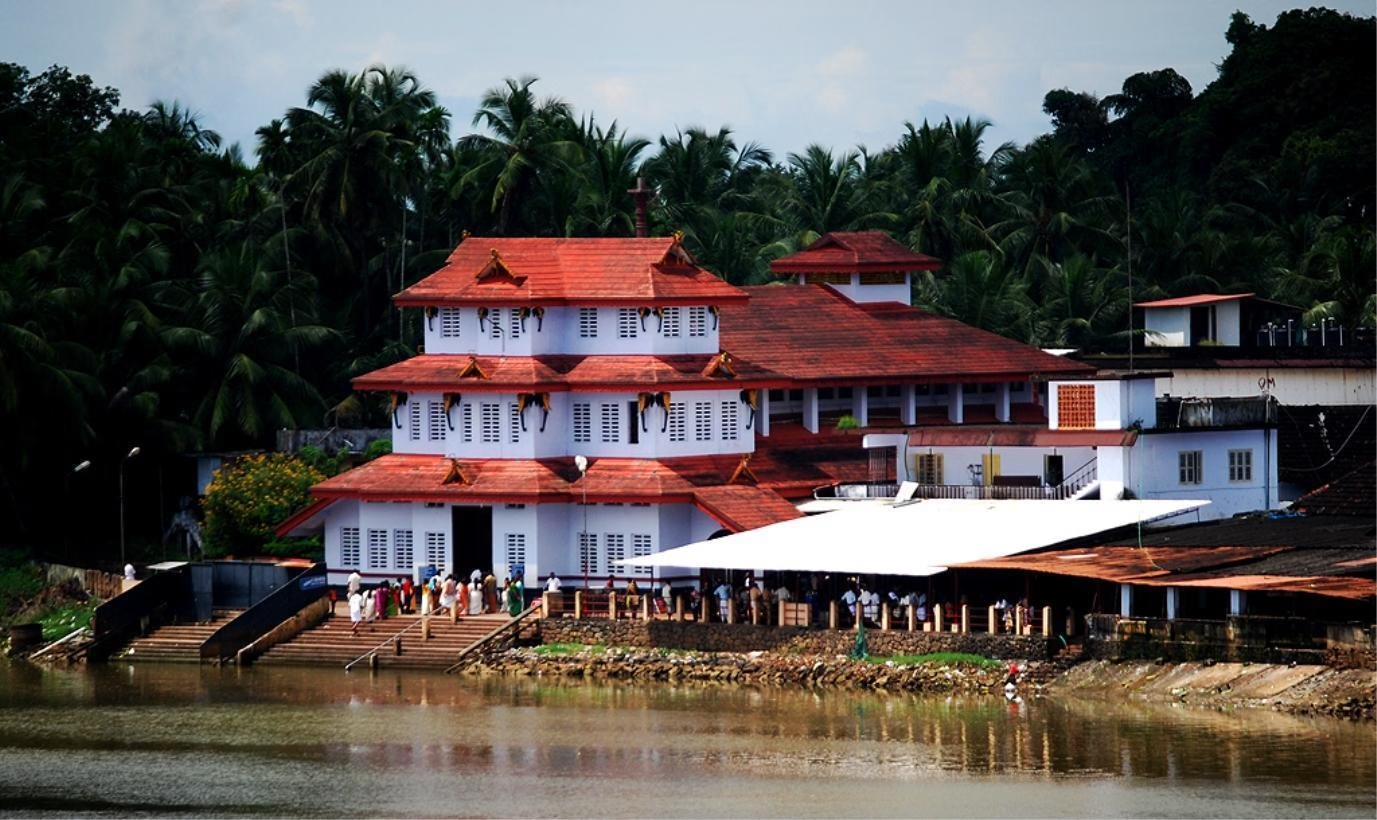
The Parassinikadavu Muthappan Temple in Kannur, Kerala, stands as a beacon of non-Brahminical tradition and divine folklore on the banks of the Valapattanam River. Dedicated to Sree Muthappan, the presiding deity is not worshipped as a mute stone idol but as a living, breathing entity manifested through the ritualistic dance known as Theyyam. In the pantheon of Hindu deities, Muthappan is revered as a supreme manifestation of Lord Shiva, specifically in the guise of a hunter (Nayattu).
Unlike conventional satvic temples, this shrine embraces the tantric traditions of North Malabar. The deity is presented in two distinct versions:
- Thiruvappana: The full version adorned with royal regalia and a grand Prabha-mandalam (auric circle), representing the complete authority and predictive power of the divine.
- Vellattam: A minimal, stripped-down version representing the purity of the idol without the surrounding halo, focused intensely on the rhythmic dance (Attam).
Phalaśruti: Why Devotees Visit
Devotees flock to Parassinikadavu seeking protection, health, and the resolution of ancestral karma. According to temple lore and oral traditions, Muthappan is the guardian of the downtrodden and the poor. The Phalaśruti (benefits of worship) is deeply rooted in the belief that offering fish, meat, and toddy (traditional offerings accepted here) pleases the deity, leading to the removal of obstacles and the blessing of progeny. The unique nature of the Theyyam ritual allows devotees to communicate directly with the god, seeking predictions and remedies for life’s difficulties.
Historical Origins & Scriptural Legend
While exact architectural dating is often obscured by oral traditions, the temple’s structure and rituals suggest ancient origins consistent with the Kavu (grove) sanctuaries of Kerala. The site is deeply embedded in the Sthala Purana (local legend) of the region.
Tradition holds that the temple is associated with the legendary figure Ponnu Muthappan. The narrative recounts a childless royal couple from Ancharamana (Eruvessi village) who found a baby boy floating in a flower basket on the river. Raised as a prince, the child grew up with a fierce sense of justice for the poor but deviated from royal norms by hunting and consuming flesh—taboos for a Naduvazhi (chieftain).
Upon leaving his home, he revealed his divine fury to his mother, who requested he wear a Poikannu (blindfold) to contain his cosmic energy (Shakti). As he wandered through the Malabar region (Kunnathurpadi, Puralimala, Thillenkeri), he befriended a tribal man named Chantan. Legend states that when Chantan refused to share toddy, Muthappan cursed him to stone, later relenting upon prayer and offering of Oottu, Tiruvappana, and Amruthakalasam. This folklore establishes the deity’s association with tribal communities and the sanctity of toddy and meat offerings.
Architectural Marvels
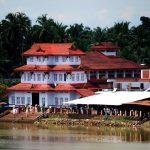
The temple exemplifies traditional Kerala Kavu Architecture, characterized by a distinctively serene and natural setting. Unlike the towering gopurams of Tamil Nadu, the structure here is grounded, integrating seamlessly with the surrounding vegetation and the Valapattanam river.
- Vastu Shastra Elements: The layout follows the ancient Kerala style, featuring a Sreekovil (sanctum sanctorum) with a conical roof made of terra cotta tiles and teak wood carvings.
- Notable Sculptures: The temple complex is marked by wooden pillars depicting scenes from Hindu epics and local folklore. A unique feature is the idol of a dog guarding the entrance, as Muthappan was always accompanied by a dog during his earthly travels. Dogs are revered here as divine companions.
- The Theyyam Mandapam: The open-air structure where the Theyyam ritual is performed is central to the temple’s architecture, designed to allow a 360-degree view of the performer, embodying the deity.
Darshan & Ritual Logistics
The temple functions differently from most Hindu shrines. Worship is driven by the Theyyam performance rather than standard pujas. Devotees witness the ritual to receive blessings and answers to their prayers.
Daily Timings
Timings are subject to seasonal changes and special rituals. Please verify locally before travel.
| Session | Timing |
|---|---|
| Morning Darshan | 05:00 AM – 10:00 AM |
| Afternoon Break | 10:00 AM – 5:00 PM |
| Evening Darshan | 5:00 PM – 9:00 PM |
Key Sevas & Offerings
Important Note: The Parassinikadavu Muthappan Temple does not follow the satvic Brahminical form of worship. Standard abhishekam with milk/coconuts is not the primary ritual.
- Theyyam Performance: The primary ritual. The deity communicates through the performer (Prathishta).
- Oottu (Offering of Food): Fish, meat, and toddy are the customary offerings. These are prepared in the temple kitchen and served as Prasad.
- Archana: Performed in the name of the devotee with local chants.
Online Seva Booking
While many rituals require physical presence for the offering preparation, the Travancore Devaswom Board (or local administration) may offer online booking for donation coupons or accommodation. Note: As of 2026, specific festival bookings should be made via the official Kerala Devaswom portal or authorized travel partners.
Major Festivals 2026
Muthappan Thiruvoppana Mahothsavam is the major annual festival, celebrated for three days. Based on the Malayalam calendar, these dates typically fall in Kumbham (Feb-March).
- 2026 Festival Dates (Tentative): March 5th – March 7th, 2026.
- Best Time to Visit: Early morning during the festival days to witness the ceremonial Seeveli (procession) with the elephant.
Practical Visitor Guidance
Visiting this temple requires adherence to specific cultural norms regarding dress and behavior.
- Dress Code: Modest attire is mandatory. Men should wear dhotis or trousers (no shorts). Women should wear sarees, salwar kameez, or long skirts.
- Photography & Mobiles: Strictly prohibited inside the inner sanctum and during Theyyam performances. There are mobile lockers available at the entrance for depositing electronics.
- Crowd Management:
- Best Hours: Weekday mornings (Tuesday and Friday are particularly busy).
- Seasonal Advice: Kannur can be humid. Carry a water bottle and a towel. During the monsoon (June-September), the river banks may swell; maintain distance from the edge.
- Accessibility: The temple complex has gravel paths. Elderly devotees may need assistance walking to the sanctum.
Pilgrimage Connectivity
How to Reach
- By Air: Kannur International Airport (CIAL) is the nearest airport, located approximately 25 km away.
- By Rail: The nearest railway station is Thalassery (approx. 20 km) or Kannur Junction (approx. 16 km).
- By Road: The temple is located on the Taliparamba – Parassinikadavu Road. It is well connected via NH 66. From Kannur city, take the route towards Taliparamba.
Nearby Sacred Sites
To extend your spiritual journey, consider visiting these nearby locations in the Kannur district:
- Chekkunnu Temple: Famous for the annual Padayani ritual, located a short drive away.
- Sree Muthappan Temple, Kunnathurpadi: Another ancient site linked to the Muthappan legend.
- Parassininiakadavu Snake Park: While not a worship site, it highlights the region’s biodiversity and is often visited alongside the temple.
Photo Gallery

Frequently Asked Questions (FAQ)
1. Is there a VIP Darshan entry at Muthappan Temple?
Unlike major south Indian temples, Parassinikadavu Muthappan Temple does not strictly have a commercial VIP ticket system. However, devotees who offer Oottu (food offerings) or participate in the Theyyam ritual preparation often receive priority access to the inner sanctum. It is best to consult the temple office upon arrival.
2. Can non-Hindus visit the temple?
The Muthappan Temple is known for its inclusivity. While traditionally a Hindu shrine, the legend of Muthappan and the tribal roots of the Theyyam often allow broader access. However, non-Hindus should respect the rituals and refrain from entering the inner sanctum if there is resistance, observing from the courtyard is generally permitted.
3. Why is fish and meat offered here when other temples prohibit it?
Muthappan is depicted as a hunter (Nayattu). The temple follows a unique Agama (ritual text) that accepts non-vegetarian offerings. It is believed that Muthappan consumes the essence of the offering, and the devotees partake in the blessed food.
4. Are dogs allowed inside the temple?
Yes. Due to the legend that a dog accompanied Muthappan, dogs are considered divine here. However, for safety reasons, it is advisable to keep pets leashed and away from the ritual fire areas.
5. What is the best time to witness a Theyyam?
Theyyam is performed daily, but the grandeur depends on the season. The peak season is December to May. For the most intense experience, visit during the Thiruvoppana Mahothsavam in Kumbham (Feb/Mar).
Contact Details
Parassinikadavu Muthappan Temple
Anthoor Municipality, Near Valapattanam River
Kannur District, Kerala
Phone: [Please check local directory for current number]
Recent Posts

Shri Kaamkoteeshwar Mandir, Varanasi – History & Significance
In the heart of Kashi, the eternal city of Lord Shiva, where the Ganges flows with celestial grace, stands the Shri Kaamkoteeshwar Mandir. This sacred Sannidhi is not merely a temple but a profound spiritual bridge between the Northern…

ओ सांवरे तूने ही मुझको संभाला – Lyrics & Meaning
ओ सांवरे तूने ही मुझको संभाला – A Prayer to Shyam Origin & Spiritual Essence Why This Bhajan Resonates Devotees chant this when overwhelmed by life’s storms—the refrain ‘तूने ही मुझको संभाला’ is the soul’s sigh of relief: “You…

कथा ये है महाराज मेरे की – Lyrics & Meaning
कथा ये है महाराज मेरे की छत्रपति संभाजी महाराज – A Prayer to Chhatrapati Sambhaji Maharaj Origin & Spiritual Essence Why This Bhajan Resonates Devotees chant this when their spirit feels tested—its powerful refrain “महाराज मेरे” is a soul’s…

Rigveda Samhita Yathartha Anuvada (ऋग्वेद संहिता यथार्थ अनुवाद) – Complete Set with Anvayartha & Hindi/English Translation
The Rigveda is the oldest surviving scripture of humanity and the foundational text of Sanātana Dharma. For serious students, scholars, UPSC aspirants studying ancient Indian history, Sanskrit learners, and spiritual seekers, a precise and grammatically structured translation is indispensable.…

आना भी अकेला है जाना भी अकेला है – Lyrics & Meaning | BharatTemples
आना भी अकेला है जाना भी अकेला है – A Prayer to the Divine Witness Origin & Spiritual Essence Why This Bhajan Resonates Devotees turn to this bhajan in moments of deep reflection—when life’s attachments begin to ache. The…

माता शेरावाली के द्वार जो भी जाता है – Lyrics & Meaning
माता शेरावाली के द्वार जो भी जाता है – A Prayer to Maa Sherawali Origin & Spiritual Essence Why This Bhajan Resonates Devotees turn to this bhajan in times of fear or uncertainty—its promise that no one leaves Maa’s…

मार लेना सपणी उबार लेणा भवरा – Lyrics & Meaning
मार लेना सपणी उबार लेणा भवरा – A Prayer to the Divine Beloved Origin & Spiritual Essence Why This Bhajan Resonates Devotees chant this in moments of deep vulnerability—its cry of “मार लेना सपणी, उबार लेणा भवरा” is the…

हमें श्याम सुंदर भरोसा तुम्हारा – Lyrics & Meaning
हमें श्याम सुंदर भरोसा तुम्हारा – A Prayer to Shyam Sundar Origin & Spiritual Essence Why This Bhajan Resonates Devotees chant this when feeling alone—its refrain ‘de do sahara’ is the soul’s cry for divine support. Lyrics in Hindi…

Mere Satguru Ne Di Thi Davai Lyrics in Hindi & Meaning
Mere Satguru Ne Di Thi Davai: Invoking the Guru’s Liberating Wisdom This soul-stirring bhajan venerates the Satguru (True Spiritual Master) as the divine physician who dispenses the only remedy for life’s deepest sufferings. Composed by Sant Karmaveer Tufani, it…

Janm Diyo Thari Maa Dukh Dekhiyo Lyrics in Hindi & Meaning
जन्म दियो थारी माँ दुख देखियो (Maa’s Grief Upon Birthing You) This soul-stirring Chetavani Bhajan (admonitory hymn) is addressed to the Divine Mother (Maa) – a call for repentance when children forget their filial duties in the dark age…