
Contents
- 1 Introduction & Spiritual Essence: The Open-Air Sanctuary of Para Brahma
- 2 Historical Origins & Scriptural Legend
- 3 Architectural Marvels: The Open-Air Concept
- 4 Darshan & Ritual Logistics (2026 Update)
- 5 Practical Visitor Guidance
- 6 Pilgrimage Connectivity
- 7 Frequently Asked Questions (FAQs)
- 8 Contact Details
Introduction & Spiritual Essence: The Open-Air Sanctuary of Para Brahma
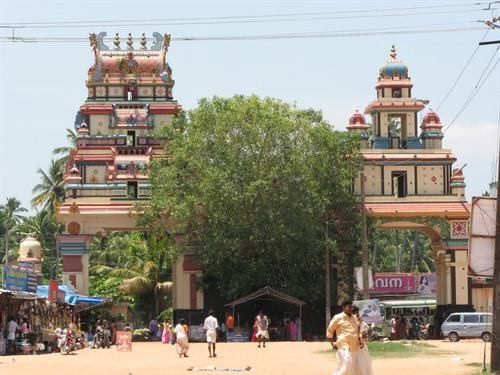
Nestled on the border of Kollam and Alappuzha districts along National Highway 47, the Oachira Temple stands as a profound testament to spiritual transcendence and unique traditions. Known locally as Dakshina Kashi (the Kashi of the South), this ancient temple is not merely a structure but a vibration center dedicated to Para Brahman.
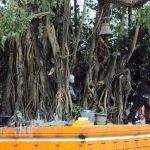
Unlike conventional temples, Oachira is unique in its absence of a sanctum sanctorum. The presiding deity is worshipped as Para Brahma—the formless, Universal Consciousness often identified with Lord Shiva—and specifically as Ohmkaram (the primordial sound of Aum). Devotees worship this formless energy under the open sky amidst neatly preserved banyan and mullanki trees. The belief is that at Oachira, the boundary between the individual soul (Jiva) and the cosmic reality (Para Brahman) dissolves.
Phalaśruti: The Benefits of Pilgrimage
Devotees visit Oachira to:
- Cleansing Ancestral Karma: It is widely believed that rituals performed here aid in relieving the cycles of ancestral karma, making it a vital center for Kathan and Shraddha ceremonies.
- Mental Liberation: As a center of Dhanurveda (the science of arms) and intense spiritual energy, devotees seek clarity of mind and liberation from worldly bondages.
- Protection: The temple has a unique role as a guardian of the region, historically protecting soldiers and now offering spiritual protection to visitors.
Historical Origins & Scriptural Legend
The history of Oachira Temple is a blend of myth, oral tradition, and documented colonial surveys. It is believed to date back to the 12th century AD, though some traditions suggest it is even older.
Scriptural and Oral Legends
According to the Puranas, Oachira is one of the most sacred pilgrimage centers in India. The name “Oachira” is derived from Omkarachira or Uvachanchira (where Uvachan refers to Lord Shiva). However, local historians point to the accounts of British officials Ward and Conner, who surveyed Travancore in the early 19th century.
Tradition holds that the name evolved from Onattuchira. The reservoir (Chira) in the center of the grounds was used by the soldiers of the Kayamkulam Raja (also known as the Odanattu Raja) for bathing and watering horses. Over time, Onattuchira was phonetically corrupted to Oachira.
Warrior Heritage
Oachira is unique because it is not just a temple but a Padanilam (field of battle). It was the annual gathering ground for soldiers from 52 Karas (wards) and 108 Kalaries (training grounds). Before the 20th century, warriors would assemble here in the Malayalam month of Mithuna (June-July) to perform war exercises under the blessings of the Nambiathiris (high-order Nambudiri Brahmins).
Architectural Marvels: The Open-Air Concept
Oachira Temple defies the rigid architectural norms of Nagara or Dravida styles. It is a landscape architecture where spirituality is integrated with nature rather than confined within granite walls.
The Unique Layout
- Formless Sanctum: The central deity, Para Brahma, has no idol. Instead, the energy is concentrated in the roots of ancient trees and open spaces.
- The Temple Pond (Kallukettuchira): Located outside the main compound, this large reservoir historically served the soldiers and is a vital part of the temple’s ecosystem.
- Scupltures and Shrines: The temple grounds house shrines dedicated to Lord Siva, Subramanya, Devi, Sree Krishna, and Nagarajas (serpent gods). The Naga shrines are particularly famous for their exquisite sculptures and are major draws for devotees seeking blessings for family prosperity.
While the site lacks a towering Shikhara, the architectural essence lies in the vast Mandapas (halls) and the natural topography that aligns with Vastu Shastra principles, directing energy flow from the open earth to the sky.
Darshan & Ritual Logistics (2026 Update)
The temple follows a traditional schedule, balancing daily worship with seasonal festivals. As of 2026, the temple administration has streamlined the process for devotees.
Daily Temple Timings
| Day | Morning Timings | Evening Timings |
|---|---|---|
| Monday – Sunday | 05:00 AM – 11:30 AM | 05:00 PM – 08:00 PM |
Note: Temple may close during noon hours (11:30 AM – 5:00 PM) for ritual cleansing and break.
Key Sevas and Online Booking
Devotees can book specific rituals to fulfill spiritual desires. Major Sevas include:
- Abhishekam: Ritual bathing of the idol (performed at associated shrines like Lord Siva and Subramanya).
- Archana: Chanting of names with specific offerings (Theertham/Prasadam).
- Payasu Nivedyam: Offering milk pudding (highly recommended for wish fulfillment).
- Kadhumuttom: Special offering for ancestors.
Booking: Devotees can book these services through the official temple website or at the counter near the office. While traditional booking is available, it is recommended to check the official portal for 2026 availability.
2026 Festival Dates (Mark Your Calendars)
- Oachira Kali (Vrischikam Festival): December 2025 to January 2026. The dates usually follow the Malayalam calendar and will be finalized by the temple committee by late 2025. This is the main festival featuring ritualistic mock-fighting in muddy waters.
- June – Oachirakkali: A specific event involving martial arts performances in the Malayalam month of Mithuna.
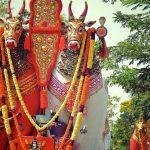
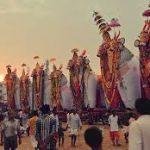
- Eruvathiyetam Onam: Celebrated 28 days after the main Onam festival. This is the “Festival of Cattle.” Look for the procession of Eduppu Kala (gigantic idols of bulls made of cloth and hay) pulled on giant wheels.
- Panthrandu Vilakku: The festival of twelve lamps, usually held during the month of Medam.
Practical Visitor Guidance
Visiting Oachira requires preparation due to the outdoor nature of the temple and the tropical climate of Kollam.
- Dress Code: Traditional attire is mandatory. Men must wear Mundu (dhoti) and shirt; women must wear saree or full-length churidar. Avoid western wear.
- Photography: Strictly prohibited inside the temple complex and during rituals. Mobile phones must be silenced.
- Mobile Lockers: The temple provides secure locker facilities near the entrance for electronic devices and bags.
- Crowd Management:
- Best Time: Early morning (5:30 AM – 7:00 AM) or late evening (7:00 PM) offers a peaceful Darshan.
- Seasonal Advice: Carry water and an umbrella if visiting between April and May. During the monsoon (June-September), the ground can be slippery; wear sandals with good grip.
Pilgrimage Connectivity
Oachira is strategically located on the busy NH-66 (formerly NH-47), making it highly accessible.
How to Reach
- By Air: The nearest airport is Cochin International Airport (COK), approximately 120 km away. Trivandrum International Airport (TRV) is about 90 km away.
- By Rail: The nearest major railway junction is Kollam Junction (QLN), about 28 km from the temple. Local trains are available to Oachira station, which is within walking distance.
- By Road: Directly accessible via NH-66. Regular KSRTC buses run from Kollam, Kayamkulam, and Alappuzha.
Nearby Sacred Sites
Extend your pilgrimage circuit by visiting these nearby temples:
- Asramam Sree Krishna Swamy Temple (Kollam): Famous for its unique architecture and massive pond.
- Sasthamkotta Sree Dharma Sastha Temple: Located about 30 km away, dedicated to Lord Ayyappa.
- Kottarakkara Ganapathy Temple: A historic temple dedicated to Lord Ganesha, known for its ancient rituals.
Photo Gallery
Frequently Asked Questions (FAQs)
1. Is there a VIP Darshan entry at Oachira Temple?
While Oachira Temple maintains a traditional approach, special passes are available for elderly citizens and differently-abled devotees to facilitate easier access. However, there is no commercial “VIP Darshan” system like in some other major temples. The focus is on communal worship.
2. What is the significance of the “Eduppu Kala” procession?
The “Eduppu Kala” is a spectacular part of the Irupathattam Onam festival. These massive bull idols made of hay and cloth are transported on wheels to the temple. It symbolizes the cattle festival, honoring the agricultural and military heritage of the region, and is believed to bring prosperity to the village.
3. Can non-Hindus visit the temple?
Oachira Temple is known for its inclusive philosophy of Para Brahman (Universal Consciousness). While traditional restrictions may apply for entering the inner sanctum of specific shrines, the temple grounds are generally open to all who wish to experience the spiritual ambiance and seek blessings.
4. Where can I stay near Oachira Temple?
There are several lodges and homestays in Oachira town and nearby Kayamkulam. For more premium options, Kollam city (25 km away) offers a range of hotels and resorts.
5. How is the parking situation?
The temple has a designated parking area near the entrance. However, during major festivals like Oachira Kali, traffic is heavy, and parking may be limited. It is advisable to arrive early or use public transportation during peak seasons.
Contact Details
Address: Oachira Temple, Oachira Rd, Oachira, Kerala 690525
Phone: 0476 269 0721
Email: [To be confirmed by administration]
Recent Posts

Shri Kaamkoteeshwar Mandir, Varanasi – History & Significance
In the heart of Kashi, the eternal city of Lord Shiva, where the Ganges flows with celestial grace, stands the Shri Kaamkoteeshwar Mandir. This sacred Sannidhi is not merely a temple but a profound spiritual bridge between the Northern…

ओ सांवरे तूने ही मुझको संभाला – Lyrics & Meaning
ओ सांवरे तूने ही मुझको संभाला – A Prayer to Shyam Origin & Spiritual Essence Why This Bhajan Resonates Devotees chant this when overwhelmed by life’s storms—the refrain ‘तूने ही मुझको संभाला’ is the soul’s sigh of relief: “You…

कथा ये है महाराज मेरे की – Lyrics & Meaning
कथा ये है महाराज मेरे की छत्रपति संभाजी महाराज – A Prayer to Chhatrapati Sambhaji Maharaj Origin & Spiritual Essence Why This Bhajan Resonates Devotees chant this when their spirit feels tested—its powerful refrain “महाराज मेरे” is a soul’s…

Rigveda Samhita Yathartha Anuvada (ऋग्वेद संहिता यथार्थ अनुवाद) – Complete Set with Anvayartha & Hindi/English Translation
The Rigveda is the oldest surviving scripture of humanity and the foundational text of Sanātana Dharma. For serious students, scholars, UPSC aspirants studying ancient Indian history, Sanskrit learners, and spiritual seekers, a precise and grammatically structured translation is indispensable.…

आना भी अकेला है जाना भी अकेला है – Lyrics & Meaning | BharatTemples
आना भी अकेला है जाना भी अकेला है – A Prayer to the Divine Witness Origin & Spiritual Essence Why This Bhajan Resonates Devotees turn to this bhajan in moments of deep reflection—when life’s attachments begin to ache. The…

माता शेरावाली के द्वार जो भी जाता है – Lyrics & Meaning
माता शेरावाली के द्वार जो भी जाता है – A Prayer to Maa Sherawali Origin & Spiritual Essence Why This Bhajan Resonates Devotees turn to this bhajan in times of fear or uncertainty—its promise that no one leaves Maa’s…

मार लेना सपणी उबार लेणा भवरा – Lyrics & Meaning
मार लेना सपणी उबार लेणा भवरा – A Prayer to the Divine Beloved Origin & Spiritual Essence Why This Bhajan Resonates Devotees chant this in moments of deep vulnerability—its cry of “मार लेना सपणी, उबार लेणा भवरा” is the…

हमें श्याम सुंदर भरोसा तुम्हारा – Lyrics & Meaning
हमें श्याम सुंदर भरोसा तुम्हारा – A Prayer to Shyam Sundar Origin & Spiritual Essence Why This Bhajan Resonates Devotees chant this when feeling alone—its refrain ‘de do sahara’ is the soul’s cry for divine support. Lyrics in Hindi…

Mere Satguru Ne Di Thi Davai Lyrics in Hindi & Meaning
Mere Satguru Ne Di Thi Davai: Invoking the Guru’s Liberating Wisdom This soul-stirring bhajan venerates the Satguru (True Spiritual Master) as the divine physician who dispenses the only remedy for life’s deepest sufferings. Composed by Sant Karmaveer Tufani, it…

Janm Diyo Thari Maa Dukh Dekhiyo Lyrics in Hindi & Meaning
जन्म दियो थारी माँ दुख देखियो (Maa’s Grief Upon Birthing You) This soul-stirring Chetavani Bhajan (admonitory hymn) is addressed to the Divine Mother (Maa) – a call for repentance when children forget their filial duties in the dark age…